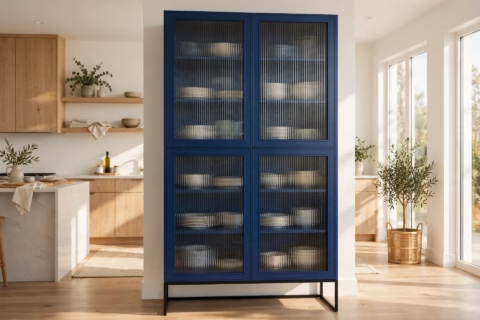
Beverage Cooler: I Put a $3,000, 51-Inch Glass-Door Unit in My Garage. Here’s the Honest Verdict.
Every month I host a cookout for somewhere between twenty and thirty people, and for years my drink situation was a fifteen-year-old top-freezer fridge in the garage that froze cans solid on the top shelf and left the bottom shelf lukewarm. Last spring I finally snapped — halfway through a party I was chipping ice out of a burst seltzer can with a butter knife while guests waited. That night I fell down the rabbit hole of beverage cooler listings, and I surfaced having ordered something completely unreasonable: a 51-inch commercial glass-door merchandiser, the kind of thing you see in a convenience store, for my garage. Three thousand dollars. Three months later, here is the honest accounting.
What a Beverage Cooler Actually Is (and Isn’t)
A beverage cooler is not just a small fridge with a marketing department. As fridge.com explains in its 2026 explainer, it is built around one job — keeping drinks at serving temperature — with drink-specific shelving and a wider temperature band (roughly 34–64°F) than a food fridge’s 35–38°F. Regular fridges are tuned for leftovers and produce; a beverage cooler assumes every shelf is cans and bottles and designs airflow and shelving around that.
It is also not a wine fridge. Wine coolers protect bottles from vibration and hold 45–65°F for proper cellaring. A beverage cooler is colder, brighter, and unapologetic — glass doors, LED lighting, grab-and-go. And it is definitely not the dorm mini-fridge of your college years. Those thermoelectric boxes struggle below 40°F; a compressor-driven beverage cooler holds the low 30s all day.
What sold me on the category: no more frozen seltzer, no more digging past condiments for a cold beer, and — the thing nobody mentions — visibility. When guests can see every option through glass, they serve themselves and stop asking you where the drinks are.
The Unit I Bought: a 51-Inch Glass-Door Monster
FLNORW MALL lists it as the 51” Glass Door Merchandiser Refrigerator Beverage Cooler with Swing door (item W160572331), and “merchandiser” is the honest word — this is commercial equipment. $3,000, antique-white powder-coated steel outside, coated aluminum and stainless inside, 51 inches wide, 27.4 deep, 79 tall, 260 pounds.
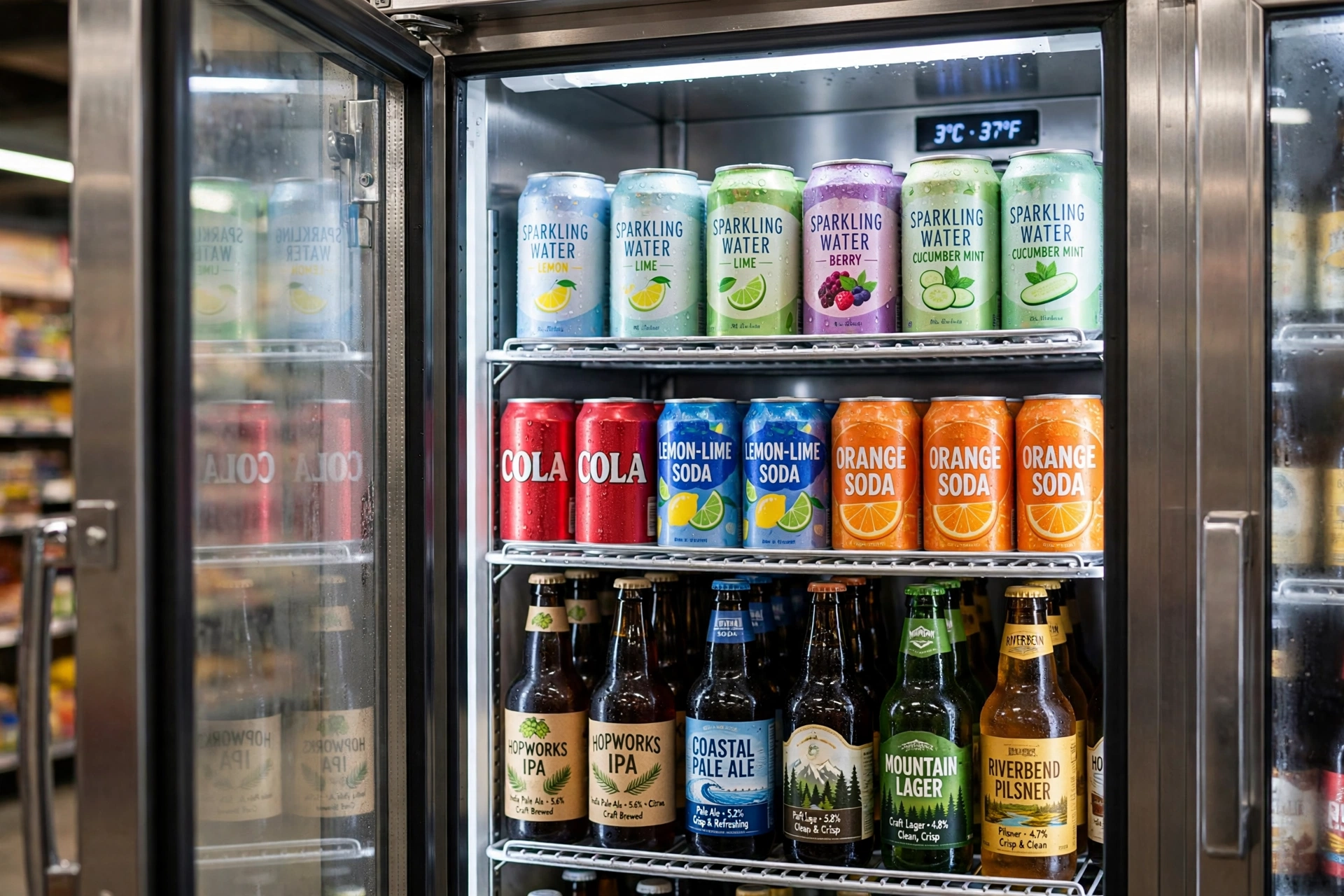
The spec sheet reads like a store fixture because it is one: two dual-pane tempered glass swing doors that close themselves, eight epoxy-coated adjustable steel shelves rated 90 pounds each — I stack 24-packs four deep and after three months there is zero bowing — bright interior LED lighting, digital temperature controls holding 33–40°F, a bottom-mounted compressor, lockable doors, auto defrost, and R290 refrigerant (global warming potential around 3, versus ~1,430 for old R134a, per EPA figures).
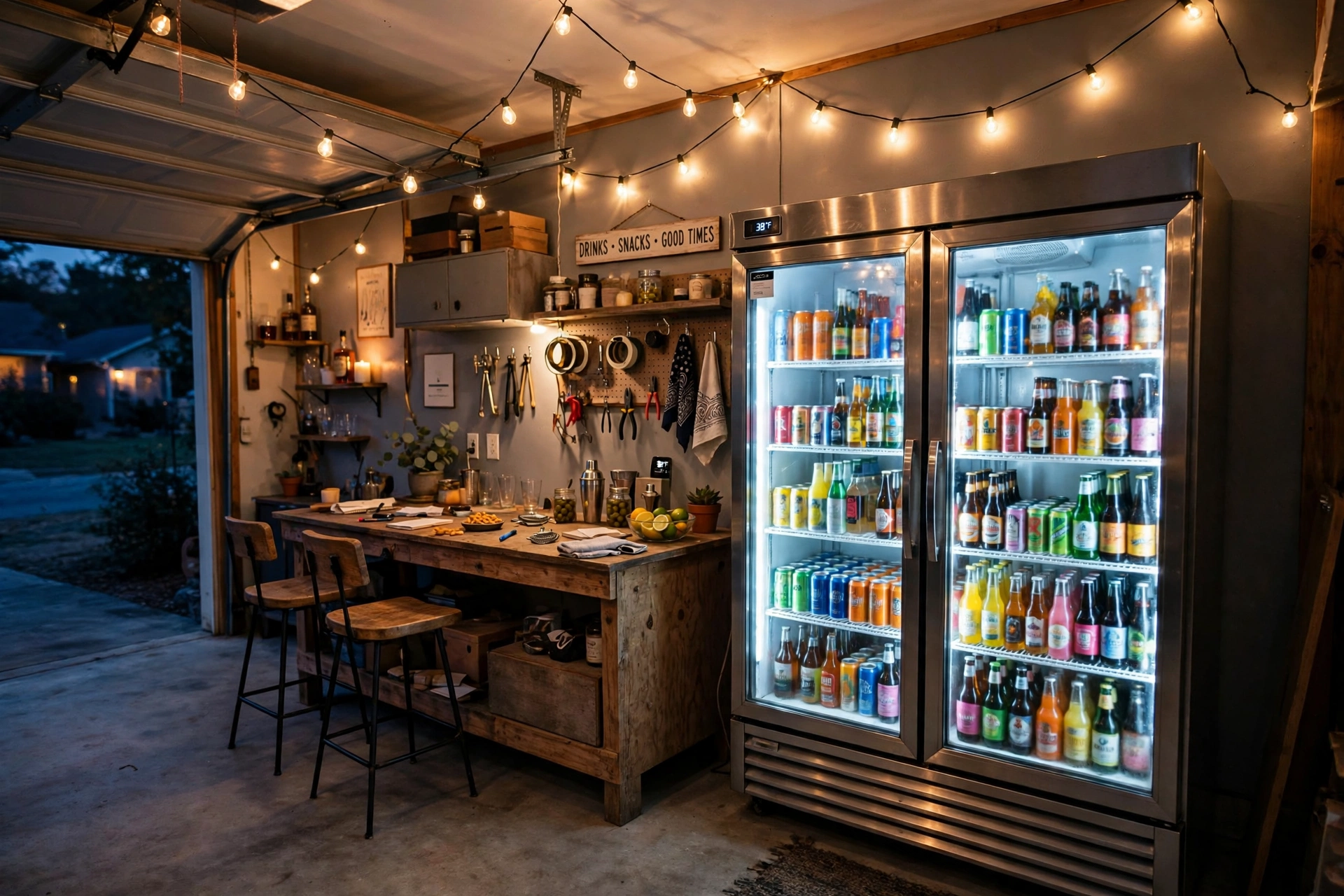
Why this one and not a $150 home unit? Two reasons. First, I wanted the glass-door look — my garage bar was finally coming together and a solid-door fridge would have looked like exactly what it was. Second, I wanted to buy drink storage exactly once. Eight shelves at 90 pounds each means I will never outgrow it, and the self-closing doors mean my kids cannot leave it open. Three months in, those self-closing doors are the feature I would pay for twice — with kids and party guests around, doors that shut themselves are the difference between a cooler that works and one that does not. The lock sounded silly until my teenager’s friends discovered the good soda.
The 260-Pound Truth About Delivery and Placement
Here is what the product page does not prepare you for: this thing ships at 290 pounds in a 55×30×82-inch crate. That is freight delivery, not a parcel truck. The driver wheeled it to my driveway on a pallet jack and that was the end of his job. Moving it into the garage took two adults, an appliance dolly, and one scraped doorframe I am still pretending not to see.
Placement needs planning. Arctic King’s setup guidance for freestanding coolers — a level floor and a few inches of clearance on all sides — applies double here because the compressor needs breathing room. I gave it four inches behind and two on each side. Then the door swing: two swing doors, each roughly 25 inches wide, need clear arc space in front. Measure your wall twice, because 51 inches of cooler plus door swing eats a real chunk of garage.
And it hums. A bottom-mounted commercial compressor is not silent — it is a low, steady hum you notice for the first week and then stop hearing. Perfectly fine in a garage. I would not put it against a bedroom wall.
The Temperature Test: 33 to 40 Degrees, Door After Door
I set the digital control to 36°F and left a thermometer on the middle shelf for a week. It read 35–37°F the entire time, through a July week when the garage hit 88°F. The FDA Food Code (2022) sets 41°F as the ceiling for cold holding — at 36°F my drinks sit well inside the safe zone with margin to spare.
The real test was a party. I held both doors open for a full minute while loading cases, and the display climbed to 44°F. Twenty minutes later it was back at 37°F. That recovery is the compressor earning its keep — and the self-closing doors are the unsung hero, because in practice the doors are never left open a full minute. Someone grabs a drink, the door swings shut on its own, and the cold stays in. My old fridge lost its chill every time a kid stood there deciding.
One honest caveat: in that 88°F garage week, the compressor ran noticeably longer. Commercial units prefer conditioned space. If your garage bakes past 90°F regularly, expect higher power draw and a harder-working compressor — or put the unit in a basement or mudroom instead.
The $3,000 Math vs a $150 Home Unit
Let us do the uncomfortable arithmetic first. $3,000 spread over ten years is about $0.82 a day (rough estimate). Electricity is the bigger line item than people expect: a two-door commercial merchandiser this size draws roughly 5 kWh a day in a warm garage (my rough estimate — check the spec sheet for your climate), which at the EIA’s 2024 residential average of ~$0.17/kWh is about $0.85 a day, ~$310 a year. Call it ~$1.67 a day all-in to own and run.
Now the comparison. Target sells a 1.7 cu ft, 68-can beverage cooler for $149.99. Over five years that is about $0.08 a day, plus maybe $0.20 a day in power. Per can-slot, the home unit costs ~$2.21; mine, at an estimated 500+ cans of capacity, costs ~$6 a slot. On pure math, the home unit wins and it is not close.
But capacity is the whole story. The 68-can unit holds 68 cans — one big party and it is empty by halftime. Mine holds hundreds across eight shelves, each rated 90 pounds, so I load 24-packs four deep without a thought. Before this unit, I was buying ice at $4 a bag, six bags a cookout, roughly $300 a year in ice alone (rough). This cooler does not pay for itself in dollars — it pays in never running out and never buying ice again.
I also seriously considered the middle ground: Home Depot’s SOZT dual-zone at $1,245, which holds 86 wine bottles plus 148 cans. If wine matters to you, that is the smarter buy — separate temperature zones for reds and cold drinks. It does not, much, to me, so the merchandiser won. Know your household’s actual drinking before you pick a tier.
Who Should Buy This — and Who Absolutely Shouldn’t
Buy it if: you entertain twenty-plus people regularly; you are building a real home bar and want the commercial look; your home office stocks drinks for staff or clients; or you run any kind of weekend food or drink side hustle and need serious cold holding. A buddy who caters weekend events keeps one like this in his prep garage and swears by it.
Do not buy it if: you live in an apartment (where would it even go); your budget is under $500 (the $150–$600 home units are excellent for normal households); wine is your main drink (get the dual-zone); or you move every couple of years (260 pounds, freight delivery, remember?). Also do not buy it if your “parties” are six people — a 68-can unit at $149.99 will make you just as happy for one-twentieth the price, and I mean that sincerely.
The honest summary: this is a commercial beverage cooler that happens to work beautifully in a home. It is overkill for most people, perfect for a few, and I am in the few.
Specs Worth Knowing Before You Order
- 51”W × 27.4”D × 79”H, 260 lbs (290 lbs crated); antique-white powder-coated steel, coated aluminum/stainless interior
- Two dual-pane tempered glass swing doors — self-closing, lockable
- 8 adjustable epoxy-coated steel shelves, 90 lbs each (720 lbs total shelf capacity)
- 33–40°F temperature range, digital controls, auto defrost
- Bottom-mounted compressor — serviceable without pulling the unit out
- R290 eco refrigerant, interior LED lighting, polyurethane insulation
- Plan for freight delivery, a dolly, two people, and a few inches of clearance on every side
The Verdict
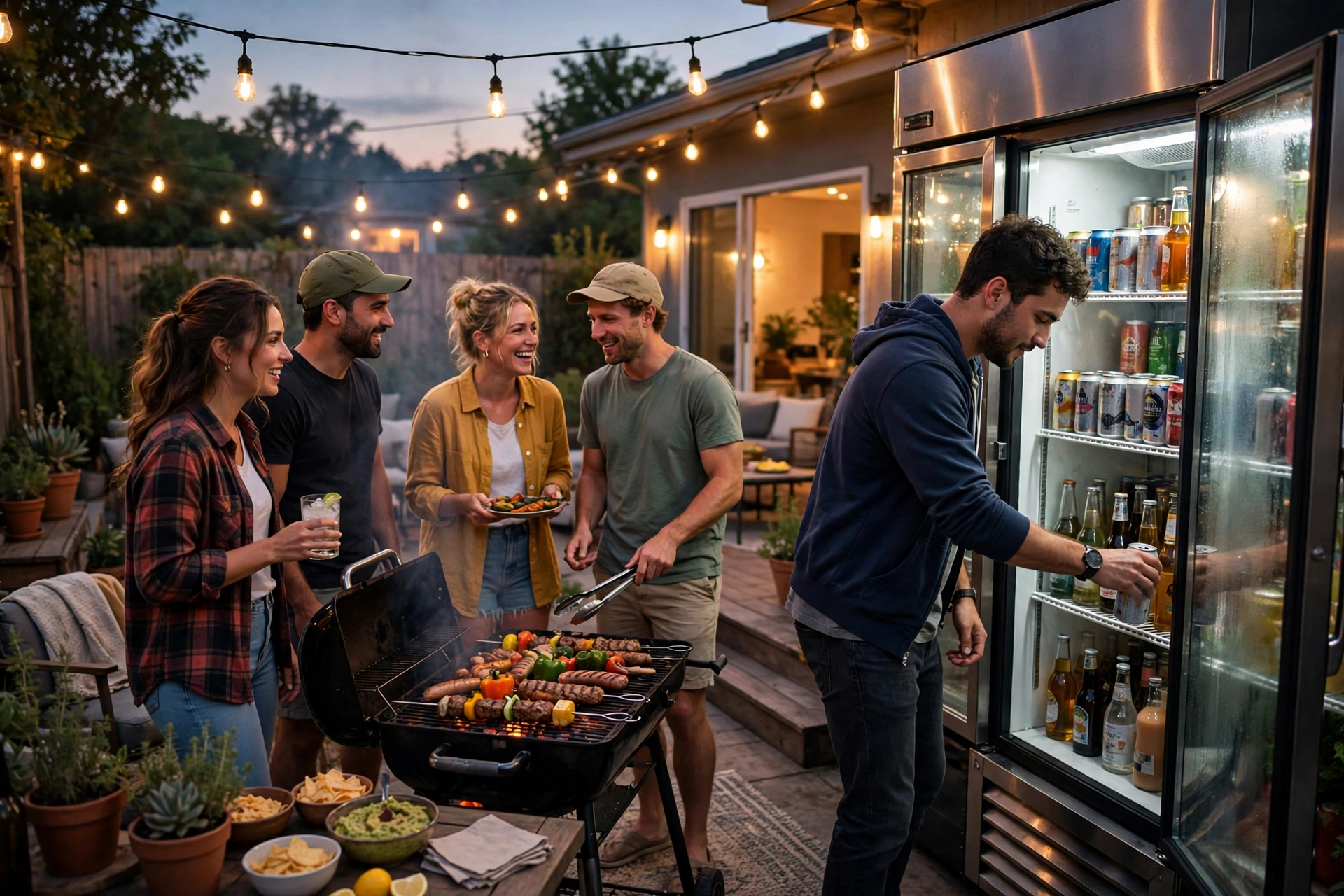
Three months and four cookouts in, the $3,000 still stings a little when I say it out loud — and then I open two glass doors, grab an actually-cold drink without moving anything, and watch the doors swing shut behind me. No ice runs, no frozen seltzer explosions, no lukewarm bottom shelf. For a household that entertains at my volume, it is the single best garage upgrade I have made, fridge included. For everyone else, buy the $150 unit and spend the other $2,850 on the drinks to put in it.
Ready to stop buying ice? See the exact 51-inch glass-door beverage cooler I bought, pair it with a countertop ice maker for cocktails and a coffee pod holder for the morning-after shift, keep the overflow in a chest freezer — or start at FLNORW MALL and build your whole setup.