Coffee Table Height: The Tape-Measure Rules I Learned the Hard Way
Three years ago I carried a coffee table up two flights of stairs, set it down in front of my sofa, sat down, and immediately knew something was wrong. The table stood 20.5 inches tall. My sofa seat was 17 inches. Three and a half inches does not sound like much — until your shins bang the table edge every time you reach for your coffee, and setting down a mug feels like lowering cargo into a well.
I lived with it for eleven days. On day eleven I measured everything, found the real rules, returned the table, and replaced it with one that sits 16 inches tall. My shins have been at peace ever since. This coffee table height and sizing guide is the one I wish someone had handed me before that first purchase — every number tape-measured, nothing theoretical.
Coffee table height: the 1–2 inch rule
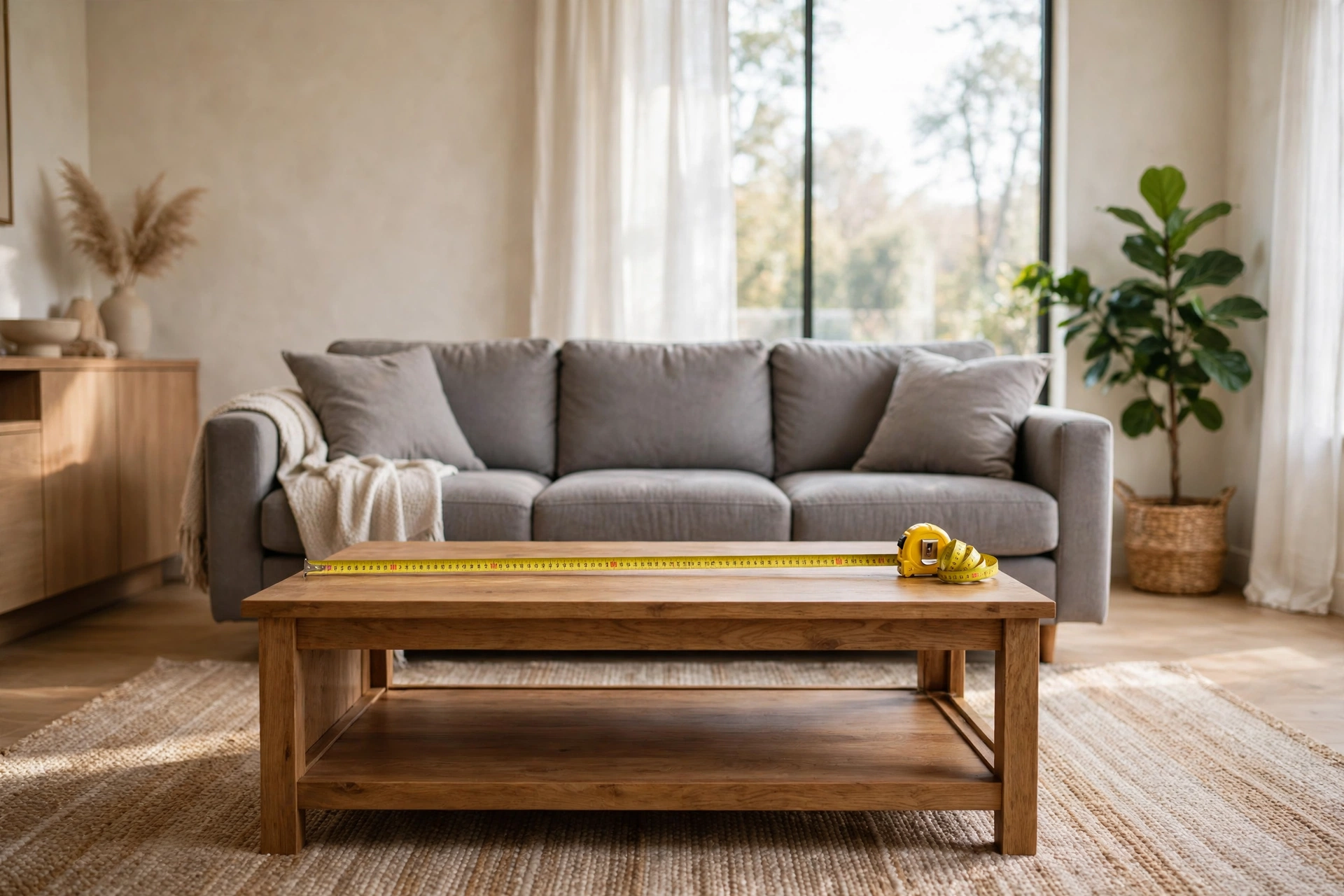
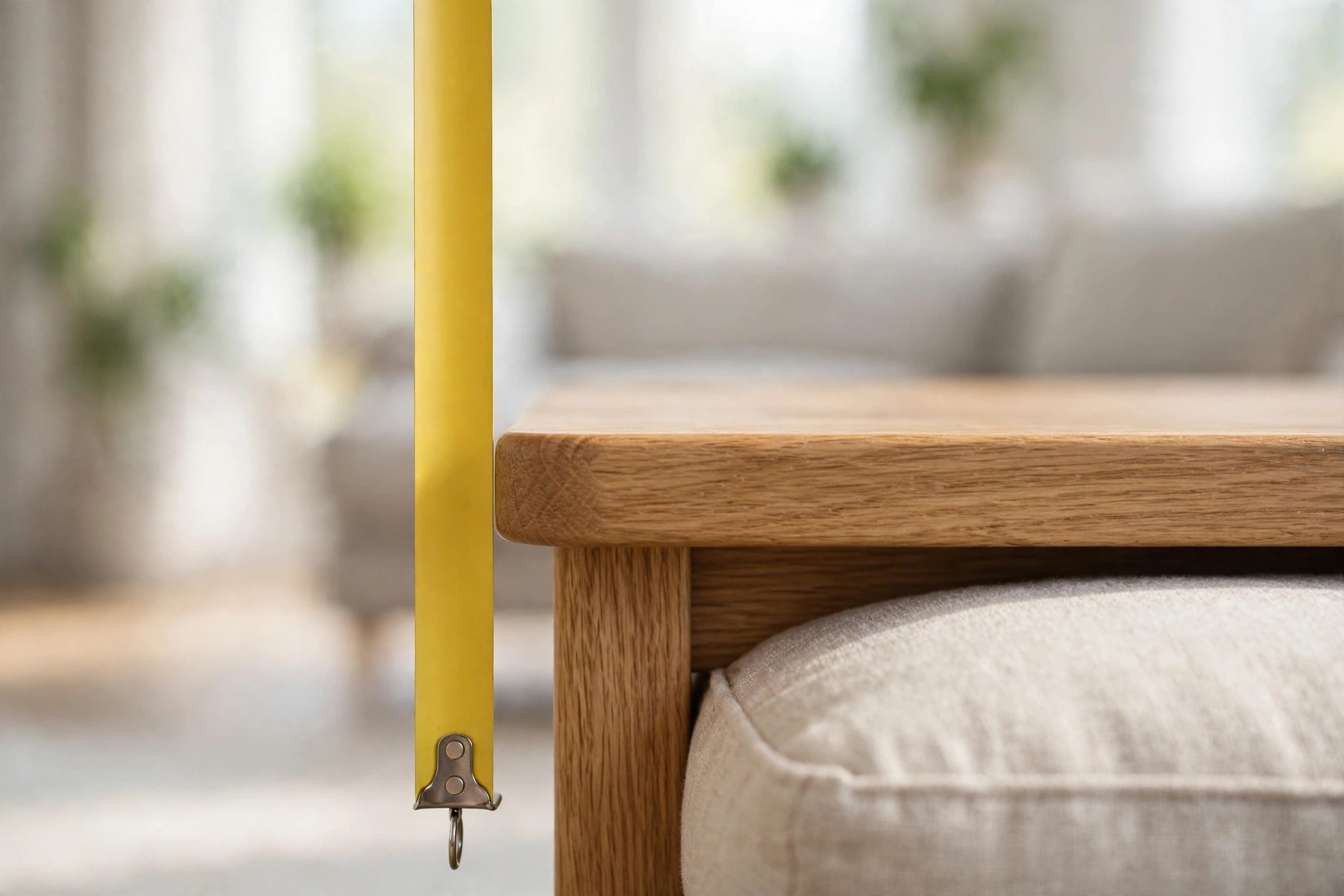
The rule the entire furniture industry quietly agrees on: your coffee table should sit 1 to 2 inches lower than your sofa seat cushion. Seat heights on US sofas typically run 16 to 19 inches — measure yours with a tape from the floor to the top of the cushion where you actually sit, not the armrest, not the back. My sofa measured 17 inches, so the right table height for me was 15 to 16 inches. The sweet spot most living rooms land in is 16 to 18 inches of table height.
Why does a single inch matter so much? Because a coffee table is a working surface, not a display shelf. At 1–2 inches below seat height, your hand travels level or slightly downward to set something down — natural, no shoulder lift. Go three inches above and you are lifting over an edge all evening; go too low, under 14 inches, and the table becomes a footstool you cannot reach without folding in half. Standard coffee table dimensions reflect this: most manufacturers build between 14 and 18 inches tall, with 16 to 17 inches as the center of the market.
Coffee table length: the two-thirds rule
Height gets the attention, but length is what makes a room look intentional. The rule: your coffee table should be about two-thirds the length of your sofa. My current sofa is 84 inches long; the table in front of it is 55 inches — 65%, right in the zone. For a 72-inch loveseat, look at 44 to 48 inches of table. For a big 96-inch three-seater, 60 to 64 inches.
The math exists for a reason beyond looks. A table much shorter than two-thirds leaves dead carpet at both ends where nothing lives and the sofa visually floats. Much longer and the table starts poking past the sofa arms, which is the first thing your shin finds in the dark. The two-thirds zone also keeps the ends reachable: seated at the far cushion, you can still slide your drink onto the table without standing. When I ran the same math for the 125-inch U shaped sectional sofa I reviewed last year, it called for an 80-inch-plus table — at that scale, two smaller tables or a large square actually works better than one long rectangle, a detail the rulebooks rarely mention.
The gap that matters: 16–18 inches of breathing room
Between the sofa and the coffee table, leave 16 to 18 inches. That is the distance that lets you set down a drink without leaning and still walk through the gap sideways in a pinch. Under 14 inches and the walkway vanishes — the table becomes part of the sofa. Over 20 inches and the reach gets annoying; you will notice it every single movie night.
Behind the table, keep a real walkway: 30 to 36 inches between the table edge and the TV stand or the next piece of furniture. My full measuring routine covers the rest of these clearance numbers — doorways first, clearances second — and it has saved me from two more bad purchases since the tall-table incident.
Round coffee table vs rectangle: how shape changes the math
Rectangles follow the two-thirds rule. Round and square tables follow a different instinct: diameter. For a loveseat or a two-person setup, a 30 to 36-inch round coffee table usually hits the mark. In a small living room, a round table is quietly superior — no corners to catch shins, no sharp edges at toddler-knee height, and the footprint feels smaller than the same area in a rectangle because your eye reads the curve as less furniture.
Square tables work the same way: 30 to 36 inches per side for standard seating, up to 40 for a large sectional corner. One honest tradeoff: round tables give you less usable surface per square inch of footprint than rectangles — a 36-inch round has about 7 square feet of top, while a 36-by-48 rectangle has 12. If the table doubles as your work-from-couch desk, the rectangle earns its corners.

Coffee table height in small living rooms: my 10×10 playbook
My first apartment living room was 10 by 10 feet, and a coffee table felt like a luxury I could not afford the floor space for. The setup that actually worked: a 32-inch round table with a lower storage shelf, pushed 16 inches from the loveseat, with 30 inches of walkway to the TV stand on the opposite wall. Total table footprint: about 5.5 square feet in a 100-square-foot room — enough surface for two mugs, a book, and the remote, and nothing to stub a toe on at midnight.
Two small-room tricks from that era: pick a table with a second shelf or drawer — in a 10×10, every surface has to do two jobs — and consider glass tops or open-frame legs, which let your eye see floor underneath and make the same footprint feel lighter. Storage tables pay double rent in small rooms, which is why the storage coffee tables in the furniture collection at FLNORW MALL are the ones I point friends toward first.
The industry numbers: a $12.4 billion argument for wood
I looked up the market because I wanted to know whether my obsession with getting this right was unusual. It is not: Dataintelo values the global coffee tables market at $12.4 billion in 2025, growing to $19.8 billion by 2034 at a 5.3% annual clip. Wood tables hold 42.6% of that market — the largest slice by material — which tracks with what I see in stores: wood forgives sizing mistakes better than glass, because a wood top at the wrong height still looks like furniture, while a glass top at the wrong height just looks wrong.
Translation of the numbers: people are not buying coffee tables as decoration. They are buying the surface their actual life happens on — laptops, dinners, board games, feet after a long day. That is exactly why the sizing matters more than the style.
My pre-buy coffee table size guide checklist
Before you click buy, run this — it takes five minutes and a tape measure:
- Measure your sofa seat height (floor to cushion top, where you sit). Target table height: 1–2 inches lower.
- Measure your sofa length. Target table length: two-thirds of it; diameter 30–36 inches if going round.
- Tape 16–18 inches on the floor between sofa and table spot. Walk it. Sit and mime the reach.
- Check the walkway behind: 30 inches minimum to the next piece.
- Confirm the delivery path fits the box — my tall-table return cost me a restocking fee and a Saturday; the doorway-first routine in my furniture measuring guide is how I avoid that now.
- For small rooms, demand a second shelf or drawer and open legs.
The verdict
The verdict, eleven days and one return later: coffee table height is not a style choice, it is an ergonomics choice. One to two inches below the seat, two-thirds of the sofa length, sixteen to eighteen inches of gap — three numbers, five minutes with a tape measure, zero more shin bruises. Get those right and almost any style works; get them wrong and no style saves it.
Ready to shop with your numbers in hand? Browse the furniture collection at FLNORW MALL — and start every living room project at FLNORW MALL with your tape measure already out.