
How to Clean Velvet Furniture: My Stain-by-Stain Field Guide
How to Clean Velvet Furniture: My Stain-by-Stain Field Guide
I used to believe velvet furniture was for people who did not have kids, pets, or snacks in their house. Then I bought a navy velvet accent chair for my reading corner — the $328 one with wooden legs and an 18-inch seat height — and spent the next three years learning exactly how to clean velvet furniture without wrecking it. Four coffee spills, one cat hairball, and a greasy pizza-box incident later, this is the field guide I wish someone had handed me on day one.
The good news: velvet is far more forgiving than its reputation suggests. The bad news: almost every velvet horror story I have heard started the same way — someone skipped the cleaning tag and guessed. This guide is about not guessing.

First, Find the Cleaning Code on Your Velvet Furniture
Before anything touches the fabric, flip the cushion over and find the tag. Most upholstered furniture carries a cleaning code — a single letter that tells you which method is safe. According to fabric manufacturer Famcor Fabrics, these codes were adopted in 1969 as the industry standard, and legal site legalclarity.org notes the system is voluntary rather than an FTC mandate, but nearly every US furniture maker still uses it.
Here is what the four common letters mean for velvet upholstery care:
- W — water-based cleaners are safe. Spot clean with foam upholstery shampoo, pretest first, and never soak the fabric.
- S — solvent-based (dry-cleaning) products only. Water will leave rings or warp the pile, so keep it dry.
- WS — either method is acceptable, but test both and go gentle. Most of my velvet pieces carry this one.
- X — vacuum only. No water, no solvents. If it is stained, call a professional.
My navy chair’s tag said WS, which gave me the widest margin for error. Whatever yours says, that letter overrides everything else in this article — no stain trick is worth fighting the manufacturer’s code.
What Kind of Velvet Do You Actually Own?
Not all velvet behaves the same, and the fiber matters more than the color. The affordable velvet on most US furniture is polyester or a polyester blend — the set of four Scandinavian-style velvet dining chairs on FLNORW MALL, for instance, lists its upholstery material as a polyester/polyester blend with a 250-pound weight capacity per chair. Polyester velvet is the forgiving kind: it resists water spotting, bounces back from brushing, and handles foam cleaners well.
Cotton, silk, and rayon velvet are the delicate cousins. Water can leave permanent rings on them, and the pile crushes more easily under pressure. If your piece is a heirloom or a high-end cotton velvet, treat it as S-code even if the tag is missing, or hand it to a professional from the start.
The quick test: find a hidden spot — the back panel near the floor works — and dab a tiny amount of distilled water on it. If the pile recovers after drying and brushing, you are almost certainly dealing with a water-friendly synthetic.
The 10-Minute Weekly Routine That Prevents Most Stains
Velvet does not get dirty the way flat fabrics do; it collects. Dust, crumbs, and pet hair settle into the pile and slowly grind the fibers down. Ten minutes a week with the right tools prevents about ninety percent of the deep-cleaning emergencies. My honest estimate, after three years: I have vacuumed this chair roughly 140 times and it still looks close to new.
- Vacuum with an upholstery attachment — low suction, slow passes, always moving in the direction of the pile. Crevice tool first for the seat-back seam where crumbs hide.
- Brush the pile — a soft-bristle clothes brush, light strokes, same direction. This is the single most underrated move in velvet fabric care tips lists, and it restores the sheen crushed seats develop.
- Rotate and flip cushions — if they are removable. On my chair the seat cushion gets flipped monthly; the backrest cannot flip, so I vary where I sit.
- Keep it out of direct sun — velvet fades unevenly. My chair sits about eight feet from a south-facing window, and the arm facing the glass gets rotated quarterly.
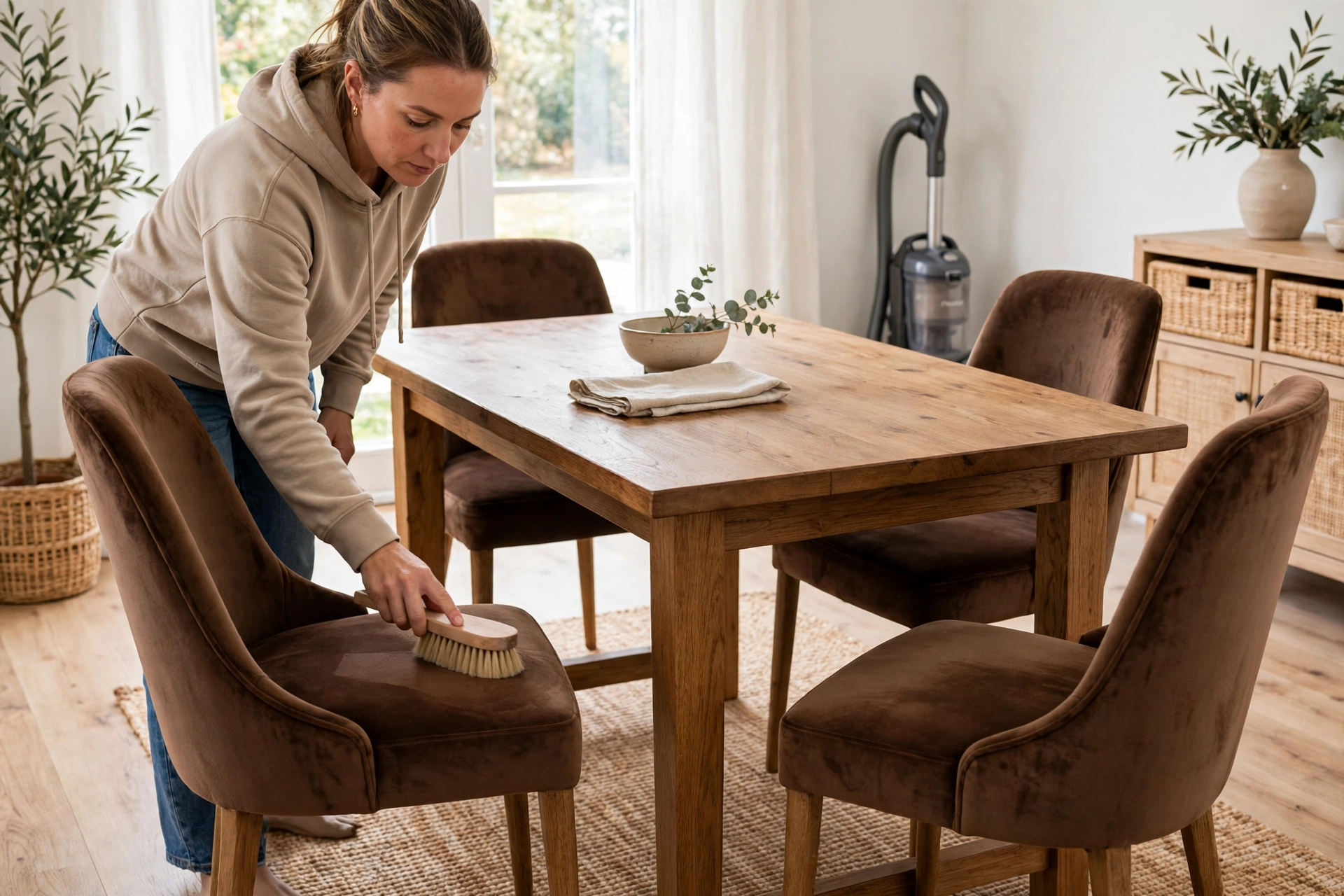
That routine takes me less time than brewing a pot of coffee, and it is the reason I have never needed to deep-clean anything except actual spills.
Stain-by-Stain: What Actually Worked for Me
Speed matters more than technique. Every stain I have saved was addressed within minutes; the one I lost — a red wine splash I discovered the next morning — taught me that lesson permanently. For velvet sofa stain removal and chair spots alike, the protocol is: blot, never rub, work from the outside of the stain toward the middle to avoid spreading it, and pretest every cleaner on a hidden spot.
Water and condensation rings. Let it dry completely, then brush the pile. On W and WS codes, a barely damp white cloth pressed over the ring usually finishes the job. On my WS-coded chair, a water glass ring disappeared with nothing but patience and a brush.
Coffee and tea. Blot up the liquid immediately with a dry white cloth. Then apply a small amount of foam upholstery cleaner — the W method — with a second cloth, using light dabbing motions. My Sunday-morning spill on the seat cushion came out in about six minutes. Do not pour the cleaner directly on the velvet; foam only, no puddles.
Grease and oily food. The pizza-box incident. Sprinkle plain baking soda over the spot and leave it for 20 to 30 minutes — it absorbs the oil instead of driving it deeper. Vacuum thoroughly, then treat any remaining shadow with a mild dry-cleaning solvent if your code allows S, or foam cleaner for W/WS.
Pet hair and dander. My cat’s favorite seat is, of course, the velvet one. A slightly damp rubber glove swept across the pile pulls hair off in seconds — faster than any lint roller I have tried. Weekly vacuuming handles the rest.
One rule covers all four: if the first gentle attempt does not work, step up the method rather than the force. Aggression is what kills velvet, not the stains themselves.
How to Steam Velvet Without Flattening the Pile
Steam is the secret weapon for tired-looking velvet — it relaxes crushed pile the way nothing else does. It is also the easiest way to create a water spot on fabric that cannot take it. The method that works for me, on WS-coded pieces like my navy chair:
- Hold the handheld steamer 6 to 8 inches away from the fabric — never touch the nozzle to the velvet.
- Keep it moving in slow, even sweeps. Steam one section, then stop and let it cool before deciding whether it needs more.
- Immediately after steaming, brush the pile with a soft brush while it is still warm to lift the fibers back upright.
- Let the piece air-dry fully before sitting on it again — sitting on damp velvet is exactly how permanent butt-shaped depressions happen.
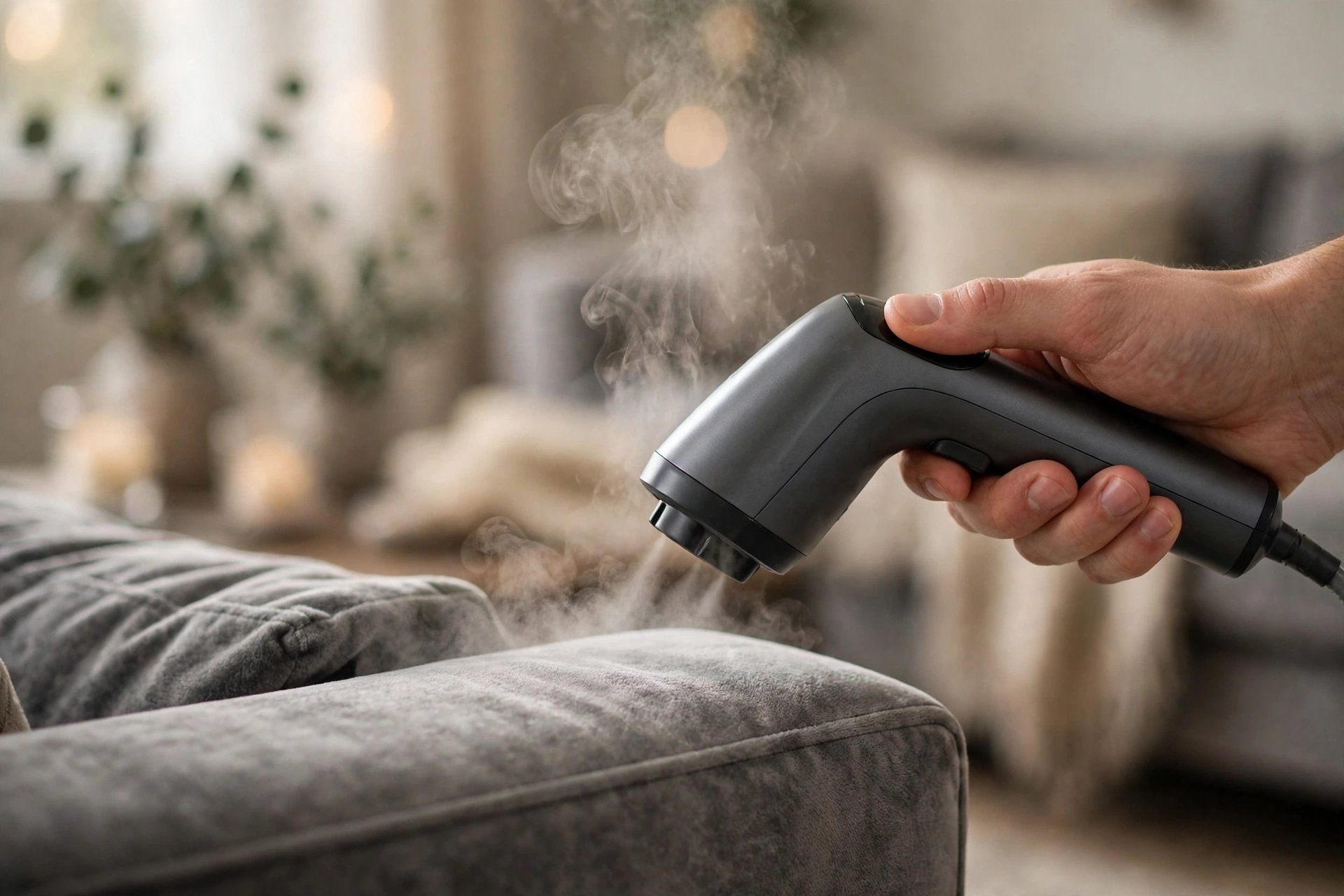
I steamed the arms and seat of my chair last spring after two years of daily use, and it genuinely looked like a different chair afterward. If you own a bigger piece — the 81.8-inch grey velvet Chesterfield sofa, for example, with its tufted buttons — work carefully around the buttons and nailhead trim, steaming the flat panels only.
Four Mistakes That Ruin Velvet for Good
I have made three of these myself, which is how I know they matter.
Rubbing a stain. Rubbing pushes the spill sideways into clean pile and mats the fibers permanently. Press and lift, always.
Using heat to dry a stain. A hair dryer on a fresh protein or coffee stain can set it into the fibers for good. Blot, treat, and let it air-dry.
Assuming vinegar is safe on dark velvet. The internet loves vinegar as a cleaner, but it can shift dyes on dark fabrics. My navy chair survived a diluted-vinegar test on a hidden panel — but the test itself took thirty seconds, and skipping it would have been reckless.
Cleaning against the pile with a stiff brush. Soft bristles only, and follow the nap. The brush that restored my chair is the same soft clothes brush I use on wool coats; it cost about nine dollars and it is the best velvet-care purchase I have made.
When a Velvet Stain Needs a Professional
Home care has a ceiling, and recognizing it is part of caring for the piece. Call a professional upholstery cleaner when: the tag says X (vacuum only); the velvet is cotton or silk and the stain is large; the spill is red wine, ink, or bleach; or you have tried two gentle home attempts and the stain is unchanged.
A professional visit costs far less than replacing a $599 sofa — and a good cleaner can usually tell you on the phone whether your fabric is a candidate for their equipment. Ask specifically whether they handle pile fabrics and what their policy is if the cleaning does not fully work.
The Verdict: Velvet Furniture Is Easier to Live With Than Its Reputation
Three years, four coffee spills, one cat, and one pizza box later, my navy velvet chair still anchors my reading corner — the pile is intact, the color is even, and the only sign of age is a slightly softer seat cushion that is honestly more comfortable now. Learning how to clean velvet furniture turned out to be less about products and more about habits: read the code, vacuum weekly, blot fast, and steam when the pile gets tired.
If you have been avoiding velvet because it looks high-maintenance, it is not. It is medium-maintenance with a dramatic reputation. Buy the chair. Read the tag. Keep a white cloth within reach.
Ready to bring home velvet you can actually live with? The $328 Navy Velvet Accent Chair with solid wooden legs is the piece I tested this entire routine on — and for the dining room, the set of 4 Scandinavian velvet chairs holds up to 250 pounds per chair and wipes clean the same way. Browse the full collection at FLNORW MALL.