Living Room Rug Size: The Tape-Measure Rules I Wish I’d Had
Living Room Rug Size: The Tape-Measure Rules I Wish I’d Had
Three years ago I got my living room rug size wrong the way most people do: I liked the pattern, I guessed at the dimensions, and I paid for it. The rug was 5 by 8, the room was 14 by 16, and the result looked like a welcome mat that had given up. My sofa’s front legs sat on it. The back legs didn’t. Every designer photo I’d ever saved showed something my living room did not have, and the difference was about four feet of fabric.
Since then I’ve bought two more living room rugs — one too big, one right — and learned to measure the way I do for everything now: with a tape, on the floor, before the order. Here are the seven rules that finally stuck.
Living Room Rug Size Starts With the Front-Legs Rule
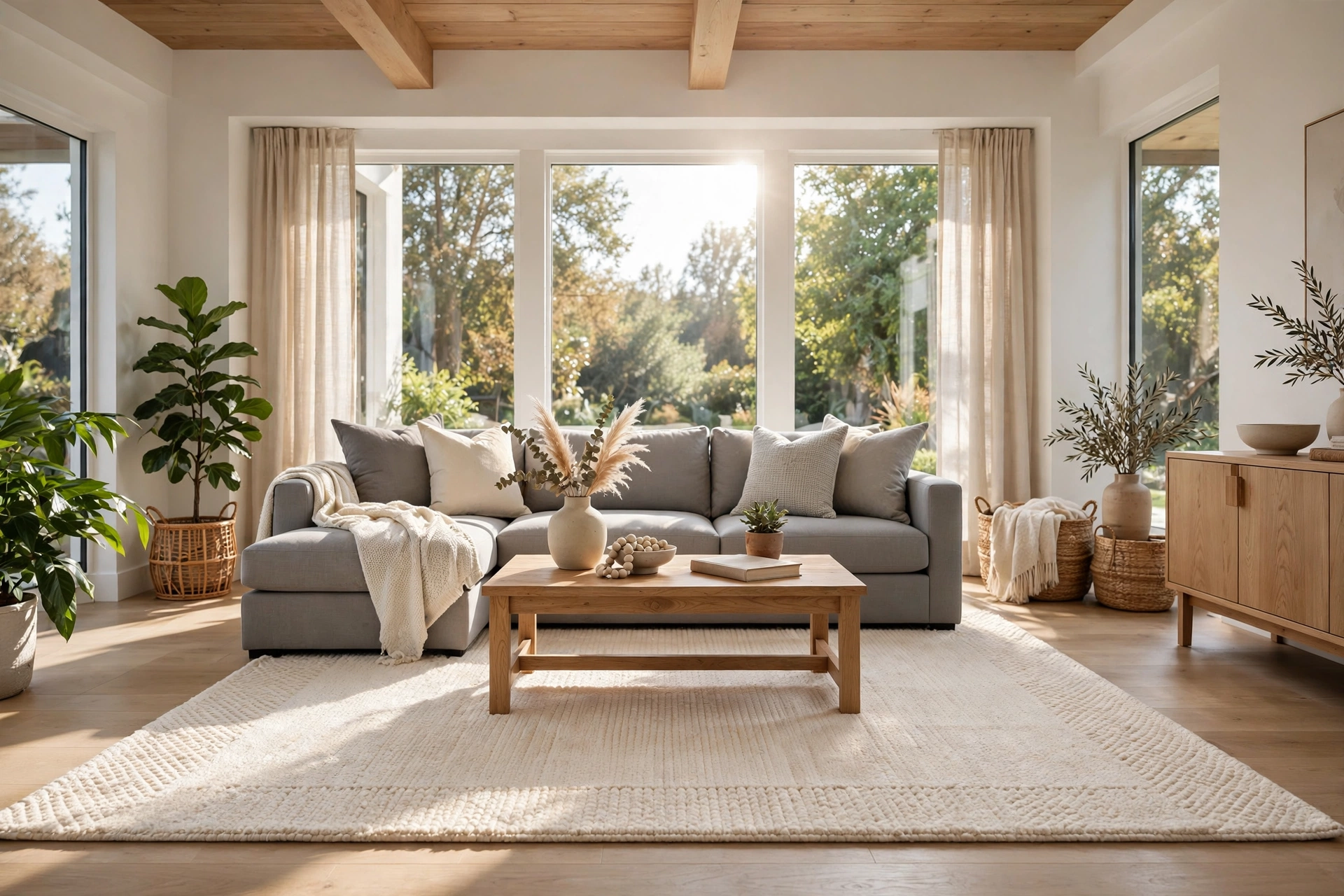
Every sizing conversation starts here, because this one rule answers most of the question. At minimum, the front legs of your sofa and chairs should sit on the rug. Not the whole chair. Not hovering near it. Front legs on, back legs can stay on the floor.
There are two legitimate exceptions. In a large room with a big rug, everything — sofa, chairs, coffee table — can sit fully on the rug, with the rug extending about 6 to 12 inches past the furniture on each side. In a small room, the coffee table alone can anchor the rug, with the rug sliding under the sofa’s front edge. If you remember one thing about the rug-under-couch question, make it this: what never works is the floating rug, a 5×8 island in the middle of the seating area with every leg off it. That was my first rug. It looked like it was lost.
8×10: The Living Room Rug Size Sweet Spot
Walk into any rug store and you’ll notice the wall of 8x10s. There’s a reason: an 8×10 rug fits a standard three-seat sofa (roughly 84 to 96 inches) with two chairs, front legs on, with room to breathe. It’s the most common living room size because it matches the most common living room.
Here’s the quick map I wish someone had handed me:
- 5×8: small apartments and tight seating areas. Works when the coffee table anchors it and the sofa’s front legs just reach.
- 6×9: the underrated middle child. Good for loveseat setups and rooms under about 12 feet wide.
- 8×10: the default. Fits most sofas up to about 100 inches with chairs.
- 9×12: large living rooms and sectionals. The one I own now.
- 10×14 and up: great rooms and open plans where the rug has to define the whole zone.
Bigger is almost always safer than smaller. A rug that’s slightly too large looks generous. A rug that’s slightly too small looks like a mistake — I know, because mine did.
The Bare-Floor Border: 12 to 24 Inches
The second rule is about what you don’t cover. Leave 12 to 24 inches of bare floor between the rug’s edge and the walls. A foot is the minimum for a tidy look; up to two feet in a larger room. This border does three jobs: it frames the seating area the way a mat frames a photo, it shows off your flooring instead of hiding it, and it keeps the rug from looking wall-to-wall — which reads as indecision, not coziness.
The exception proves the rule: in a genuinely small room, letting the rug run close to the walls can actually make the space feel bigger by unifying the floor. But if you do that, commit — a rug that nearly touches two walls and leaves a fat gap at the third looks accidental.
My Three Wrong Rugs: A Short, Expensive History
Rug one was the 5×8. I bought it for the pattern — a nice geometric print — and it arrived looking fine on the listing. In my 14-by-16 living room it looked like a coaster. The coffee table sat on it. Nothing else did. I kept it for eight months out of stubbornness, and guests kept complimenting the mat.
Rug two was the overcorrection: a 9×12 at a price that made me wince, about $260 at the time. The size was actually right for the seating area — but I hadn’t measured the door swing. The front door’s bottom edge dragged across the rug’s pile every time it opened, and the walkway past the TV stand shrank to a shuffle. A rug that fights your doors is a rug you resent.
Rug three is the keeper: an 8×10 with the front legs of everything on it, a clean 14-inch border to the walls, and a door that swings free. The difference wasn’t taste. It was the tape measure — which, yes, I now keep in the same kitchen drawer as the one I use for measuring furniture before delivery.
Small Rooms, Open Plans, and Round Rugs
Small living rooms follow the same rules at a smaller scale. A 6×9 or even a 5×8 works if the front legs land on it — resist the urge to fill a small room with a big rug, because oversizing shrinks walkways faster than anything. In my old apartment the rug ran under the sofa’s front legs and stopped 18 inches from the opposite wall, and the room felt bigger than it was.
Open-plan spaces use the rug as a room divider. Align the rug with the furniture grouping, not the walls — the rug is what says the living room ends here. This is the part of any area rug size guide that gets skipped, and it matters most. My current setup anchors a 125-inch U-shaped sectional, and only a 9×12 was wide enough to catch the chaise’s front feet without swallowing the walkway behind it.
Round rugs are for round moments: under a round coffee table or in a reading corner. A 6-foot round works for a chair and a side table; an 8-foot round handles a small seating cluster. For dining, the rule is the rug must extend 24 inches past the table edge on every side so pulled-out chairs stay on the rug — the standard designer guideline, and the one I check before any dining setup.
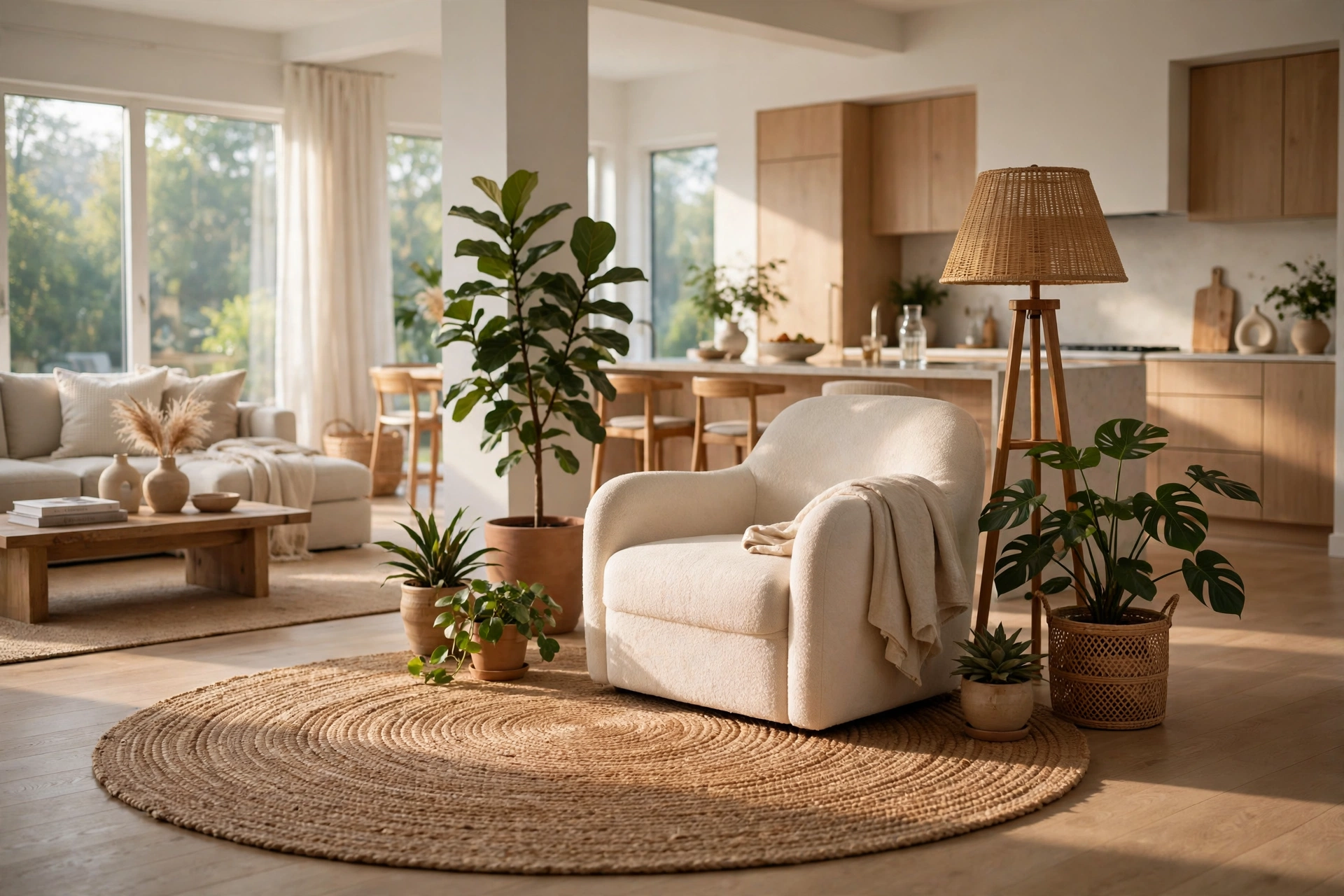
Rug Pads, Pile Height, and the Door-Clearance Trap
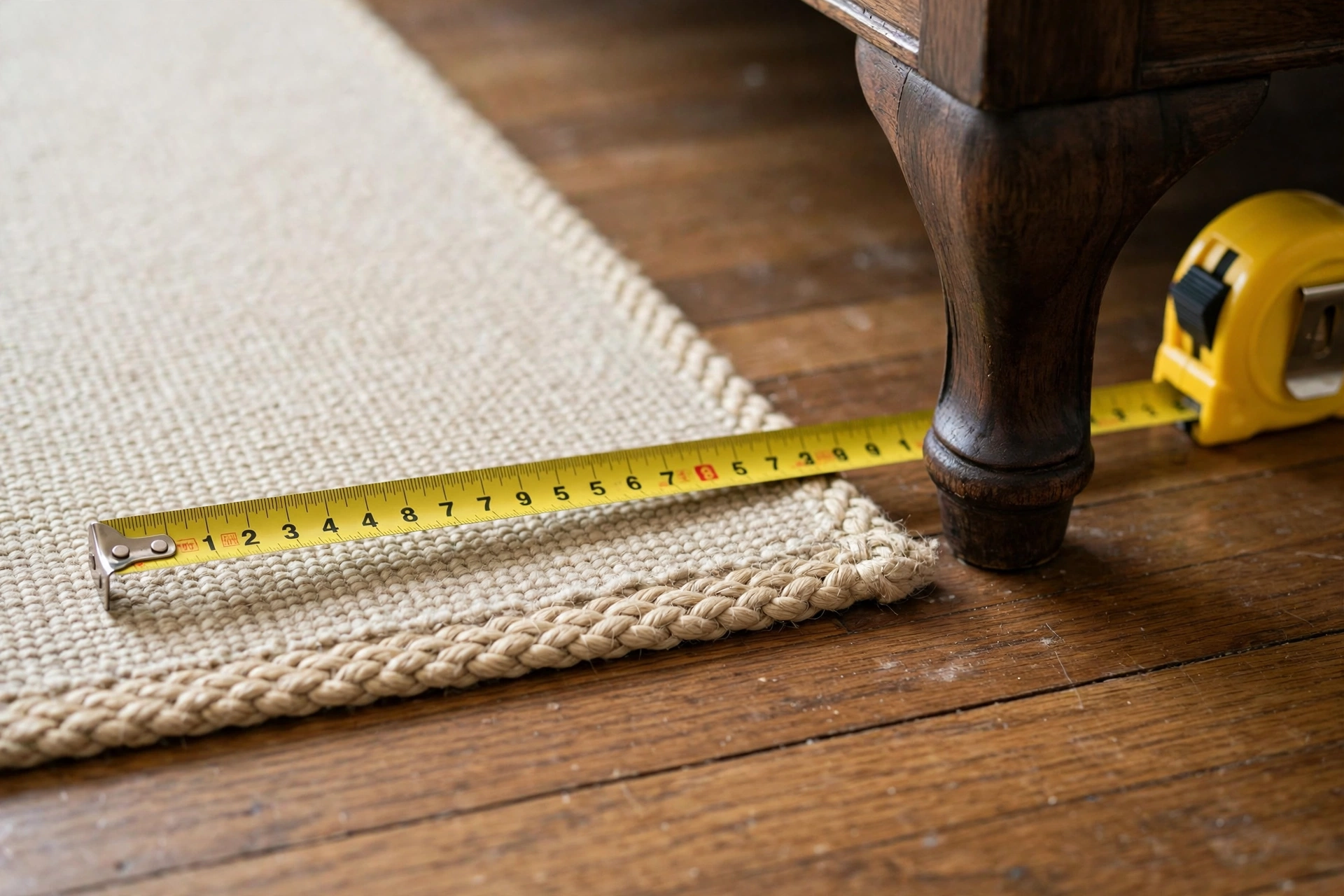
Buy the pad. Getting rug pad size right is simple: about an inch smaller than the rug on all sides. It keeps the rug from bunching, adds cushion, protects the floor, and costs a fraction of the rug itself. I skipped the pad on rug one and spent a year straightening a corner that curled like a wave.
Pile height matters more than people expect. Low pile — under about half an inch — is the practical choice for dining areas, entryways, and anywhere a door swings. Measure the gap under your doors before ordering anything plush. My rug-two disaster was a door-clearance problem, not a size problem, and a 30-second measurement would have caught it. One more honest note: high-pile shag and robot vacuums are not friends.
The market agrees this category is no afterthought. Emergen Research valued the US area rugs market at $3.5 billion in 2024, projecting $5.2 billion by 2034 at a 4.0% CAGR — and a survey from the American Home Furnishings Alliance found more than 60% of homeowners inclined to buy home decor items including area rugs. Wool still held about 40% of the market in 2024, with synthetics growing fastest at a 5.5% CAGR. In a $3.5-billion category, the tape measure is the cheapest accessory in the room.
What Size Rug for a Sectional?
Sectionals are where sizing guides usually wave their hands, so here’s the concrete version from my floor. My U-shaped sectional is 125 inches long and 99 inches deep — which means an 8×10 (96 by 120 inches) catches the front legs along the long side but leaves the chaise end short. I went 9×12, and it’s the right call: the full seating footprint lands on the rug, the walkway behind the chaise stays clear, and the coffee table has room on all sides.
The rule of thumb: for an L-shaped sectional, size the rug to the longest two dimensions of the seating block — usually 8×10 minimum, 9×12 if the room allows the 12-to-24-inch wall border. For a U-shape like mine, go one size up from what you think. And measure the chaise — the piece everyone forgets — because a rug that ends mid-chaise looks unfinished from every angle.
If you’re still furnishing, the furniture collection at FLNORW MALL lists full dimensions on every piece, which makes this math possible before you order instead of after you regret.
The Verdict
Three rugs in, my verdict is boring and worth it: measure twice, buy once. Tape the footprint on your floor with painter’s tape, check the front-legs rule, leave your 12 to 24 inches of border, and swing every door in the room before you commit. The whole ritual takes fifteen minutes and costs four dollars of tape. My first rug taught me what a wrong size looks like; the tape taught me what a right one feels like — everything lands where it should, the room looks finished, and the door opens without a fight.
Shopping for the room around your rug? Browse FLNORW MALL — sofas, coffee tables, and sectionals with real dimensions listed, so your next rug purchase starts from numbers, not guesses.