I Bought a $599 Pirate Ship Bed for My Kid. Here’s the Honest Verdict.
I Bought a $599 Pirate Ship Bed for My Kid. Here’s the Honest Verdict.
My six-year-old cornered me after a birthday party with a single demand: a bed shaped like a pirate ship. I laughed, said we would see, and then spent three weeks doing the math parents do — is a pirate ship bed a magical childhood memory or a $599 regret shaped like a boat? Eighteen months later, the ship is still in his room, still sailed daily, and I finally have an honest verdict. This is the themed-bed buying guide I wish someone had written for me, with every number from the real product page.
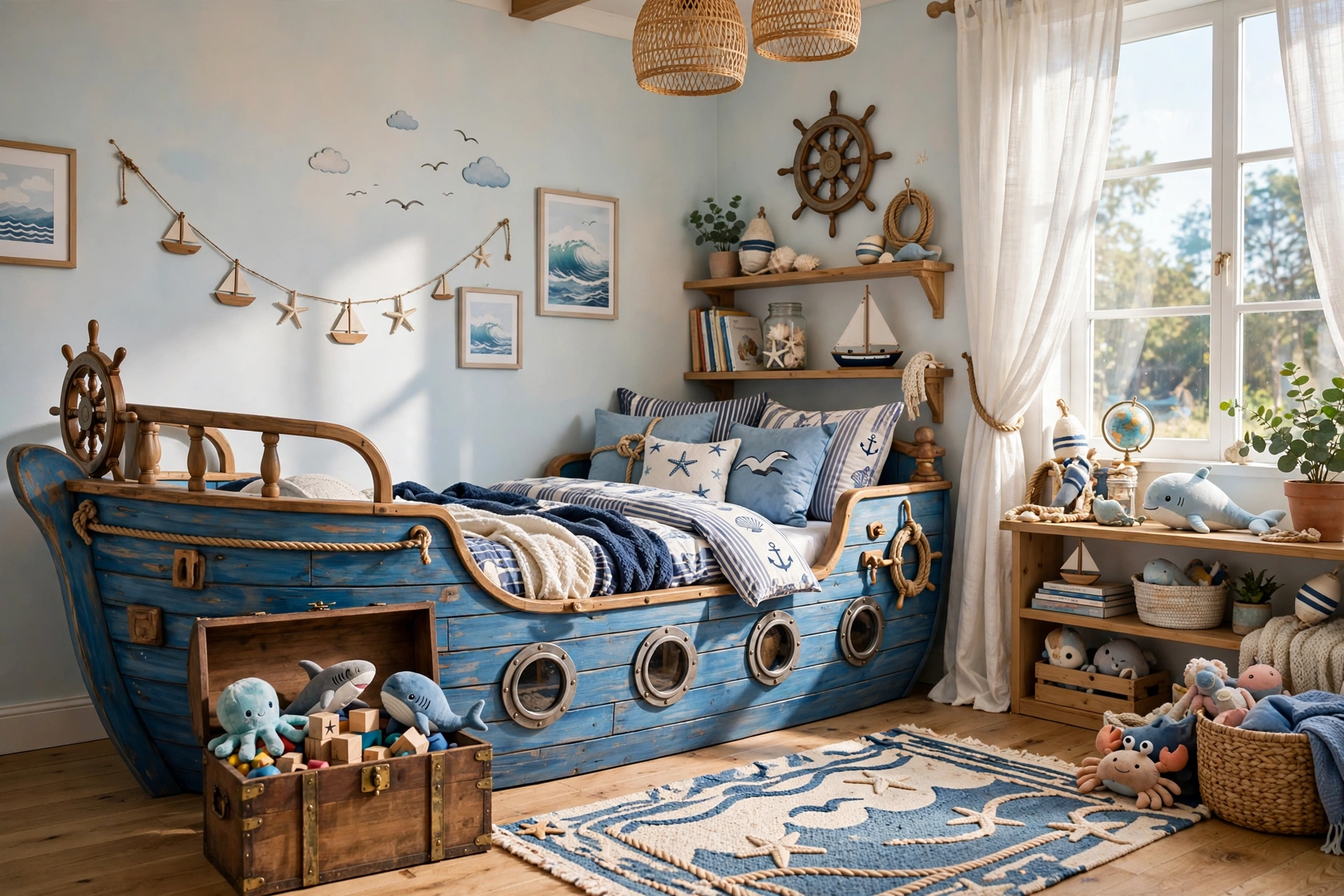
What $599 actually buys: the pirate ship bed specs
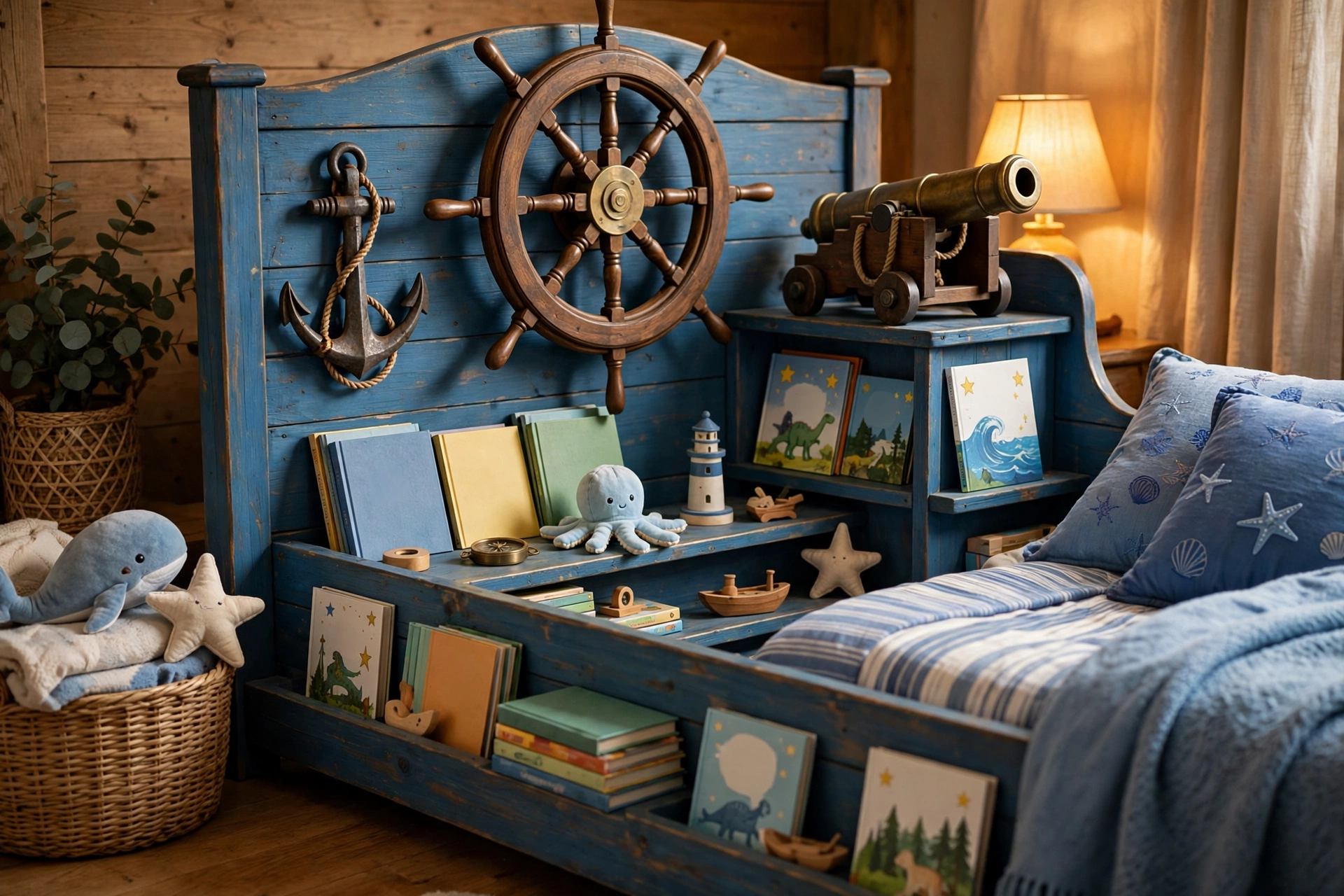
The bed in question is the Pirate Ship Bed at FLNORW MALL — $599, InStock, listed in blue with an MDF build. The spec sheet reads like a shipwright’s manifest: 100.8 inches long, 42.3 inches wide, 35.4 inches tall, weighing 188.27 pounds, item code W2237S00005. The design details are what sell it: a fronthead with built-in shelves for storage, a wood-grain pattern on the ship’s bilge, a plastic anchor and cannon design at the front, and a printed pattern finish across the hull.
Two specs mattered most to me as a parent. First, the edges are fully covered with round edge banding — no sharp corners for a kid who launches himself into bed at speed. Second, the frame uses P2-grade MDF, which the listing notes avoids the formaldehyde problems of cheap composite boards. I am not a chemist, but for a bed my kid sleeps in eight hours a night, the material grade was a line I was glad to see printed.
The footprint question: 100.8 inches is not a small bed
Here is the measurement that almost stopped me: 100.8 inches long. That is 8.4 feet — a full foot longer than a standard twin bed frame. A pirate ship bed is long because ships are long; the bow and stern extend well past the mattress. Before you fall in love with the photos, tape 101 by 43 inches on your kid’s bedroom floor and live with it for a day.
The flip side of the footprint is the width: 42.3 inches comfortably holds a standard twin mattress (38 x 75 inches), with a couple of inches to spare on each side. The extra length means there is no footboard cliff for tall-for-their-age kids — my son is in the 90th percentile for height and still has growing room at seven. But the room math is non-negotiable: in a 10-by-10-foot bedroom, this bed eats roughly a third of the floor. Measure first, fall in love second.
Safety details that actually mattered in daily life
Marketing copy says “kid-safe” about everything, so I judged the pirate ship bed on three physical facts. Height: 35.4 inches to the top of the structure is low enough that my six-year-old climbs in and out without a step stool, and a middle-of-the-night roll-out is a short drop, not a fall. Edges: the rounded edge banding is real — I ran my hand along every rail on assembly day and found no sharp points. Stability: at 188 pounds of MDF, this bed does not budge when a kid treats it like playground equipment, which, to be clear, he does.
The honest caveat: it ships in two boxes weighing 87 and 91 pounds, and assembly is a genuine two-adult, one-afternoon job. The panels are large and heavy. Do not plan to build this solo after bedtime. But once assembled, the thing is a tank — eighteen months of daily sailing and not a single wobble or loose bolt.
The themed-bed trap: will they outgrow it by age nine?
This was my real fear, and the reason most parents hesitate on a themed kids bed. A race-car bed is adorable at five and mortifying at eleven. So I did the longevity math before buying. My son was six. The bed fits a twin mattress, which realistically serves a kid until about twelve. That is six years of use for $599 — roughly $100 a year, or about the cost of one birthday party’s worth of decorations annually. Framed that way, the “trap” looked manageable.
Eighteen months in, the theme is holding up better than I expected. Pirates age better than cartoon characters — there is no licensed character to outgrow, just adventure. The blue finish and wood-grain bilge read as “cool boat” rather than “baby bed,” which buys extra years. My estimate: we get until ten or eleven before he asks for something plainer. At that point the bed will have cost us about $120 per year of genuine childhood magic, and I will have zero regrets. Your mileage depends on your kid’s age at purchase — buying this for a ten-year-old is a two-year rental; buying it at five or six is a childhood era.
Pirate ship bed vs bunk bed: the $200 question
The serious alternative in our house was the twin-over-twin bunk bed with trundle — $399, solid New Zealand pine, white finish, sleeping up to three kids with the trundle pulled out. On pure practicality, the bunk wins: $200 cheaper, sleeps more kids, and at 81.38 inches long it takes up less floor than the ship. If you have two kids sharing a room, or frequent sleepovers, buy the bunk. Full stop.
But we had one kid and a 12-by-11-foot room, and the pirate ship won on the only metric that mattered to a six-year-old: bedtime stopped being a negotiation. The pirate ship bed turned “go to bed” into “go sail the ship.” The fronthead shelves hold his current book stack and a flashlight — sorry, a “lantern” — and the anchor-and-cannon front is, per my son, “where the battles happen.” You cannot spreadsheet that. My rule: if the room fits it and you have one kid under eight, the $200 premium buys something a bunk bed never will — a kid who runs toward bedtime.
Five things to check before buying any themed kids bed
- Tape the footprint, not the mattress size. This bed is 100.8 inches long — a third longer than the twin mattress inside it. Themed frames always run bigger than the mattress they hold.
- Check the edge treatment. Kids hit every corner of a bed frame at speed. Rounded edge banding on this ship passed the hand test on day one; any themed bed you consider should too.
- Do the per-year math. $599 over six years is $100 a year. If your kid is already ten, that same bed is $300 a year — buy the plainer bed and spend the difference on the vacation.
- Confirm the mattress fit. A 42.3-inch-wide frame takes a standard twin (38 x 75 inches). Do not assume — some themed beds need odd sizes that cost double.
- Count the boxes. Two packages, 87 and 91 pounds. If your building has no elevator, plan the carry before the delivery truck arrives.
The verdict
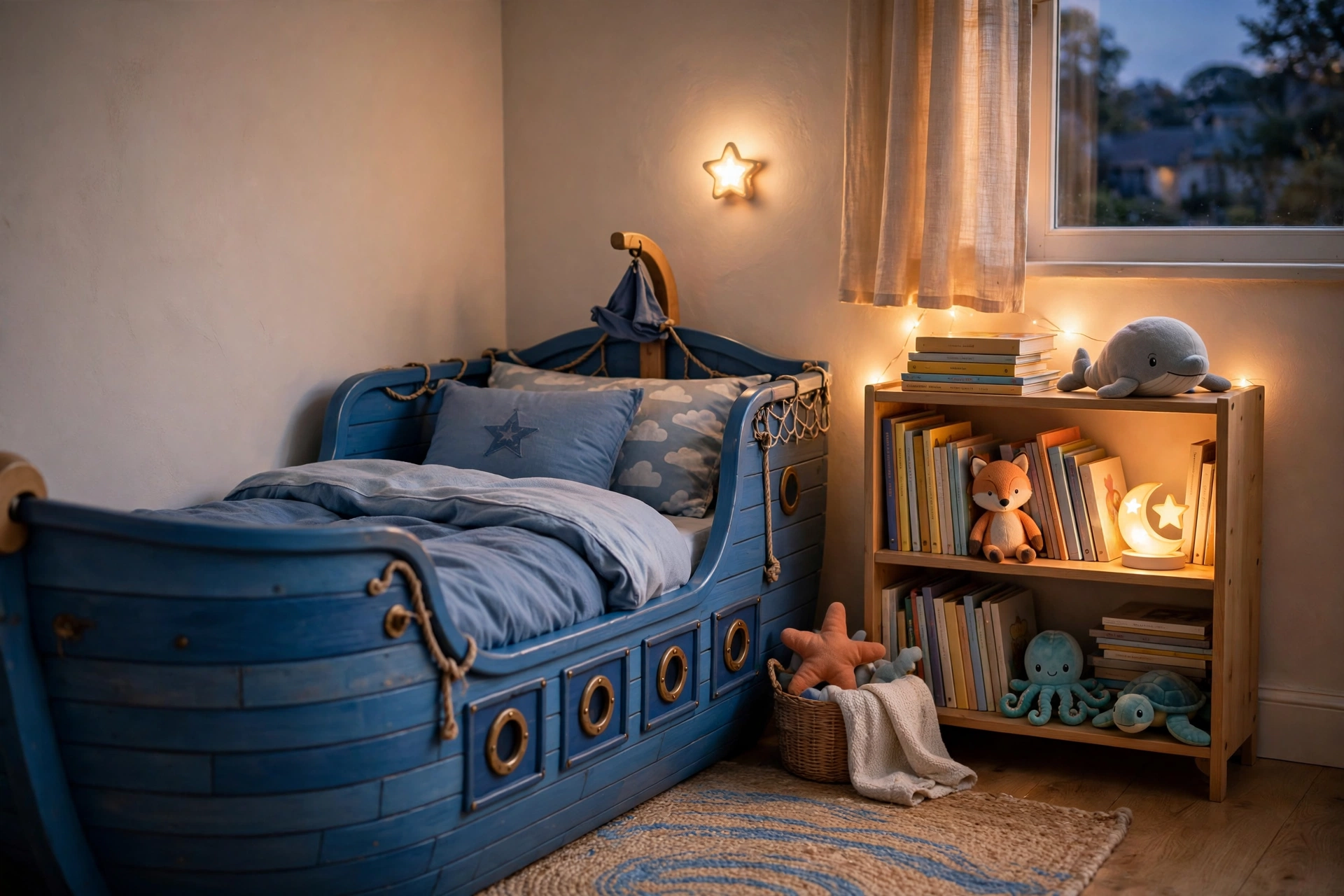
Eighteen months in, the pirate ship bed is the best $599 I have spent on my kid’s room. The build is solid — 188 pounds of P2 MDF with genuinely rounded edges — the 100.8-inch footprint fit our room with the tape-measure test to spare, and the fronthead shelves turned out to be the sleeper feature, holding the nightly book-and-lantern ritual. The theme is aging gracefully because pirates do not expire the way cartoon characters do.
Buy it if your kid is five to eight, the room can spare 101 by 43 inches, and you want bedtime to stop being a battle. Buy the $399 bunk bed instead if you need to sleep two or three kids, or if your oldest is already ten. Either way, measure the floor first — ships are bigger than they look in photos.
Ready to set sail? The Pirate Ship Bed ($599) is InStock at FLNORW MALL — or compare it with the twin bunk bed with trundle ($399), browse the full furniture collection, and start at the FLNORW MALL homepage.