Sectional vs Sofa and Loveseat: I Measured Both Setups in My 12×14 Living Room. Here’s the Honest Winner
Sectional vs Sofa and Loveseat: I Measured Both Setups in My 12×14 Living Room. Here’s the Honest Winner
Last spring I stood in my 12-by-14-foot living room holding a tape measure, a budget of roughly two grand, and one stubborn question: in the sectional vs sofa debate, which setup actually wins in a normal American living room? My sister had just bought a U-shaped sectional and swore it changed her life. My neighbor, meanwhile, had the classic sofa and loveseat set arrangement and said she’d never trade the flexibility. Both of them were sure. Both of them couldn’t be right.
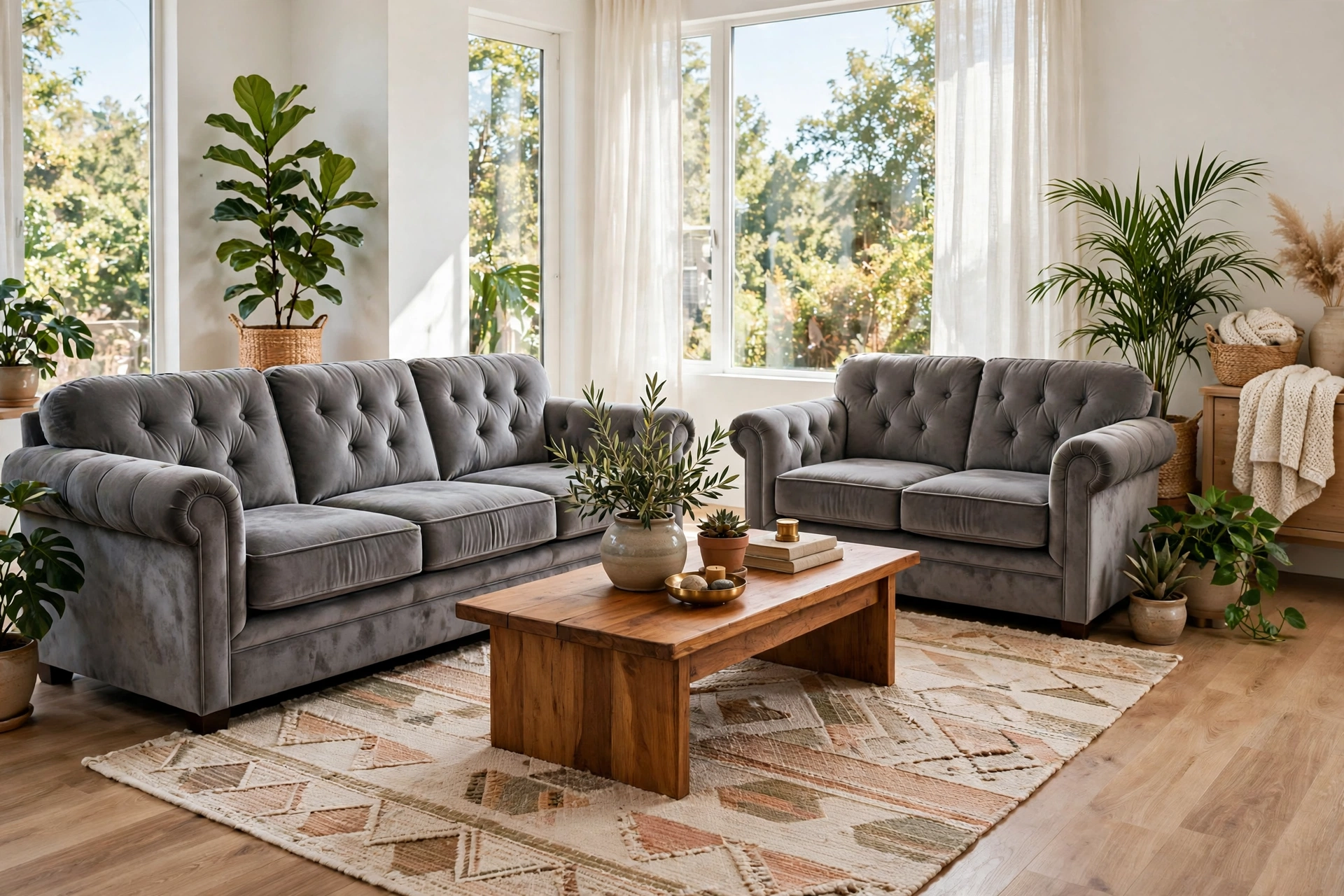
So I did what I always do when furniture people disagree: I ran the numbers. Real dimensions, real prices, real floor plans — using actual pieces you can buy today, like the 125-inch U-shaped 7-seat sectional ($1,888) and the 81.8-inch Chesterfield 3-seater sofa ($599) paired with a $299 two-seat loveseat. Here’s every test I ran, and the winner I’d pick with my own money.

Sectional vs Sofa: The Price Math, Seat by Seat
Let’s start with the number everyone feels first. The 125-inch U-shaped sectional costs $1,888 and seats 7 people. That works out to about $270 per seat — simple division, $1,888 divided by 7.
The sofa-plus-loveseat route: $599 for the Chesterfield 3-seater plus $299 for the loveseat, totaling $898 for 5 seats. That’s roughly $180 per seat. The classic combo costs less than half the sectional and delivers a cheaper seat.
Is that typical, or did I cherry-pick? It’s typical. Atunus Home’s 2025 sofa price guide puts a mid-range sectional at $1,600 to $3,000, while Dataintelo’s 2025 sofas market report lists sectional price ranges at $800–$2,500 and loveseats at $600–$1,800. Sectionals cost more because there’s simply more of them: more frame, more foam, more fabric, more shipping weight. The $1,888 sectional sits right in the middle of the real market.
Stretch it over a decade of ownership — a fair lifespan for decent upholstery — and the sectional runs about $189 a year while the sofa-loveseat pair costs about $90 a year (my estimate, assuming neither needs early replacement). If budget is the tiebreaker, the sofa and loveseat set wins walking away.
Sectional vs Sofa Floor Space: What 85.9 Square Feet Really Means
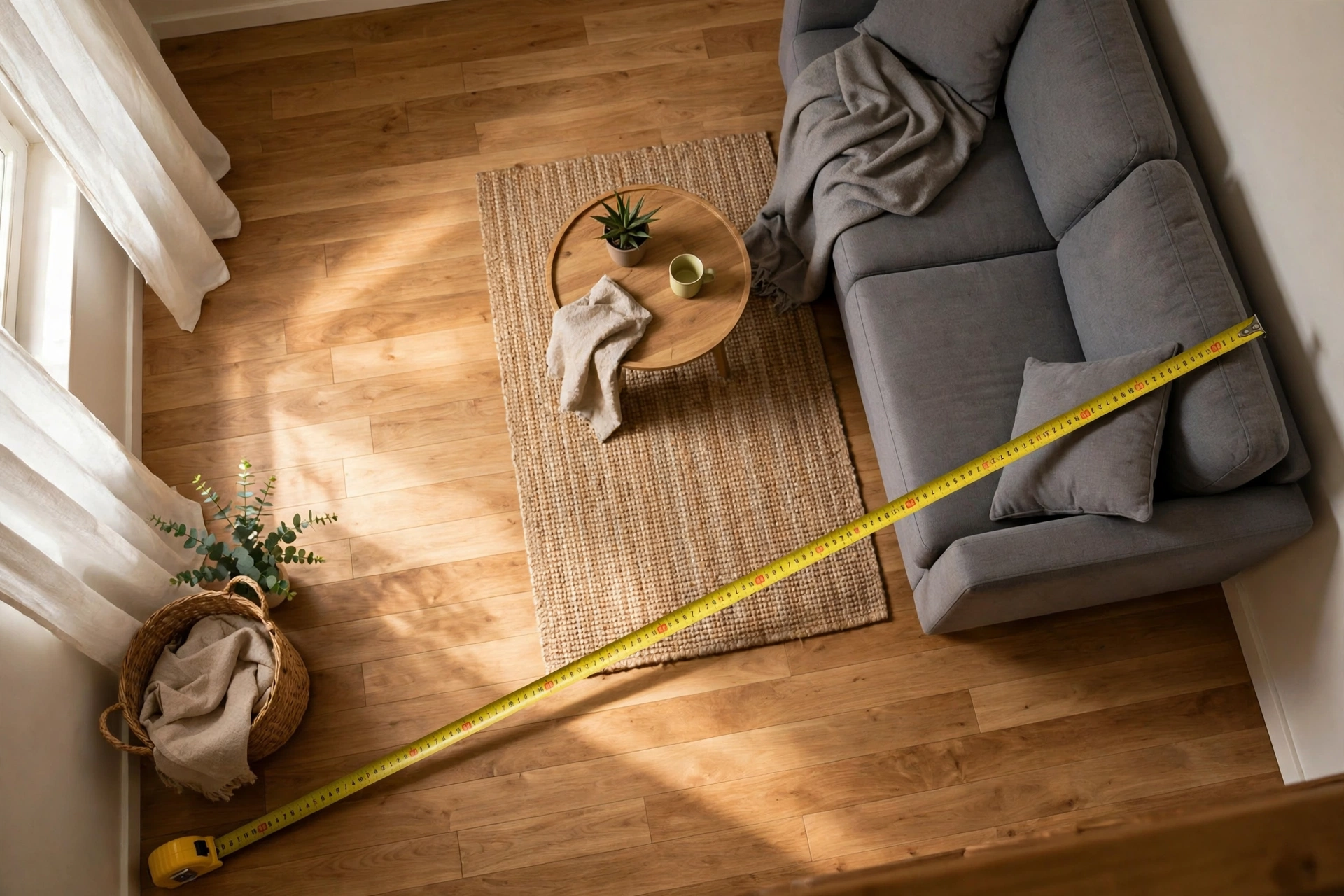
Here’s where my tape measure earned its keep. The U-shaped sectional measures 125 by 99 inches. Multiply that out: 12,375 square inches, or 85.9 square feet of floor. My living room is 168 square feet. One piece of furniture would eat 51 percent of the room.
Now the pair: the Chesterfield is 80 by 29 inches (2,320 sq in) and the loveseat is 55.9 by 28 inches (about 1,565 sq in). Together they occupy roughly 27 square feet — less than a third of the sectional’s footprint. The rest is walkway, coffee table, and breathing room.
Placement matters as much as raw area. Put the 125-inch sectional along my 14-foot wall and it leaves 43 inches of walkway on that axis; its 99-inch depth against the 12-foot wall leaves 45 inches. The common rule is 30 to 36 inches for a comfortable walkway, so technically it fits — but “technically fits” is how you end up sidestepping your own couch for five years. The sofa-plus-loveseat arrangement, placed in an L or facing layout, leaves genuine walking lanes everywhere.
The Seat Test: Seven Seats Aren’t Seven Good Seats
Seven seats sounds unbeatable until you ask which seven. On a U-shaped sectional, the two corner seats are the good ones — deep, loungey, the spot everyone fights over. The two middle seats of the long run are fine. And the seats at the far ends of each U arm? In my experience, they’re the exile zone: too far from the coffee table, half-facing the wrong direction, the place where Uncle Ray ends up scrolling his phone.
A 3-seater sofa plus loveseat gives you five seats, but they’re five usable seats. The Chesterfield’s 23.6-inch seat depth is genuinely comfortable for an average adult (I wrote a whole guide on seat depth — 20 to 22 inches is the sweet spot, and this lands right there). Face the sofa and loveseat toward each other across a coffee table and every seat is in the conversation. Nobody’s exiled to the far arm.
For movie night with two people, the sectional wins — stretch out, feet up, no negotiation. For six people talking, the facing arrangement of a sofa and loveseat wins. Count how you actually live before you count the seats.
Small Living Rooms and the 910-Square-Foot Apartment
Context matters: RentCafe and Yardi Matrix reported in August 2026 that the average newly built US apartment is about 910 square feet in 2025, with studios and one-bedrooms making up more than half of new supply. In those rooms, a 125-inch sectional isn’t a statement piece — it’s a roommate.
That’s where the sofa-and-loveseat combo quietly dominates. You can tuck a 55.9-inch loveseat against a short wall, float the 80-inch sofa, and still walk around both. Try floating a 99-inch-deep U-shaped sectional in a 10-by-12 room and you’ve built a maze. If your living room is under about 200 square feet, I’d skip the big U-shape entirely and consider the smaller end of the sectional world — an L-shaped sleeper sectional like the 129.5-inch model I reviewed, which seats a crowd by day and unfolds a guest bed by night, does double duty without the U-shape’s footprint.
Moving Day: 454 Pounds Through a 32-Inch Door
Nobody thinks about delivery day until delivery day. The U-shaped sectional weighs 454 pounds and ships in four boxes, the heaviest at 146 pounds (64 × 38 × 26 inches). You’ll need two strong people, a clear hallway, and ideally an elevator or a ground-floor room. Stairs plus a 146-pound box is a story you’ll tell for years.
The sofa-and-loveseat pair is a different afternoon. The Chesterfield ships in two boxes (64 and 58 pounds), and the loveseat arrives in a single 67.7-pound box measuring 52 × 24.2 × 12.2 inches — that slides through a standard 32-inch interior door with room to spare. One person with a dolly can handle it.
If you rent and move every couple of years — and about 36.9% of US workers can work from home now (BLS, October 2026), which keeps movers mobile — the lighter, modular option saves you real money and real backaches each time.
Rearranging Without a Forklift
Here’s the argument nobody makes for the sofa and loveseat: your life changes, and they change with it. New apartment? The loveseat goes in the bedroom as a reading seat and the sofa anchors the living room. Kid’s playroom needs furnishing? The loveseat migrates. Holiday party? Pull the two pieces apart for mingling space.
A 125-inch U-shaped sectional goes exactly one place: the one wall big enough to hold it, in the one orientation the chaise allows. You don’t rearrange it; you build the room around it. That’s fine if you own your home and love the layout — my sister does, and she’s happy — but it’s a commitment, not a purchase.
There’s also the replacement math. Spill red wine on one cushion of a five-piece setup and you can often replace or deep-clean that piece. Damage one section of a sectional badly enough and the whole $1,888 investment looks tired.
What the Market Numbers Actually Say
The industry is voting with its wallet, and it’s voting sectional. Dataintelo’s functional sofa market report (2025) gives sectional sofas a 31.4% product share — the largest slice — in a $28.6 billion global market growing at 6.1% a year. Their broader sofas report puts sectionals at 28.5% share versus 16.8% for loveseats.
The same report explains the price gap I found: suburban North American buyers average over $1,500 per transaction on larger sectional configurations, while urban apartment dwellers mostly buy compact convertibles and sleepers priced $600 to $1,400. In other words, the market has already sorted itself — big-house buyers go sectional, apartment buyers go compact. My tape-measure test just confirms why.
One more honest note from that data: sectional prices have risen an estimated 14–18% from 2020 to 2025 in North America as features and materials improved. The $1,888 sectional I priced isn’t expensive for what it is — it’s the market.
My Verdict: Answer These 5 Questions First
After all the measuring, here’s the decision the way I’d actually make it. Answer honestly:
- Is your living room over 200 square feet? Yes → sectional is on the table. No → sofa and loveseat, no contest.
- Do you host overnight guests often? If yes, look at a sleeper sectional — my $999 sectional sleeper review breaks down the guest-room math.
- Do you move every few years? Renters should favor the lighter, splittable pair.
- Is this your forever layout? Homeowners who love their floor plan get the most from a big U-shape.
- What’s the real budget? $898 versus $1,888 is a $990 gap — that’s a coffee table, a rug, and a lamp on top of the sofa set.
My honest winner for most people: the sofa and loveseat set. It costs less than half, fits more rooms, moves easier, rearranges freely, and gives you five seats you’ll actually sit in. The sectional is the better lounge — if you have the square footage, the budget, and the forever home, that U-shaped corner seat is genuinely the best seat in the house. Just make sure you’re buying it for your real life, not the showroom fantasy.
The bottom line: measure your room, count your real seats, and be honest about how often you move. The tape measure doesn’t care about trends — and in my 12-by-14 living room, it voted sofa and loveseat.
Ready to measure your own room? Compare the 125″ U-shaped 7-seat sectional ($1,888), the 81.8″ Chesterfield 3-seater sofa ($599), and the green 2-seat loveseat ($299) — or browse the full FLNORW MALL furniture collection to find your fit.