Cat Tree: My $288 Wooden Tower After 8 Weeks
For two years I told myself my apartment didn’t need a cat tree. Miso, my 14-pound tabby, had claimed the back of the sofa. Pip, my 9-pound rescue, lived on top of the bookshelf. Everyone had a spot, and I had one firm rule: no giant carpet-covered cat tree in my living room. Then Miso shredded the arm of my reading chair — a $220 chair I’d owned for eleven months — and I finally ran the numbers. A wooden cat tree at $288, if it lasted four years, would cost me about 20 cents a day. I ordered the PurrScape Elegance on a Tuesday night. It arrived Friday. Eight weeks later, here is the honest accounting.
Why I refused to buy a cat tree for two years
I’ll be honest about why I resisted: every cat tree I’d ever seen in person was a beige carpet monument that wobbled when the cat sneezed. They looked like dorm furniture and smelled like it after a year. The irony is I knew better — the American Animal Hospital Association calls vertical space “essential indoor enrichment for cats” (January 2025), and cats that can survey a room from above genuinely feel more confident. The market isn’t small either: the APPA’s 2023-24 National Pet Owners Survey counted 46.5 million US households with cats. So the demand is real. I just didn’t want the eyesore.
What changed my mind was a category I hadn’t taken seriously: wooden cat trees built like actual furniture. Eucalyptus instead of particleboard, sisal instead of carpet, clean lines instead of a beige blob. Once I stopped shopping the $60 carpet towers, the whole idea made sense.
What $288 actually buys: eucalyptus, sisal, and a staircase
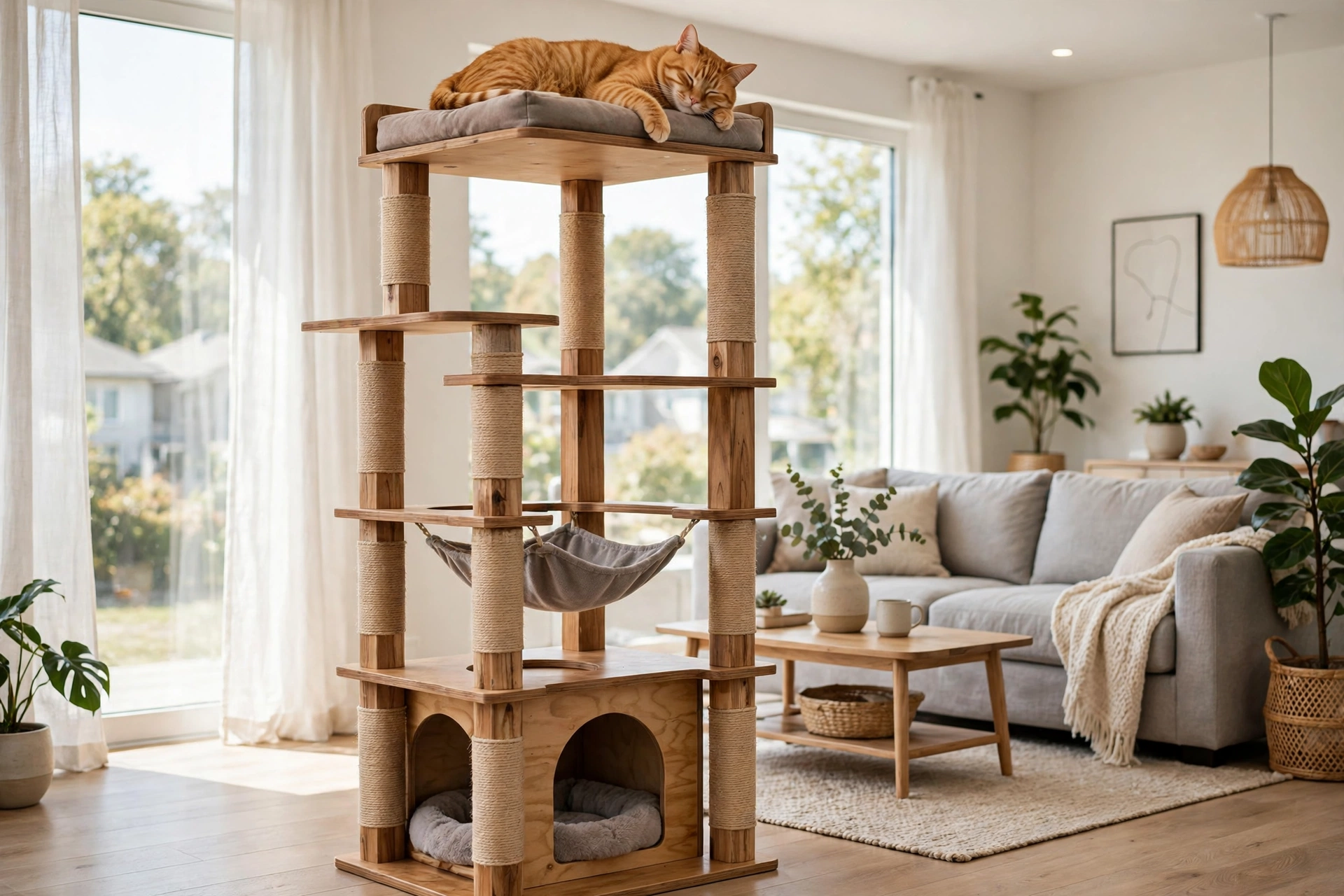
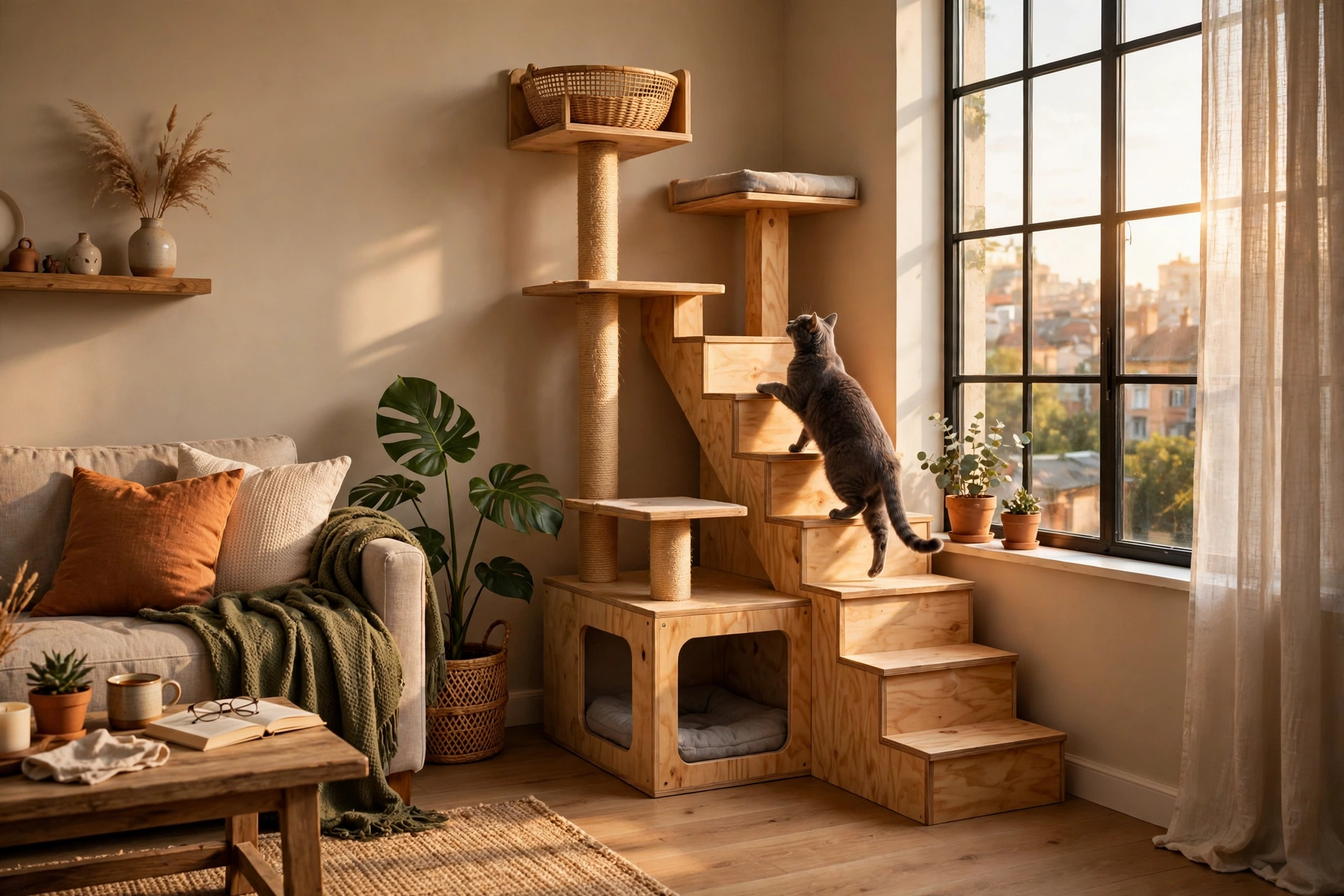
The PurrScape Elegance — a deluxe wooden cat tower — stands 58.86 inches tall on a 38.98 by 15.75 inch footprint, and the whole thing weighs 37.49 pounds. That weight matters more than any feature on the list; it’s the difference between furniture and a toy. The frame is eucalyptus wood, the scratching surfaces are natural sisal rope, and there’s a built-in staircase so cats don’t have to leap between levels. It’s freestanding — no wall straps, no drilling into drywall, which my landlord appreciates. FLNORW MALL lists it at $288, and it was in stock when I ordered.
For context, the Petco best-sellers list is dominated by carpet-and-particleboard towers like the Go Pet Club 72-inch — perfectly fine, but they’re the reason cat trees have a reputation for looking tired after eighteen months. Wood changes the proposition: it wipes clean, it doesn’t hold odor, and it looks like something you chose on purpose. You can see the full spec sheet on the PurrScape Elegance wooden cat tree product page.
Setup: 25 minutes and one reversed platform
Assembly was straightforward, with one self-inflicted detour:
- Unboxed and laid every part out on the rug — five minutes that felt excessive until step four.
- The pillars screw into the base with the included Allen key. Everything is labeled; nothing needs a drill.
- Platforms stack in order, staircase last.
- My mistake: I mounted the middle platform upside down and only noticed when the staircase holes didn’t line up. Ten minutes lost, entirely my fault.
- Final tighten, stand it up, done. Twenty-five minutes solo, no swearing.
Honest note: the heaviest single panel is around 10 pounds — my estimate, I didn’t weigh it — so one person can manage, but two make it easier. All the hardware was in the bag; nothing missing, which is rarer than it should be.
The wobble test: a cat tree for a 14-pound cat at full sprint
Forbes Vetted tested 17 cat trees and concluded the tall ones wobbled the most — that sentence lived rent-free in my head while I waited for delivery. So here’s my test protocol: Miso launches off the sofa arm at full sprint and hits the tower mid-stride. The tower is 37.49 pounds of eucalyptus on a wide freestanding base. It did not move. Not a rock, not a shift. He’s done it roughly forty times now — my rough count, not a lab study — and the thing is as planted as my bookshelf.
Pip is the opposite case: 9 pounds, timid, hates jumping. She uses the staircase exclusively and claimed the middle platform on day three. Miso took the top perch within a day — height is the whole point for him. One caveat I owe you: Cats.com advises safety straps for tall towers, especially with large cats. This one’s base is wide and heavy enough that I skipped the strap, but if you have toddlers who climb furniture, strap it. Twenty dollars of prevention.
Wood vs. carpet cat trees: the cleaning math
This is where the wooden cat tree quietly wins the whole argument:
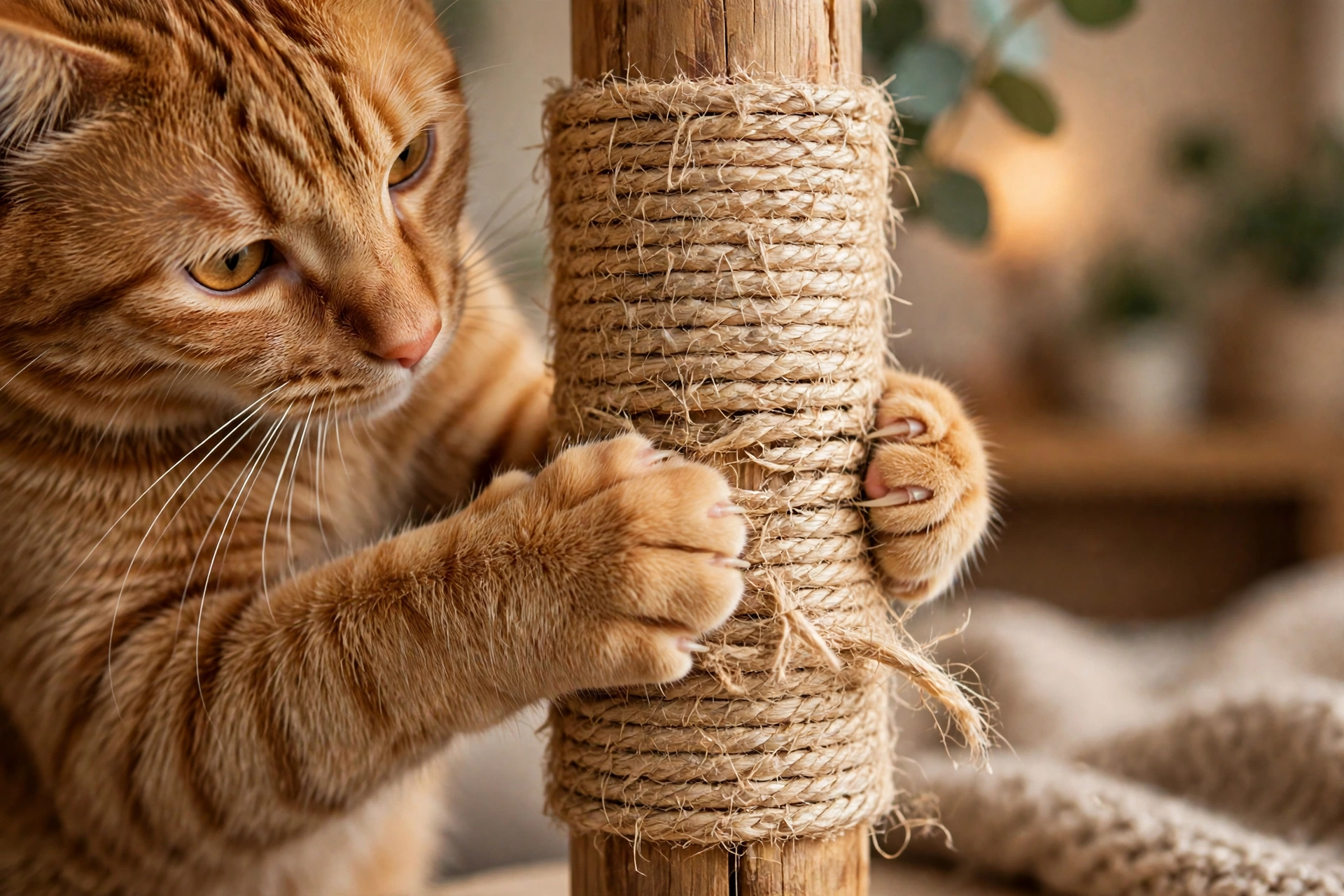
- A damp cloth wipes the wooden platforms in about two minutes. My old foster cat’s carpet tower needed a vacuum plus a lint roller — fifteen minutes, weekly — and it still looked matted.
- Sealed wood doesn’t trap hair or hold odor. Carpet towers absorb both. That old carpet tower went to the curb after two years smelling like a vet’s office waiting room.
- Litter dust settles on the platforms either way; on wood it wipes off, on carpet it grinds in.
- The sisal ropes: Miso scratches them daily, and after eight weeks they show wear but no unraveling.
Rough math, flagged as rough: fifteen minutes a week of carpet-tower maintenance is thirteen hours a year. I’ll take the damp cloth.
The 8-week cost math: 20 cents a day
$288 divided by 1,460 days — four years, which is my lifespan estimate for a solid wood frame, not a promise — comes to about 20 cents a day. The alternative I was actually considering: a $120 carpet-and-particleboard tower, replaced every two years, which is $240 over four years plus two full assemblies and two trips hauling the old one to the curb. The wooden tower costs $48 more over the same span and looks better on day one than the carpet one looks on day thirty.
Then there’s the chair. Miso’s claw work on my reading chair arm would cost more than $220 to reupholster — I checked with a local shop, $180 to $240 depending on fabric. The tower redirected his scratching within a week; the sisal posts are simply a better target than my furniture, which is the entire theory of scratching posts working at all.
I also cross-shopped FLNORW MALL’s own lineup: the GalaxyCat Oasis cat tower with the space capsule at $188, and the EliteCat Haven wooden cat climber at $199. Both are shorter — 46.18 and 46.06 inches against the PurrScape’s 58.86 — and neither has the staircase. For a 14-pound cat who treats height as a personality trait, the extra $100 bought the two things that mattered: stability at height and a dignified route up. If your cat is small and your budget is tight, the $188 one is the honest value pick.
Who should buy this cat tower (and who shouldn’t)
Buy it if any of these sound familiar:
- Big cats. If yours is 12-plus pounds, shop for weight and base width first, looks second. This tower was clearly built with that buyer in mind.
- Multi-cat homes. Two cats, three usable levels, no fights yet — the staircase means Pip never has to compete for a jump.
- Senior cats. Stairs beat leaping for arthritic joints; my neighbor’s 13-year-old uses a similar setup.
- Design-conscious apartments. It genuinely looks like furniture. My sister asked where I got “the bookshelf.”
Skip it if:
- Your budget is tight — the $188 GalaxyCat Oasis exists for a reason.
- You move every year. At 37.49 pounds it disassembles fine, but you’ll be doing it every move.
- You want an enclosed condo with a hidey-hole. This is platforms and perches; a den isn’t in the design.
The verdict
Eight weeks in: both cats use the cat tree daily, the reading chair arm has been untouched since week two, and the tower looks the same as the day I built it. My original math holds — about 20 cents a day over four years, flagged as my estimate — and the unplanned bonus is Pip, my shy one, finally having a high place that’s hers. She sits up there and watches the room like she owns it, which I suppose she does now.
Ready to give your cat the high ground? The tower I bought is the $288 PurrScape Elegance, in stock now — browse the full FLNORW MALL furniture collection, and find more of these long-term home tests on the FLNORW MALL blog.