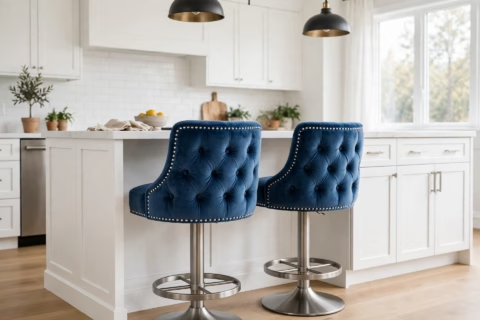
Bathroom Vanity: The 7 Rules I Wish I’d Followed Before Spending $2,999
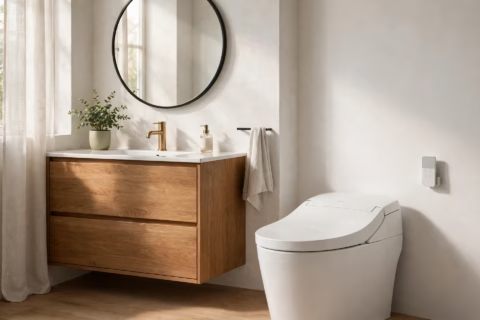
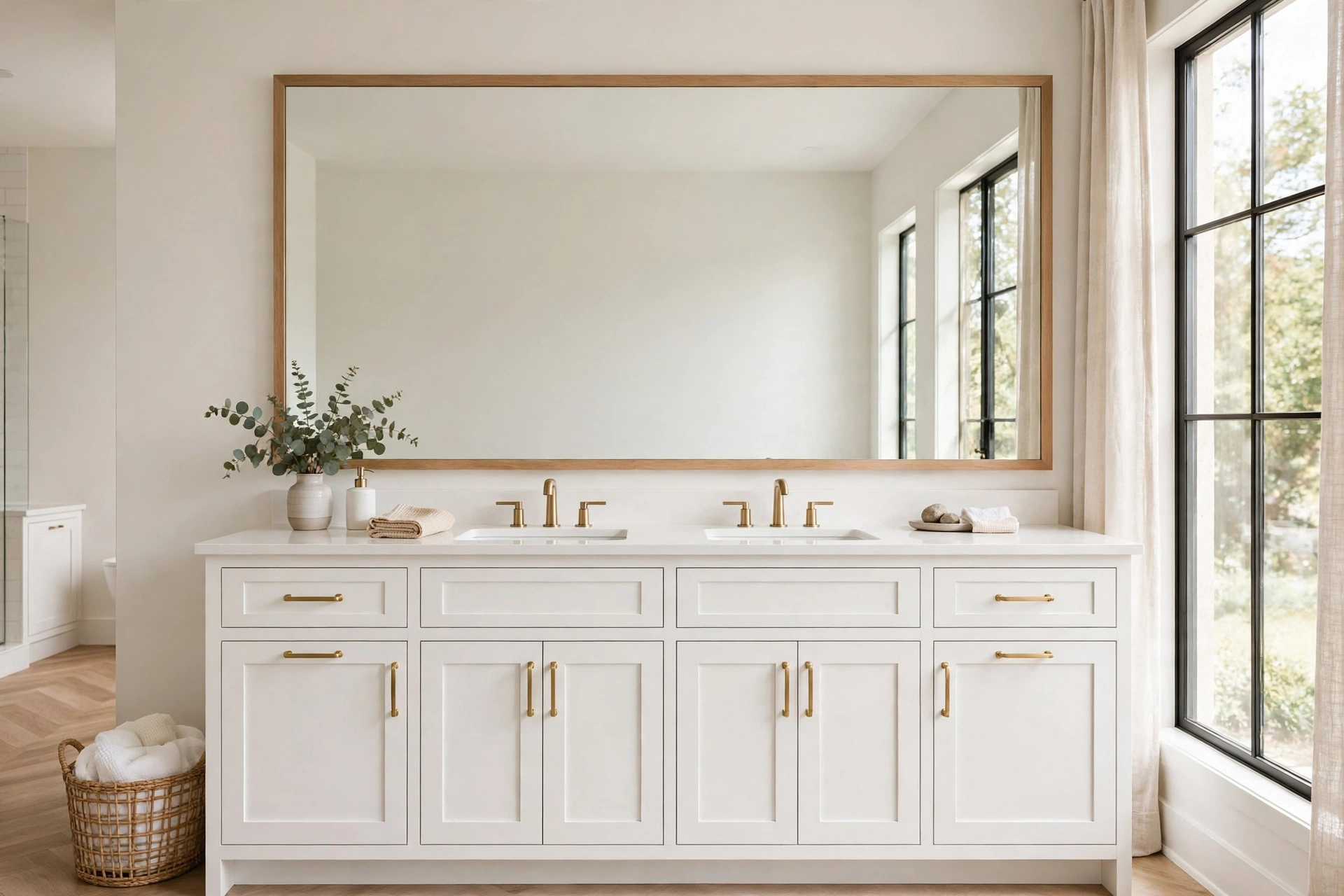
Last spring I spent $2,999 on a bathroom vanity. Not on a whole bathroom — on one 54-inch cabinet with a sink in it. Our master bath is 9 by 11 feet, and the builder-grade vanity it came with had given us eight loyal years: the particleboard toe kick was swelling from shower steam, one drawer face had detached, and every morning involved a small excavation under the sink to find the floss. I wanted to buy the last vanity this house would ever need, and I wanted to buy it once. The unit I chose — a 54-inch solid wood bathroom vanity with a sink, six soft-close drawers, a pre-installed countertop — has now survived eighteen months of twice-daily use by two adults. Along the way I learned seven rules the hard way. If you are shopping for a bathroom vanity, these are the ones I would tape to your forehead before you click buy.
Rule 1: Measure the Room, Not Just the Wall — Bathroom Vanity Dimensions That Actually Fit
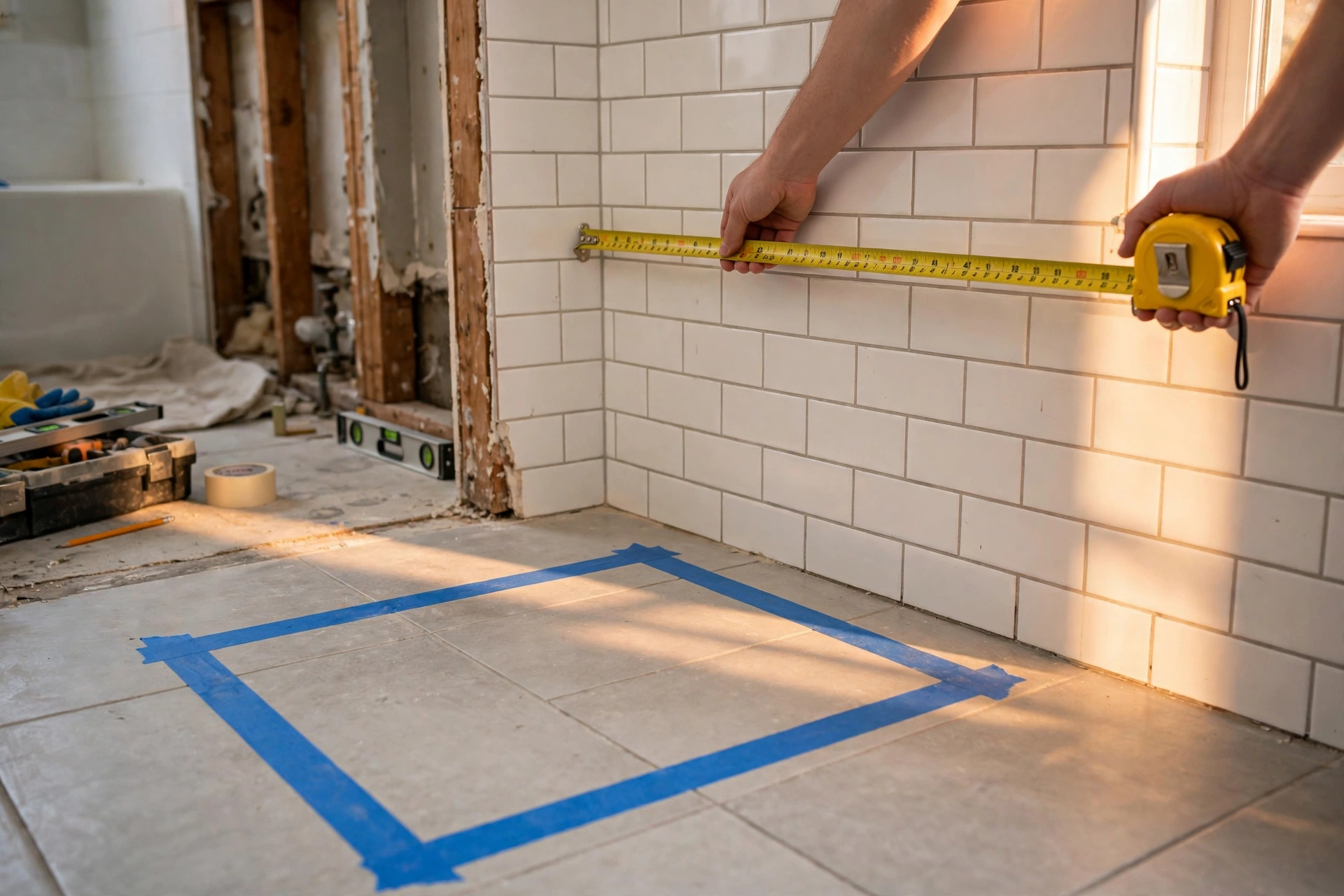
The vanity is 54 inches wide, 22 inches deep, 36 inches tall. The wall I put it against is 60 inches wide. On paper, 60 minus 54 leaves six inches, which sounded fine until I remembered the door. Our bathroom door swings inward and the vanity’s left drawer bank would have caught the door edge by a good two inches. I caught this the night before delivery, standing in the room with painter’s tape and a tape measure, which is the only measuring method I trust now. Tape the full 54-by-22 footprint on the floor, then open and close every door in the room. Tape costs four dollars. A delivery-day surprise costs your Saturday.
And plan for the crate. This unit ships at 281.6 pounds in a box roughly 57 by 26 by 53 inches. Our delivery driver and I wrestled it into the garage; getting it into the bathroom took my brother-in-law and a furniture dolly. If your vanity arrives at the curb instead of the room, measure the hallway, the door frame, and every turn in between before you order. A 54-inch box does not bend.
Rule 2: Vanity Height Is a Back Decision, Not a Style Decision
The old vanity was 32 inches tall — the old standard. I am 5-foot-11, and eight years of washing my hands hunched over a 32-inch basin had given me a 6:45 a.m. complaint from my lower back. This unit is 36 inches tall — comfort height — and it is the single most noticeable upgrade in the room. My wife is 5-foot-4 and reaches it comfortably. There is no wrong height, only the wrong height for the people who live with it: heights run 30, 32, 34, and 36 inches. If the tallest person in your house is over 6 feet, 36 inches is the one. If the primary user is under 5-foot-2, 34 might be kinder. Measure the people, not the brochure.
Rule 3: Count the Drawers, Not the Doors — What a Bathroom Vanity Cabinet Must Hold
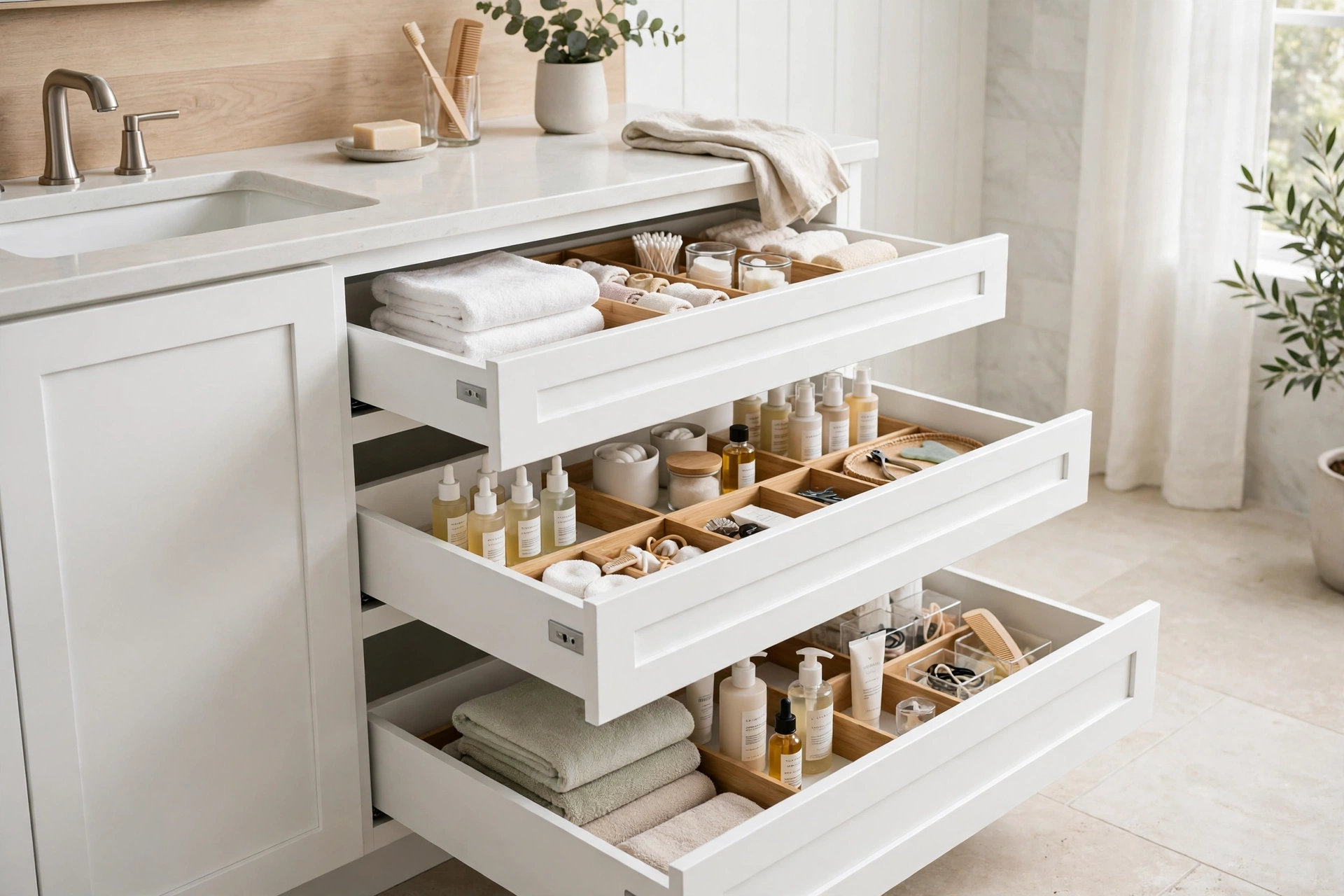
Our old vanity had two big doors and a false drawer front. Every morning I knelt on cold tile, digging past the contact-lens case to reach the sunscreen behind it. Doors force you to excavate; drawers bring the contents to you. This is the rule I would put in capital letters. The unit I bought has six soft-close drawers plus two doors with adjustable shelves behind them, and the layout is the reason the room stays calm.
- Top drawer: my toothbrush, floss, contacts — the things I touch before I am fully awake.
- Second drawer: my wife’s six-bottle skincare rotation, all standing upright and visible.
- Third drawer: the hair dryer, docked in the built-in power station box so the cord never drapes across a wet counter.
- Bottom three drawers: folded towels, the first-aid kit, and cleaning supplies that used to live under the kitchen sink.
The power station box deserves its own sentence: a box inside the vanity where hair tools live plugged in and out of sight. It is the feature I did not know I wanted and now mention to anyone standing in my bathroom.
Rule 4: A Solid Wood Bathroom Vanity Is a Math Problem, Not a Luxury Problem
Three thousand dollars is real money, so I ran the numbers the way I wish I had with the first one. A solid wood frame with plywood panels in a steamy bathroom has a realistic service life of 25 to 30 years — my estimate, but a reasonable one for solid wood that is finished and kept dry. At $2,999, that is roughly $100 to $120 a year, my rough math.
The particleboard alternative runs about $1,200 to $1,600 for a 54-inch unit. In a bathroom with a daily shower, particleboard toe kicks start swelling somewhere around year five, and by year eight to ten most of them look like wet cardboard — which is exactly what killed our last one. At $1,400 lasting eight years, that is $175 a year, and you do the shopping-and-hauling ordeal twice in sixteen years instead of once. The solid wood unit costs less per year than the cheap one. The industry agrees people keep spending here: Grand View Research’s 2025 report put the global bathroom vanities market at $46.1 billion in 2025, growing toward $83.6 billion by 2033. Big categories have big options; the math is what keeps you from buying twice.
Rule 5: Your Bathroom Vanity with Sink May Not Include the Faucet — Read the “What’s Included” Line
The product page for our vanity lists exactly what ships: cabinets, countertop, sink pre-installed, hardware, backsplash. It also says, in plain text I scrolled right past, that faucets and mirrors are not included. I found this out the morning the plumber arrived, when he asked where the faucet was and I said “in the box” with a confidence that evaporated in about four seconds. That cost a panicked hardware-store run, a $230 faucet I had not budgeted — a decent widespread faucet runs $150 to $400, my estimate — and a plumber standing around at $85 an hour while I drove. Read the “What’s included” section like a contract, because it is one. Budget the faucet, the mirror, and the plumber’s visit as separate line items from day one.
On mirrors, I have strong opinions now: I paired ours with a $199 LED anti-fog bathroom vanity mirror with dimmable touch controls and three color temperatures, and after eighteen months I wrote up the full experience in my 60-day LED bathroom mirror test. The anti-fog function alone ended the post-shower wipe-down ritual.
Rule 6: Plan Power Before You Fall for the Modern Bathroom Vanity Look
A modern bathroom vanity looks like furniture, and that is the trap: it still needs power. Our vanity has that power station box inside, which needs an outlet behind or beside the unit. An LED mirror is an appliance too — the $199 unit I bought needs power for the light and the anti-fog pad, and my bathroom had no outlet behind the old mirror. An electrician visit to run one cost me an estimated $150 to $180 and two days of schedule slip, because electricians do not appear on demand. If your mirror plugs in, lights up, or defogs, plan the electrical before you plan the hanging. For the full catalog of what went wrong in our remodel — door swings, steam, lighting — I wrote up the seven bathroom remodel mistakes I paid to learn, with the dollar amounts attached.
Rule 7: Think About the Second Sink Before You Order — Double Sink Bathroom Vanity Planning
Fifty-four inches is the largest single-sink size that still feels right for one basin. If two people share the room and both want a sink, you need 60 inches at minimum, and 72 is the comfortable number — sink centers want 30 to 36 inches apart. We chose the 54-inch single-sink route because our 9-by-11 room could not give up six more inches without strangling the walkway, and we have never regretted it. But decide this before ordering, not after: a vanity is the one fixture that cannot grow. If you are even considering a double sink bathroom vanity, measure the wall, tape the 72-inch footprint, and walk the room with two imaginary people in it. If it fits and the plumbing rough-in can split, the extra sink ends a surprising number of morning negotiations.
The pre-order checklist I wish I had:
- Tape the full footprint on the floor, then open and close every door in the room.
- Measure the tallest and shortest daily users before choosing between 32, 34, and 36 inches.
- Read “What’s included” like a contract — faucet and mirror are separate budgets.
- If the mirror has a plug, a light, or a defogger, plan the electrical first.
- Count drawers, not doors. Drawers bring contents to you; doors make you kneel.
- Confirm the delivery path for a 281.6-pound crate — hallways and door frames included.
- Run the cost-per-year math: $2,999 over 25 years is about $120 a year, my rough estimate, and you buy once.
The Verdict
Eighteen months in, the 54-inch solid wood bathroom vanity is the best fixture decision I have made in this house. The 36-inch height fixed my back, the six soft-close drawers ended the morning excavation, the power station box corralled the hair dryer, and the pre-assembled delivery meant I never touched an Allen key. Against an average bathroom remodel — a 2026 survey by This Old House of 1,000 homeowners put that at $15,586 — the vanity was the part I spent the most on and think about the least, which is exactly what you want from furniture. Follow the seven rules, buy the height your back needs, count the drawers, and read the box. Do it right once.
Shopping for your own bathroom vanity? Start with the 54-inch solid wood bathroom vanity with sink — $2,999, pre-assembled, six soft-close drawers, InStock. Pair it with the $199 LED anti-fog bathroom vanity mirror that earned its place in my mornings, or browse the rest of the house at FLNORW MALL.