I Bought a $688 Fluted Freestanding Bathtub. 90 Days Later, the Honest Verdict.
I Bought a $688 Fluted Freestanding Bathtub. 90 Days Later, the Honest Verdict.
When the gloss-black 59-inch tub went into our guest bath this fall, the primary bathroom’s builder-grade alcove tub started looking tired by comparison. It was stained around the drain, loud when it filled, and about as relaxing as a parking garage. My wife wanted the primary bath to feel like the spas we used to pay $110 a visit for. I wanted something that did not look like every other white rectangle on the internet. That is how I ended up ordering a fluted freestanding bathtub: FLNORW MALL’s 67-inch fluted-style acrylic soaking tub at $688, grooves and all. Ninety days and roughly thirty soaks later, here is the honest verdict.
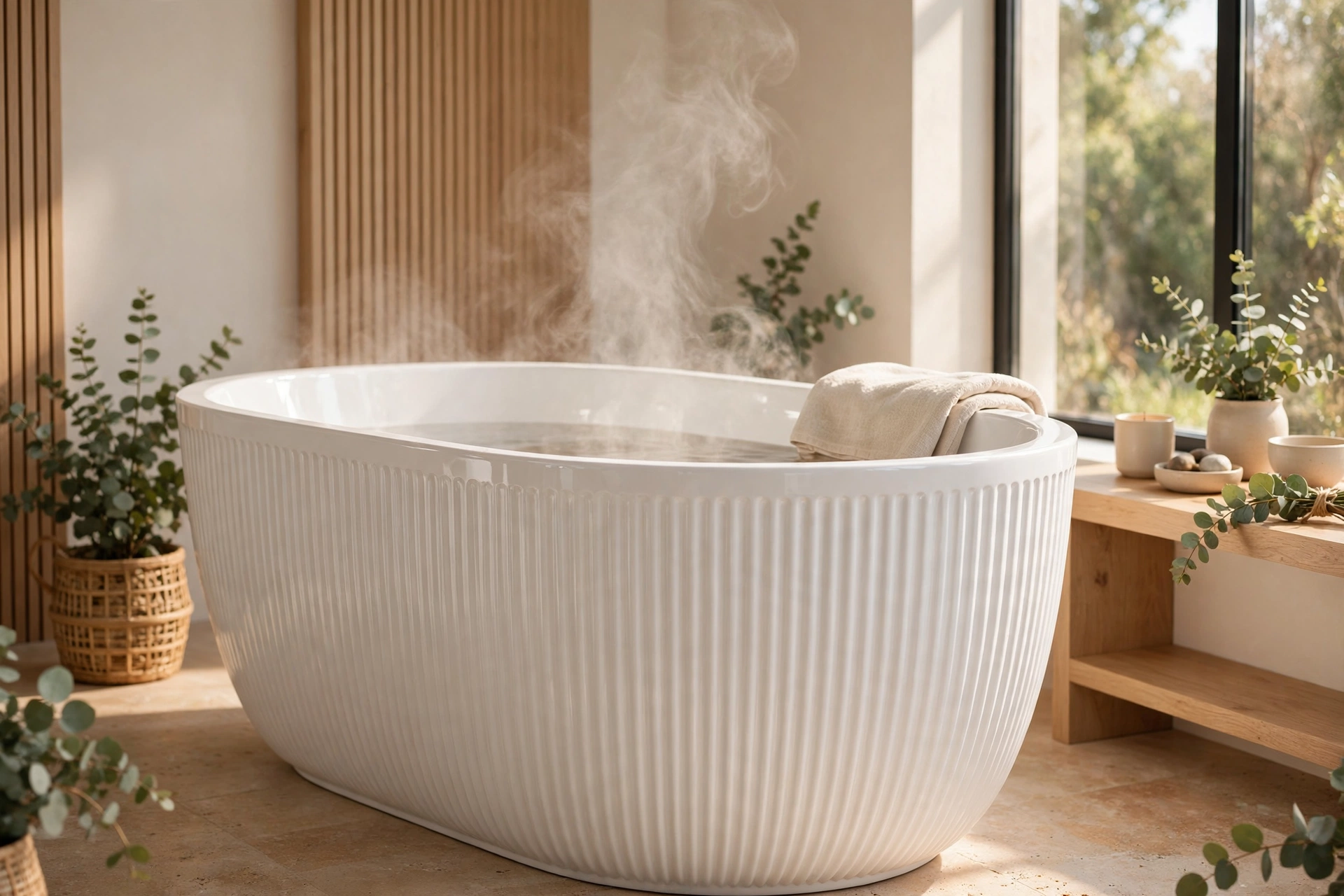
Why I paid $159 extra for grooves: the fluted premium, explained
The smooth black 59-inch tub I put in the guest bath cost $529. This one cost $688. The difference is $159, and I want to be upfront about what that money buys, because it buys almost nothing functional. The inside of a fluted tub is identical to a smooth one. Same acrylic, same soak, same drain.
What the $159 buys is texture. I checked whether the premium was a FLNORW markup or just how the category works, and it is the category: The Blue Space’s fluted baths buying guide notes that pressing consistent ribbed texture into a tub panel is an extra manufacturing step, so fluted baths tend to sit slightly above an equivalent plain freestanding bath in the same material and size. That matched what I saw shopping around — every fluted model I found cost more than its smooth equivalent.
Spread over a realistic 15-year tub life, the premium is $10.60 a year, about 3 cents a day (rough estimate, flagged as rough). I decided the texture was worth three cents a day before the tub ever arrived. Whether that holds up depends entirely on the next two sections.
Delivery day: 128 pounds of acrylic and one nervous staircase
The crate showed up at 128 pounds, and the tub itself weighs 96 pounds. Two of us carried it up the stairs without drama. For perspective, a cast-iron tub in this size runs 300 to 500 pounds (typical range), which would have meant a freight elevator or a hernia. Acrylic’s lightness is not a luxury feature; it is the reason a two-person crew can install a fluted freestanding bathtub in an afternoon.
The footprint is 67 by 29.5 inches, and I taped that rectangle on the bathroom floor before ordering. Best decision of the project. The tape showed the tub would clear the vanity by four inches and the door swing by six — numbers my eyes had confidently gotten wrong. The plumber connected it to the existing drain line in about two hours; the chrome overflow and pop-up drain come in the box along with a flexible drain hose, so there was no second trip to the supply house. Total plumbing bill: $300.
Does a fluted soaking tub actually feel different to bathe in?
Short answer: inside, no. The grooves live on the exterior panel only, and the bathing surface is smooth polished acrylic. But the 67-inch length is a different story. I am 6’1”, and in the old alcove tub my knees broke the surface like periscopes. In this fluted soaking tub, I stretch out flat with room to spare, and the gently sloped back supports my shoulders without a bath pillow.
I ran the heat test I always run: filled to 105°F, set a timer, read a book. At the 40-minute mark the water was still comfortably hot — acrylic does not have cast iron’s thermal mass, but it also does not pull heat out of the water the way cold porcelain does. One honest note: the 22.8-inch height means a deep fill uses a lot of water. Roughly 60 gallons to the overflow (my estimate), which is about 500 pounds of water plus the 96-pound tub plus me. If your floor feels springy, get a professional opinion before you fill.
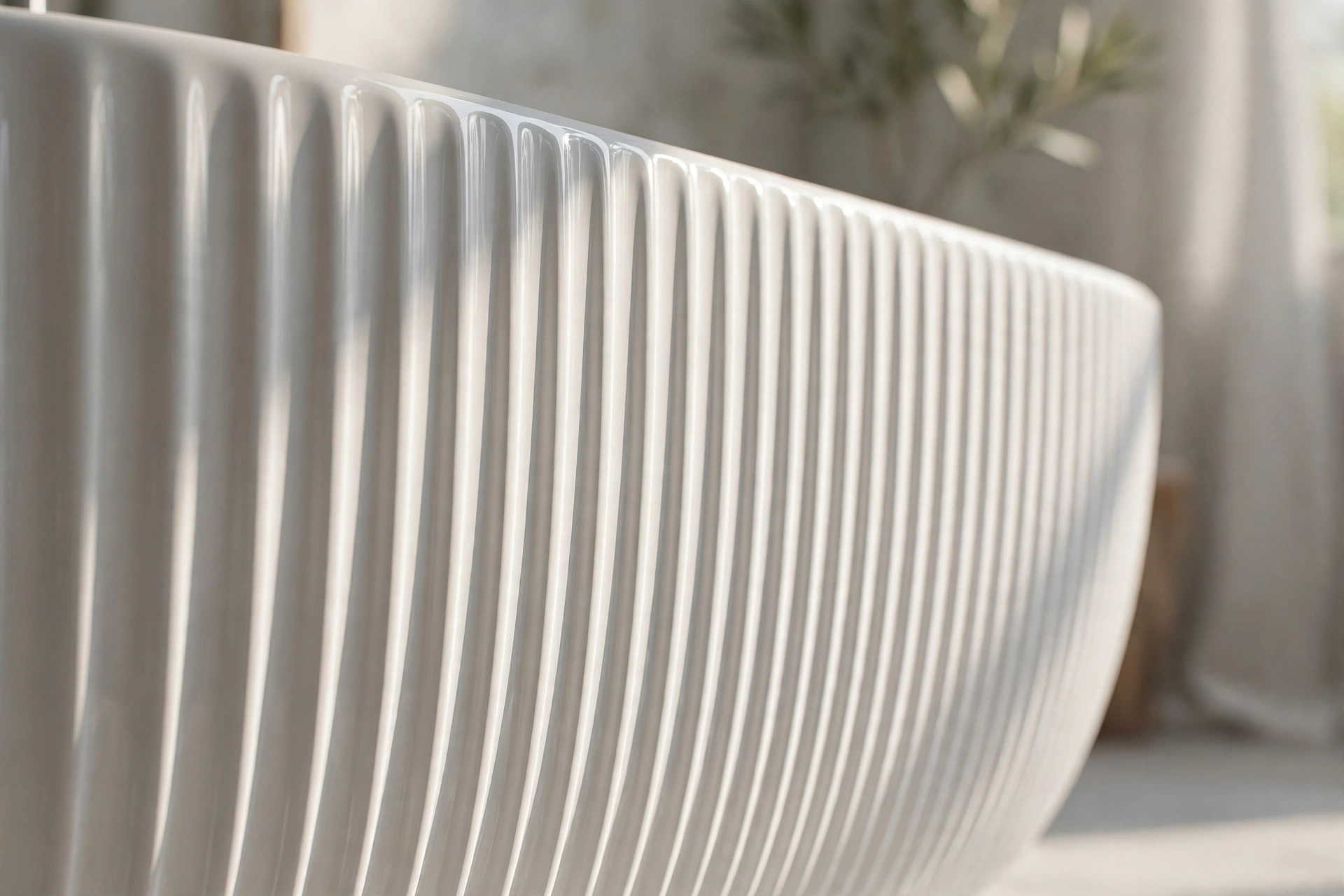
Cleaning a fluted bathtub: the groove test, 90 days in
This was my real question, and the reason I waited 90 days to write. A smooth tub wipes clean. A ribbed exterior has dozens of little valleys, and I wanted to know whether they become soap-scum canyons.
The honest report: the exterior needs a soft brush, not just a cloth. Once a week I run a soft-bristle brush down the grooves with a non-abrasive bathroom cleaner, and it takes about five minutes. Dust and dried bath-product drips collect in the valleys if you ignore them for two weeks — ask me how I know. The interior, though, cleans exactly like any smooth acrylic tub: squeegee after each soak, diluted white vinegar and a microfiber cloth once a week. The Blue Space guide was right that day-to-day cleaning of the tub itself is no different from a smooth-sided bath; it is only the outside that asks for the brush.
Two things to avoid, same as any acrylic tub: abrasive scrub pads and bleach. They will dull the gloss, and on a white gloss finish the dulling shows. The chrome overflow still looks brand new with the same vinegar wipe. And here is the surprise benefit I did not expect: the ribs scatter light the way the fluted glass wall cabinet I mounted in the guest bath does — water spots and fingerprints break up on the texture instead of sitting there as evidence. My white tub is more forgiving than the gloss-black one, which shows everything.
Fluted vs. smooth: the $159 question, answered with math
Here is the side-by-side, because this is the decision most shoppers are actually making:
- Fluted, 67-inch, gloss white: $688. Design statement, 8 extra inches of legroom, grooves that need a weekly brush.
- Smooth, 59-inch, gloss black: $529. Same acrylic, same hardware in the box, wipes clean with a cloth, shows hard-water film like a black car shows dust.
Over 12 years, the fluted tub costs roughly $0.16 a day and the smooth one roughly $0.12 a day (rough estimates). The real gap is four cents a day plus five minutes of brushing a week. If you want the full numbers on the smooth one, my $529 freestanding bathtub review has the spa-visit math and the 45-minute install story.
Buy the fluted version if the bathroom is a primary bath you look at every morning, if you are styling around the fluted trend (it pairs naturally with fluted glass and reeded wood), or if resale polish matters to you. Skip it for a kids’ bathroom — grooves plus bath crayons is a combination I do not want to test — or a rental, where the next tenant will never brush the ribs.
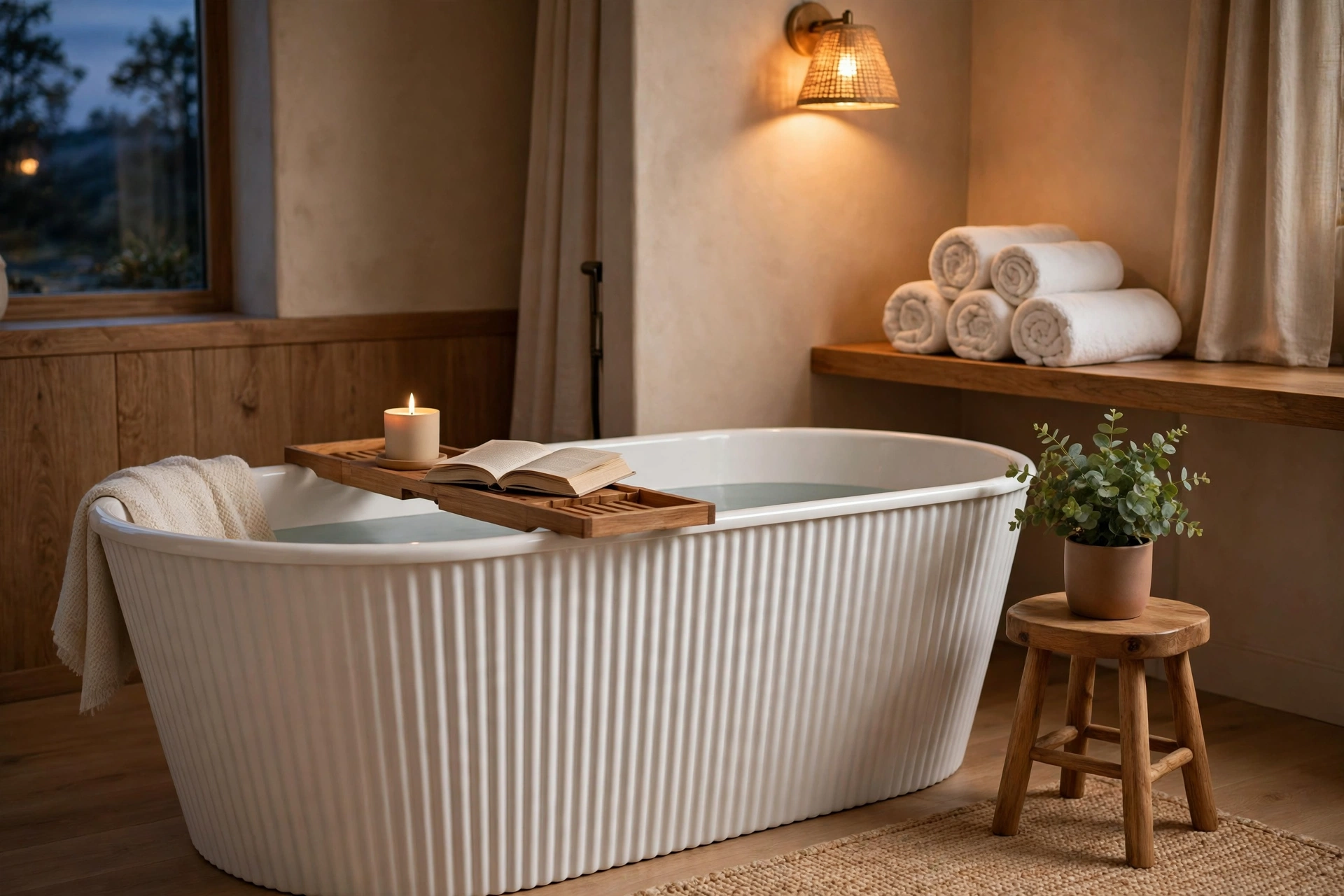
The industry numbers: fluted bathroom design is not a fad
I checked whether I had bought into a trend with a six-month half-life. The signs say otherwise. DataIntelo’s 2025 freestanding bathtub report puts the global market at $2.78 billion in 2025, growing to $4.63 billion by 2034 at 5.8% a year, with acrylic holding 42.5% of the segment — the most popular material because it is light, warm to the touch, and repairable.
On the design side, the fluted texture keeps showing up everywhere I look: Rubber Duck Bathrooms calls fluted finishes a go-to across baths, vanities, and shower glass, and coverage of the 2026 Salone del Mobile furniture fair flagged fluted texture as a signature design language across entire showrooms. The Blue Space’s buying guide notes that freestanding fluted baths remain the most popular configuration, finished on all sides so the grooves read from every angle. And the demand backdrop is real — Mordor Intelligence notes that bathroom remodeling ranked as the most common home-improvement project in 2025 among US remodelers. I was not early to a trend; I was the trend.
What I would tell my brother before he buys a fluted freestanding bathtub
- Measure the path, not just the room. The tub is 67 inches long and the crate is bigger. Hallways, stairwell turns, and door widths all have to clear it.
- Tape the footprint on the floor. 67 by 29.5 inches, plus 4 to 6 inches of clearance on the sides you need to clean behind.
- Budget the plumber. $250 to $400 is the typical range I saw (estimate) — the drain and overflow are in the box, but the hookup is not a DIY job for most people.
- Commit to the brush. Five minutes a week with a soft brush keeps the grooves perfect. If that sounds like a chore, buy the smooth tub and be happy.
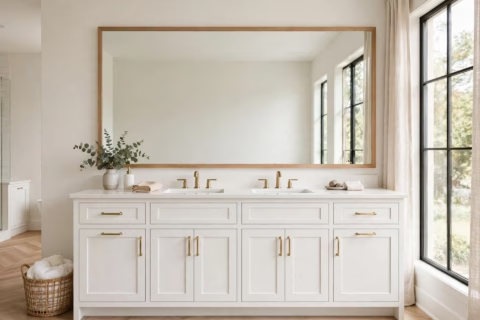
- Plan the pairings. I matched mine with the 54-inch bathroom vanity with sink for storage and an anti-fog LED bathroom mirror so the whole wall reads intentional instead of improvised.
The verdict
Ninety days and thirty soaks in, the fluted freestanding bathtub has earned its premium. The grooves do exactly what the design magazines promise — they catch light all day and make the tub the room’s centerpiece — and the cleaning cost is one soft brush and five minutes a week, which I have stopped noticing. The 67-inch length is the unsung hero: at 6’1”, the extra eight inches over the 59-inch model is the difference between soaking and merely sitting in warm water. At $688 plus $300 in plumbing, it paid for itself against our old $110-a-visit spa habit in about five months (rough math), and everything since has been free. If you want texture, buy the flutes. If you want the cheapest path to a deep soak, the smooth tub is still the rational pick — and I would not talk you out of it.
Want the full spec sheet? See the 67-inch fluted freestanding bathtub at FLNORW MALL — 67 × 29.5 × 22.8 inches, 96 lbs, gloss white acrylic, chrome overflow and pop-up drain included, $688 with free shipping.