I Bought a 9 Drawer Dresser. First, I Measured Twice.
Two months ago I ordered a dresser. Not a thrilling sentence, but the purchase scared me more than any sofa or mattress ever has — because a dresser is the one piece of bedroom furniture you cannot hide. It sits there, wide as a car hood, holding everything you own. I went with FLNORW MALL’s white 9 drawer dresser: $288, 47.56 inches wide, 15.75 inches deep, 34.45 inches tall, nine drawers, antique-style handles. Before I clicked buy, I spent a week measuring my bedroom wall like it was a construction site. This is the sizing guide I wish someone had handed me first.
A 9 drawer dresser is a whole wardrobe in disguise
Let’s start with what nine drawers actually buys you. My old setup was a six-drawer chest plus a plastic rolling cart for overflow — the cart kept cracking, and the chest top had become a graveyard of laundry baskets. When I moved everything into the new dresser, one whole adult wardrobe fit: tops, jeans, sweaters, socks, underwear, the lot. The only things left out were hanging clothes and coats. If you are deciding between a six-drawer and a nine-drawer model, the honest math is this: three extra drawers equals roughly one extra person’s clothing, or — in my case — the disappearance of the plastic cart from the corner of the room. That is the entire value proposition, and it is worth naming before any dimension.
The width rule: measure the wall, not the furniture
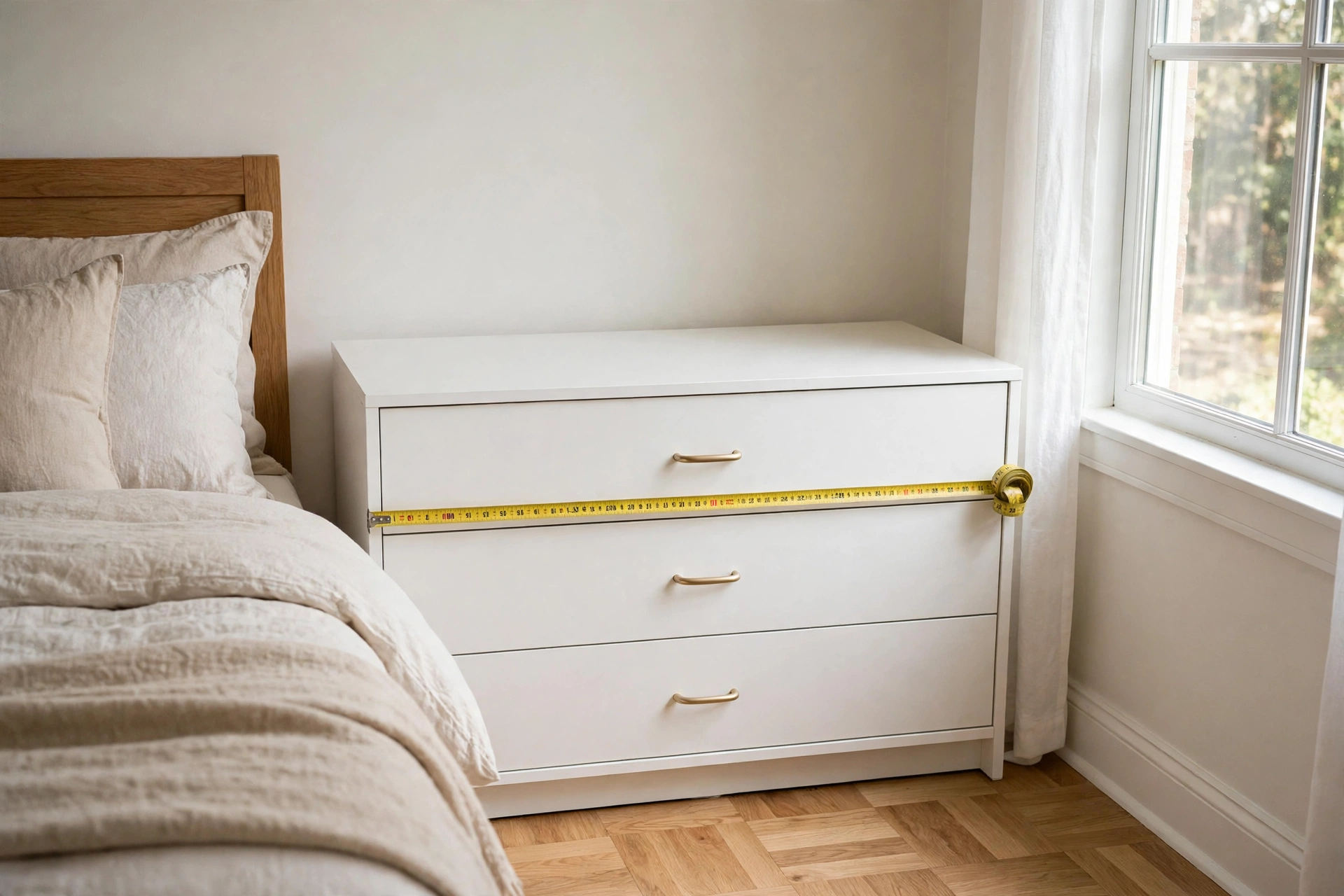
Here is the mistake I almost made: I measured the dresser (47.56 inches, call it four feet) and figured it would obviously fit. Wrong question. The right question is what the wall gives it. My bedroom wall is 72 inches. A 47.56-inch dresser on a 72-inch wall leaves about 12 inches of breathing room on each side — enough to reach in behind for a fallen sock, not enough for another piece of furniture, which is exactly what you want.
My rule after doing this twice in life: the dresser should take up roughly two-thirds of the wall it sits against, and you should have at least 4 to 6 inches of clearance on each side so the edges do not scrape the wall when the house settles. Also walk the path: stand where the dresser will go and open the closet door beside it. If the door knocks the dresser’s corner, you need a shorter wall or a narrower unit. I caught exactly that problem in my first layout sketch and moved the whole plan to the opposite wall before a truck ever showed up.
Height and depth: the numbers people skip
Width gets all the attention; height and depth do the damage. This dresser stands 34.45 inches tall — about counter height, which means it doubles as a surface. The product page rates the top for a 200-pound static load, so a small TV or a row of plants is genuinely fine. What matters more: measure your windowsill. My sill sits at 30 inches, so a 34.45-inch dresser in front of that window would block it — which is why mine went on the interior wall instead.
Depth is 15.75 inches, on the shallow side for a dresser. That is a gift in a small bedroom: it hugs the wall instead of eating the room. But shallow depth plus full drawers means you need 16 to 18 inches of open floor in front for the drawers to pull out. I laid painter’s tape on the floor in a 16-inch band before buying, walked the room for two days with the tape down, and only ordered when I was sure I was not going to be shimmying sideways past a half-open drawer every morning.
How many clothes actually fit in nine drawers
I unpacked with a tally sheet, the way you do when you genuinely want to know. These are my counts, marked as estimates because everyone folds differently:
- Drawer 1–2 (top row): roughly 40 pairs of socks and underwear. Shallow drawers are perfect here — nothing gets lost.
- Drawer 3–4: about 25 folded t-shirts and tanks, file-folded so I can see every one.
- Drawer 5–6: 18 pairs of jeans and pants. These are the deep drawers; jeans stand folded in a row like books.
- Drawer 7–8: 12 sweaters and hoodies. Bulky, so two drawers, no cramming.
- Drawer 9: bedsheets, pillowcases, and the guest blanket. The misc drawer every house needs.
That is one person’s full folded wardrobe with room to spare in the shallow top drawers. If you share a room, nine drawers still covers a couple as long as neither of you is a sweater collector. Compare this with the modern rattan dresser at $209 to $269, which is wider-drawered but shorter on count — fine for minimalists, tight for everyone else.
Antique handles and the white finish: honest care notes
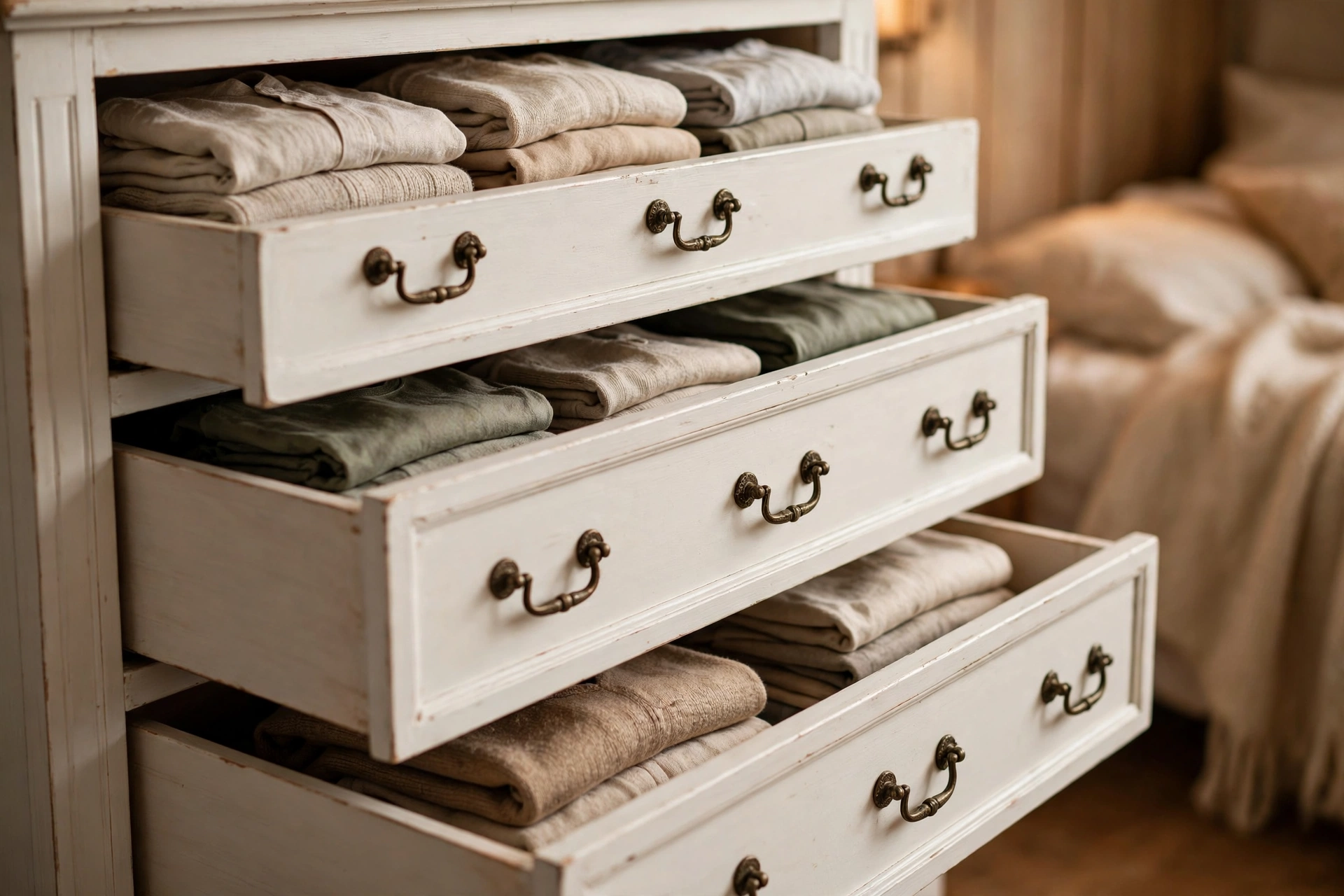
The drawers glide on the box tracks smoothly enough, but the part that surprised me was the hardware. The antique-style handles look expensive and feel solid; after two months of daily yanking, I checked all eighteen screws and found exactly one loose — five minutes with a screwdriver, done. New furniture rule: check every handle screw at the one-month mark. They always settle.
The white finish is scratch-resistant per the listing, and honestly it has survived two suitcase corners and one dog tail so far. Care is simple: dust with a dry cloth, never soak a spill (wipe it, do not let water sit), and put felt pads under anything heavy you set on top — the 200-pound rating is about structure, not about the finish forgiving a dragging ceramic vase. The frame is CARB P2 and TSCA certified manufactured wood, which is the formaldehyde-emissions standard worth having on anything that sits in your bedroom. One touch-up marker in a matching white lives in my junk drawer now; two months, zero chips used so far.
Assembly and the 126-pound reality check
Plan for the delivery, not just the product. This dresser ships in one box at 134.86 pounds and assembles into a 126-pound unit. The listing says about two hours of assembly, and that matched my experience — clear markings on the hardware, one long stretch of repetitive drawer-box building that is boring rather than hard. Real advice: do not assemble it in the bedroom. Build it in the living room, carry it in with a second person, and anchor it to the wall. Any dresser this size deserves an anti-tip strap; the hardware costs a few dollars and the peace of mind is permanent.
Why long dressers keep getting popular: the industry numbers
I looked up the market data out of curiosity about why every furniture site suddenly sells the extra-wide dresser. Mordor Intelligence puts the global bedroom furniture market at USD 126.8 billion in 2025, growing at about 4.5% a year through 2031. The detail that caught my eye: the dressers and dressing tables segment is growing at 5.07% CAGR — faster than the category overall. Translation: people are buying bigger dressers on purpose. The logic is not hard to see once you live with one. Closets in new apartments keep shrinking, rents keep rising, and a 9 drawer dresser at $288 is cheaper than moving to a place with a bigger closet. The furniture industry did not invent the trend; it is just answering the floor plans.
The verdict
Two months in, the $288 was the least interesting part. The interesting part is that I open a drawer every single morning and find exactly what I expected, which sounds trivial until you remember the plastic cart era. A 9 drawer dresser earns its floor space if — and only if — you measure the wall, the window, and the drawer swing first. I did the tape-on-the-floor thing, the two-thirds rule, the handle-screw check at thirty days. None of it was fun. All of it was worth it. If your bedroom wall has roughly six feet to give and your clothes are currently living in three places, this is the piece that ends that.
Want the exact one? It is the 9 drawer dresser with antique handles at FLNORW MALL — $288, white, 47.56 inches wide, ships in one box. If you want a softer look, the modern rattan dresser runs $209 to $269. Browse the full furniture collection or start at the FLNORW MALL homepage.