I Bought an $88 Raised Garden Bed Kit. Two Seasons Later, It’s a Grocery Store.
The receipt that broke me was $63.41 for a single paper bag of produce. Six cherry tomatoes, a sad bunch of basil, two peppers, a head of lettuce. That was the Tuesday I went home and typed raised garden bed kit into a search bar. Two seasons later, I have opinions about steel, soil, and the real math of growing your own dinner. This is the honest review of the metal raised garden bed kit I bought for $88 — what it actually cost to fill, what it grew, and whether it survived a season of rain and neglect.
Why a Metal Raised Garden Bed Kit — Not Cedar, Not Plastic
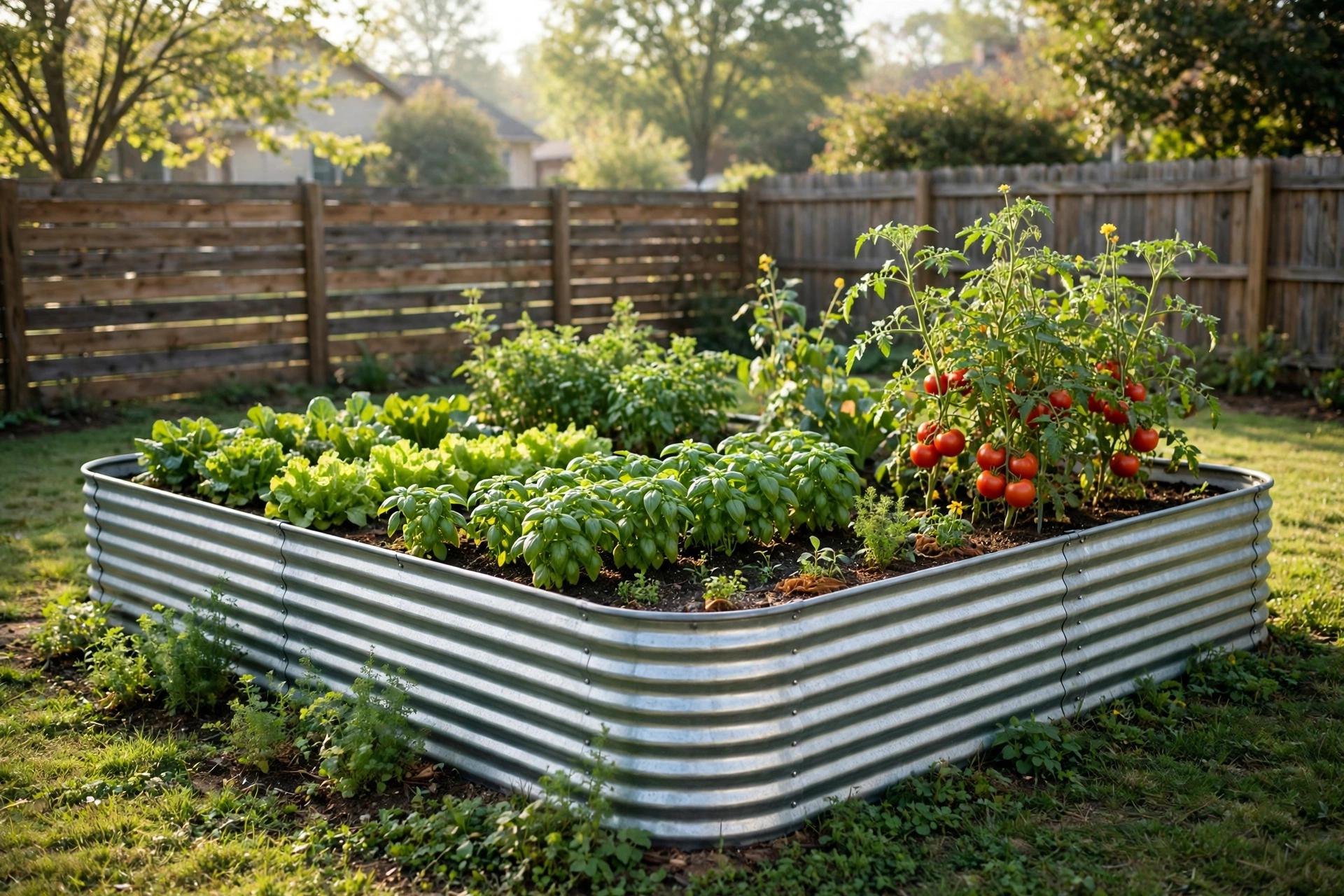
I almost bought a cedar kit. Then I did the math cedar retailers hope you skip: a 4×8 cedar bed kit runs $120 to $180, and untreated cedar still rots out in four to six years in a wet climate. Plastic beds look cheerful until a July heat wave bows them sideways. The metal kit cost me $88, and the anti-rust coating is the whole point of galvanized steel — the same reason stock tanks and farm buildings outlive their owners.
The one I bought is the silver 7.6 ft × 3.7 ft × 0.98 ft model (item code W84090998 on flnorw.com). In real inches, that is 91.34″ long, 44.69″ wide, and 11.81″ deep, with a soil capacity of 27 cubic feet. That depth matters more than most beginners realize: tomatoes and peppers want at least 10 inches of root room, and 11.81″ clears it. Shallow 6-inch beds look cheaper until your carrots fork into pretzels.
Assembly: The 10-Minute Claim, Tested
The product page claims one adult can assemble it in 10 minutes. I am skeptical of assembly claims the way a food critic is skeptical of “best pizza,” so I timed it: 9 minutes and 40 seconds, with one pause to shoo the cat off the panels. Everything is screws and nuts — no drill, no second pair of hands required, though a second person makes the long panels less floppy.
Two construction details are worth noting. First, there are 2 supporting bars that brace the middle of the long sides, which stops the classic metal-bed failure where the walls bow outward after the first rain. Second, the edges are rolled and the corners have protectors — I garden barefoot sometimes, and a raw sheet-steel edge is a tetanus shot waiting to happen. At 24 lbs, the whole bed ships in a package barely 45.67″ long, so it fit in the back of a sedan without folding seats.
How Much Soil Does a 7.6 × 3.7 Raised Bed Actually Need?
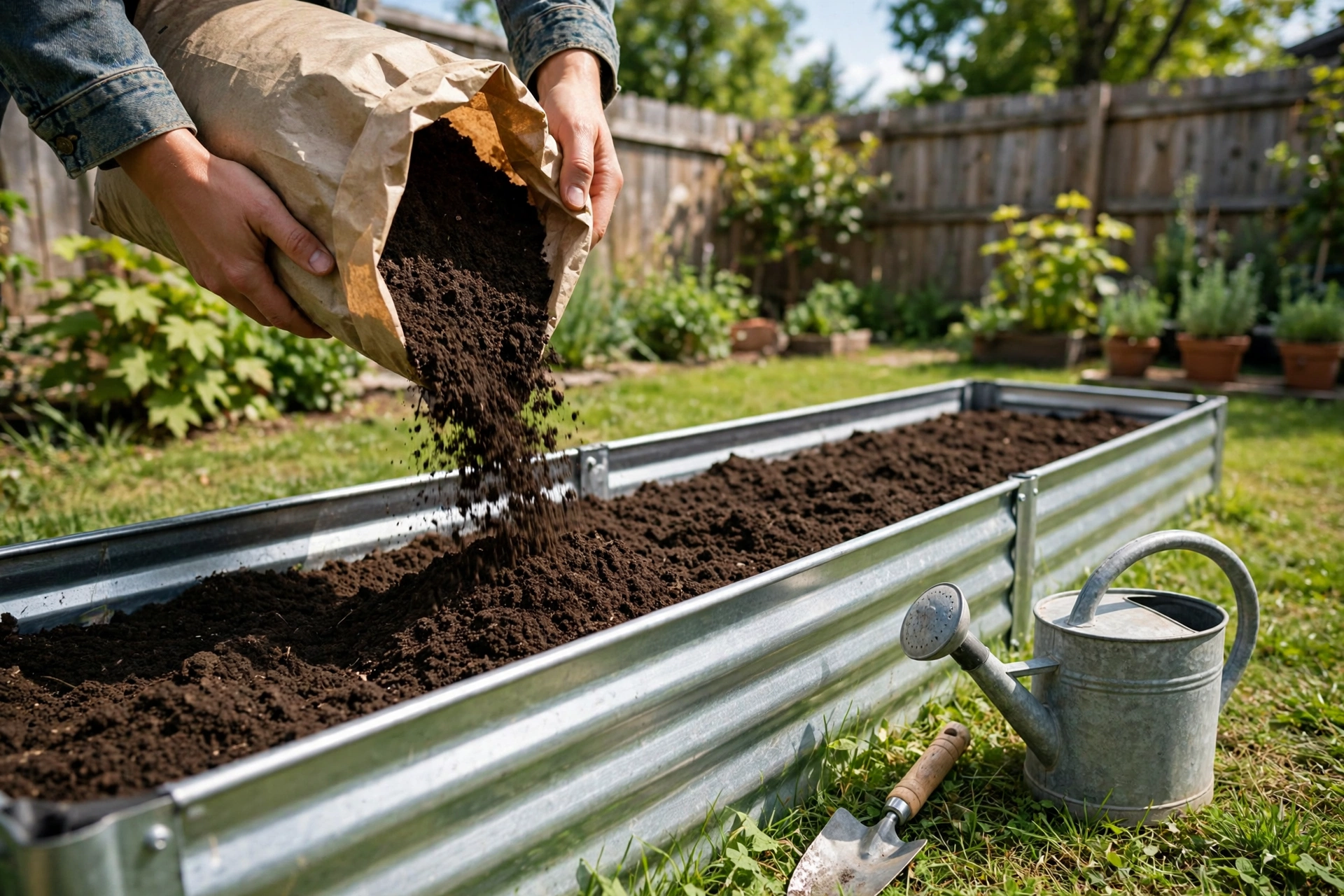
Here is the cost nobody puts in the headline: the bed is $88, but 27 cubic feet of soil is the real bill. A standard garden soil bag is 1.5 cubic feet, so you are looking at roughly 18 bags. At about $9 a bag (my rough estimate based on my local garden center last spring), that is around $160 in soil — nearly double the bed itself.
I did not pay that, and neither should you. Here is the layering I actually used, bottom to top:
- Bottom third: logs, branches, and wood chips — free from my backyard cleanup. This is the hugelkultur trick; it decomposes slowly and feeds the bed for years.
- Middle third: bulk compost from my county yard-waste site, about $35 for a pickup-truck load.
- Top third: raised-bed mix in bags, because this is where the roots actually live.
Total soil cost: about $95, and every year you top up with a few bags of compost because the wood breaks down. One honest warning: 27 cubic feet of soil dries out faster than in-ground soil. I mulched with straw and added a cheap drip line, which paid for itself in the first month I forgot to water during a heat wave.
What I Planted (and What I Shouldn’t Have)
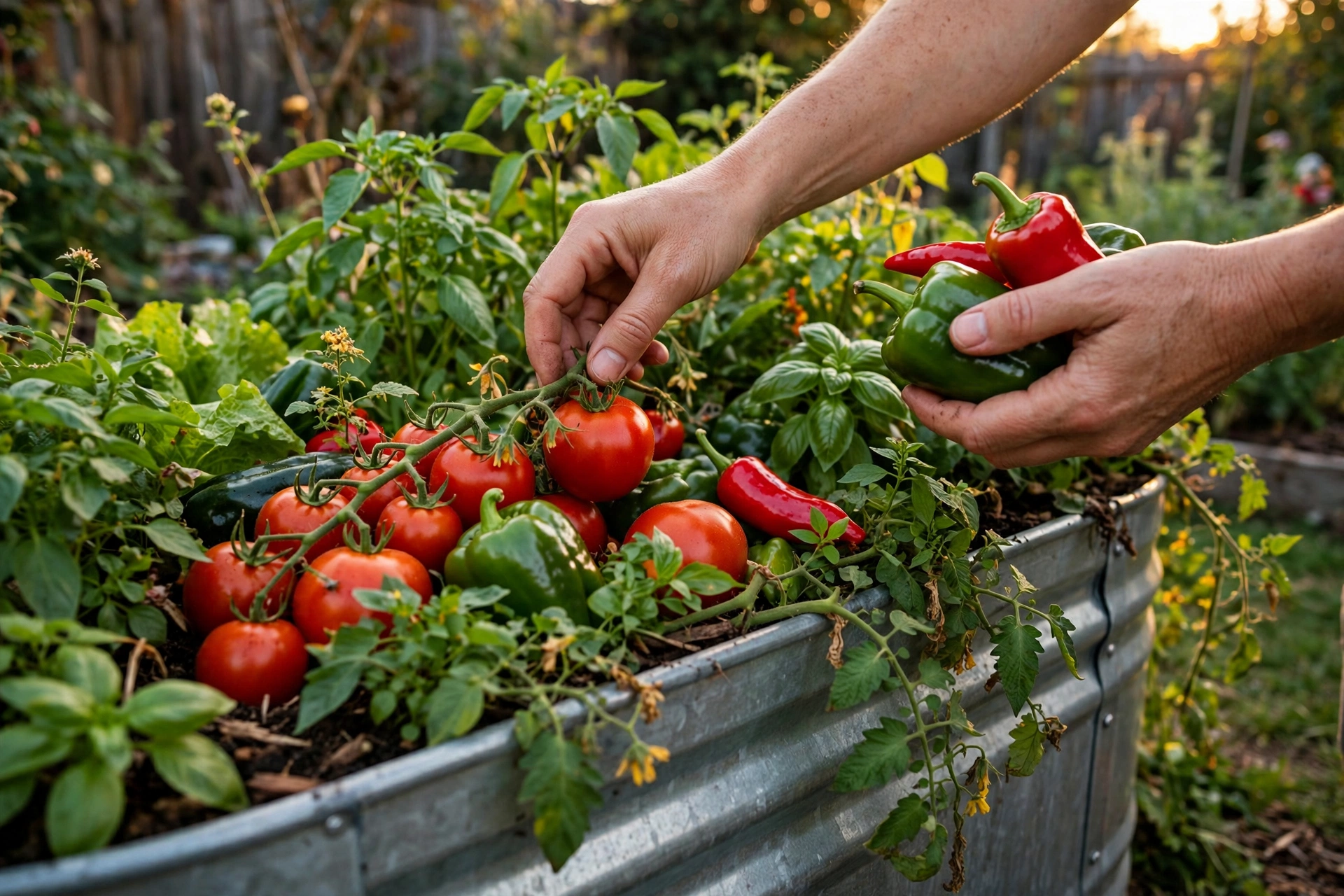
Bed one, season one, I went full farmers-market fantasy: six cherry tomato plants, two bell peppers, a row of basil, and lettuce I planted two months too late. The tomatoes were the right call — cherry varieties are forgiving and absurdly productive. The lettuce was my rookie mistake: 11.81″ of depth is great, but lettuce sown in June bolts into bitter flags before you blink.
Season two I got smarter and treated the bed as a raised garden bed for vegetables that actually like heat: tomatoes in the back row where they can climb, peppers and basil up front, and marigolds along the edge because every old gardener I have ever met swears they cut down aphids. What I would not plant again: anything that needs deep, loose soil like carrots (a foot of depth is fine, but my soil had too many wood chips near the bottom), and anything that spreads like mint. The mint tried to conquer the neighborhood. It lives in a pot now.
The Harvest Math: Did an $88 Bed Beat the Grocery Store?
Time for the only number that matters. The raised garden bed kit cost $88; soil and amendments cost about $95; drip line and straw mulch another $30. Call it $213 all-in for year one.
Harvest, season one, my rough estimates: roughly 25 lbs of cherry tomatoes (organic cherry tomatoes ran $4.99 a pint that summer — figure roughly $60 to $75 in value), about 40 heads of basil-equivalent across two plantings (basil was $3.99 a clamshell; call it $50), a dozen bell peppers ($2 a pop organic; $24), and enough salad greens before the bolting to be worth maybe $20. Total value: around $170 to $190.
So no — year one did not beat the grocery store. But here is the thing about year one of a raised bed: you are buying infrastructure. Year two cost me $35 in compost and new seedlings, and the harvest was bigger because the soil had settled and the microbes had moved in. Industry data backs the long game: the National Gardening Association’s 2014 Garden-to-Table report found the average gardener spends about $70 and grows about $600 worth of produce. My year-two rough math — over $200 in produce off $35 in inputs — finally started looking like that. The bed itself is a fixed cost; the harvest is the annuity.
Rust Check: One Season on Galvanized Steel
This was the review section I was actually nervous about writing, because a rusted-out bed at $88 is a bad deal at any price. After one full season of rain, sprinkler overlap, and being filled with perpetually damp soil, the anti-rust coating has held. I looked closely at the screw holes — the most likely rust starting point on any metal bed — and found nothing beyond surface dust. The 2 supporting bars show no flex, and the long sides are still straight where wood-chip settling pressed hardest.
Realistic expectation-setting: galvanized steel is not immortal. In coastal salt air or with acidic soil constantly against the walls, I would expect years, not decades, from any metal bed. But for a suburban backyard at $88, the durability math is generous — even five seasons works out to under $18 a year for the container. Would I have gotten that from a $60 cedar bed? Not with cedar rotting from the soil line up by year three.
Raised Garden Bed vs In-Ground: My Take After a Season
My in-ground attempts failed the same way most suburban attempts fail: clay soil, tree roots, and a dog who considered seedlings a personal buffet. The raised bed solved all three in an afternoon. The soil warms earlier in spring — every university extension guide I have read says raised beds give you a two-to-three-week head start in cold climates, and my tomatoes were fruiting while my neighbor’s in-ground patch was still mud — drainage is entirely in your control, and the 11.81″ walls are a meaningful fence against the casual dog.
The honest trade-off: you give up the free deep moisture of the earth. A raised bed is a container, and containers need consistent water. If you travel for two weeks every August with no drip line, grow in-ground instead. For everyone else, the control is worth it.
Three Things I’d Do Differently
Three lessons, all cheap. First, I would buy the drip line before the seedlings, not after the first heat wave. Second, I would mulch from day one — bare raised-bed soil forms a crust that rain just runs off. Third, I would skip the lettuce-in-June embarrassment and plant garlic in October in that same bed; garlic loves cold weather and a raised bed’s drainage, and it is about the lowest-maintenance crop there is.
Maintenance, by the way, has been almost nothing: a top-up of compost each spring, tightening a couple of screws the second season, and hosing the outside of the panels when algae started painting the north side green. The rolled edges still have no nicks. It looks better at the end of season two than my patio furniture does, and my patio furniture cost nine times as much.
The Verdict
An $88 metal raised garden bed kit is the rare purchase where the unglamorous middle option is the right one. Cedar is prettier and rots. Plastic is cheaper and sags. The galvanized steel bed held 27 cubic feet of soil without bowing, survived a season without rust, and paid its infrastructure costs back by year two — after which it started generating something close to the NGA’s $70-in-$600-out average. If your grocery receipt has been scaring you lately, this is the cheapest serious gardening you can buy: one afternoon of assembly, a season of real food, and a bed that will still be standing when you decide to plant garlic.