How to Measure for Furniture: the Room-Fit Rules That Ended My Returns
How to Measure for Furniture: the Room-Fit Rules That Ended My Returns
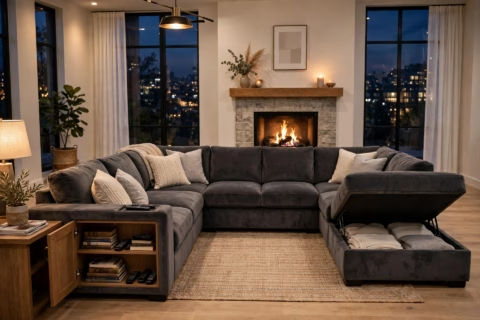
The third time a delivery crew carried a piece of furniture back out of my house, I stopped blaming bad luck and bought a nine-dollar tape measure. The offending piece was a 96-inch sleeper sectional I had deliberated over for two weeks — I measured the living-room wall, confirmed it fit with inches to spare, and never once measured the hallway corner it had to travel around to reach that wall. It wedged at the turn. The crew spent twenty minutes trying angles before shaking their heads, and I paid a $150 restocking fee that afternoon. Learning how to measure for furniture the right way — doorways and stairwells first, the room second — has saved me from every near-miss since. Here is the exact routine I use before ordering anything online, with every clearance number.

The $150 Lesson: Why Eyeballing Costs More Than Measuring
The sectional was not my first offense. A year earlier I ordered a 63-inch TV stand that technically fit the wall but swung directly into the bedroom door arc — the door could only open about eight inches, and I discovered that at 9 p.m. on delivery day with a installer waiting. The return label and two-way shipping came to $112.
Here is the uncomfortable math that finally motivated me: most US furniture retailers charge restocking fees of 10–25%, and white-glove delivery often runs $100–$300 — sometimes each way if the piece comes back. Those are typical ranges, not a quote, but they explain why one bad measurement can cost more than the tape measure, the painter’s tape, and the hour of your time combined. A furniture measuring guide sounds boring right up until it saves you two hundred dollars.
Measure the Doorway First, Not the Room (How to Measure for Furniture Delivery)
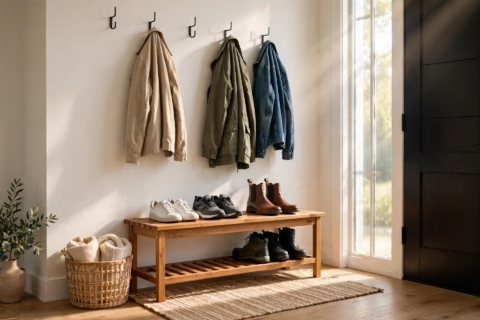
This is the step everyone skips, and it causes the majority of delivery-day failures. Before you measure a single wall, walk the entire delivery path from your front door to the final room and measure the narrowest point of every opening: the front door, hallway width, stairwell turns, elevator interior, and any interior door along the way.
Know your reference numbers. Interior doors in US homes are typically 30–36 inches wide; hallways usually run 36–42 inches. Now compare those against the piece’s boxed dimensions — not just the assembled ones, because the box is what actually travels through your house, and it is always bigger. If the narrowest point on your path is under 32 inches, measure twice, then check whether the piece ships in multiple boxes — a sofa that arrives in two or three cartons is a narrow doorway’s best friend.
One more trick: measure with the door removed in mind. A door slab plus its hinges eats about two inches of clearance. Delivery crews do this instinctively; you should know the number before they arrive.

The 36-Inch Walkway Rule for Measuring Your Room for Furniture
Once you know the piece can physically arrive, check whether you can live with it. The single most useful number in measuring your room for furniture is 36 inches: that is the comfortable width for a main walkway between pieces. In a pinch point you can squeeze through 24 inches, but you will hate it daily — reserve that for secondary paths, not the route from the couch to the kitchen.
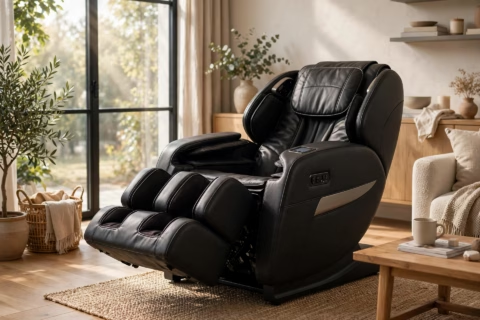
A few more numbers I keep taped inside my kitchen cabinet door: 16–18 inches between the sofa and the coffee table (close enough to reach your drink, wide enough to walk past), 12–18 inches of clearance behind a recliner for full recline — the number everyone forgets until the back of the chair meets the wall at 11 p.m. — and a side table positioned within easy reach of a seated person, not across the room where it looks good in photos. In newer US apartments averaging around 887 square feet (RentCafe / Yardi Matrix, 2025 national rent report), every inch of clearance is doing real work.
How to Measure for a Sofa: Clearance Numbers That Actually Matter
For the sofa itself, the wall is the easy part: leave at least 3 inches of breathing room on each side so it does not look jammed in and you can vacuum behind it. The number that actually determines delivery success is the diagonal depth — the diagonal measurement across the sofa’s side profile. Calculate it roughly as the square root of (height squared plus depth squared); a typical 36-inch-tall, 38-inch-deep sofa has a diagonal depth around 52 inches.
Why does this matter? Because a sofa rotates through a doorway on its diagonal. If the diagonal depth exceeds your narrowest doorway width, it is not going through — no angle, no technique. This is the single most common cause of the wedged-at-the-turn scene I described above. Compare diagonal depth against your narrowest measured opening before you fall in love with the listing photos. For sectionals that must be carried upright around corners, also note the ceiling height in the stairwell or hallway.
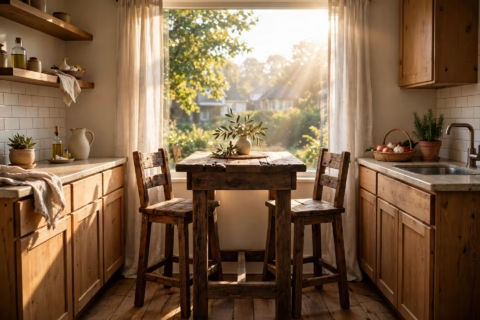
Dining Table Sizing: Seats, Pull-Out Space, and Chair Swing
Dining tables fail differently — they fit through the door, then fail at Thanksgiving. Budget 24 inches of table width per diner; that is the real elbow-room number, not the optimistic “seats six” on the product page. Behind each chair, leave 36–42 inches between the table edge and the wall so chairs can pull out and a seated person can stand up without shoving. In a high-traffic dining room that doubles as a hallway, push that to 48 inches.
Two details people miss: chairs with arms need roughly 6 extra inches of width each, which quietly shrinks a “seats six” table to seats four. And if you are buying an extendable or drop-leaf table, measure the room fit with the leaf in — that is the state the table will be in every holiday, and the only state that counts.
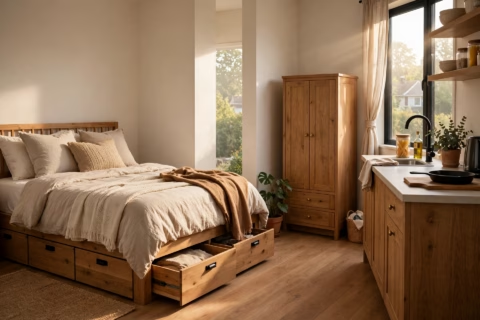
Bedroom Furniture: Nightstands, Dressers, and the Open-Door Test
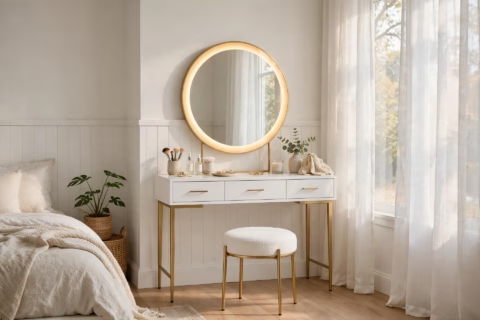
Bedrooms are where door swings ambush you. A dresser that clears the closed door perfectly can block it completely when the door opens — so measure the door’s full arc, not just the doorway. I now trace door arcs in painter’s tape before buying anything that lives within swinging distance.
For nightstands, the working rule is height within plus or minus 2 inches of your mattress top — too tall and you are reaching up for your water at 2 a.m., too short and the lamp looks swallowed. Leave 30 inches of standing space in front of dresser drawers so you can pull them fully open and still stand there. And measure the bed-plus-nightstands total width against the actual wall: a king with two 24-inch nightstands needs 124 inches of wall, which surprises a lot of first-time buyers.
Tape It Out: The Painter’s-Tape Trick Before You Click Buy
Here is the step that replaced 90% of my measuring anxiety: outline the piece’s footprint on your floor with painter’s tape and live with it for 48 hours. Tape the rectangle, walk the paths, sit in the imaginary chair, open the imaginary drawers. It feels silly for about ten minutes, and then it becomes the most honest preview you will ever get.
This is exactly how I caught a coffee table that would have clipped the nursery doorway on my route to the kitchen — a collision my tape measurements had technically flagged as fine, but my body vetoed on day two. The tape does not lie, and at four dollars a roll it is the cheapest furniture sizing insurance in existence.

My Pre-Order Measuring Checklist
Print this, or save it to your phone — I run it before every single order:
- Tools: a 25-foot tape measure and your phone’s notes app. Measure twice, write it down once.
- The path: front door, hallway width, stairwell turns, elevator interior. The narrowest point wins — compare it to boxed dimensions and diagonal depth.
- The room: wall-to-wall in two directions, plus ceiling height if anything goes upright.
- The piece: boxed AND assembled dimensions, plus diagonal depth for anything with arms or height.
- Clearances: 36-inch walkways, 16–18 inches sofa-to-coffee-table, 36–42 inches behind dining chairs, 30 inches in front of drawers, and the recliner’s full recline arc.
- The tape test: painter’s-tape footprint on the floor for 48 hours. Walk it, sit in it, open the drawers.
- The state test: measure with leaves in, recliners reclined, and doors fully open.
The verdict:
Two years and zero returns later, I can tell you exactly what changed: measuring stopped being a chore and became the five-minute habit that protects every furniture dollar I spend. The tape measure lives in my kitchen drawer now, right next to the scissors, and it has paid for itself roughly twenty times over. If you take one thing from this guide, take this order of operations — doorway first, clearances second, aesthetics last — because no amount of beautiful styling fixes a sofa that cannot enter the room.
Ready to shop with your numbers in hand? Browse the furniture collection at FLNORW MALL — every listing includes full dimensions so you can run this whole checklist before you buy. And if you are furnishing room by room, our blog has the same honest, numbers-first buying guides for each category. Measure first at FLNORW MALL, and your delivery day will be the boring, uneventful kind — which is exactly what you want.