
I Bought a $299 PU Leather Bed Frame. Here’s How I Keep It Looking Brand New.
When the delivery crew dropped off my new PU leather bed frame back in March, I just stood there staring at it for a minute. Black PU leather, a stitched wingback headboard, a soft LED strip glowing along the base — the whole thing looked like it belonged in a boutique hotel, not my spare-bedroom-turned-master-suite. Three hundred dollars, on sale from FLNORW MALL. I kept waiting for the catch.
The catch, it turns out, is maintenance. My brother bought a similar faux-leather bed from a big-box store two years before I did. Last Thanksgiving I slept in his guest room, and his headboard was peeling like a sunburn — little flakes of the coating coming off on the pillowcases. That is what happens to PU leather when nobody looks after it. Mine is eight months in and still looks like delivery day. Here is everything I do, and everything I avoid.

What a PU leather bed frame is actually made of
PU leather is a polyurethane coating sprayed or laminated onto a fabric backing — usually polyester. It is not leather, and the best way to keep it looking good is to stop treating it like leather. Real leather is skin; you condition it to replace oils. PU is plastic film over cloth; its enemy list is different: heat, UV light, harsh chemicals, and friction. Once the coating cracks or peels, there is no going back. Care for PU leather is 90% prevention.
The upside is real, too. Industry estimates put the global synthetic leather market at roughly $40 billion (Grand View Research, 2024 estimate), and a big reason is furniture like this: it wipes clean in seconds, shrugs off spilled water, and costs a fraction of the real thing. My frame — the Stylish Queen Size PU Leather Upholstered Bed Frame — runs $299, measures about 80 by 60 inches (a true queen footprint), and weighs 80 pounds. That is a lot of bedroom for the money, as long as the finish survives.
The weekly wipe-down: my 15-minute routine
I do this every Sunday while the sheets are in the wash. Fifteen minutes, start to finish, and it is the single highest-leverage thing on this list. Dust is quietly abrasive — every time you lean against a dusty headboard, you are sanding the coating with grit.
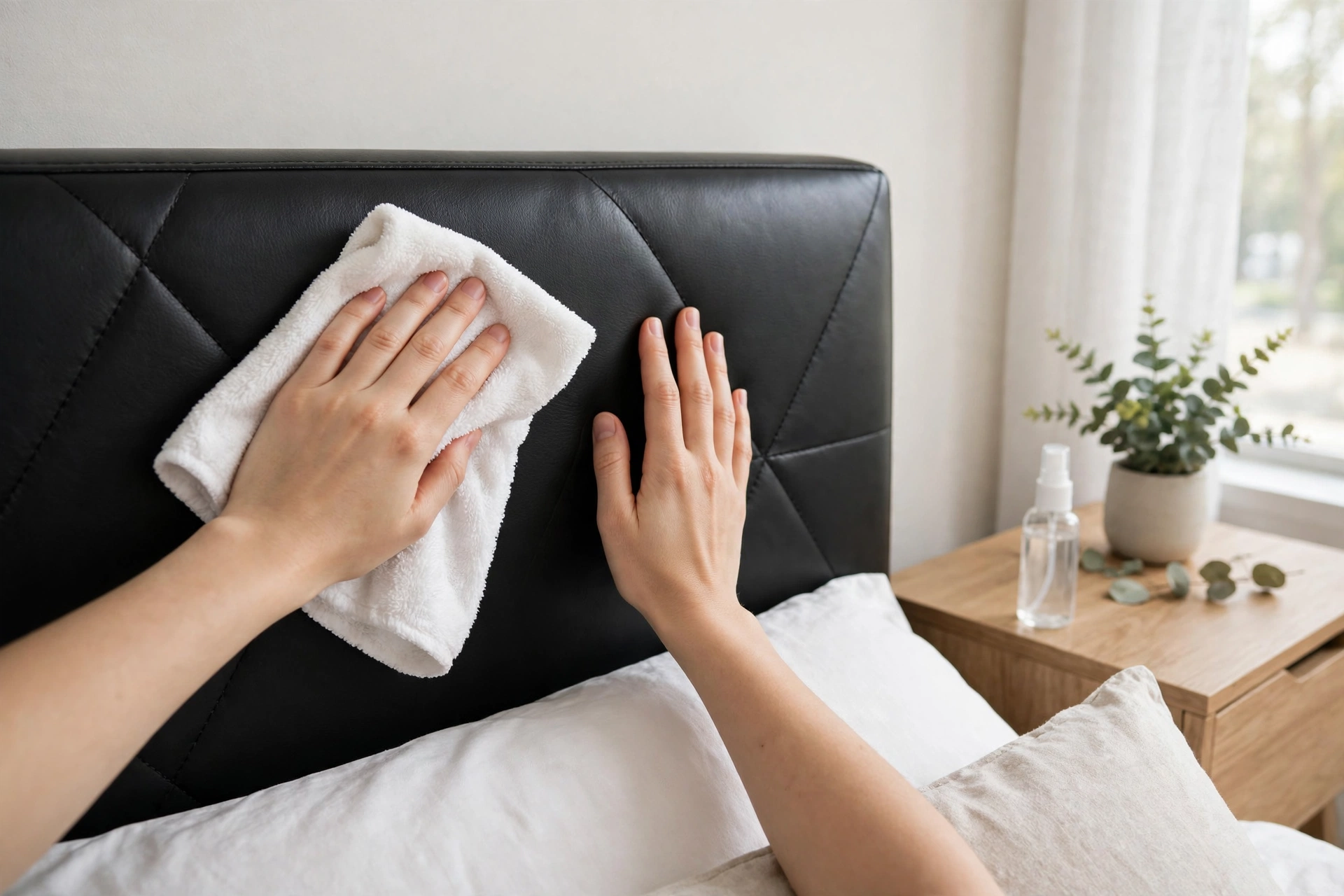
- Dry dust first. A clean microfiber cloth, headboard, footboard, side rails, top of the base. Do not skip the ledge behind the headboard; it collects a shocking amount.
- Damp wipe, never wet. Wring a second microfiber cloth until it is barely damp — a few drops of mild dish soap in warm water, no more. Wipe in small circles, one panel at a time.
- Dry immediately. Follow with a dry cloth. PU hates sitting wet; water that pools in the stitching seams will find its way to the fabric backing.
- Air it out. Leave the room ventilated for half an hour before you remake the bed. Ten minutes of patience beats ten months of musty backing.
That is the whole routine. No special products, no rituals. I have done it roughly 35 times now, and the coating still has that even, soft sheen it arrived with.
What goes on it — and what never touches it
I keep a small kit in the nightstand drawer: two microfiber cloths, a travel-size bottle of diluted dish soap, and a bottle of PU-safe conditioner I use every few months. Everything else stays away. Here is my personal do-not list, earned the hard way on an old office chair I ruined in 2022:
- Bleach and ammonia-based cleaners — they eat the polyurethane coating. Glass cleaner is the sneakiest offender; people grab it for a “quick wipe” and the shine goes cloudy within weeks.
- Alcohol wipes and baby wipes — alcohol dissolves the topcoat; baby wipes carry oils and fragrances that leave residue.
- Real-leather conditioner — wrong chemistry for plastic film. It sits on top, turns gummy, and attracts more dust. Use only products labeled for PU or faux leather.
- Abrasive sponges and magic erasers — they work by micro-scratching. On PU, those scratches are the beginning of peeling.
- Steam cleaners — too hot, too wet. Heat plus moisture is the fastest way to delaminate the coating from its backing.
If you have hard tap water like mine, use distilled water for the damp wipe. Mineral spots on black PU look awful and they are annoying to remove without scrubbing, which you do not want to do.
A bed frame with lights needs gentler hands
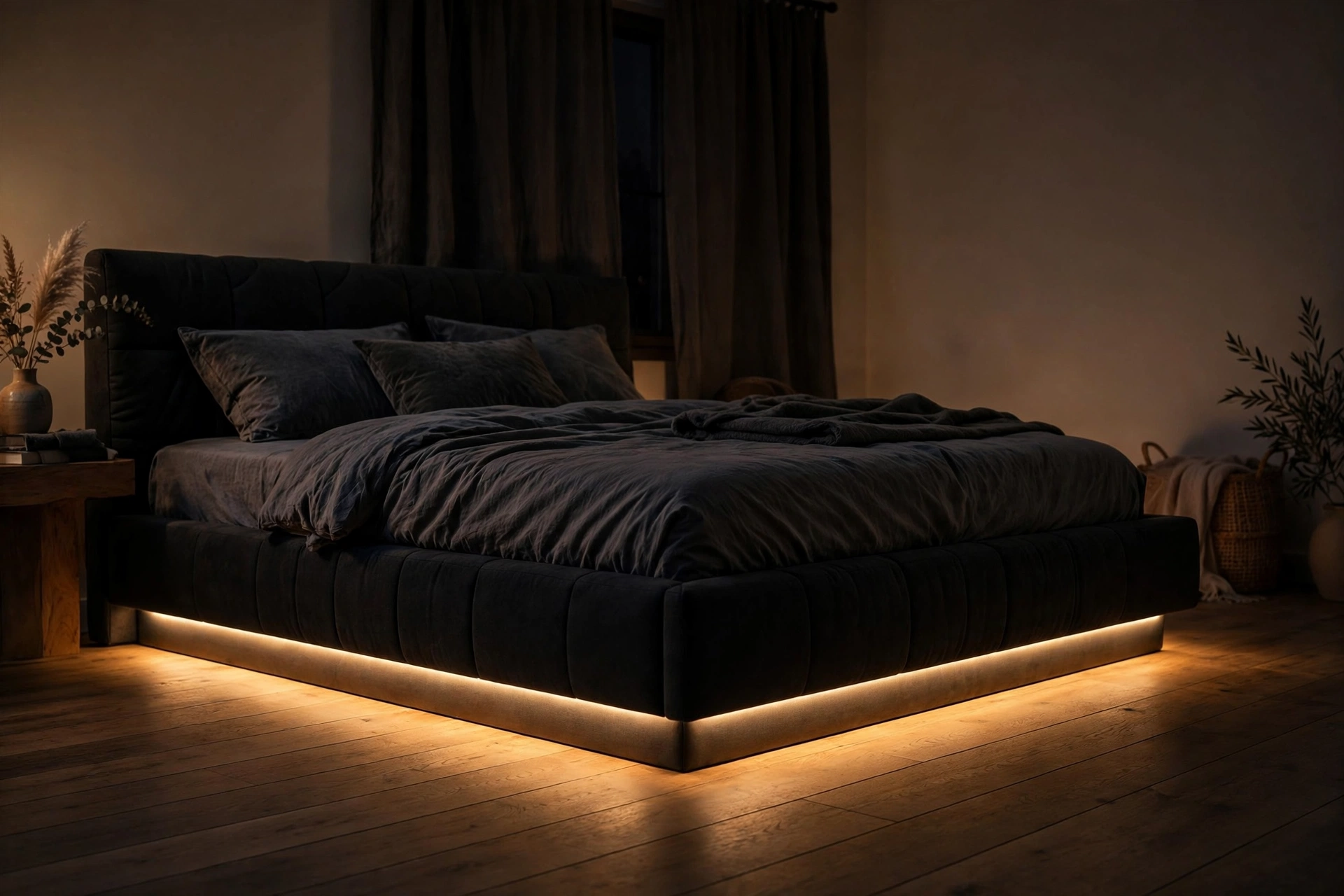
The LED strip along the base is my favorite part of this bed frame with lights — it throws a soft glow that makes 2 a.m. bathroom trips civilized. But electronics and cleaning spray are a bad combination, so the rule is simple: dry cloth only around the light strip and any wiring. Never spray cleaner near it; if a panel near the lights needs a damp wipe, spray the cloth in another room, then bring it over.
The stitched wingback headboard gets its own step: run a soft brush (a clean, dry paintbrush works) along the stitching lines once a month. Dust packs into the seams, and damp-wiping stitched areas forces water into needle holes. Brush first, wipe around the stitching, and you will never have grime lines outlining every seam.
Sunlight and heat: the two things that actually kill faux leather
My bedroom faces west, and in July the afternoon sun used to land directly on the footboard. I noticed the PU there felt slightly stiffer than the shaded side within a month — that is UV and heat starting to cook the plasticizers out of the coating. I moved the bed two feet to the left and hung a sheer curtain. Problem solved for about twelve dollars.
The rules I live by now:
- No direct sun on the upholstery for hours a day. Sheers, blinds, or a two-foot shift of the bed.
- Space heaters stay three feet away, minimum. A heater aimed at a PU headboard will dry and crack it in a single winter — I have seen it happen to a friend’s ottoman.
- Radiators and heating vents: do not park the headboard against one. If the layout forces it, a thin gap of a few inches plus a vent deflector does the job.
This is the care step most people skip, and it is the one that separates the five-year bed from the two-year bed.
Under the mattress: slats, bolts, and the annual check nobody does
A queen size upholstered bed frame like this one needs no box spring — the strong wooden slats carry the mattress directly. But slats and bolts are wood and metal living under a bouncing load, and they loosen. Three months after assembly, I found two bolts on the side rails had backed off a quarter turn. Wood compresses as it settles; that is normal, not a defect.
Once a year, mattress off, I do a five-minute inspection: tighten every bolt, check each slat for cracks (replace one for a few dollars rather than letting the mattress sag onto its neighbor), and vacuum the dust bunnies underneath. An 80-pound frame is easy to shift solo if you empty it first. A squeak is almost always a loose bolt, not a broken bed — tighten before you panic.
Scuffs and scratches happen — here is how I fix them
Last month I clipped the footboard with a laundry basket and left a pale scuff on the black coating. My fix: warm damp cloth, a dab of mild soap, gentle circles, dry immediately. Gone. Surface scuffs that have not broken the coating almost always come out this way.
For a scratch that has actually cut into the PU, a matching-color leather repair cream (the kind sold for car seats) fills and tints well enough that you will not notice it from two feet away. It is cosmetic camouflage, not a cure — be honest with yourself about that. And if the coating is already peeling in patches, no product reverses it. That is why everything above is about prevention. The maintenance is the product.
The verdict: $299 plus $15 a year keeps a PU leather bed frame looking new
Realistic math: my cleaning supplies cost maybe $15 a year — microfiber cloths, a bottle of dish soap you already own, one bottle of PU conditioner. Eight months in, the frame looks like delivery day, and I expect five to seven years of good-looking service out of it (my estimate, based on how the coating is holding up and how gently this routine treats it). That works out to roughly fifty dollars a year for the bed itself — less than one nice dinner.
Compare that to my brother’s two-year-old peeling frame: same category, zero care, already shopping for a replacement. The difference between a $299 bed that lasts and a $299 bed that does not is about fifteen minutes a week and knowing what never to spray on it. Start with the weekly wipe-down, keep it out of direct sun, tighten the bolts once a year — and your faux leather bed will still look like a boutique hotel piece when the warranty is a distant memory.
See the exact bed I am talking about: the Stylish Queen Size PU Leather Upholstered Bed Frame with Lights at FLNORW MALL — $299, stitched wingback headboard, LED accent lighting, strong wooden slats, no box spring needed. If you want more storage with your upholstery, the Tufted Upholstered Platform Bed with Storage Headboard ($388) adds a hydraulic lift compartment and motion-activated night lights. Browse the full furniture collection or start at the FLNORW MALL homepage — shipping is USA-wide, delivered within 8 days.


