
Fabric vs Leather Furniture: 4-Year Verdict
Four years ago I bought two pieces of furniture in the same month: a $299 PU leather upholstered bed frame with a light-up wingback headboard, and a $328 navy velvet accent chair for my reading corner. They have sat through coffee spills, a cat, a toddler, two moves, and one memorable incident involving a glitter pen. So when people ask me the great fabric vs leather furniture question, I am not guessing — I have lived both sides.
Here is what four years of daily use taught me about comfort, stains, pets, maintenance, and the real yearly cost of each material.
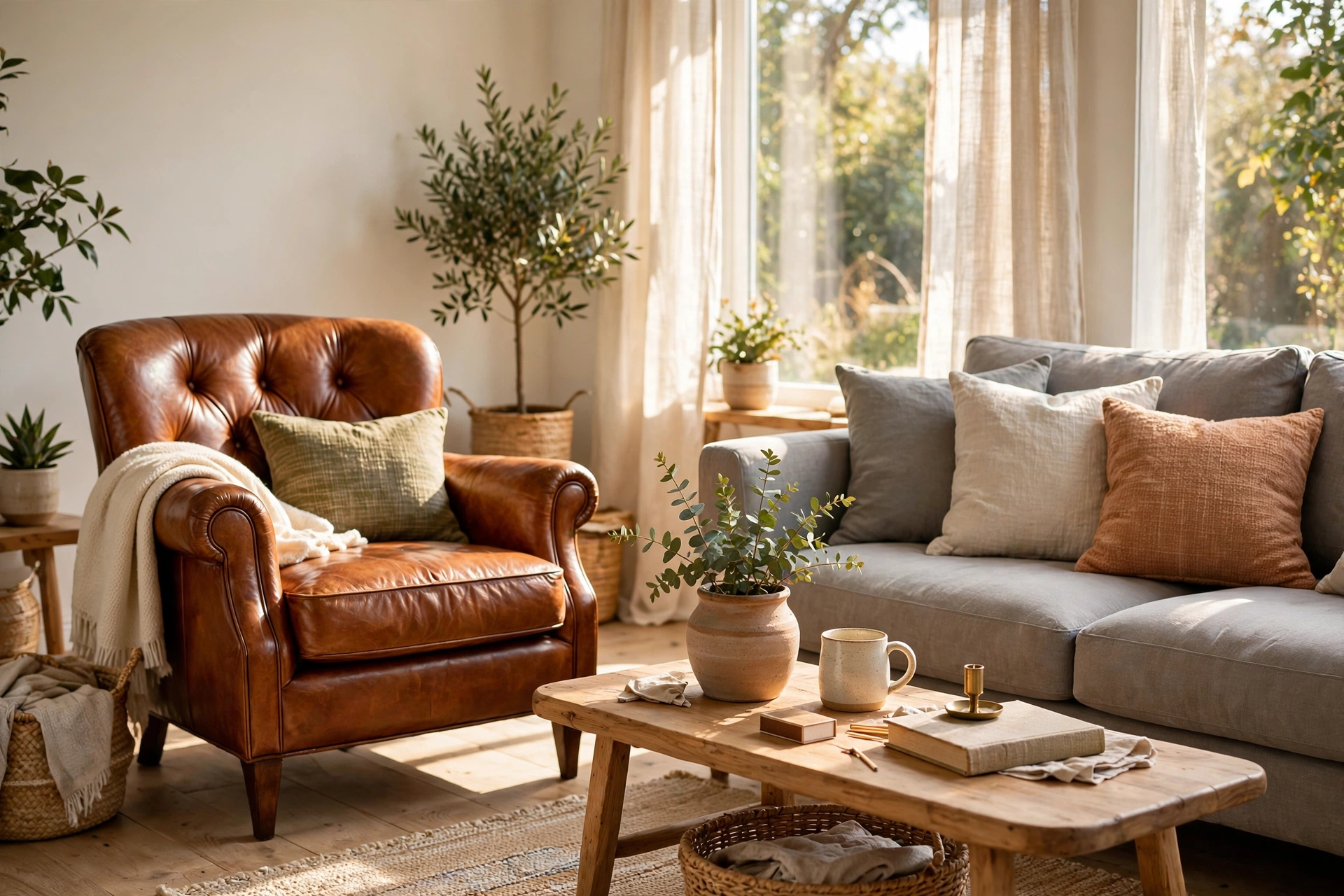
The leather side of the experiment is a queen-size PU leather bed frame — polyurethane-coated upholstery over a solid frame, with an LED headboard and built-in wingbacks. It cost $299, and it anchors our master bedroom.
The fabric side is a navy velvet accent chair: 29 inches by 29 inches, solid wood frame, TB117-rated foam, wooden legs. It cost $328 and has hosted roughly 1,400 evenings of reading in my bedroom corner (my estimate, at about 25 minutes a night).
Neither piece has been babied. Both get real life. And after four years, I can tell you exactly where each material wins and where each one bleeds.
Fabric vs Leather Comfort: Hot Days, Cold Nights, Naps
Comfort is the round everyone expects leather to win, and the first year it nearly did. Fresh leather feels cool and smooth; sitting on the bed to tie my shoes every morning felt oddly luxurious. But summer taught me the fine print. In an unairconditioned bedroom on a humid July night, bare skin sticks to PU leather. You peel yourself off. Fabric — velvet especially — never does that. It breathes.
Winter flips the script again. Leather feels cold for the first ten seconds; fabric is instantly warm. My honest scorecard after four years: fabric wins for daily sitting comfort, leather wins for the first impression. If you nap on furniture — and I do, about twice a week — fabric’s edge is not close. It is not even the same sport.
Spills and Stains: What Wiped Off and What Didn’t
Year two, I knocked a full mug of coffee onto the PU leather bed frame. Panic, a paper towel, one wipe — and it was gone. Not faded, not lurking. Gone. Polyurethane-coated leather is genuinely waterproof against liquids, and that spill justified a lot of the $299.
Year one, coffee hit the velvet chair’s armrest instead. That one required the full protocol: blot immediately with a dry cloth, never rub, then a barely damp cloth the next day. The mark vanished, but only because I moved fast. Rubbed once in the first thirty seconds, and that stain would own the armrest forever.
The honest rule I live by now:
- Leather: forgives slow reactions to liquids, punishes neglect of the finish.
- Fabric: forgives neglect of the finish, punishes slow reactions to liquids.
- Velvet specifically: dense pile hides dust and forgives blotting; it shows pet hair like a spotlight.
Pets and Kids: The Scratch and Claw Test
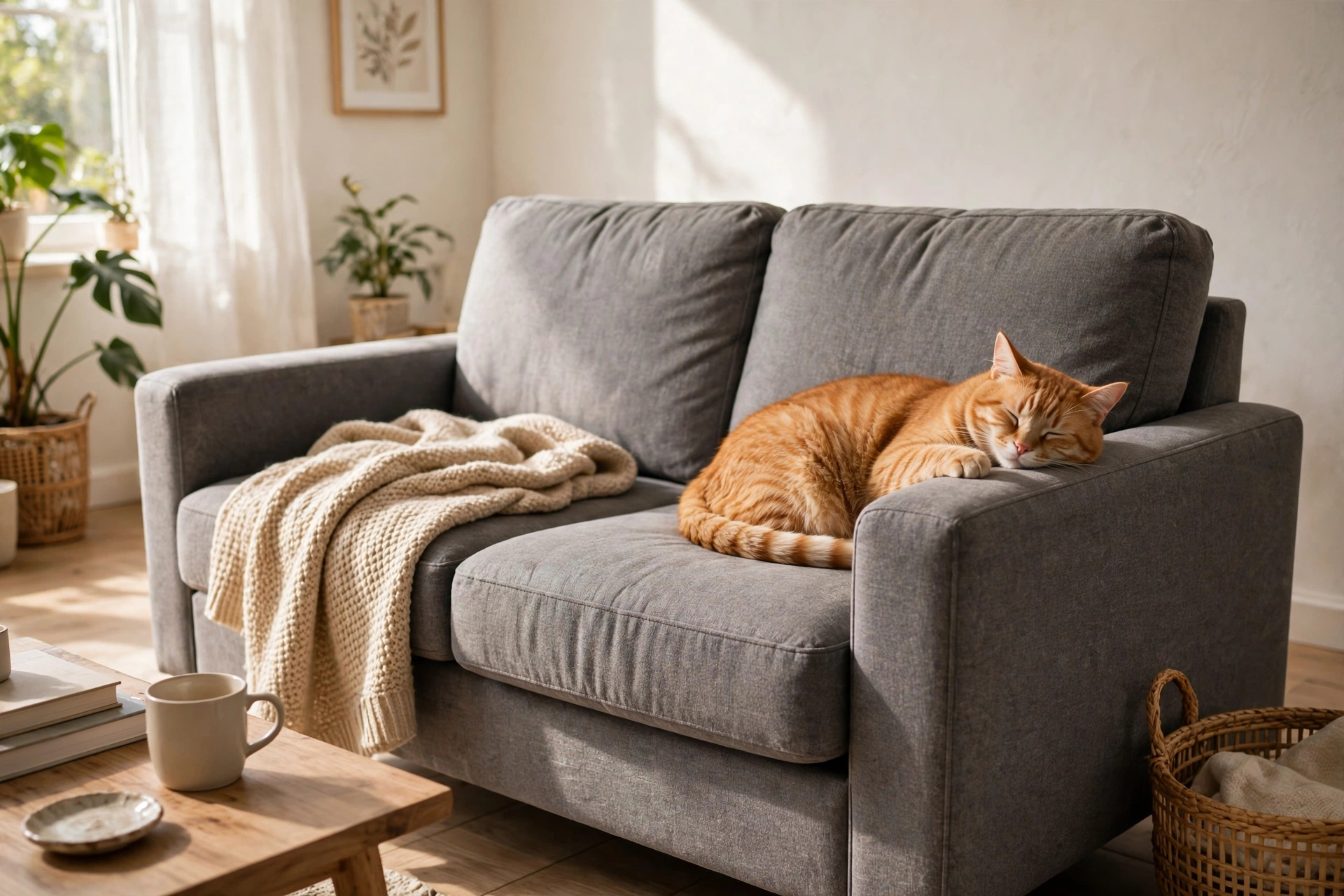
Our cat chose the leather headboard as a scratching post for exactly one week. The damage: four shallow score marks on the PU surface, visible if you know where to look, invisible from the doorway. The velvet chair, meanwhile, is the cat’s favorite nap spot — and velvet’s tight weave shows zero claw damage after four years. It shows cat hair instead, which a 30-second lint roller pass fixes weekly.
My verdict on pet-friendly furniture is counterintuitive: if your pet kneads with claws, tightly woven fabric (velvet, microfiber) survives better than coated leather. If your pet drools or has accidents, leather wins by a mile. Our dog is a drooler. He is not allowed on the velvet chair. He has his own blanket on the leather bed frame, and that system has worked for three years.
Leather Furniture Maintenance: The Real Time Cost
Here is the part leather sellers skip. PU and genuine leather dry out. Mine started showing micro-cracks along the headboard’s top edge in year three — the spot that catches afternoon sun. I caught it early, conditioned the frame, and moved nothing, but the lesson landed: leather furniture maintenance is a real recurring cost.
My routine, which has kept the frame looking nearly new since year one:
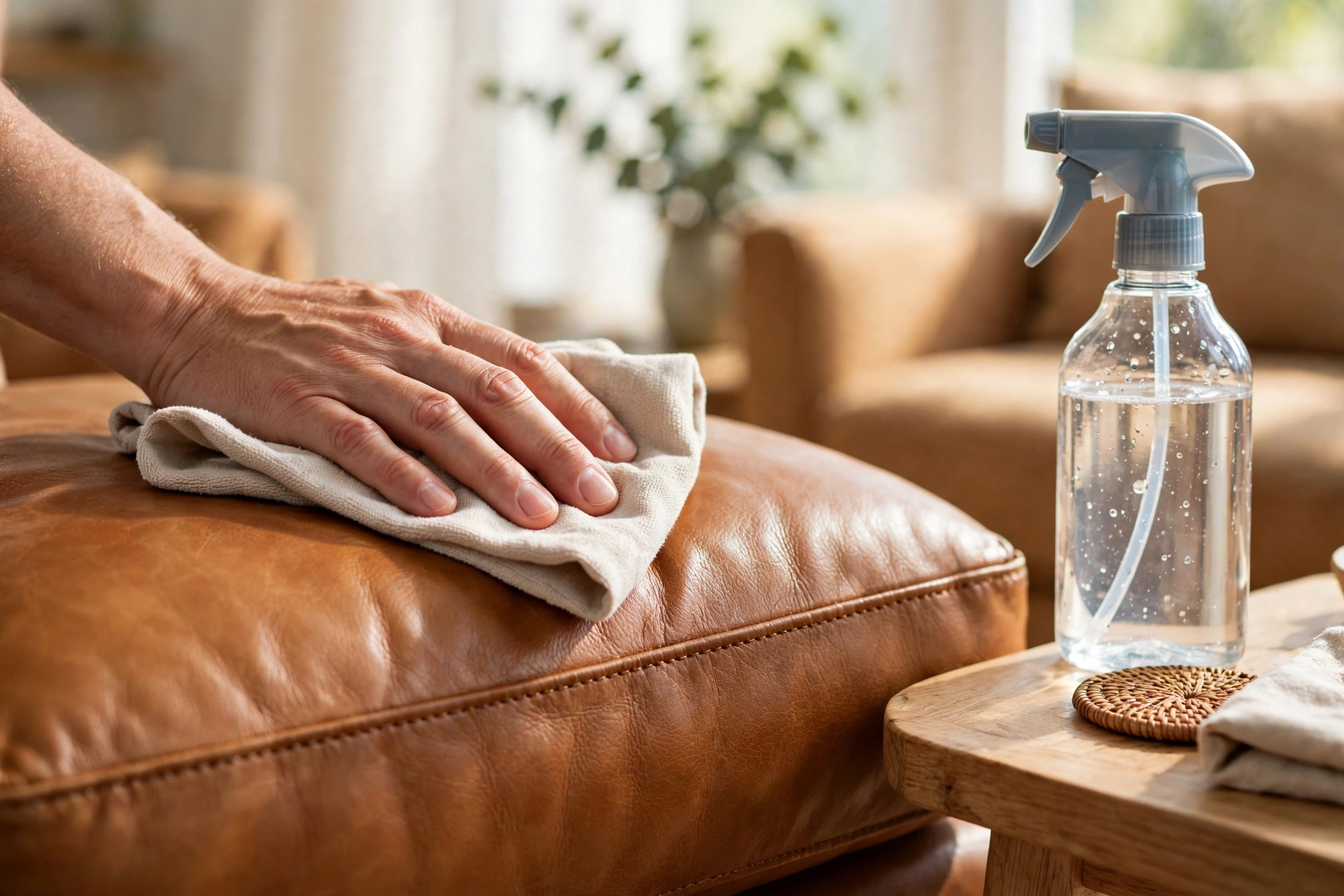
- Wipe down with a damp cloth every two weeks to remove body oils and dust.
- Condition every 6 to 12 months with a PU-safe conditioner (about $12 a bottle, which lasts years).
- Keep it out of direct, all-day sunlight — UV is leather’s fastest aging agent.
- Address scratches within days, not months; small scores are fixable, deep ones are permanent.
Total time invested over four years: maybe five hours. Total cost: one $12 bottle. But skip the conditioning for two straight years and you will be buying a replacement — peeling PU leather is not a repair situation. I wrote a longer version of this routine in my PU leather bed frame care guide, including the exact conditioner mistake to avoid.
Fabric Upholstery Care: What Actually Works
Fabric’s maintenance is more frequent but lower stakes. My velvet routine: weekly lint roller, monthly vacuum with the upholstery brush, and a soft clothes brush stroked in one direction when the pile flattens. Total: maybe 20 minutes a month, and the chair still looks showroom-new at the four-year mark.
One tip most buyers miss: check the cleaning code tag under your fabric furniture before you buy anything. W means water-based cleaners are safe, S means solvent-only (no water), WS means both, and X means vacuum only. That little letter decides whether a spill is a 5-minute fix or a professional-cleaner invoice. I keep a deeper stain-by-stain walkthrough in my guide to how to clean velvet furniture — the cleaning-code system dates back to 1969, and it still runs the whole industry.
Bonded Leather vs Real Leather: The $100 Trap
The leather market has a trap I wish someone had warned me about: bonded leather vs real leather are completely different products that look identical on day one. Bonded leather is leather dust and fibers glued onto fabric with a plastic coating. It typically starts peeling in 2 to 5 years (my estimate from owner reports, not a lab test). Genuine top-grain leather typically lasts 15 to 25 years with conditioning.
PU leather — what my bed frame uses — sits in between: a solid polyurethane layer bonded to fabric. It behaves like the real thing for liquid resistance but will eventually delaminate at stress points, usually after 5 to 10 years in my experience. My frame is at year four with zero delamination so far.
The buying rule is simple: a $299 PU leather bed frame is honest value at its price. A $599 sofa labeled just “leather” with no grade specified is where you get burned — if the listing will not say “top-grain” or “full-grain,” assume bonded. That $100 price gap between bonded and PU at checkout can cost you a full replacement in year four.
Fabric vs Leather Cost Per Year: The Math
Here is the part that changed how I shop. Spread the price over the years each piece realistically lasts:
- $299 PU leather bed frame ÷ 8 years (my conservative estimate) = about $37 a year.
- $328 velvet accent chair ÷ 7 years (my estimate; the fabric still looks new) = about $47 a year.
- A $599 grey velvet Chesterfield-style sofa ÷ 10 years = about $60 a year — and Chesterfields age well, as my velvet Chesterfield durability notes detail.
- A $400 bonded-leather couch that peels at year 3 = $133 a year — the most expensive option on this list.
The cheapest per-year seat is usually the mid-priced honest product, not the bargain. And the market agrees: The Insight Partners puts the global leather furniture market at $14.07 billion in 2025, growing to $20.91 billion by 2034 at 4.5% a year — growth the analysts tie directly to durability demand. People keep buying leather because the good versions outlive the cheap ones by a decade.
My Verdict: Buy This If…
Four years, two materials, one clear answer for each kind of buyer. Choose leather if you eat and drink on your furniture, you have drooly pets, or you want the easiest spill cleanup ever invented — and commit to conditioning it twice a year. Choose fabric if you nap, you live somewhere hot, you have claw-kneading cats, or you want the warmest sit on a winter night — and commit to the lint roller.
My personal household runs both, and that is the real answer: leather where liquids happen, fabric where bodies rest. The $299 PU leather bed frame has been the workhorse; the $328 navy velvet accent chair has been the joy. I would buy both again tomorrow, and that is the highest praise four years of real life can give furniture.
Shopping for your own test subjects?
Browse FLNORW MALL’s furniture collection — honest prices, real materials, and my full four-year verdict behind every pick.


