Round vs Rectangle Dining Table: Which Shape Actually Fits Your Room?
The 36-Inch Rule Every Dining Room Has to Obey
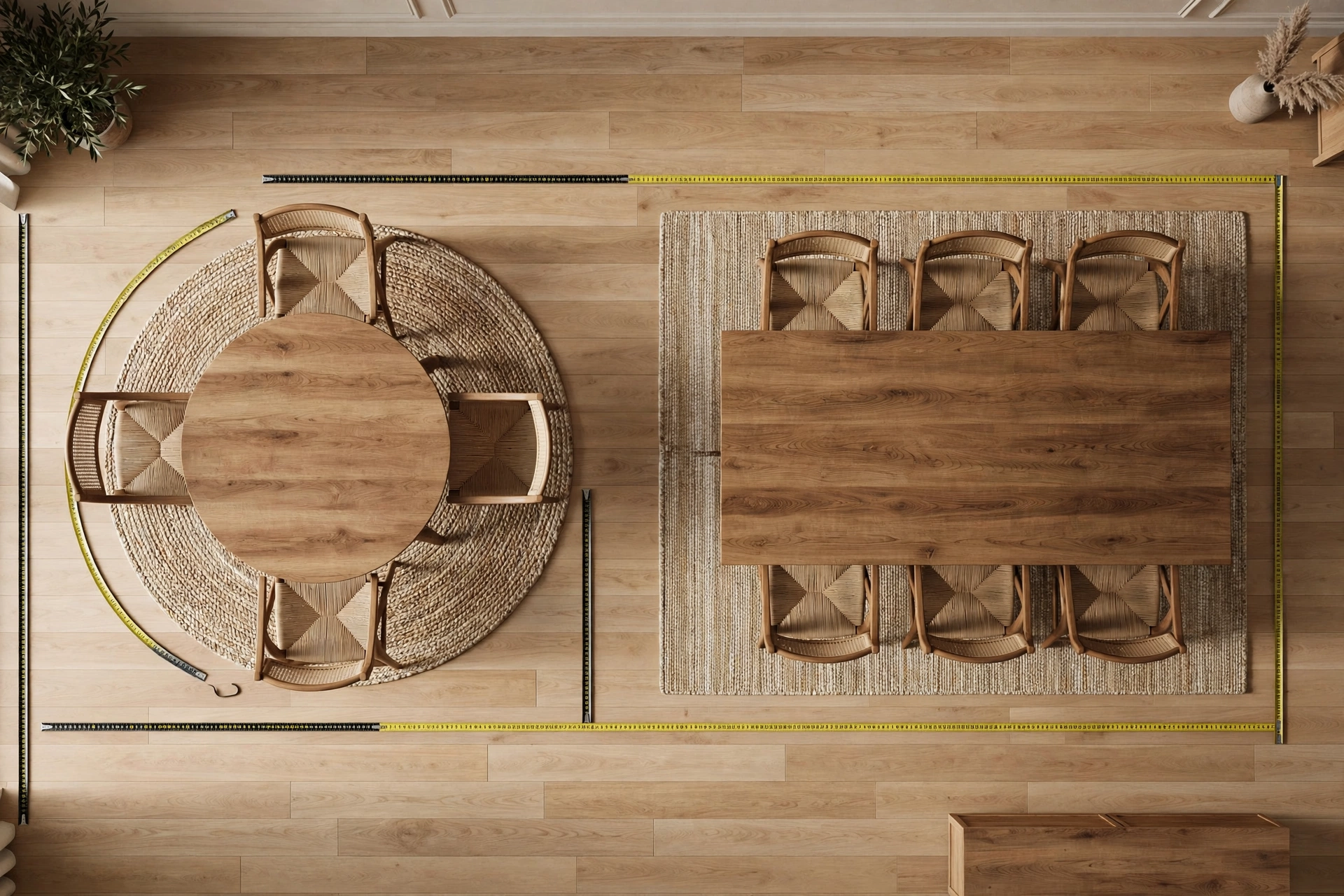
My dining room is exactly ten by twelve feet. I know this because I spent an entire Saturday with painter’s tape and a tape measure, laying out ghost rectangles and circles on the floor while my coffee went cold. I had been scrolling dining tables for two weeks — round ones looked cozy and honest in the photos, rectangles looked like the adult choice — and I refused to spend a dollar until the tape told me which shape actually fit the room. That afternoon taught me more than a year of showroom browsing. Here is the round vs rectangle dining table math, the seating charts, and the verdict I would hand anyone shopping for one.
Designers cite one clearance standard over and over: leave about 36 inches between the table edge and the wall — or any furniture — so a person can pull out a chair and walk behind it. Squeeze it to 30 inches and people will shimmy. Under that, forget hosting. So the first question is not round or rectangle. It is how much floor you have, minus 72 inches of walkway (36 on each side). My 10×12 room gives me a usable zone of roughly 48 by 72 inches. That number ended my dreams of a long farmhouse rectangle, and it is the only honest starting point for any dining room layout.
Where Round Dining Tables Win
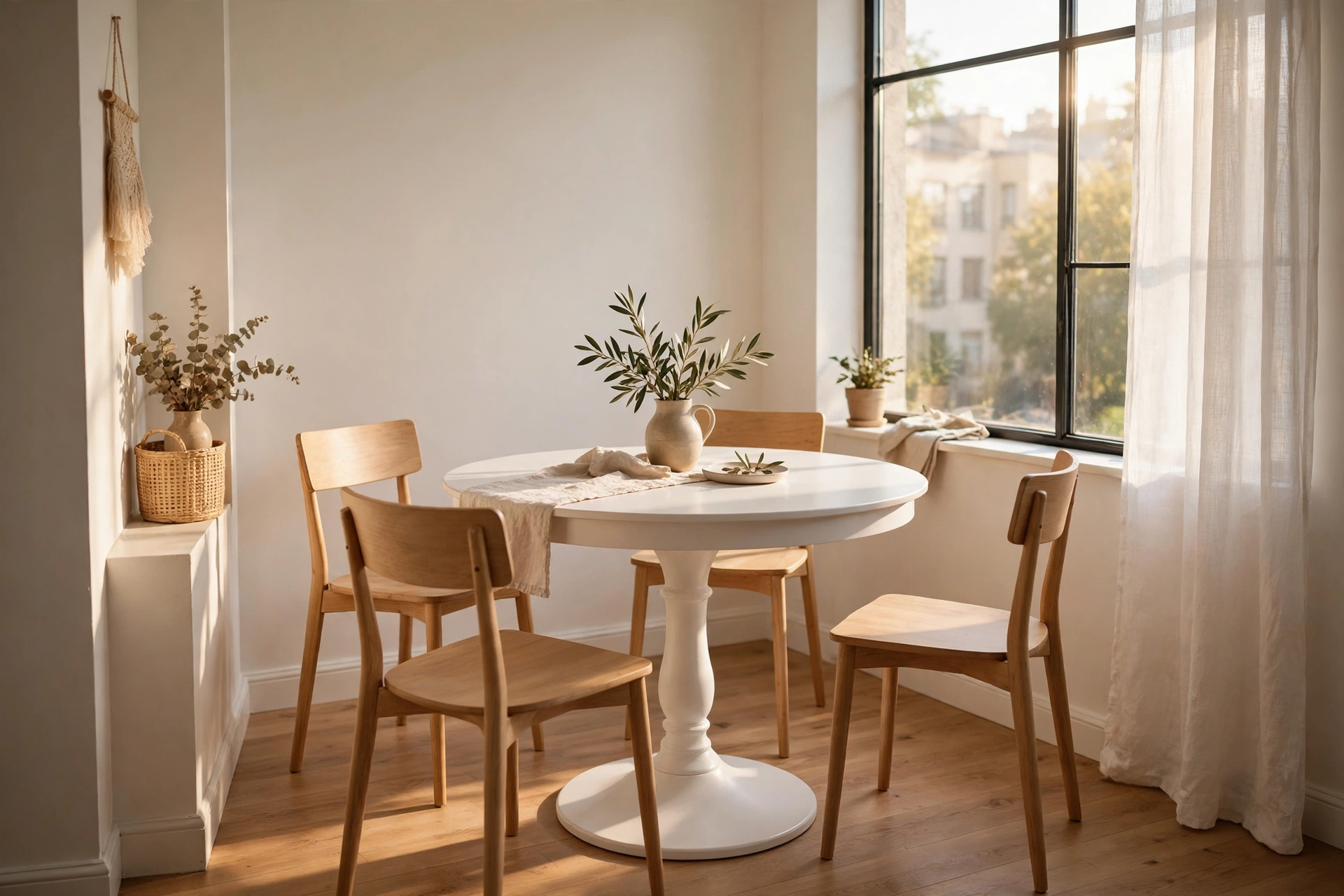
A round table wastes no corners, and corners are where small rooms bleed space. A 42-inch round table seats four in comfort and squeezes six for a holiday, and its whole footprint is one 42-inch circle — in my 10-foot-wide room that leaves 39 inches of clearance per side, comfortably above the 36-inch rule. Pedestal bases are the quiet hero here: with no corner legs, chairs slide in from any angle and knees never hunt for a table leg.
My favorite concrete example is the 42.1-inch round white pedestal table I kept coming back to — $299, 28.74 inches tall, a 44-pound MDF top on metal legs, listed for 4 to 6 people. At roughly $50 to $75 a seat (my rough estimate), it is one of the cheapest ways I have seen to seat a crowd. Round also wins the conversation game: everyone faces the center, nobody gets the dead-end corner seat, and serving dishes reach every hand. And for homes with toddlers — I once watched a two-year-old sprint full-speed into a rectangular table corner, and the memory is physical — a round dining table for small spaces has no corners to childproof.
Where Rectangle Tables Win
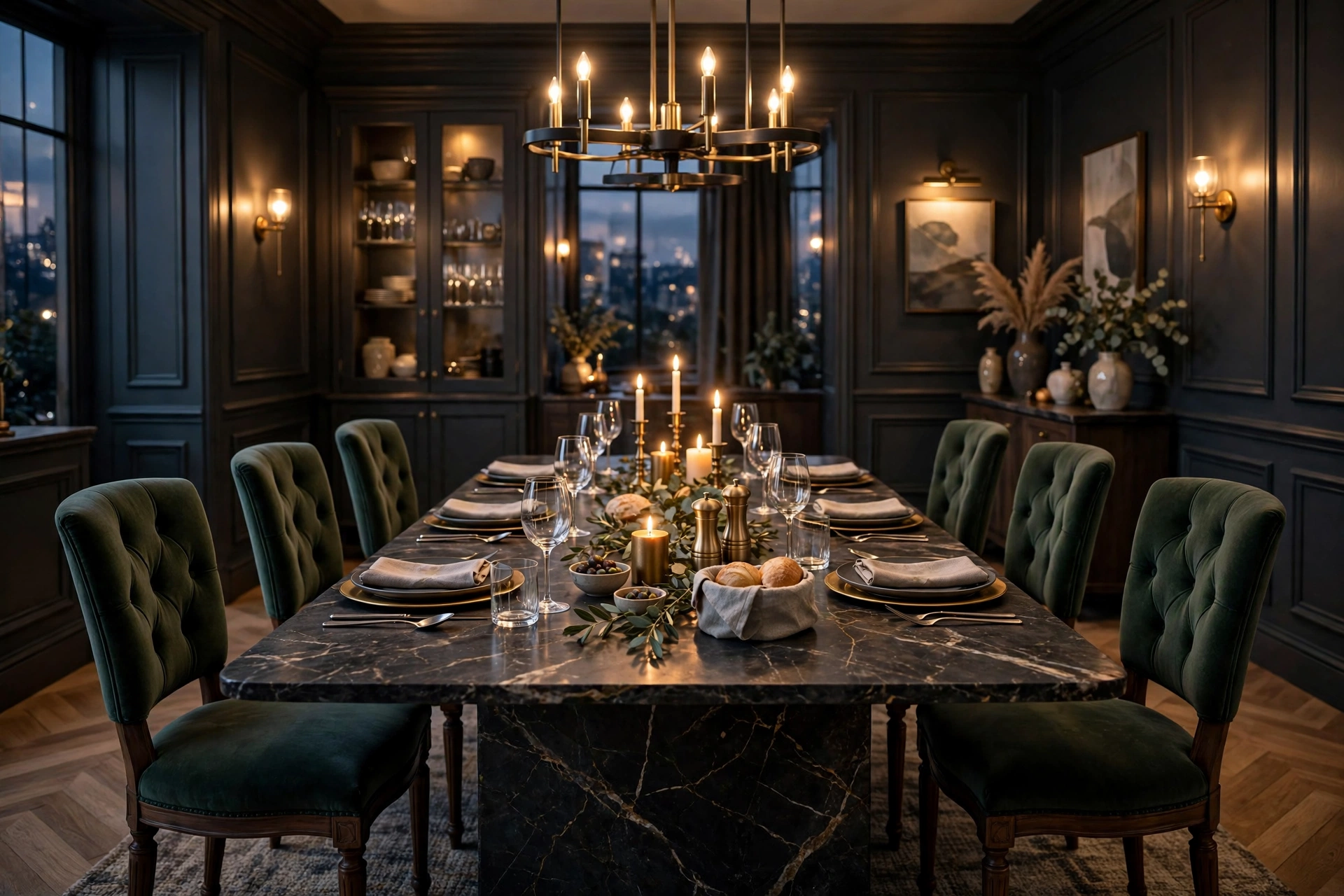
Rectangles win the moment the guest list grows. A 72-inch rectangle seats six in comfort and eight in a pinch, and you can push it against a wall for daily life, then pull it out for parties — something a round table can never do gracefully. Rectangles also come in extendable versions, and this is where the math gets fun. The stretchable square dining table that lived in my cart for a week runs 47.24 inches long closed and pulls out to 62.99 inches — same table, four weeknight seats or six-plus holiday seats, $600, black printed-marble MDF top on a steel X-base, tools included for assembly. And aesthetically, long rectangles suit narrow galley-style dining rooms and open-plan layouts where the table doubles as a visual divider. If you host more than three times a year, rectangle dining table seating starts as the favorite.
Seating Math: How Many People Each Shape Really Holds
The industry standard is about 24 inches of table edge per diner. For a round table, divide the circumference by 24: a 42-inch round gives roughly 132 inches of edge, which is five and a half people — four comfortably, six with elbows touching. A 48-inch round gets you six in comfort. For a rectangle, count the perimeter: a 60×36-inch table has 192 inches of edge, good for six comfortably and eight tight. Here is the cheat sheet I taped to my fridge:
- 36–44″ round → 4 comfortably, 6 max
- 48–54″ round → 6 comfortably, 8 max
- 60″ rectangle → 6 comfortably, 8 max
- 72″ rectangle → 6–8 comfortably, 10 max
If you want the full holiday version of this math, I worked it out table by table for Thanksgiving in this seating-capacity guide — including the 24-inch rule, bench seating, and the fixes when the table comes up short.
Round vs Rectangle Dining Table: My $299 vs $600 Cart Test
So I put two real tables head to head in my cart. Contender one: the 42.1-inch round white pedestal table, $299, 44.09 pounds, 28.74 inches tall, 4–6 people. Contender two: the stretchable square dining table in printed black marble, $600, 89 pounds, 47.24 to 62.99 inches long, MDF plus steel, assembly required. On pure cost per seat, the round table wins: roughly $50–$75 a seat versus $75–$100 for the stretchable (rough estimates). But cost per seat is the wrong metric if the table does not fit your life. The round table fit my 10×12 room with room to spare and would have been in my kitchen by Friday. The stretchable fit only if I committed to keeping it closed on weeknights and extending it for holidays — which, honestly, is what most people do anyway, and then they discover the extension leaves live in a closet for eleven months a year. I almost bought the stretchable. Twice.
One more data point that pushed me: per RentCafe and Yardi Matrix 2025 data, the average newly built US apartment is about 887 square feet — dining rooms in units like that are tight by default, which is exactly why this dining table shape guide question keeps coming up for renters and first-time buyers.
Corners, Kids, and Walkways: The Real-Life Tiebreakers
Three tiebreakers that have nothing to do with square footage. One: traffic. If the dining room is a walkway to the kitchen or patio — mine is — a round table’s forgiving edges save shins daily, while rectangles create pinch points at the corners. Two: kids and grandparents. Round tables have no corners to pad and let a booster seat slide in anywhere. (Bench seating on one long side of a rectangle can beat both, but that is a different article.) Three: the light. My dining room has one window on the short wall — a rectangle placed parallel to it looked staged and correct, while the round table looked friendlier in the center. Silly, but you live with the thing. Also: check your door swing. My dining room door opens inward and would have clipped the corner of a 72-inch rectangle — a tape-measure detail no product page will warn you about. If your room is truly tiny, a small 3-piece dining set with tuck-under stools can buy back floor space either shape cannot.
My Verdict: Round vs Rectangle Dining Table — Buy the Shape Your Room Allows
Here is my honest verdict after a Saturday of tape and a month of second-guessing. If your dining room is under about 11×12 feet, buy round — a 42 to 48-inch round table will seat your family, survive holidays with a card-table annex, and never fight the walls. If you have the length and you host, buy rectangle, and seriously consider an extendable one: the stretchable 47-to-63-inch table is the closest thing to two tables for the price of one. And whatever you buy, do the tape test first. Twenty minutes, zero dollars, and the only review that matters — because no table, however beautiful, survives a room it does not fit. Browse the full range at FLNORW MALL and measure twice.
Still deciding? I put the full Thanksgiving seating math — every table size, bench tricks, and the fixes when chairs run out — in this guide. Read that before you spend a dollar.