Velvet Bar Stools with Backs: My $236 Kitchen Island Fit Guide
Why I Started Caring About the Backrest
For two years, my kitchen island was furnished with a pair of backless wooden stools I had bought on a whim. They were fine for the first ten minutes. Coffee, a quick scroll through emails, done. Then my daughter started doing homework at the island after school, my husband started eating breakfast there, and I started parking my laptop there on slow mornings. Suddenly “fine for ten minutes” was not fine at all. By minute twenty, everyone was shifting, leaning elbows on the countertop, asking for a cushion. That is the exact problem a backrest solves — and it is why I ordered a $236 pair of velvet bar stools with backs in gray from FLNORW MALL to replace them.
This review is not a press release. I measured my island, I sat in these stools, I spilled on one of them (more on that later), and here is the honest accounting.
What $236 Buys You: Velvet Bar Stools with Backs, Spec by Spec
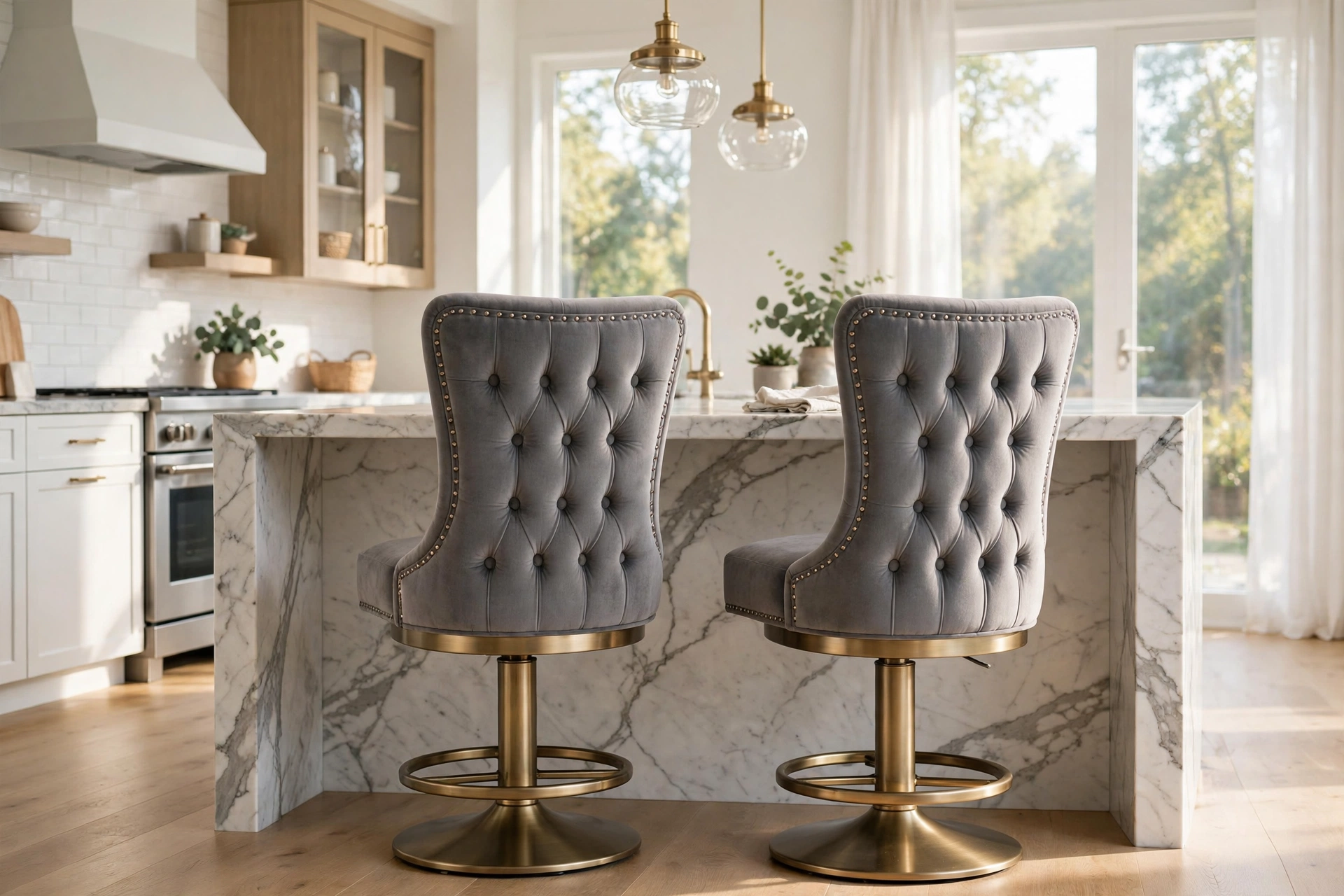
The listing calls them the TS Modern Swivel Bar Stools, but nobody remembers that name. What matters: it is a set of two, upholstered in gray velvet, with a tall button-tufted back, rivet trim along the curve of the backrest, a metal pull-ring footrest, and a full 360-degree swivel seat. Each stool stands 41.54 inches tall with a 21.65 by 16.93 inch footprint, weighs about 22.5 pounds (light enough to slide out with one hand), and is rated for 250 pounds per stool on solid wood legs. The pair was in stock when I ordered, item code W2311P149213, and the site lists USA-only shipping with delivery inside 8 days.
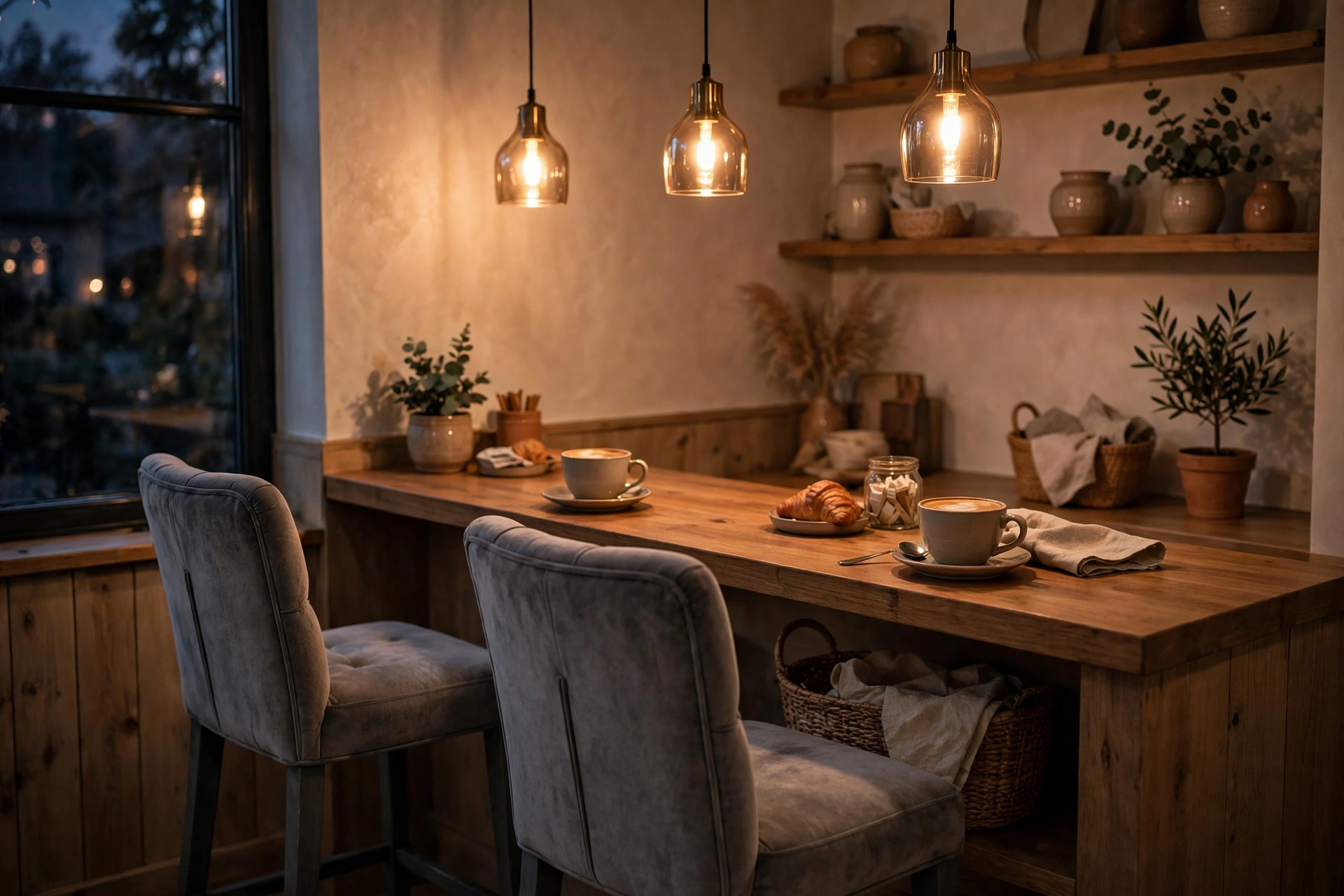
The velvet is the visual headline. In person it reads softer and more expensive than the photos suggest — the button tufting gives the back a tailored, almost wingback feel, and the rivet trim is actual metal, not painted plastic. My living room is nothing fancy, but these stools make the island corner look like I planned it.
The Seat-Height Math (Where People Go Wrong)
Here is the part I wish someone had told me before my first stool purchase. Bar stool height is not decorative — it is a fit problem with one rule: leave 10 to 12 inches between the seat and the underside of your countertop. That gap is what keeps your thighs from hitting the counter and your back from hunching.
The listing gives an overall height of 41.54 inches, which puts the seat in the standard bar-height band — roughly 29 to 31 inches off the floor (my estimate from the proportions; the listing does not publish the exact seat height). That means these stools are built for bar-height surfaces around 40 to 44 inches. My island measures 42 inches, so the fit is textbook: about 12 inches of legroom.
If your island or counter is 36 inches — standard counter height — these will sit you too high and you will be hunching over your plate. You need counter stools instead. Before you buy any stool, do this:
- Measure your surface height from floor to the underside of the countertop.
- Subtract 10–12 inches. That is your target seat height.
- Match to the stool. 29–31 inch seats fit bar-height islands; 25–27 inch seats fit counter-height ones.
- Leave elbow room: allow about 24 inches of counter width per stool — my island fits two comfortably, three would be a squeeze.
The Swivel Question: Gimmick or Genuinely Useful?
I was skeptical about the 360-degree swivel. It sounded like a feature list filler. In practice, at a kitchen island, it earns its keep daily. I turn to talk to my daughter while she does homework beside me, swivel toward the stove to check a pot without standing, then rotate back to the laptop. With a fixed stool you do a clumsy three-point turn with your feet; with the swivel you just twist.
One honest caveat: a swivel seat plus a plush velvet cushion can make the stool drift away from the island on hard floors if you lean back hard. The stools are light — that 22.5-pound weight I mentioned. A cheap felt pad under each leg (a dollar at any hardware store) stops the wandering and protects the floor at the same time.
Velvet in a Kitchen — The Honest Take
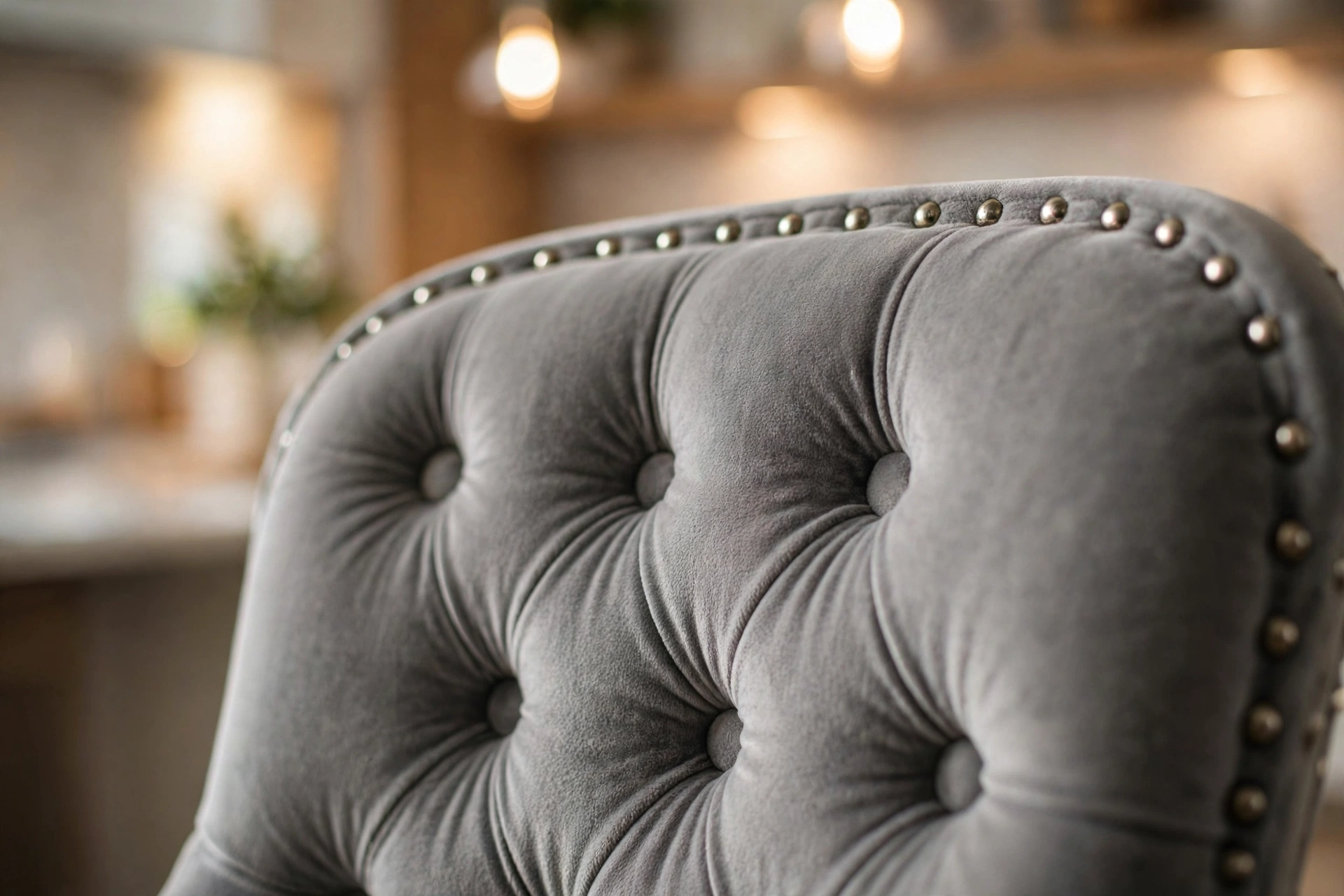
The question everyone asks: is velvet too delicate for a kitchen? My honest answer, eight weeks in: it is not precious, but it is not bulletproof either. The fabric on this pair is a tight, short-pile velvet — not the plush long-pile kind that shows every fingerprint. Crumbs brush off. Dust needs a lint roller once a week, which takes about ninety seconds for both stools.
The real test came last week: tomato soup, a small splash, right onto the seat cushion. I blotted it immediately with a damp cloth, no rubbing, and it lifted completely. Velvet’s short pile helps here — there is no deep nap for liquids to sink into. That said, I would not recommend velvet bar stools with backs for a household with a toddler who eats at the island unsupervised. My daughter is twelve and knows the drill; with a three-year-old and a sippy cup, I would pick a wipeable PU leather stool and sleep better. Know your own chaos level.
The 45-Minute Comfort Test
To settle the backrest question properly, I did something deliberate: a full 45-minute work-from-island session on a Tuesday morning, coffee, laptop, the works. The tall back supports the mid-back rather than just the lumbar — the tufting is soft enough that it does not dig in, and the backrest is wide enough to shift position without sliding off the edge. By minute 40 I was still sitting normally instead of draped over the counter. On my old backless stools, I would have migrated to the dining table by minute 25.
For comparison, FLNORW also sells a $188 round bar stool set with a built-in shelf in rustic brown — cheaper per set, and the mid-shelf is clever for small kitchens. But the seat cushion is narrower (13.4 inches) and the overall feel is pub-stool firm rather than lounge-chair soft. If your island is where people actually linger — meals, homework, work-from-home — the velvet pair’s taller back and thicker cushioning justify the $48 difference. If your stools are mostly for quick perches, save the money.
The Numbers Behind the Bar Stool Boom
I looked up the market data because the whole category seems to be everywhere right now. According to a Dataintelo industry report published in 2025, the global bar stools market was valued at $3.07 billion in 2025, with residential use accounting for 64.3% of demand — kitchen islands with integrated seating have become standard in new builds, not upgrades. Fact.MR’s 2025 report lands in the same territory, estimating $4.4 billion in 2025 with 61.3% of 2026 demand coming from residential buyers, and projecting roughly 5.5% annual growth through 2036.
The driver is boring but real: open-concept kitchens keep getting bigger, islands keep getting longer, and the old dining-room-table model of family meals keeps losing ground to eating where the food actually is. Velvet and upholstered finishes are riding that wave as the “dressed-up” option — the middle ground between a $50 backless metal stool and a full dining chair.
Verdict: Who Should Buy Velvet Bar Stools with Backs
After eight weeks, here is my verdict. Buy these velvet bar stools with backs if your island is bar height (40–44 inches), if people actually sit at it for more than twenty minutes, and if you want the seating to look like a design choice rather than an afterthought. The 360-degree swivel, the metal pull-ring footrest, and the 250-pound capacity all work as advertised, and $236 for a pair lands well under what comparable upholstered pairs cost on Amazon or Wayfair.
Skip them if your counter is 36-inch counter height — you will be sitting too tall — or if small children or pets treat your island as a crash zone. Velvet rewards households that are at least semi-civilized. For everyone else, the backrest is not a luxury; it is the difference between a stool people use and a stool people avoid.
See the pair: the gray velvet swivel bar stools with backs — $236 for two, in stock at FLNORW MALL. Pair them with a small-space breakfast table set if your kitchen needs the full setup.