I Built a $598 Mudroom Organization System. Winter Has Met Its Match.
I Built a $598 Mudroom Organization System. Winter Has Met Its Match.
Last November, I stood in my front hallway at 7:40 in the morning, holding a coffee that was getting cold, and watched my six-year-old fish one wet mitten out from behind a pile of winter boots. That was the day I stopped calling our entryway “the foyer” and started calling it what it was: a bottleneck. We had no mudroom and no system at all — just six feet of wall, a front door, and four people who all needed to get out of the house on time.
So I built one. Not a renovation — a drop zone, and honestly the best mudroom organization $598 can buy. A 4-in-1 hall tree with a storage bench and seven coat hooks, plus a solid acacia wood shoe bench, tucked against the wall by the door. Total damage: $598. It survived last winter intact, and this little corner of the house has quietly become my favorite home upgrade per dollar spent.
Mudroom Organization, Winter Edition: The Gear Math
Winter does not add one coat per person. It adds a coat, boots, a hat, gloves, a scarf, and — if you have kids — a school bag that somehow weighs more than the child carrying it. Four people times five to six items is 20+ items flowing through the entryway every single day, each one wet, muddy, or both.
The housing math makes it worse. A LendingTree analysis of U.S. Census data (August 2026) found the average new single-family home sold in 2025 measured 2,409 square feet, down 11.6% from 2,724 square feet in 2015 — while the average price per square foot climbed 71.9% over the decade, from $100.02 to $171.95. Less house, more expensive per foot. When square footage shrinks, the entryway stops being a hallway and becomes a machine that has to earn its keep.
The One-Hook-Per-Person Rule: My Drop-Zone System
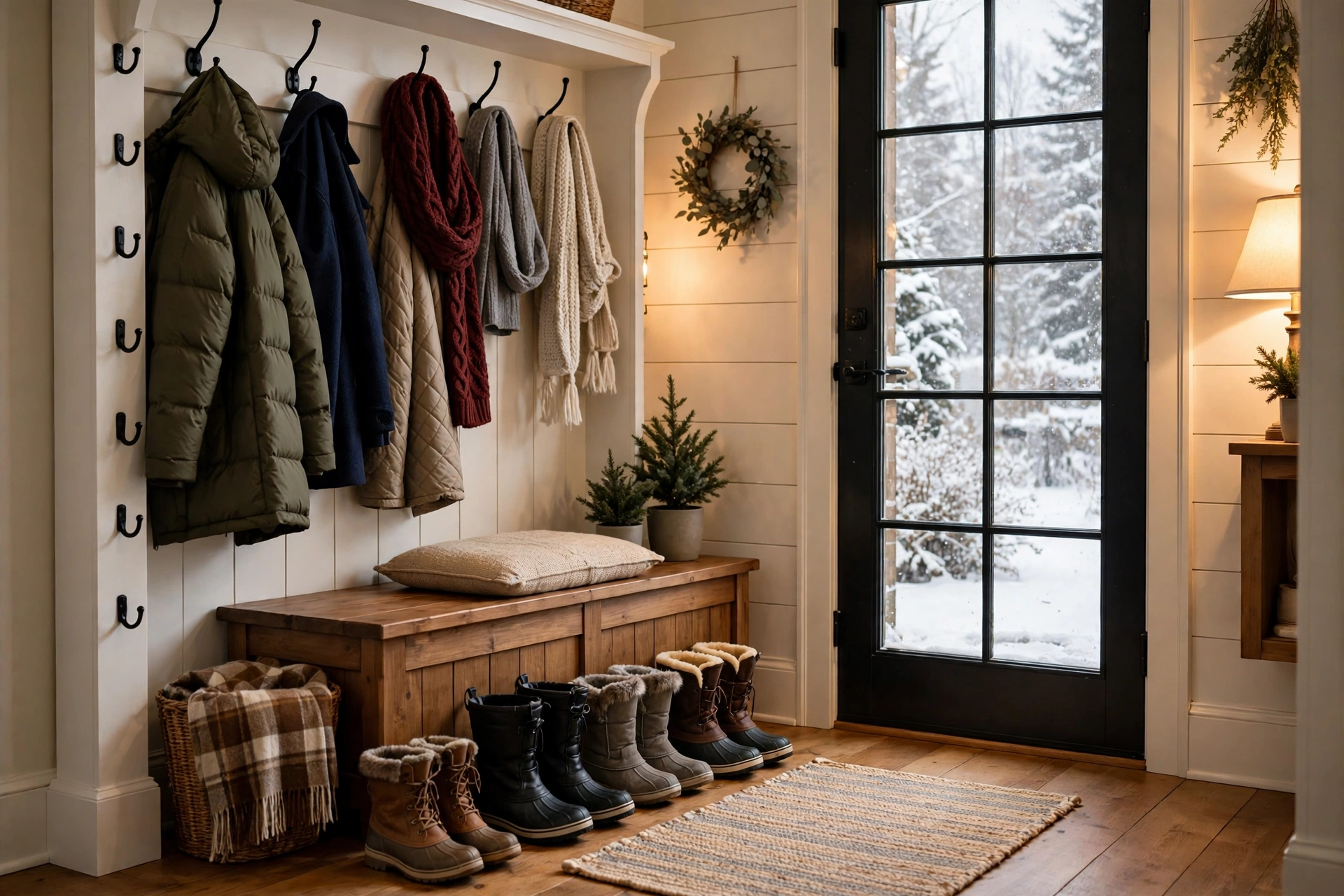
The system is embarrassingly simple. Each person gets one hook for the current-season coat, one spot on or under the bench for daily shoes, and one small bin for gloves, hats, and the earbuds that multiply in winter pockets. Everything off-season lives in a closet. That is the whole system, and it works because it has a capacity limit — the hook is full, so the old coat has to go somewhere else.
I test it with what I call the 40-second rule: from front door to car keys in hand in under 40 seconds, without hunting for anything. Before the drop zone, our morning average was closer to four minutes of shouting. Here is the setup in order:
- Hooks at coat height — one per person, with a second lower row for kids’ bags.
- A bench to sit on — because lacing boots while standing is how mornings go wrong.
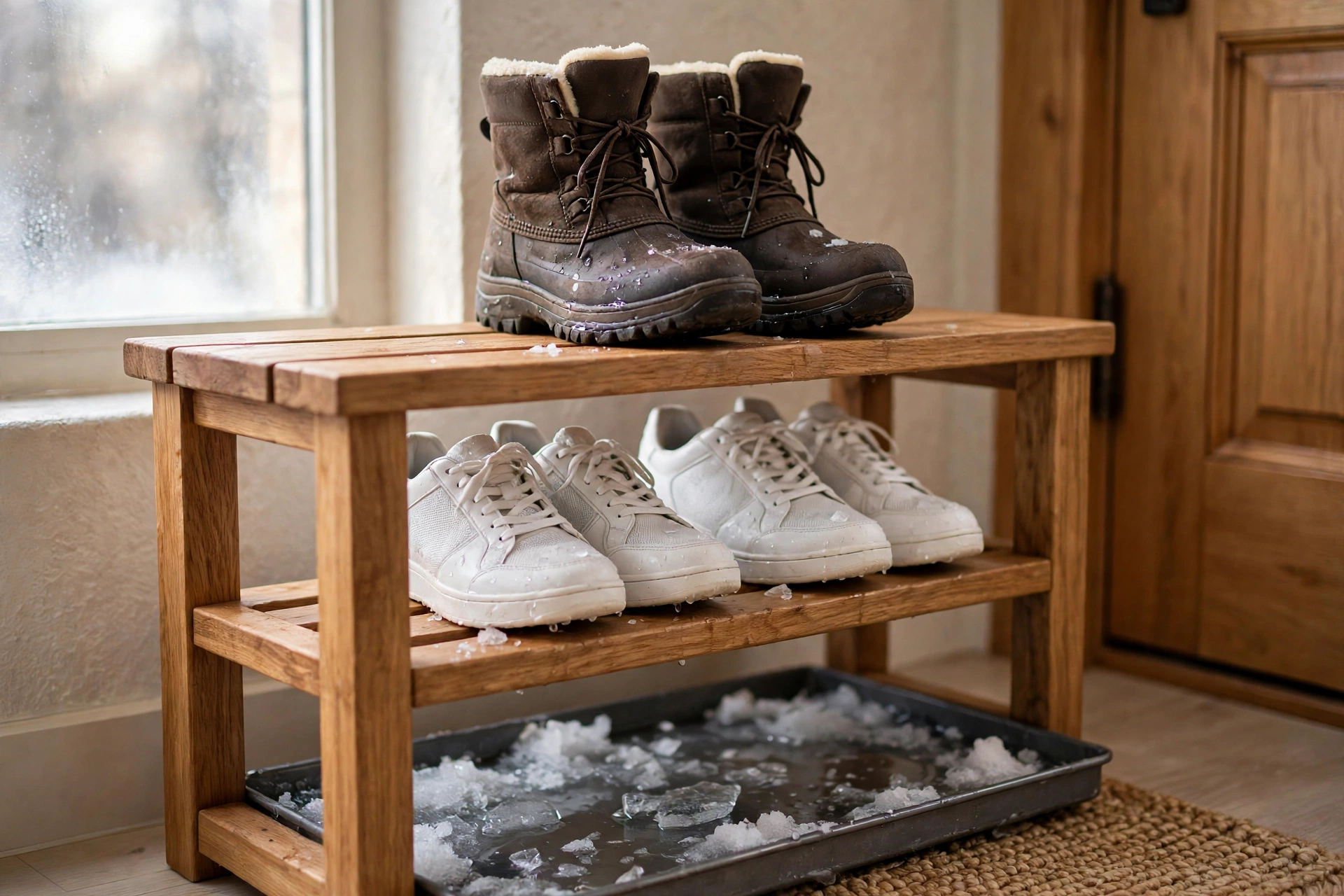
- A tray for melt — boots drip; give the water somewhere to go that is not your floor.
- One bin per person — for the small stuff that otherwise migrates to every flat surface in the house.
- A Sunday 10-minute reset — return strays, rotate coats if the temperature swung, done.
The Hall Tree That Does Four Jobs
The backbone of the setup is the 4-in-1 hall tree with seven coat hooks and a storage bench from FLNORW MALL — $499, and honestly the piece that makes the whole thing look intentional instead of improvised. The name is a mouthful, but the “4-in-1” part is real: it combines a hanging entryway shelf, a storage bench, seven black metal hooks, and four storage cabinets plus a drawer on metal slides.
The numbers that mattered to me: 78.7 inches wide by 15 inches deep by 72 inches tall, which fit a 42-inch hallway with room to walk past. Each hook is rated for 11 lbs — plenty for a winter coat — and the bench seat handles 154 lbs, with an overall capacity over 400 lbs. My favorite trick: the unit splits into four pieces that can be used separately, so I ran the shelf section down the hallway as extra storage while the bench-and-hooks core guards the door.
Two honest caveats. First, it is particle board with veneer, not solid wood — respect the hook ratings and do not treat it like a gym rack. Second, it ships at 163.9 lbs and takes about 2.5 hours with two people (a power drill is recommended); once assembled, it is not moving again. It does include an anti-topple device — use it, especially with kids who will absolutely try to swing from the hooks.
The $99 Shoe Bench That Ended the Boot Pile
The second piece is the acacia wood shoe rack bench — $99, and the hardest-working ninety-nine dollars in my house. It is 100% solid acacia wood, 27.6 x 11 x 17.8 inches, rated to 200 lbs, with two lower tiers for shoes and a top you sit on. I weigh about 180 and sit on it every morning to lace my boots; it has never creaked.
The surface has a water-based coating with a light gloss, so it is rated for indoor and outdoor use and wipes clean — meltwater beads instead of soaking in. The edges are sanded smooth with no sharp corners, which matters because my six-year-old collides with it daily. One honest sizing note: the tiers sit 6.8 inches apart, which fits sneakers and regular shoes perfectly but not tall snow boots — those stand on the floor beside it or ride on top. I keep a cheap boot tray underneath for the drip, and the floor has stayed dry all winter.
The Cost Math: $598 vs. a Contractor-Built Mudroom
$499 + $99 = $598. A custom built-in mudroom wall — bench, cubbies, beadboard, the works — is commonly quoted in the low four figures for even a small wall (that is an estimate; get your own quotes). My freestanding version cost less than a third of that and went up in one Saturday afternoon.
Spread over five winters, that is $598 ÷ 1,825 days = about $0.33 a day for a dry floor and 40-second mornings. And here is the part renters should hear: both pieces are freestanding. The hall tree anchors to the wall with its anti-topple hardware — two screws to patch when you leave — and the shoe bench just sits there. No drilling into tile, no landlord negotiations.
The Winter Routine That Keeps It Working
Furniture alone does not stay organized; a routine does. Ours is small enough to survive a busy week. Each person keeps a maximum of two pairs of shoes at the door — the daily pair and the boots. When the temperature swings 20 degrees, we do a coat rotation: the heavy parka goes up, the light jacket comes down. The glove-and-hat bin gets audited monthly, which is when we discovered my son had been operating with three left gloves and zero rights.
Once a week I wipe down the bench top. Road salt and meltwater are quietly corrosive, and thirty seconds with a damp cloth keeps the wood coating doing its job. Total weekly maintenance: about ten minutes. The system fails gracefully, too — when it gets messy, the mess is contained to one six-foot wall instead of colonizing the whole first floor.
Why the Industry Thinks This Tiny Space Matters
I am not the only one who noticed. The National Association of Home Builders’ What Home Buyers Really Want (2024 Edition) found garage storage essential or desirable to 81% of buyers, that buyers now want homes around 2,070 square feet, and that 63% chose upscale amenities over larger square footage. When buyers pick features over size, every square foot has to work — and the entryway is the first one they judge.
Realtor.com’s 2025 home trends coverage put it bluntly: expanded storage — including mudrooms — “has staying power,” with Coldwell Banker Global Luxury’s Cindy Raney noting that buyers want storage and organization in entryways, laundry rooms, kitchens, and mudrooms alike. A compact drop zone is the budget version of that trend: five feet of wall doing the work of a whole room.
Small Entryway Mudroom Organization: No Mudroom Needed
Not everyone has a mudroom, and most of us do not have a wide foyer either. That is exactly who this setup is for. The hall tree is only 15 inches deep — shallower than most shoe cabinets — so it fits hallways where a built-in never could. If your entryway is truly a doorway with ambitions, start with just the shoe storage bench: sit, stash, done, for under a hundred dollars.
Three more small-entryway tricks that cost nothing: put hooks at two heights so kids can actually reach theirs; keep the palette light and warm so a narrow space does not feel like a tunnel; and leave the floor in front of the door completely clear — the drop zone works because everything has a home within arm’s reach of the threshold.
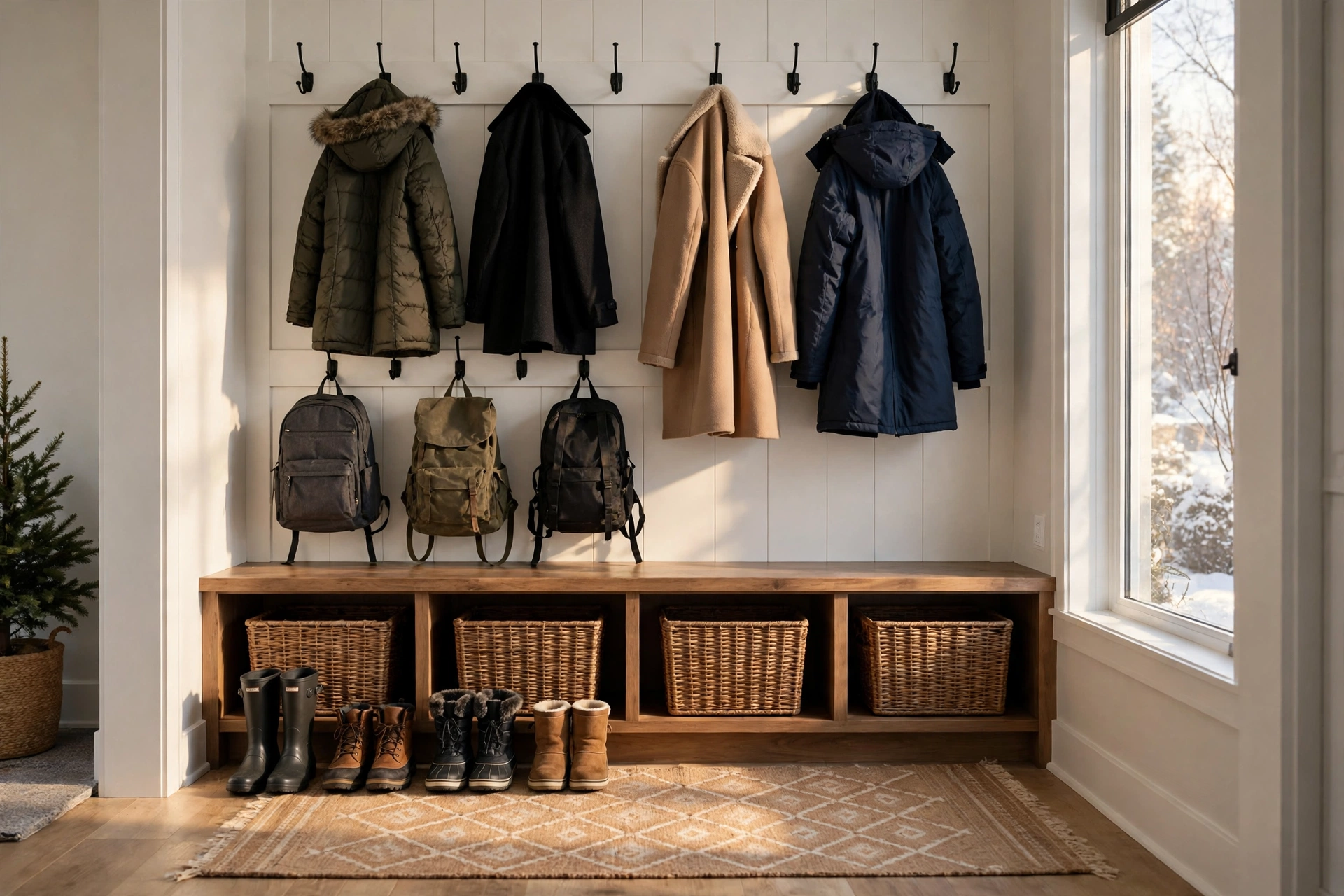
The verdict, one winter later: the 40-second rule holds, the mitten hunts stopped, and the hardwood by the front door has no salt scars. The $598 did not buy me a mudroom — it bought me the function of one, in a six-foot wall, with furniture I can take to the next house. If your mornings currently involve shouting about lost gloves, this is the cheapest fix I have found that actually sticks.
See the pieces: the 4-in-1 hall tree with seven coat hooks and storage bench ($499) and the solid acacia shoe storage bench ($99) — or browse the full furniture collection at FLNORW MALL.