I Bought a $399 Self-Cleaning Cat Litter Box. 60 Days Later, I Never Scooped Again.
Somewhere between my two cats, Biscuit and Miso, I had developed a small, daily ritual: a cup of coffee in one hand, a litter scoop in the other, crouching in front of a plastic box like a very undignified butler. Twice a day, seven days a week, for three years. I did the arithmetic on that one night — 3,652 scoops a year, roughly — and decided there had to be a better way. That is how a $399 self-cleaning cat litter box ended up in my laundry room. Sixty days later, I have not touched a scoop since the delivery box arrived.
This is the honest review I wish I had read before I bought one — what the automatic litter-box cycle actually looks like, whether the odor claims hold up, how two cats adapted to it, and the real cost math versus a $35 plastic tray.
What this thing actually is
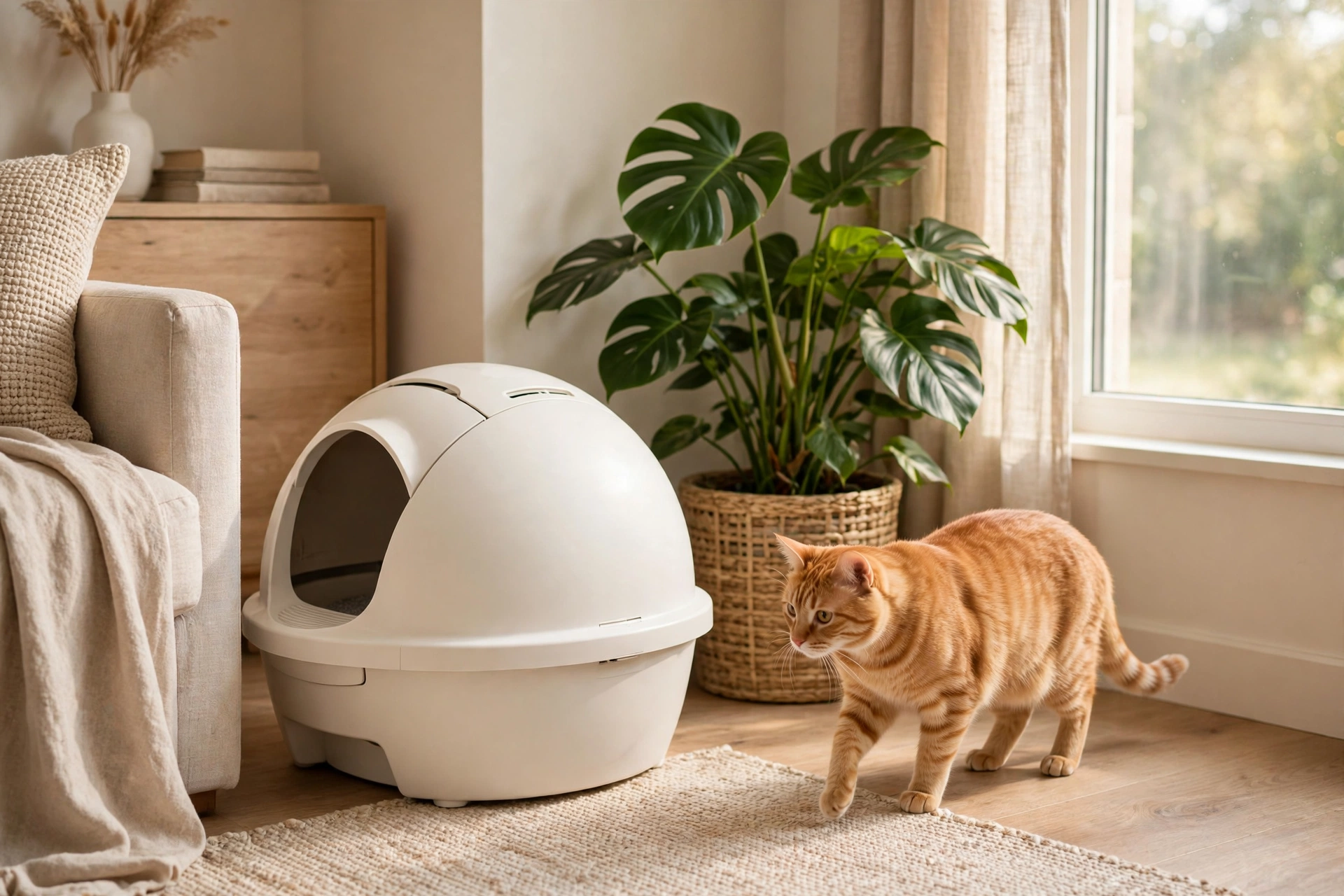
The unit I bought is the Smart Cat Litter Box sold by FLNORW MALL — a cream-white, dome-shaped box made of polypropylene, about 18.9 × 20.3 × 20.5 inches, weighing 17.64 lbs. Inside sits a rotating drum with 65 liters of interior space, sized for cats between 3.5 and 22 lbs.
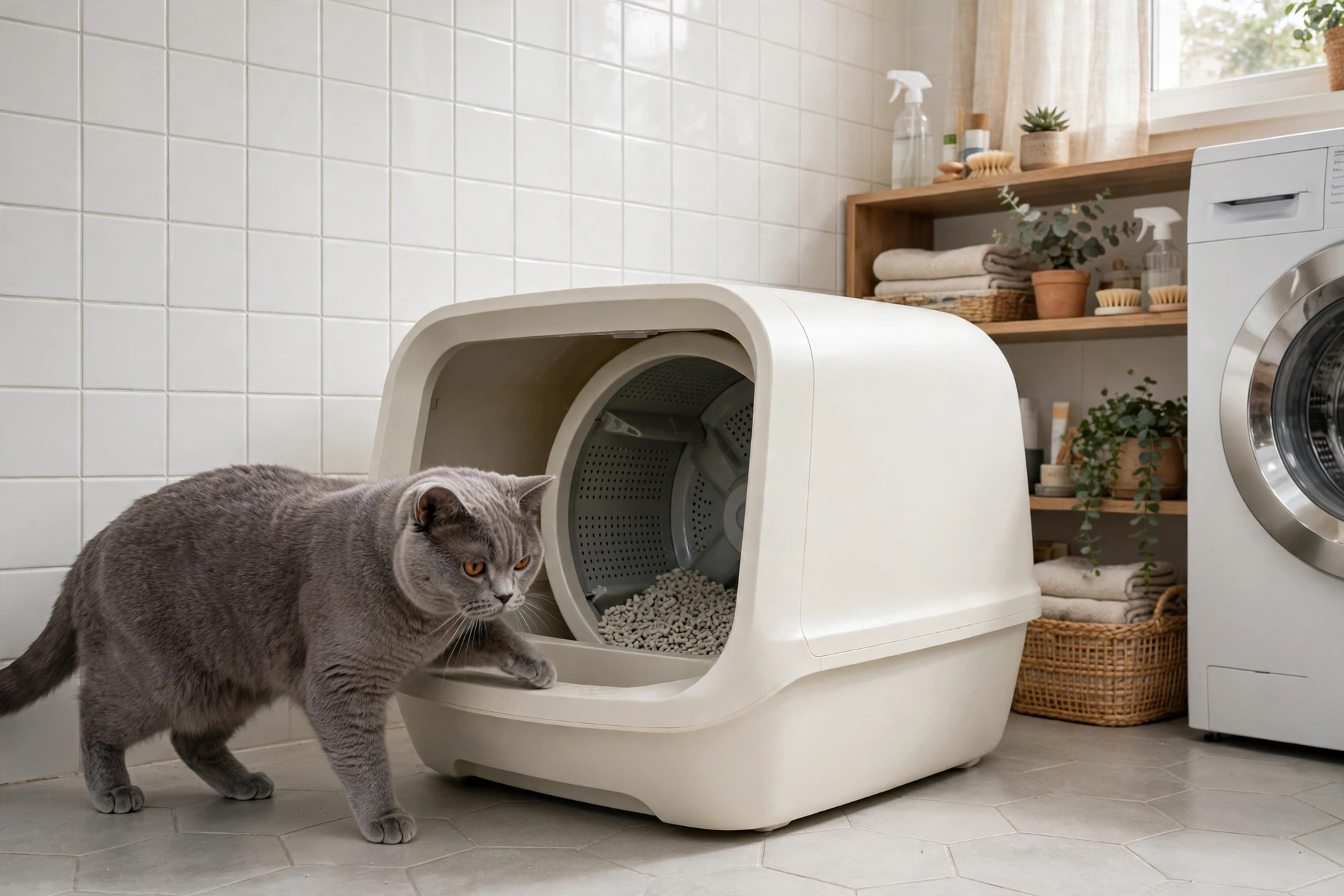
Four cleaning modes come out of the box: automatic, scheduled, manual, and emptying. The rotating shovel does the work — after the cat exits, the drum rotates, the scoop sifts clumps out of the clean litter, and a full cycle takes about 2.5 minutes. Waste lands in a concealed trash bag hidden inside the unit, so from across the room it looks like a modern pet appliance rather than a litter box.
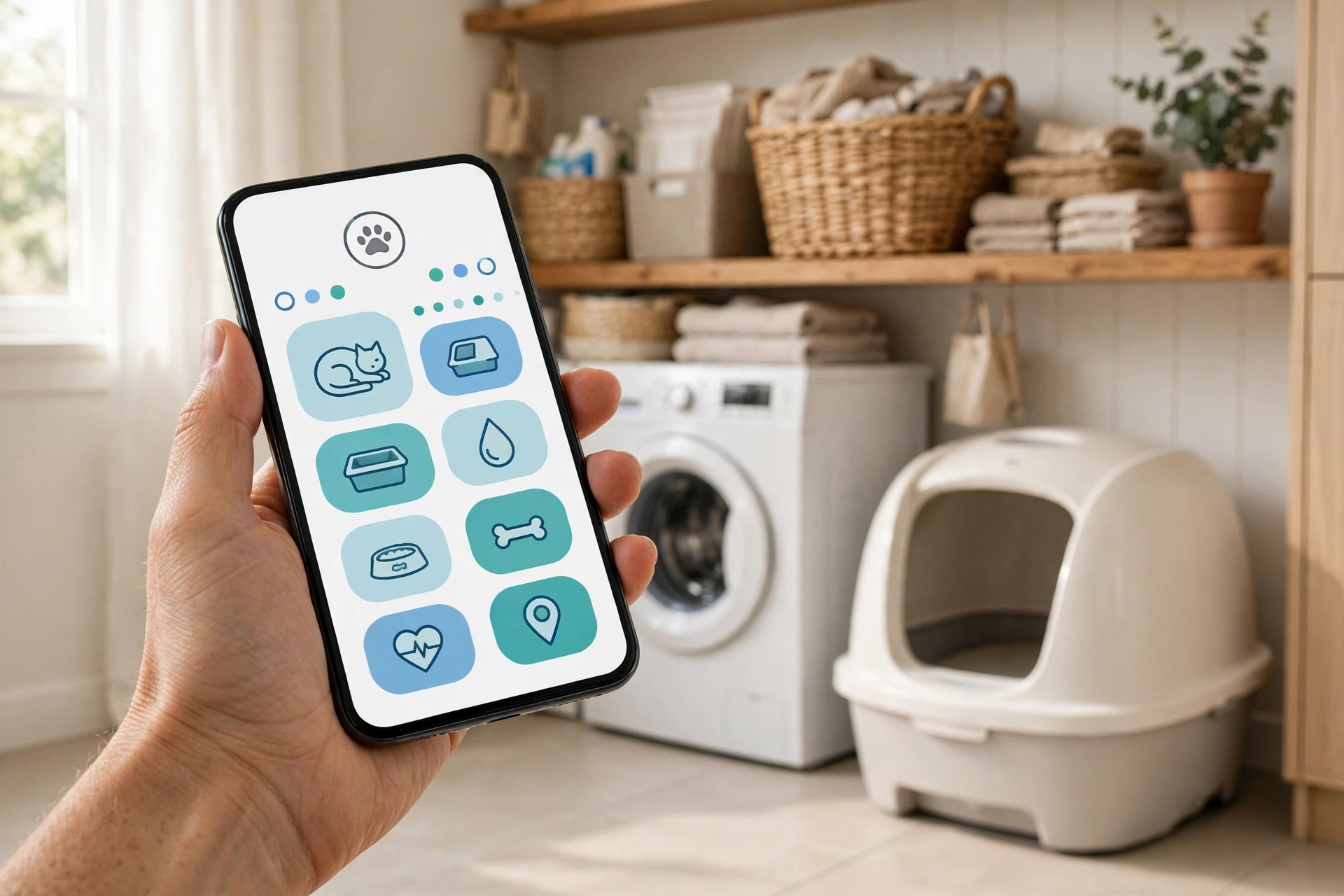
The smart part is a 2.4GHz Wi-Fi connection to the CATLINK app. From my desk or from vacation, I can trigger a cleaning cycle, set a schedule, or watch the usage log — yes, it counts how many times each cat visits. It is oddly fascinating data.
Does it actually clean, or is it just a $399 gimmick?
The honest answer: it cleans better than I did. The rotating sift method separates clumps more completely than a hand scoop, because the rake passes through the whole litter bed rather than just where my eyes happen to look. After each cycle the bed looks raked-smooth, like a tiny Zen garden.
Three things make it work: first, use a clumping litter that forms hard clumps — soft or non-clumping litter defeats the sifting. Second, keep the litter level where the manual says; too little and clumps scrape, too much and the shovel strains. Third, give your cats about three days. Biscuit walked in within an hour. Miso circled it like a suspicious detective for two full days, then decided it was fine. Every cat behaviorist will tell you the same: put the new box next to the old one for a few days rather than swapping cold turkey.
The emptying mode deserves a mention. A hinged emptying board lowers so you can pour the whole litter load out without lifting the unit — during my first full litter change I realized this was the design detail that separated this box from the cheaper ones I had looked at.
The smell question — handled
This was my biggest skepticism, and it is where the box surprised me most. The package includes an odor eliminator and activator that install on the side of the unit and decompose odor inside the litter chamber. Between that and the fact that waste gets sealed in a concealed bag within minutes rather than sitting open for hours, the laundry room no longer announces itself when I open the door.
My laundry room has no window and poor ventilation. With two traditional boxes in there before, guests absolutely knew which room was which. Now the smell is gone unless you open the waste drawer itself — which tells you the odor control is working on the right thing: the source, not the room.
The low entrance that sold me
One spec sold me more than any feature on the marketing page: the entrance is only 7.87 inches high. My old litter box had a tall front wall, and Miso, who is twelve with a stiff back leg, used to hop in with a small grunt that I tried not to notice. She now walks straight in without the little launch maneuver.
The product page lists suitability for cats from 3.5 to 22 lbs — a wide range, and with two cats of 11 and 14 lbs the interior 65L capacity has proven genuinely roomy. I never see either cat half-hanging out of the entrance mid-visit, which used to be Biscuit’s signature move in the old box.
Four safety systems, because it moves
Anything with a rotating drum and a cat inside has to answer the safety question. This one has four answers: infrared sensing, weight sensing, anti-blocking rotation, and an anti-pinch function — and the rotating shovel method is designed with no pinch points.
In practice: if a cat re-enters mid-cycle, the unit stops. I have watched this happen. Biscuit has zero respect for other cats’ cleaning schedules and once walked in thirty seconds into a cycle — the drum halted immediately and resumed after she left. No drama, no stuck cat, no emergency manual. The sensors also mean the box only runs a cycle when the cat has actually exited, not on a timer while someone is still inside.
Two cats, one box: the capacity math
Conventional wisdom says one box per cat plus one. With a self-cleaning box, the math shifts because each visit gets cleaned minutes afterward — it is closer to a fresh box every time. Two cats on one automatic box have worked without a single out-of-box incident in sixty days, though if you have three or more cats, I would run two units.
Consumables are the honest ongoing cost: clumping litter and the waste bags. With two cats I empty the waste drawer every four to five days — about six drawer changes a month. The bags are standard drawstring trash bags, not proprietary cartridges, which keeps the running cost low. Litter itself lasts longer because the sifter recovers clean litter that my old scoop habits threw away; I estimate a 20–30% reduction in litter use (my estimate, not a manufacturer claim).
The industry numbers: why these boxes are everywhere now
I looked up the market context because I wanted to know whether I was an early adopter or just late. According to the American Pet Products Association’s 2023–2024 survey, 46.5 million US households own cats — and cat ownership keeps growing. Meanwhile, the pet-tech category has exploded: automatic feeders, water fountains, and self-cleaning litter boxes are among the fastest-growing smart-home pet segments, with the automatic litter box market estimated at over $2 billion globally and growing at double-digit rates (estimates vary by firm and methodology — treat the exact figure as an estimate).
The driver is not laziness, despite what people joke. It is consistency: vets and behaviorists consistently say that a clean box is the single biggest factor in preventing litter-box avoidance, and a machine that scoops within minutes of every visit beats even the most diligent human schedule.
So — is $399 worth it? The math
The flagship name in this category, Litter-Robot, starts around $599 — this box delivers the same rotating-shovel mechanism, app control, and safety sensors for two hundred less. The budget manual boxes run $35–$80 but demand your time every single day.
Time math, flagged as rough: at 10 minutes a day of scooping, sweeping, and smelling your fingers afterward, a manual box costs about 61 hours a year. Over a five-year life of the box, that is 300 hours — at $399, the box pays for its own price in the first year by any reasonable value of your time. And the 2.5-minute cleaning cycle sips electricity; my utility bill did not notice.
The real comparison is not $399 versus $35. It is $399 versus the thousands of scoops you will never do again, plus the odor control, plus the usage data that once flagged Biscuit visiting four times in a morning — a small urinary sign I caught a day earlier than I otherwise would have.
Specs worth understanding before you buy
- Item W126453121. 65L interior, 18.9 × 20.3 × 20.5 inches, 17.64 lbs.
- Fits cats 3.5–22 lbs. Entrance height 7.87 inches — senior-cat and kitten friendly.
- Four cleaning modes. Automatic, scheduled, manual, emptying; one cycle is about 2.5 minutes.
- 2.4GHz Wi-Fi + CATLINK app. Remote control, schedules, and visit logging. 2.4GHz only — it will not connect to 5GHz networks.
- Odor eliminator included. Installs on the side of the unit, decomposes chamber odor.
- Clumping litter required. The sifter cannot work with crystal or non-clumping litter.
The verdict
Sixty days, two cats, zero scoops. The box cleaned better than I did, the odor eliminator solved the laundry-room smell, the low entrance made my senior cat’s life easier, and the app caught a health flag I would have missed. At $399, it undercuts the category flagship by two hundred dollars while matching the feature list that matters.
The plastic tray era of my house is over. Biscuit and Miso did not thank me — but they do use the box within minutes of every automatic cycle, which is the cat version of a five-star review.
If you want the full spec sheet and photos, they are on the self-cleaning cat litter box product page at FLNORW MALL. If you are building out a cat corner, my wooden cat tower review pairs well with it — the PurrScape Elegance wooden cat tower is the matching piece — and the pet supplies collection has the rest of the lineup.