I Installed a $468 Shower Door. Here Is the Buying Guide I Wish I Had First.
I Installed a $468 Shower Door. Here Is the Buying Guide I Wish I Had First.
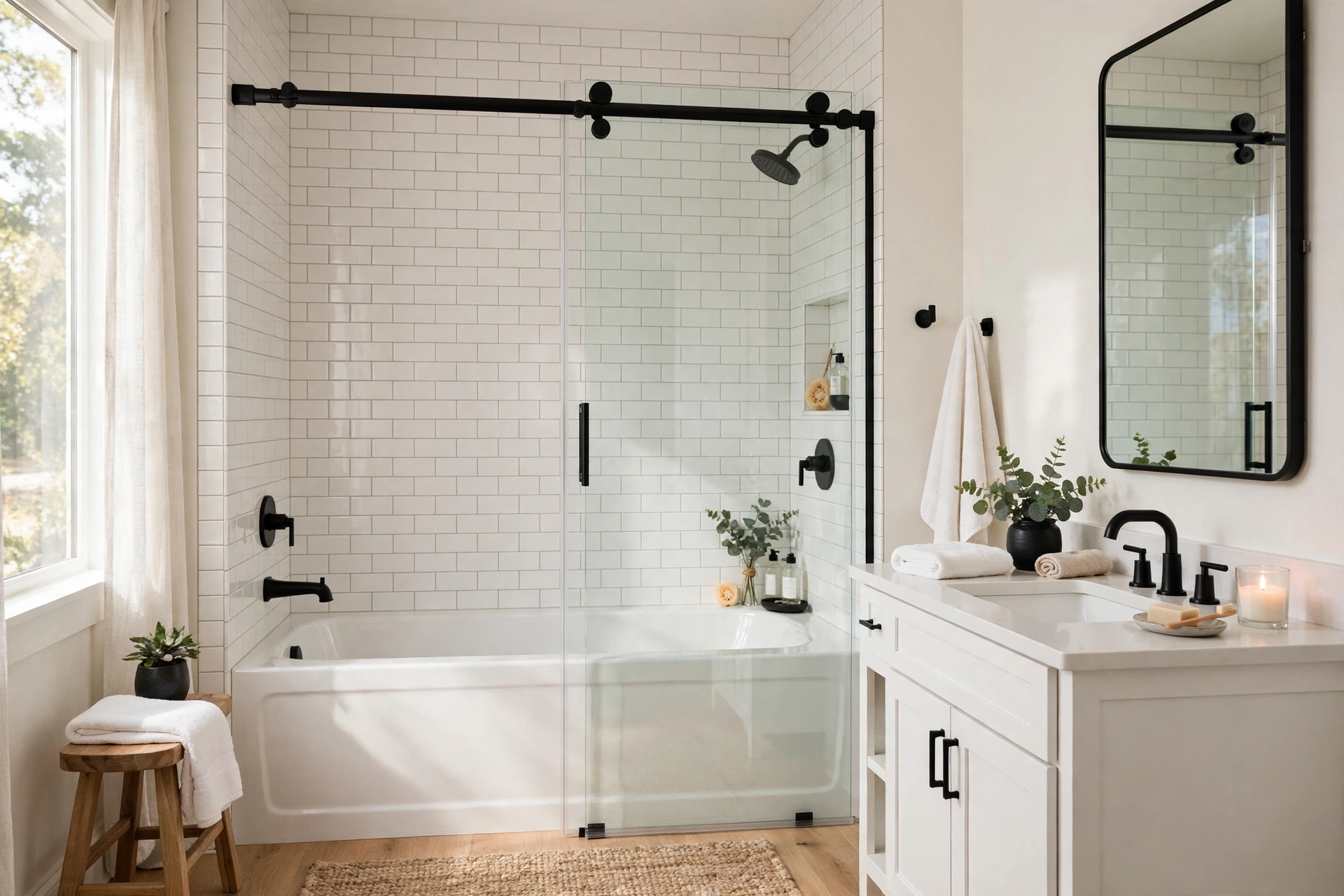
My hall bathroom has a standard 60-inch tub alcove, and last spring the shower curtain finally beat me. It clung every morning, it grew a mildew border no bleach fully erased, and replacing it every eight months had become a household ritual. I went shopping for a shower door and learned fast that a $468 semi-frameless slider and a $1,800 custom frameless job are not the same purchase. I bought FLNORW MALL’s 60-inch semi-frameless double-sliding glass shower door — 3/8-inch tempered glass, matte black hardware — and installed it over a weekend. Here is the buying guide I wish someone had handed me first.
The sizing math every shower door buyer gets wrong once
The single biggest surprise in shower door shopping, and the one that ruins the most installs, is this: the door you walk through is not the width of the door you buy. Dulles Glass’s 2026 bypass-slider buying guide states the half-width rule plainly — most bypass sliding shower doors are two panels that overlap and slide past each other on a top track, so a 60-inch door gives you roughly a 30-inch walk-through entry, not 60 inches. The unit I bought lists a 27.3-inch walk-in space on a 30.3-inch-wide panel, and that number is the one that mattered in my bathroom, not the 60 on the box.
Why is 60 inches the magic number anyway? ACE DECOR’s sliding shower door size guide explains it: for decades the standard North American alcove bathtub measured 60 inches long, so the industry built around that width. Here is the measuring routine the guides agree on, and the one I followed:
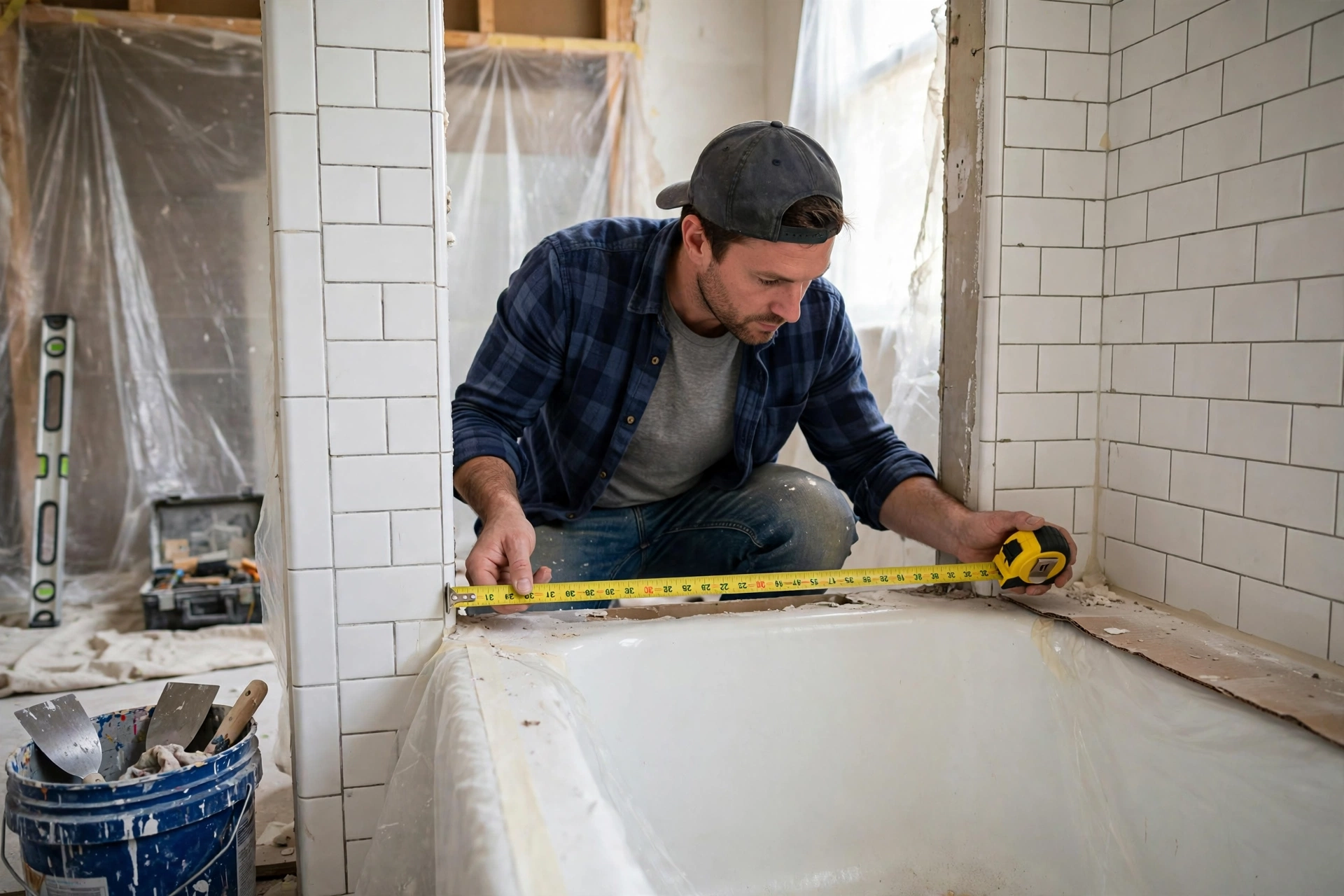
- Measure the finished opening tile-to-tile at three heights — top, middle, and bottom. Walls are rarely perfectly plumb; my opening varied by a quarter inch. Write down all three.
- Use the smallest width as your reference number. Hardware channels can absorb a few millimeters of out-of-plumb, but the glass cannot negotiate with tile.
- Measure the entry you will actually walk through. For a double slider, that is roughly half the total width — plan your morning routine around 27 to 30 inches, not 60.
- Measure the wall-to-wall height at both ends. This unit stands 76 inches tall, the standard modern height that clears most showerheads without needing a custom panel.
One more sizing truth I picked up from the Dulles Glass guide: bypass sliders fit openings between about 42 and 72 inches. Under 42 inches, the half-width entry gets too narrow and a hinged door is the better answer. My 60-inch opening sits right in the sweet spot.
Glass thickness is not a spec — it is the feel
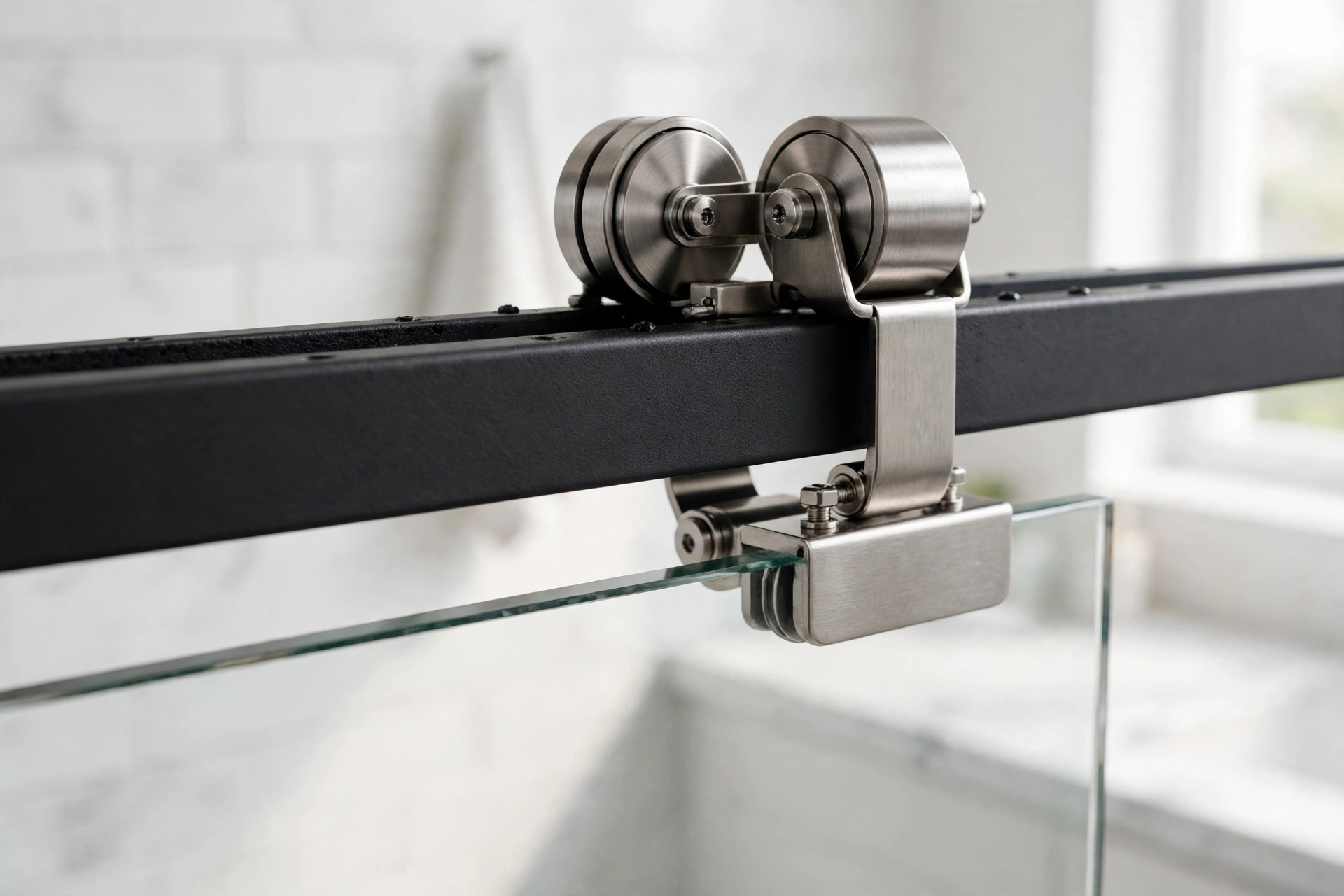
You will see tempered glass shower door options ranging from 1/4 inch (6mm) up to 3/8 inch (10mm), and it is tempting to treat thickness as a bragging-rights number. It is not. Slide a 6mm panel and it feels like a nice appliance door; slide a 3/8-inch (10mm) tempered glass panel and it feels like it was carved from something. The unit I bought uses 10mm tempered safety glass, and the weight — 176 pounds for the whole assembly — is what gives the motion its planted, glide-not-rattle character. The large stainless steel rollers on this door earn their keep precisely because they are moving that much glass quietly.
Thickness also decides the hardware rules. Thinner glass needs more frame to stay rigid; 10mm glass is stiff enough to hang with minimal framing, which is why the semi-frameless design works here. On the safety side, look for tempered glass certified to ANSI Z97.1 / 16 CFR Part 1201, the architectural safety glazing standards — tempered glass shatters into blunt granules instead of shards, the only failure mode you want in a room where people are barefoot.
Semi-frameless vs frameless vs framed: the honest trade-off
Three shower door architectures dominate the market, and the price ladder maps almost exactly to how much metal is in the way of the glass. At the top sits true frameless shower door design — glass panels with only clamps and a support bar, the airy spa look. FLNORW MALL sells one at the same $468 price point: a frameless MESA single-sliding unit in the same 60-by-76 dimensions with a nano-technology protective coating on the glass. Same money, different personality: single slider instead of double, frameless instead of semi-frameless, and a note on the listing that it installs on the right side only.
The middle tier is where mine lives: semi-frameless. Two 10mm sliding panels, but with a premium stainless steel top guide bar carrying the rollers. The bar is structural — it keeps two heavy panels perfectly parallel — and it doubles as the visual anchor that makes matte black hardware look intentional against white tile. Framed doors sit at the bottom of the ladder, cheapest to buy and the most aluminum to clean around. Dulles Glass’s guide backs the hardware point — solid brass or 316 stainless steel rollers with sealed bearings age gracefully, while zinc-alloy rollers with plastic bushings start to drag within 5 to 10 years. My rollers are stainless steel, and six months in they still move with one finger.
Install day: what the 176-pound box does not warn you about
Here is the shower door installation reality the product page sketches in two sentences: this thing ships heavy. The spec sheet lists 176 pounds assembled, in two packages of roughly 180 and 24 pounds. My delivery driver got it to the garage; getting it up the stairs took two people and a dolly. The glass panels are the scary part — five feet tall, ten millimeters thick, and awkward. Gloves with grip, two people, no rushing.
The actual install took my brother-in-law and me most of a Saturday, about four hours including a lunch break and one trip to the hardware store for longer masonry anchors — right in line with Dulles Glass’s 2 to 4 hours with a helper estimate. The steps that mattered most: dry-fitting the top guide bar before drilling a single hole, checking plumb at both jambs, and laying a proper silicone bead behind every wall channel. The waterproof seal strips along the panel edges did their job on the first shower — no drips on the bath mat, which was the whole point of this purchase.
The money math: $468 against every alternative
Four hundred sixty-eight dollars is real money for a bathroom fixture, so I ran the numbers before clicking buy, and again after install when I had actual costs. The incumbent was the shower curtain: a decent mildew-resistant curtain runs about $20 to $30, and in my steamy bathroom it lasted eight months before the hem went pink. That is roughly $40 to $60 a year in curtains — my estimate — or $400 to $600 over a decade, before counting the liner, the hooks, and the general misery of wet fabric touching your shoulder. The $468 shower door spreads over a conservative 10-year lifespan to about $3.90 a month (my estimate), and it never touches my shoulder.
The competitors, honestly priced: a big-box framed sliding door runs roughly $300 to $500 — comparable money for thinner glass and more frame to scrub. A custom frameless installation, measured and hung by a glass shop, typically runs $1,200 to $2,000 or more (my estimate based on 2026 market listings) — gorgeous, but triple the money. The 60-inch semi-frameless double-sliding shower door at $468 sits in the gap: custom-weight glass at big-box money, with the labor outsourced to your Saturday. Add my install costs — $12 for anchors, a Saturday — and the all-in project stayed under $500.
The honest downsides of a double-sliding shower door
No shower door is perfect, and a review that pretends otherwise is an ad. Here are the real compromises of this configuration, all of them mine to report:
- The entry is half the door. A 60-inch double slider gives you a 27.3-inch walk-through. I am an average-size man and it is plenty; my wife is fine too. But if anyone in your household needs a wide entry — wheelchair, walker, or just generous hips — this configuration is the wrong answer no matter how pretty it is.
- Overlapping panels have an overlap. Where the two panels pass each other, there is a narrow channel that collects soap film. It takes a toothbrush and two minutes a month. Frameless single-sliders have less of this.
- The box is genuinely heavy. At 176 pounds across two packages, this is a two-person delivery and a two-person install. If you live alone on the third floor, pay for white-glove delivery or recruit a friend before ordering.
- Matte black shows water spots on the hardware. The glass has the self-cleaning coating; the black top bar does not. A quick wipe with the squeegee when you do the glass keeps it clean.
None of these would change my purchase. But the first bullet is the one to take seriously — measure your entry needs, not your door dreams.
The cleaning routine that keeps glass spotless
My routine, six months in and holding: one squeegee pass after every shower, thirty seconds, top to bottom. Once a week I wipe the panels with a microfiber cloth dampened with white vinegar, and the overlap channel gets the toothbrush once a month. No abrasive cleaners, ever — they would eat the coating that makes all of this easy. Total weekly effort: under five minutes. Total mildew: zero.
The verdict on this $468 shower door
Six months in, the scorecard is short. The 27.3-inch entry clears my mornings; the 10mm tempered glass glides on stainless rollers with one finger; the matte black top bar looks like it cost three times the price; the coating plus a squeegee has kept the glass spotless with five minutes of weekly effort. The all-in project cost was $468 plus a Saturday, against a decade of shower curtains that would have cost more. Would I buy this shower door again? Yes — and I would measure the three heights before ordering, the only part that could have gone wrong.
Ready to retire the curtain? The 60-inch semi-frameless double-sliding shower door ($468, in stock, 10mm tempered glass, matte black finish) is the one I bought and the one this guide is built around. Prefer the airier look? The frameless MESA single-sliding shower door runs the same $468 with a nano-coated panel. If the whole bathroom is getting the treatment, my one piece toilet for a small bathroom review covers the other fixture I measured twice — and the rest of the house is at FLNORW MALL.