I Replaced My Front Door With a $999 Fiberglass One. One Winter Later, the Honest Math.
Last January, on a 14-degree morning in Columbus, I found frost on the inside of my front door latch — a little white beard of ice crystals on the metal, right where my hand goes every morning. My builder-grade steel door was finished: thin sweep, sweating bottom edge, a hallway six degrees colder than the rest of the house. I started shopping for a fiberglass front door with glass that could seal tight through Ohio winters without looking like a refrigerator door. I landed on FLNORW MALL’s $999 prehung fiberglass entry door with decorative glass, and one full winter later, here is everything I learned, with real numbers.
Why fiberglass beat steel and wood for my front door
My old steel door had three problems, and they are the three problems steel doors always develop. First, the dents: my son’s tricycle, a delivery driver’s hand truck, my own snow shovel — each one left a small permanent dimple, because on steel, dents are forever. Second, the rust: little orange freckles crept up from the bottom edge where road salt and meltwater collect, and every scratch through the paint was a rust starter kit. Third, the paint chalked. After twenty years of sun, the south-facing slab just looked tired.
The research backed up what my eyes were seeing. A fiberglass-vs-steel comparison from Fas Exteriors, updated days before I bought, puts fiberglass lifespans at 30 to 50+ years versus 20 to 30 years for steel, and notes steel installed runs $500 to $1,000 while fiberglass installed runs $1,200 to $3,500. Feldco’s guide agrees: 30+ years, better insulation, almost no upkeep. Wood was never really in the running — gorgeous, but a stained wood door needs refinishing every few years and a quality wood entry installed runs $3,000 to $5,000+ (FirstHomeDiary’s Edmonton pricing survey). As the Pennsylvania installers at Prestigious Windows & Doors put it, fiberglass is the low-maintenance middle: no denting like steel, no rotting like wood.
Steel was what I was replacing; wood was what I couldn’t afford to maintain. The only question left was which fiberglass door — and whether to get glass.
My $999 fiberglass front door with glass: what prehung includes
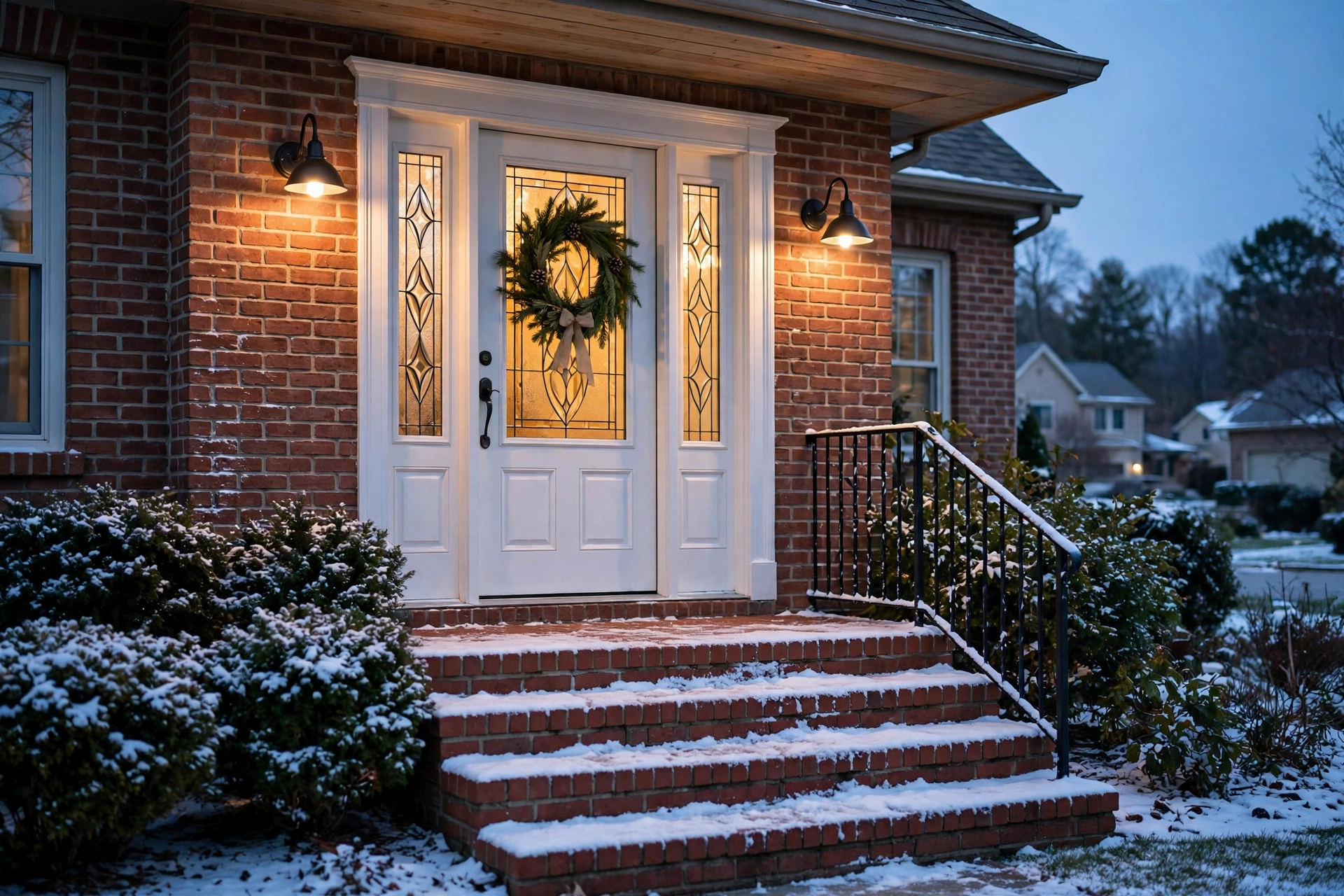
I bought the $999 fiberglass prehung entry door with decorative glass — full name 37.5inx81.5in Right Hand Inswing Decorative Glass-Zinc Caming Fiber Glass Prehung Entry Door, item W509S00036. It arrived as a combo: door, jamb, and hinges in one package, the slab itself 80.54 x 37.06 x 1.75 inches and 71.5 lbs. Smooth white fiberglass skin, a decorative glass insert with zinc caming, a WPC non-rot, maintenance-free jamb, and a UV-inhibitor protective layer meant to resist yellowing and fading. The product page’s pitch — won’t warp, rot, or split; resists dents, rust, and moisture — read like a direct rebuttal to everything my steel door had done wrong.
One important word: prehung. The door arrives already mounted in its frame, hinges installed — you set the whole unit into the rough opening, shim it plumb, and fasten through the jamb. That is what makes a front-door swap a weekend project instead of a carpentry exam.
The winter energy math: heating bills, drafts, and the 25% number
Honest version first: a door is a small hole compared to your windows and attic, so it is rarely the whole heating-bill story. But drafts are a different animal — they make a hallway feel cold, and feeling cold is what nudges the thermostat up two degrees.
My numbers, with the caveat that no two winters match: January before the swap, our gas bill was $238; the January after, $212. Call it $26/month over five heating months, roughly $130 a year — a rough estimate, since weather, gas prices, and thermostat habits all move. The bigger win was the hallway: the six-degree cold spot is gone, and the new sweep and tight prehung seal did more for comfort than the slab’s R-value ever could.
The industry math explains why. Windows Canada’s cold-climate guide notes that drafty doors and windows can account for around 25% of a home’s heat loss in winter — and if you are choosing a cold-climate front door, the seal matters as much as the slab. Fiberglass slabs with foam cores carry R-values around R-5 to R-6, insulated steel sits near R-4 to R-5, and wood manages roughly R-1 to R-2 (Magic Window’s comparison). ENERGY STAR — the EPA and Department of Energy program — certifies qualifying entry doors, and the National Fenestration Rating Council’s U-factor rating is the honest number to compare, not the marketing copy. My door’s foam-core fiberglass construction put it in the top tier of that scale, and the composite jamb — which can’t wick moisture or swell like wood — kept the seal tight through freeze-thaw cycles.
Long-horizon math, also an estimate: $999 ÷ 30 years ≈ $33 a year, about $2.78 a month. Even before any heating savings, that is the cheapest durable thing bolted to my house.
A fiberglass front door with glass: light, privacy, and the energy trade-off
The glass was the part I argued with myself about longest. My entryway hallway has no windows; on grey January afternoons it used to feel like a tunnel. The decorative glass insert fixed that completely — morning light comes through the zinc caming pattern and throws soft geometry on the floor, and the hallway hasn’t needed its light on during the day since.
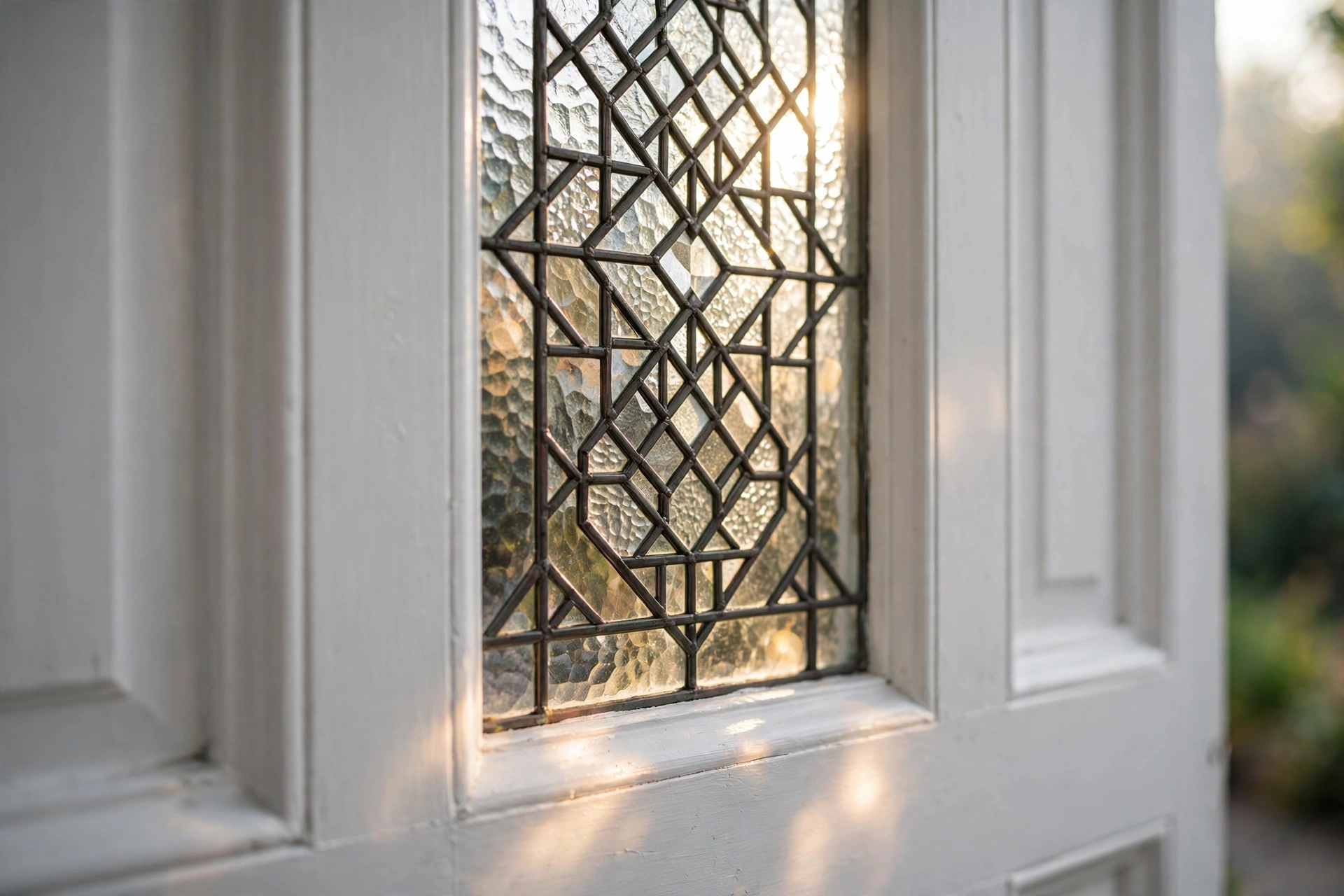
Two trade-offs nobody at a showroom will volunteer. First, privacy: decorative glass obscures shapes, but at night with interior lights on, a silhouette near the door is visible from outside. Second, energy: the glass is the least insulated part of any door — a solid slab will always out-insulate a glassed one. For me the daylight was worth a few points of R-value; for a north-facing door in Minnesota, you might choose differently.
One more practical note: the door I bought is the right-hand inswing. FLNORW MALL also sells the left-hand inswing version of the same fiberglass entry door — same 37.5 x 81.5 size, same $999, wrought-iron-style glass instead of the zinc caming pattern, and a slightly heavier 92.4-lb slab. Which hand you need is a measurement question, and getting it wrong means a reorder, so read the next section twice.
The 4 measurements that decide everything (do this before ordering)
Entry doors are unforgiving: order wrong and you own an expensive leaning slab. My checklist — and since this is a prehung entry door, “the door” below means the whole unit including the jamb:
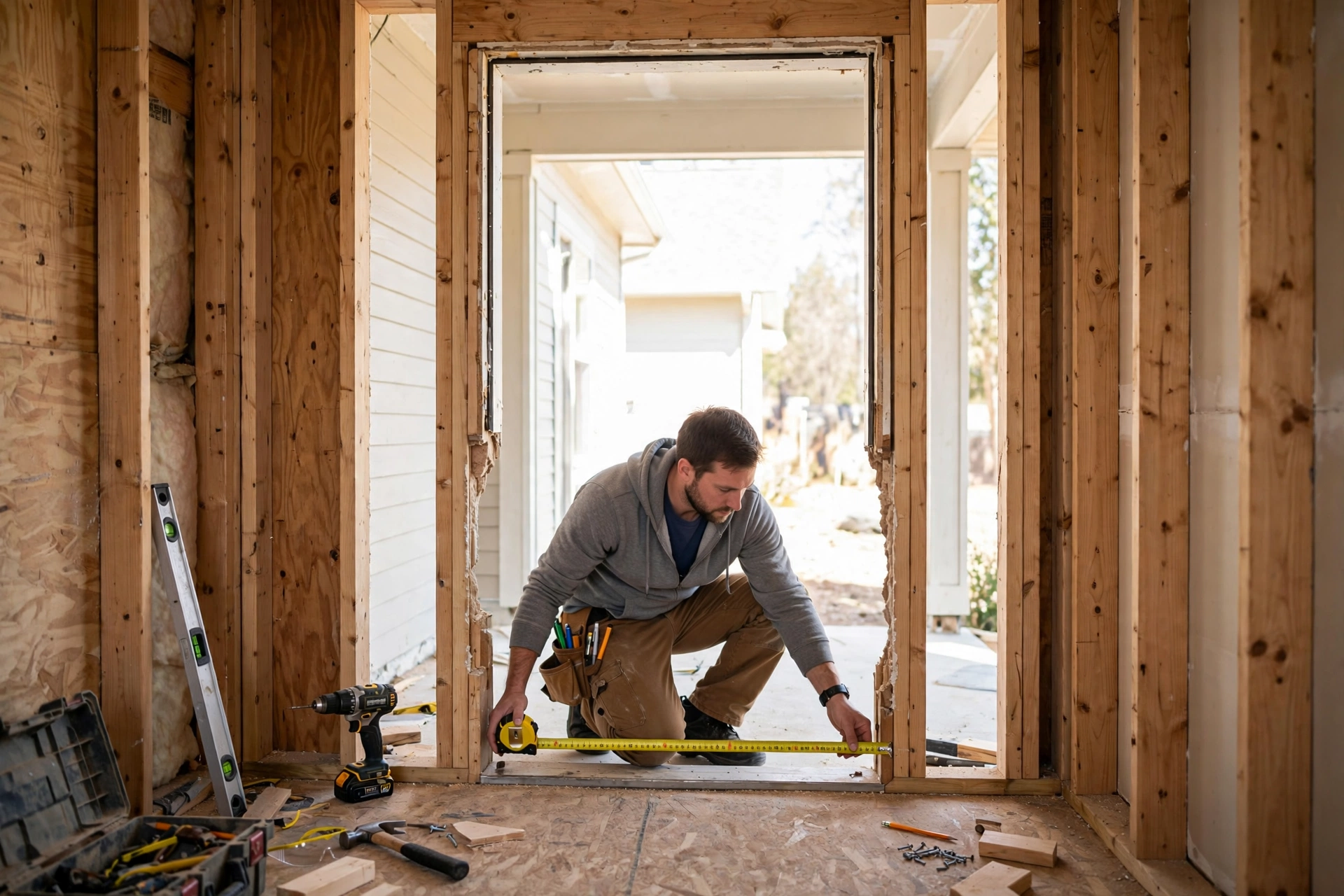
- Slab size vs. rough opening. My door’s slab is 37.5 x 81.5 inches. The rough opening in the wall needs to be roughly 2 inches wider and about 2.5 inches taller than the unit — room for shims, the jamb, and a level set. Measure the opening in three places each direction; walls are never as square as you think.
- Hand and swing. Stand outside facing the door. If the hinges are on your right and the door swings inward, that’s a right-hand inswing — what I ordered. If your hinges sit on the left, you need the left-hand version. This is the single most common ordering mistake in entry doors.
- Jamb depth. Measure your wall thickness (a 2×4 wall with sheathing and drywall is usually about 4-9/16 inches). The jamb has to land flush with the interior drywall, or your trim carpentry turns into a science project.
- Swing clearance inside. A 37-inch door sweeping inward needs a clear arc. My hall tree and shoe bench live by the front door — I checked the swing against my $598 mudroom drop-zone setup before ordering, because moving furniture after the door is hung is a special kind of regret.
Install day: the honest DIY vs. pro math
I installed mine with my neighbor Dave, who has hung more doors than I’ve owned houses: most of a Saturday to pull the old unit, dry-fit the new one, shim it plumb, fasten through the jamb, foam and caulk. The 71.5-lb slab is a comfortable two-person lift; the 92.4-lb left-hand sibling wants the same two people and a steadier grip.
The money math on front door replacement cost: a GTA installer’s 2026 guide quotes pro installation at $400 to $800 on top of the door, and FirstHomeDiary’s survey puts typical fiberglass entries at $2,000 to $3,500 installed (steel $1,200 to $2,000). So a $999 prehung unit plus a $400–$600 pro install lands around $1,400 to $1,600 all-in — under the usual installed price for fiberglass, with the same 30-year slab underneath. DIY saves the labor but spends your Saturday; if your opening is out of square or the subfloor is soft, pay the pro.
One winter of maintenance: what fiberglass actually asks of you
Almost nothing, and that is the entire point. Feldco’s care guide is three items: mild soap, water, soft cloth. No rust to chase — steel demands that you touch up every scratch immediately or the corrosion creeps under the paint. No swelling or sticking in August humidity. No refinishing schedule. The UV-inhibitor layer is supposed to resist yellowing and fading; after one winter of Ohio sun — admittedly not a stress test — the white is still white.
The one honest limitation: a smooth white fiberglass skin is a paint-it-once decision. You can paint fiberglass, but you can’t convincingly stain a smooth white slab to look like mahogany — that trick belongs to the wood-grain-textured fiberglass doors. I wanted white, so it never mattered. But pick your finish at purchase, not at year three.
The verdict, one winter later: no frost on the latch, no cold hallway, no dents from the tricycle’s successor (a scooter now), and a heating bill that moved in the right direction. The glass insert turned the darkest hallway in the house into the brightest. At $2.78 a month over a 30-year slab life, the $999 fiberglass front door with glass is the best money I have spent on this house per year of service. I would buy it again tomorrow — after measuring twice, and confirming the hand one more time.
See the exact setup: the $999 fiberglass prehung entry door with decorative glass (37.5 x 81.5 in, right-hand inswing, item W509S00036) and the left-hand inswing version if your hinges sit on the other side — or browse the full FLNORW MALL furniture collection.