Sideboard Buying Guide: The 7 Rules I Wish I Had Known Before I Bought Mine
I bought my first sideboard because I loved how it looked in the photo. I sold it eight months later because it never fit the wall, never fit the room, and never fit the life I was actually living. The second one — the one I still have — took me three weekends of measuring and one long argument with my husband about whether “sideboard” and “buffet” are the same thing. They are, mostly. “Buffet” is the older word, and “credenza” is the low one people put behind an office desk. Retailers use all three, which is half the confusion. If you are shopping for a sideboard right now, here are the seven rules I wish someone had handed me before I paid for the first one.
Why Most People Buy the Wrong Sideboard First
Most of us shop for a sideboard backwards: we fall for a finish, then discover the piece is six inches too wide, too deep to open the dining room door, or has nowhere to put the ten wine glasses we actually own. I did all three, across two purchases, before I learned to shop by numbers first and looks second. The rules below are in the order that would have saved me the most money.
Rule 1: Measure the Wall, Then Measure It Again
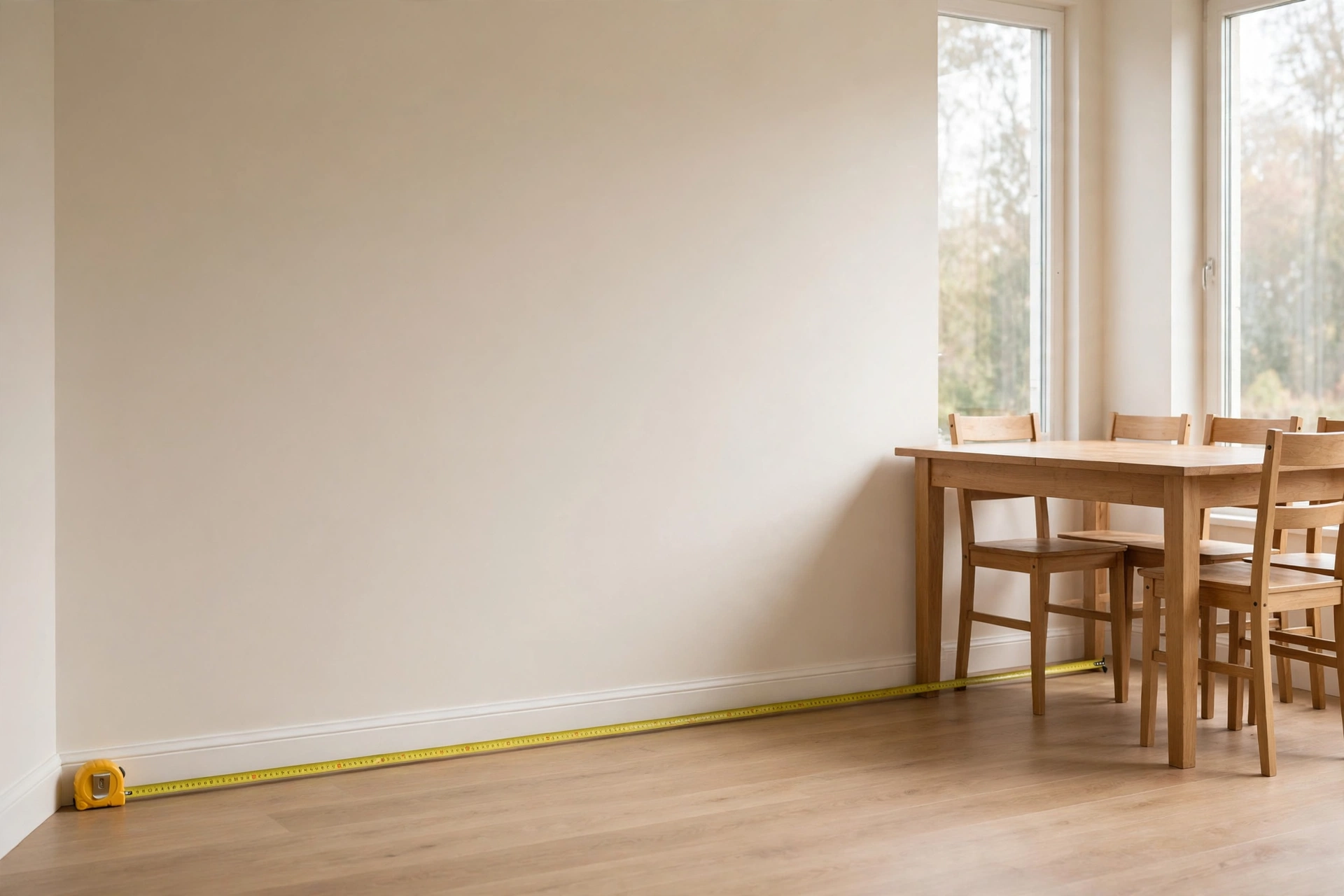
My mistake was simple: I measured the wall once, bought a 39-inch-wide cabinet, and discovered the baseboard heaters stole three inches on each side. The cabinet arrived, slid in with a centimeter of air, and blocked a vent. It went back, and the return shipping on a 90-pound cabinet cost me $89.
Do this instead: measure the usable wall space — not the wall itself, but the space minus vents, outlets, door swings, and trim. Then subtract four inches, two on each side, so the piece never looks wedged in and you can still get a vacuum behind it. A 55-inch sideboard needs roughly 60 to 64 inches of wall. Write the number on a piece of tape and stick it to the wall before you open a single product page.
Rule 2: Height and Depth Decide Whether You Will Actually Use It
Height matters more than looks. A sideboard between 30 and 36 inches tall doubles as a serving surface — you can set a coffee maker, a stack of plates, or a decanter on top and reach it comfortably standing or sitting. The $299 farmhouse bar cabinet I keep coming back to is 67.32 inches tall, which makes it a tower rather than a serving surface; its top is for display, not for work. Neither is wrong. Pick by how you live.
Depth is the sleeper spec nobody reads. The standard guidance is to keep 36 inches of clearance behind dining chairs so people can walk past without turning sideways. A 15.87-inch-deep cabinet against the wall leaves that walkway wide; a 24-inch dresser in the same spot eats straight into it. My dining room kept a full 40 inches of clearance because the piece hugged the wall. Measure the walkway, not just the wall.
Rule 3: Read the Material Listing Like a Contract
This is where the money hides. Solid wood costs more, weighs more, and ages gracefully. MDF — medium-density fiberboard — is the honest budget option: it takes a finish beautifully, stays flat, and keeps the price at $299 instead of $900. It is not solid pine, and the listing should say so plainly. The farmhouse bar cabinet listing does exactly that: main material MDF, with a waterproof and moisture-proof finish treatment, in charcoal grey.
MDF’s real enemy is standing water soaking into raw edges. I treat the top like any wood surface and wipe spills the same day. Two months of daily use on my other MDF piece showed no bubbling — even where a spilled glass of wine sat overnight and got wiped up in the morning. Reasonable care, no problems. Glass-front cabinets solve the dust question differently: everything visible, everything accountable. Pick MDF for price, solid wood for heirloom, glass doors for display. Just know which one you are buying before the box arrives.
Rule 4: Count Your Sideboard Storage Before You Shop
Here is the exercise that changed how I shop for furniture: count what you actually need to store, then buy the cabinet that holds it. Open every kitchen cabinet and write it down. How many wine glasses? How many bottles do you keep on hand in a normal month? Where do the placemats live right now?
My count came out to ten stemware glasses, a dozen bottles, twenty placemats, and a coffee maker that was eating a whole counter. The $299 farmhouse bar cabinet fit that count almost exactly: a stemware hanger for up to 10 glasses, 5 wine racks, an open middle shelf with a cord hole for the coffee maker, upper glass-door cabinets for display, and lower wooden doors for the ugly-but-useful stuff. That is the difference between a sideboard buffet cabinet that looks full and one that actually works.
If your count is six glasses and no bottles, a 12-slot rack is wasted space and you should buy the smaller piece. If your count is thirty bottles, no sideboard will save you — you need a cellar rack. Shop by the count, not the photo.
Rule 5: Tall Tower or Low Credenza? Pick by the Room
The same “sideboard” word covers three different pieces, and the room decides which one you need:
- The dining room sideboard works hardest as a serving surface: 30 to 36 inches tall, deep enough for a coffee maker, with drawers for placemats and napkins. This is the classic buffet, and it is what most shoppers actually picture.
- The tall bar cabinet — like the 67-inch farmhouse at 26.89 by 15.87 inches — answers a different need: vertical storage in a small footprint. Upper glass doors for display, lower wooden doors for hidden storage, a middle shelf that doubles as a coffee station. It is the right answer when the wall is narrow but the storage need is big.
- The low credenza is a work surface first and storage second. At a party its top holds a decanter, an ice bucket, and a dozen glasses with room to spare. My friend’s 55-inch industrial one runs the whole room during dinner parties.
I nearly bought the credenza before measuring my wall and realizing I needed vertical, not horizontal. The room told me; I just had to listen first.
Rule 6: Do the Money Math Before the Style Math
A custom built-in buffet from a contractor runs $2,000 to $6,000 per project — that is HomeAdvisor’s 2024 national range, and my own quotes last spring landed at $3,400. Renting a portable bar setup for a single big party costs $150 to $300 around here, my rough estimate from three local rental companies. A $299 sideboard that hosts every holiday for ten years costs about $2.50 a month — an estimate, but a fair one — and you own it at the end.
The industry data backs the category up. Dataintelo puts the contemporary sideboard market at $11.43 billion in 2025, growing toward $19.06 billion by 2034 at roughly 5.8% a year, and Market Research Intellect tracks kitchen and dining furniture at $28.45 billion in 2025, with sideboards and buffets as a listed category. People keep buying these pieces because home entertaining is not fading: the Wine Institute notes the US has been the world’s largest wine market by volume since 2010, and Houzz’s 2024 U.S. Renovation Trends study found storage and entertaining function near the top of homeowners’ wish lists. Buy once, host for a decade.
Rule 7: Buy for the home bar you actually host. This is the rule I break most often in the store: buy for the parties you actually throw, not the ones you imagine. If you host four dinners a year, you need the piece that makes those four easy — the glasses within reach, the coffee maker with a cord hole, the bottles off the counter. If you imagine hosting weekly cocktail parties but have not hosted one in two years, the big tower is theater, not furniture.
My honest confession: the first sideboard I bought was for the dinner parties of my imagination. The one I kept is for the ones I actually throw. It has a stemware hanger, a cord hole, and enough height to look like furniture instead of an appliance. It is not the prettiest piece in the catalog. It is the one I use.
The Verdict
A sideboard is one of the few furniture purchases where the measuring tape matters more than your taste. Get the width right, the height right for the job, the material honestly listed, and the storage matched to your actual count — and the finish becomes the fun part instead of the expensive mistake. I paid for the education with a return fee and eight months of a cabinet I resented. You get it free.
Ready to measure your wall? Start with the $299 farmhouse bar cabinet for liquor and glasses — the tall charcoal-grey tower with a 10-glass stemware hanger, upper glass doors, and a cord-hole coffee shelf that fits a 27-inch wall. Prefer a low credenza? My $228 industrial wine bar cabinet review covers the 55-inch serving-surface option, and the $269 farmhouse buffet cabinet review covers the drawer-heavy hosting alternative. Full collection at FLNORW MALL.