I Bought a $199 Artificial Christmas Tree. The Real-Tree Math Made Me Never Go Back.
Three Decembers ago I did something I swore I’d never do: I gave up real Christmas trees. Every year since my kids were born we’d drive out to a tree lot the weekend after Thanksgiving, argue about which Douglas fir looked the least lopsided, and drag it home. The smell was great for exactly one day. Then came the needles. They migrated into every rug in the house and were still turning up in April. That spring I did the math, ordered the 6FT Hinged Fir Artificial Bent Top Christmas Tree from FLNORW MALL for $199, and I haven’t bought a real tree since. Here is the honest review — specs, the real-vs-artificial cost math, setup, and what three seasons of use actually look like.
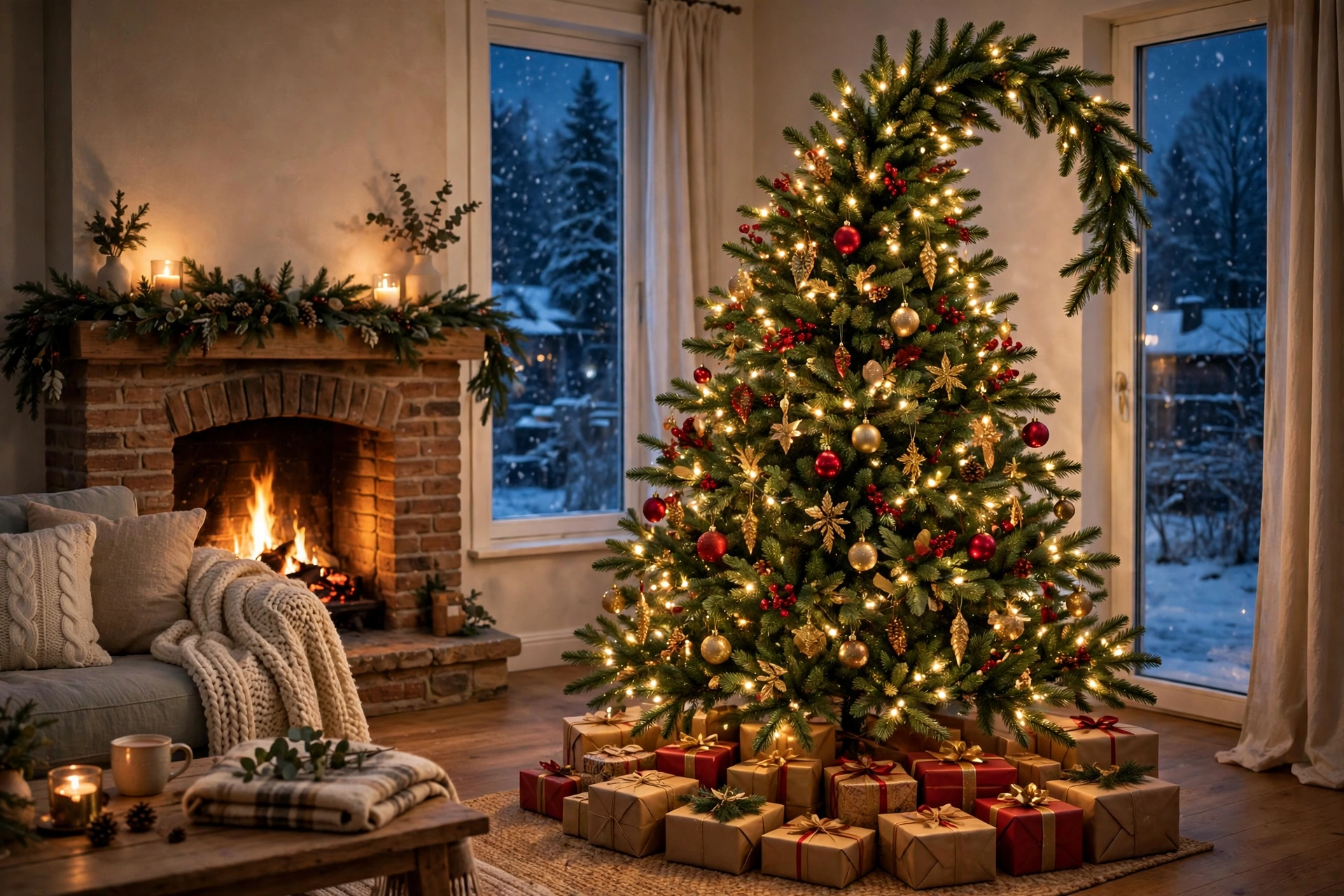
What $199 Actually Buys: 1,250 Branch Tips and 300 Pre-Strung LEDs
Let’s start with the spec sheet, because this is where a lot of budget trees quietly disappoint. This one stands 6 feet tall (72 inches) with a 36-inch base diameter, weighs just 12.54 pounds, and arrives in a box barely bigger than a snowboard (41.3″ x 9.1″ x 8.7″). The trunk and metal stand are steel; the branches are fire-resistant PVC with a claimed 1,250 branch tips, hinged for folding, assembled from 4 sections. It is rated indoor use only.
The headline feature is the 300 pre-strung LED lights. They are clear-white (“cold light” tone per the spec), plug-in powered, with stay-lit bulbs (one dead bulb doesn’t kill the whole string) and ten light functions — combination, in wave, sequential, slo glo, chasing, flash, slow fade, twinkle, and steady on. In practice I use exactly one of those: steady on. But the option is there if your household likes the twinkle setting on Christmas Eve.
Branch density is what separates a $199 tree from a $99 tree that looks like a green traffic cone. At 1,250 tips on a 6-footer, the branch count per foot is competitive with trees I’ve seen at twice the price, and once fluffed, you cannot see the pole through the middle — the single fastest quality check on any artificial Christmas tree.
The Bent Top: Gimmick or Genuinely Charming?
The tree’s whole personality is its bent top — the crown flops over like the tip of a Santa hat, and yes, you can bend and pose it yourself. When I unboxed it I assumed my kids would laugh and then demand we “fix” it straight. Wrong. It is now the household’s favorite feature. It photographs wonderfully, it gives the tree a handmade, Whoville-ish character, and guests ask about it every single year.
Practically speaking, the bend is just the top section’s flexible leader being posed at an angle — nothing mechanical to wear out. If you prefer a classic silhouette, you can straighten it. But I’d estimate (estimate) most owners keep the flop, because the alternative is a tree that looks like everyone else’s.
Real vs Artificial Christmas Tree: The Cost Math That Sold Me
This was the whole decision. A real tree in my area ran about $80–$90 a season for a decent 6–7 footer — the National Christmas Tree Association has reported average real-tree prices in the $75–$90 range in recent seasons, and my local lots match that. Add the hidden yearly costs:
- $80–$90 for the tree itself, every single year
- $10–$15 in gas and impulse hot chocolate at the lot (call it tradition tax)
- A disposable stand every few years, plus needle-cleanup hours you never get back
- Ornaments and lights you already own — but stringing lights takes 45 minutes I’d rather spend elsewhere
Call it $95 a year all-in (my rough estimate). The $199 artificial tree with lights pre-strung breaks even after about two and a half seasons. I’m now in season four, so I’m roughly $180 ahead — and that’s before counting the Saturday mornings I didn’t spend vacuuming needles. If the tree lasts eight years, the effective cost drops to about $25 a year. Real trees over the same span would run $700+.
The real vs artificial Christmas tree debate usually stalls on the smell, and I won’t pretend the house smells like a fir farm anymore. A $5 pine-scented candle covers it. Everything else — cost, cleanup, reliability — the artificial tree wins on points.
How Long Does an Artificial Christmas Tree Last? My 8-Year Estimate
Artificial Christmas tree lifespan depends on two things: branch construction and storage. Hinged branches (like these) beat hooked branches because they fold flat instead of being yanked off and re-hung — fewer stress fractures, fewer lost tips. PVC tips are practically immortal if kept dry; they don’t crumble like PE needles on the cheapest trees.
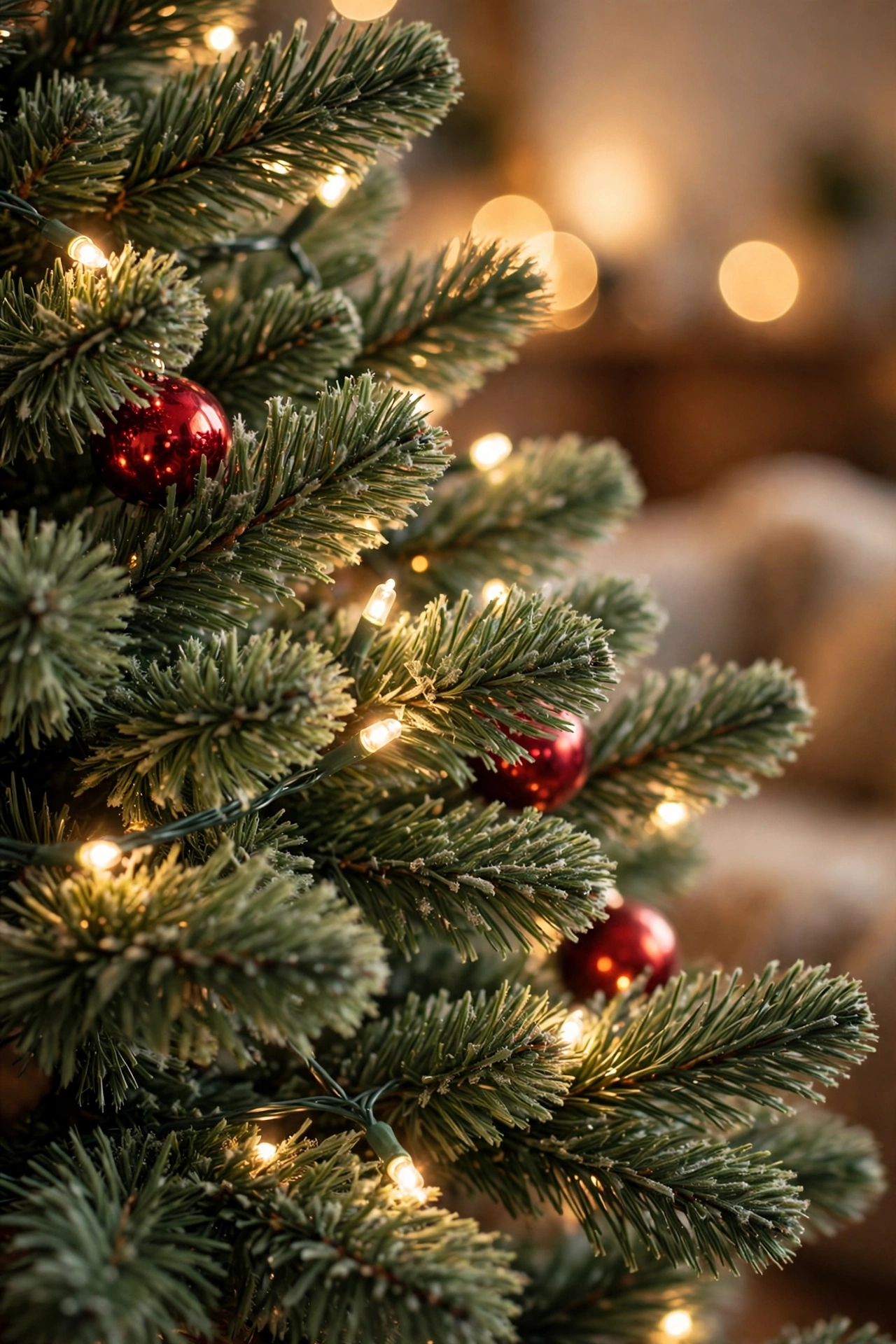
My tree is entering its fourth season. Honest condition report: the branches are still full, no tip shedding beyond what happened in year one (a handful), the stand is solid, and every LED still works. The weak link on any prelit tree is the light string, but LEDs rated for tens of thousands of hours mean the string should outlive the tree’s useful life. My working estimate: 8–10 years with decent storage. Store it in its box or a tree bag, dry, and don’t stack paint cans on it — that’s the entire maintenance program.
Setup Reality: Four Hinged Sections and One Sunday Afternoon
Assembly is genuinely simple: stack 4 sections onto the metal stand, let the hinged branches drop into place, and plug in the lights. The part nobody tells you about is fluffing. With 1,250 tips, shaping takes a real 35–45 minutes the first time — I put on a podcast and worked section by section, alternating tip directions. Year two took twenty minutes.
One person can do the whole job; the tree’s 12.5-pound weight is nothing. My honest tip: fluff it once properly and take a photo of how the sections align, so next year you can skip the guesswork. Takedown is the reverse and takes half the time — fold the hinged branches up, sections nest, box closes.
The Industry Numbers: Artificial Trees Keep Gaining Ground
I wanted to know whether I was an outlier or just late to an obvious trend. Consumer surveys by the American Christmas Tree Association in recent years have put the artificial share at roughly three-quarters of U.S. households displaying a Christmas tree — I’m in the majority, not the avant-garde.
The drivers are boring and durable: real-tree prices creep up every year, prelit trees eliminate the worst chore (stringing lights), and younger buyers grew up with artificial trees as the default. There’s also the fire angle. The National Fire Protection Association reported that U.S. fire departments responded to an estimated annual average of 160 home fires starting with Christmas trees during 2016–2020, nearly all involving real trees drying out — a fire-resistant PVC tree that never needs watering simply doesn’t carry that risk. That stat, more than the money, is what I tell friends with toddlers.
The Small Print: Cold-White LEDs, Indoor Use, and Storage Space
Honest caveats. The cold-white light tone is crisp rather than warm — if you love the amber glow of old incandescents, know what you’re getting. (Ten functions help; “slow fade” is softer than steady on.) The tree is indoor use only per the spec sheet, despite UV-resistant construction — don’t porch it.
And storage is the real cost people forget: the box is 41 inches long. If you live in a studio apartment with no closet depth, a 6-foot tree is a commitment. Measure your storage before you buy — this is the one piece of advice I give everyone.
My Verdict: Who Should Buy This Prelit 6ft Tree
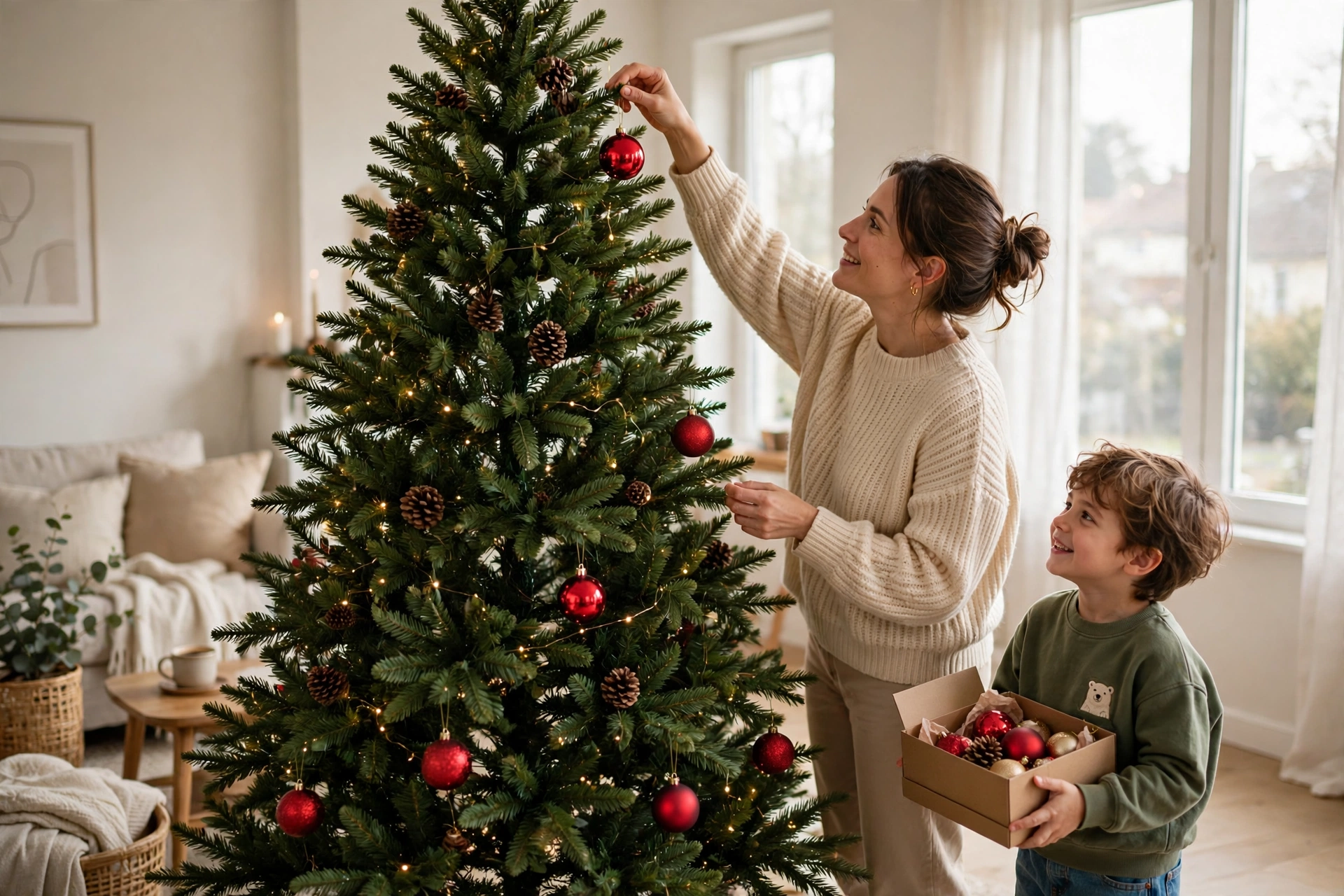
Three seasons in, the 6FT Hinged Fir Artificial Bent Top Christmas Tree is one of the few purchases I’d make again at full price without hesitation. The prelit 6ft convenience alone is worth it — no stringing lights, no needle cleanup, no annual lot trip — and the bent top makes it the rare artificial tree with actual personality. The math holds: $199 against ~$95 a year for a real tree means it pays for itself by season three and then it’s free Christmas for the better part of a decade.
Buy it if: you’re tired of the real-tree ritual, you have 41 inches of storage, and you want lights pre-strung. Skip it if: the real-tree smell is non-negotiable for you, or you have nowhere to store the box. For everyone else in the first camp — especially parents of small kids who’d rather decorate than vacuum — this tree is an easy yes.
Ready to stop buying a tree every December? Check the current price and full specs on the 6FT Hinged Fir Artificial Bent Top Christmas Tree at FLNORW MALL — and browse the rest of the Home & Garden collection for the season.