I Bought Three Area Rugs in Five Years. Here’s My Area Rug Size Guide.
I bought my first area rug the way most people do: I measured nothing, eyeballed the product photo, and ordered the 5×7 that looked generous on screen. It arrived, I unrolled it, and my living room suddenly had a postage stamp floating in the middle of the floor. The rug covered maybe a third of the seating area, and my sofa looked like it had wandered away from it. Two rugs and four years later, I finally learned the sizing rules that rug sellers, interior designers, and one very patient returns-desk clerk have known all along. This area rug size guide is the one I wish someone had handed me before that first order — the real numbers, room by room, plus the cheap tape trick that would have saved me two returns.
The $189 postage stamp in my living room
My first apartment had a 12-by-14-foot living room, and I bought a $189 5×7 rug because a friend told me rugs were expensive and I should start small. I laid it under the coffee table, stood back, and something looked off — I just couldn’t name it yet. The rug sat fully under the coffee table and touched nothing else. My sofa, all eighty-plus inches of it, stood entirely on bare floor, and the rug looked like a raft that had drifted away from its dock.
I lived with it for eight months. Every time I walked in, the room felt unfinished, like the furniture had never agreed on where the living room actually was. Return shipping wasn’t free, so I ate the cost and kept the rug in a closet for a year. The lesson took longer than the money to arrive: a rug’s job is to anchor your furniture, not to decorate the center of the floor. If the rug doesn’t touch your furniture, the rug isn’t doing anything.
The golden rule of area rug sizing: front legs on
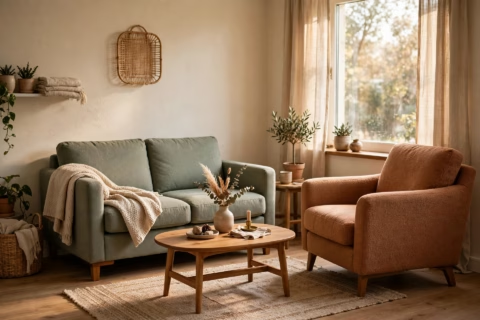
Here is the one rule that replaces every chart you’ve ever skimmed: at least the front legs of every seating piece should sit on the rug. Sofa, armchairs, the coffee table — their front feet belong on the rug’s edge. That single habit is what makes a group of separate furniture pieces read as one intentional room.
There are two upgrades from there. The budget version is exactly what I described: front legs on, back legs off, and it looks fine. The luxury version is all legs on, which requires going one size up — worth it in a large room, unnecessary in a small one. And one hard limit: never run the rug wall to wall. Leave 12 to 18 inches of bare floor between the rug’s edge and the wall. A rug that kisses the baseboards reads as wall-to-wall carpet and visually shrinks the room.
Living room area rug sizes: the 5×8, 8×10, and 9×12 math
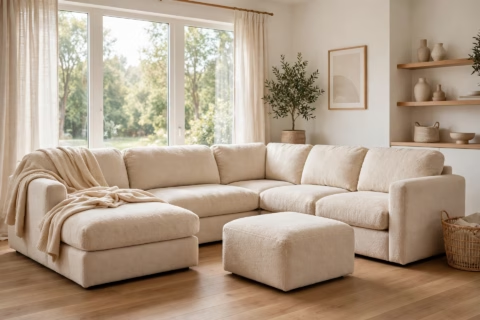
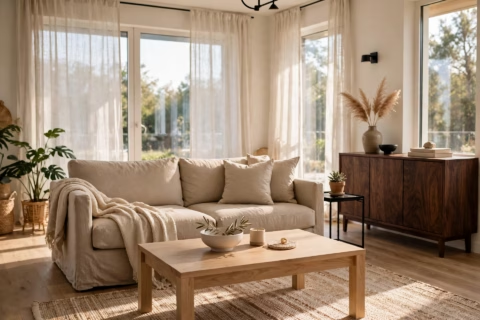
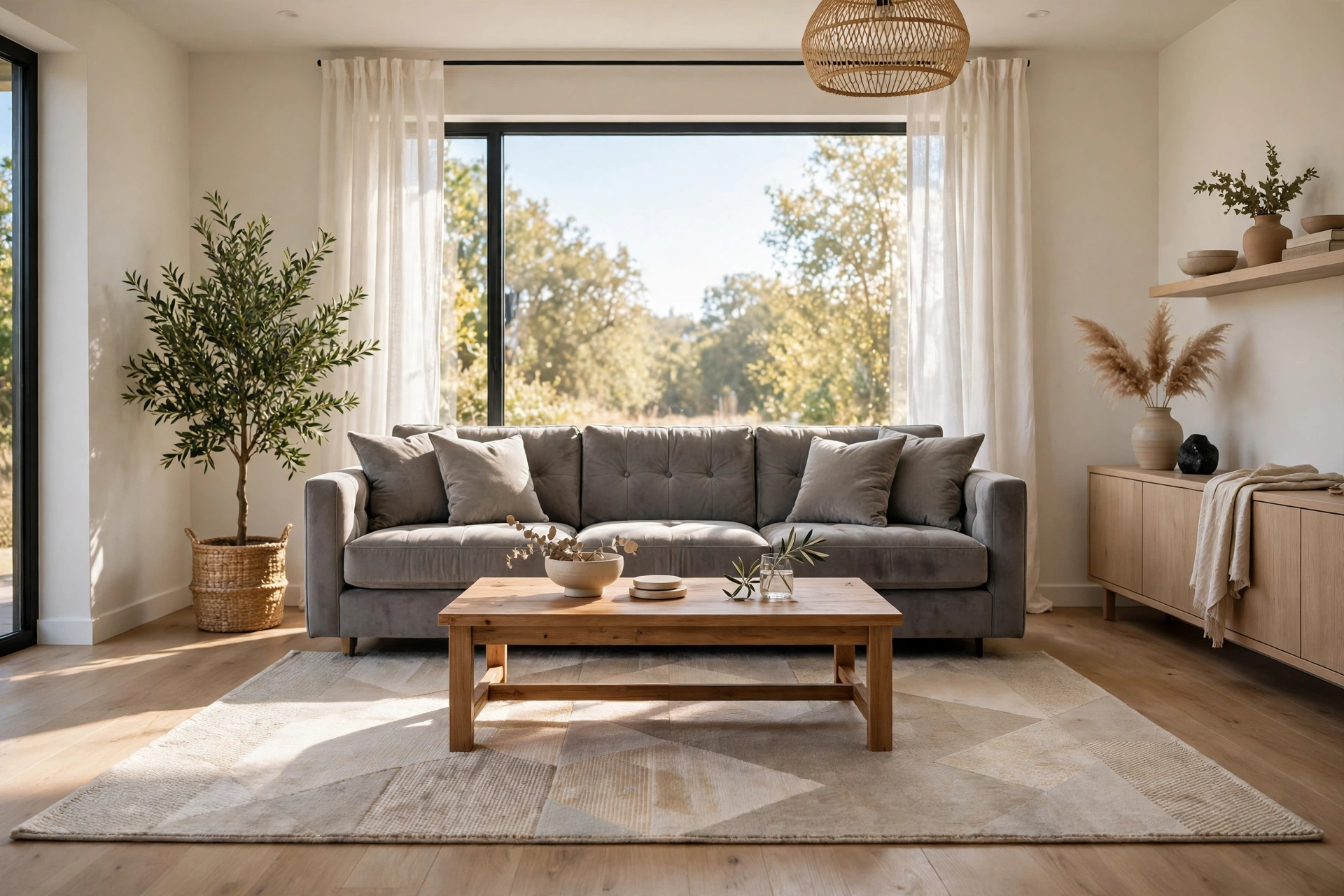
This is where I finally stopped guessing. My current setup centers on an 81.8-inch grey velvet Chesterfield sofa ($599, about 6.8 feet wide) and a 31.5-inch square farmhouse coffee table ($228). The math goes like this: add 8 to 10 inches of rug beyond each side of the sofa. That’s 81.8 plus 16 to 20, which lands at roughly 98 to 102 inches — and a standard 8×10 rug is 96 by 120 inches. Close enough to be exactly right: the sofa’s front legs land on the rug with a few inches to spare, and the coffee table sits centered with over 30 inches of rug on each side.
- 5×8 (40 sq ft): the starter size. Works for studio apartments, loveseat setups, or any sofa under about 72 inches wide. If your living room is smaller than 11×13 feet, this is probably your size — and there’s no shame in it.
- 8×10 (80 sq ft): the default answer. Fits a standard 3-seat sofa (72 to 90 inches) with front legs on. If your living room is 12×14 or bigger, start here and only downsize if the tape trick tells you to.
- 9×12 (108 sq ft): for sectionals, open-plan rooms, or when you want every leg of every piece fully on the rug. Also the right call when the sofa floats in the middle of a large room rather than sitting against a wall.
One pricing reality I wish I’d known: each size jump adds roughly 40 to 60 percent to the price (rough estimate — fiber and construction swing it a lot). That stings at checkout, but a $189 rug you hate is more expensive than a $320 rug you keep. I know, because I’ve owned both.
Dining table rug size: the 24-inch pullout rule
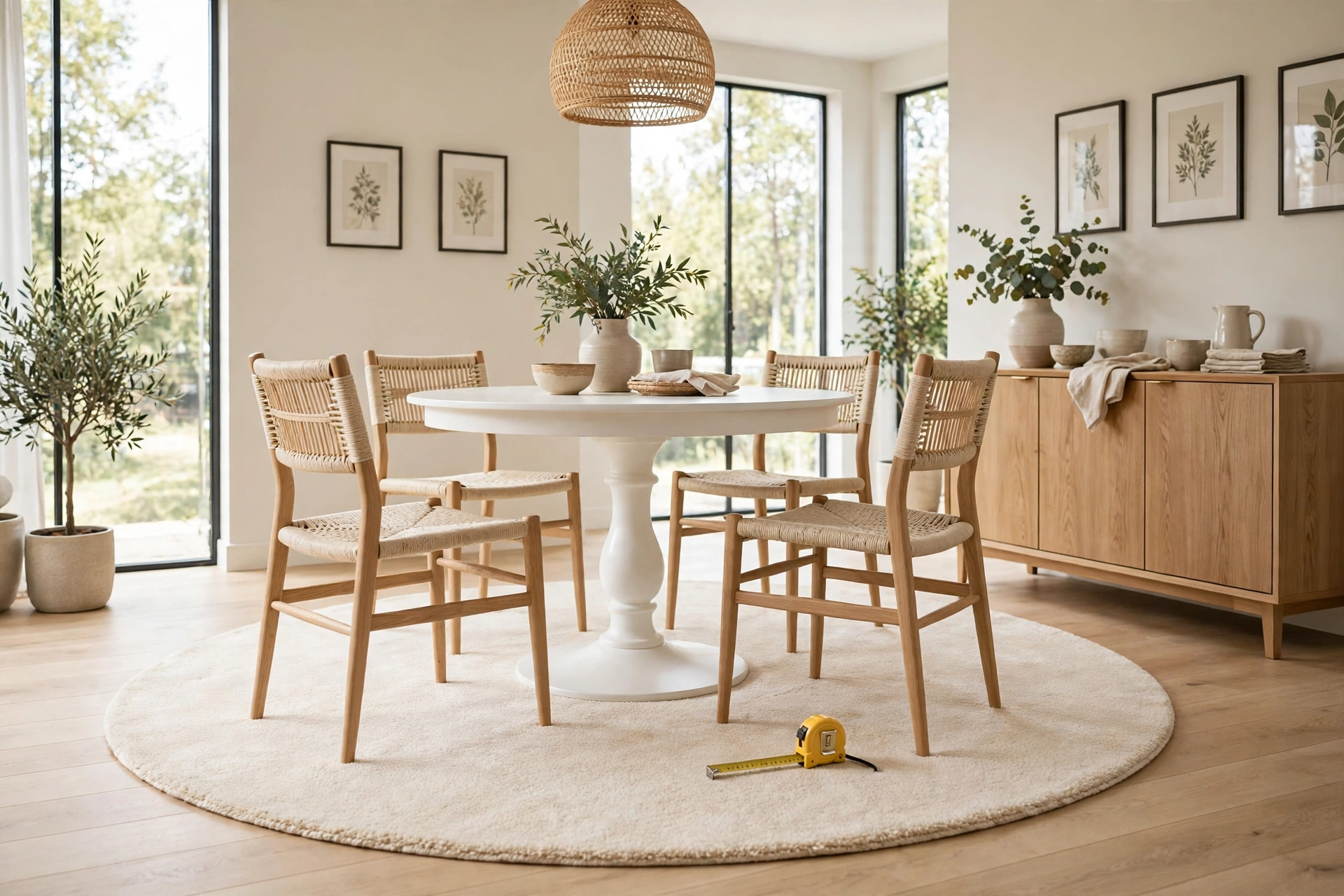
Dining rooms have their own rule, and it’s even simpler. When someone pulls their chair out to sit down, the chair’s back legs should stay on the rug. If the chair rocks off the rug’s edge every time your uncle sits down, the rug is too small. The allowance: 24 inches of rug beyond the table’s edge on every side.
The math on my own setup: we have a 42.1-inch white round dining table ($299). Add 24 inches per side — 42.1 plus 48 — and you get about 90 inches. A standard 8-foot round rug (96 inches) nails it. A 6-foot round rug, which is what I almost ordered, would have stranded every chair leg the moment anyone sat down.
For a rectangular table, apply the same 24 inches to each side: a 60-by-36-inch table needs roughly 108 by 84 inches of rug, and the closest standard size is 8×10, laid lengthwise. Measure the chairs at their pulled-out position, not tucked in — that’s the measurement that matters.
Bedroom rug sizing without the guesswork
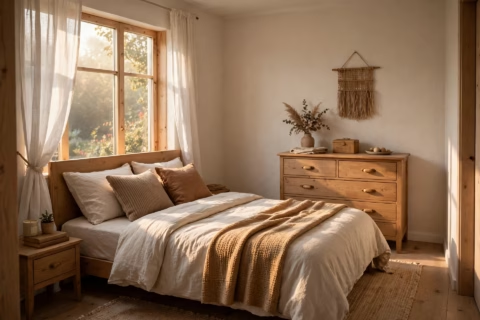
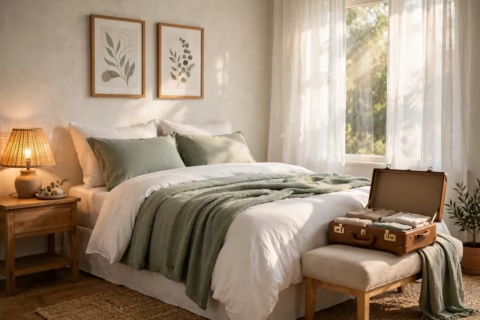
Bedrooms are forgiving, because half the rug hides under the bed. The target: an 8×10 rug under a queen bed, positioned so the top edge sits about a third of the way under the mattress, leaving 18 to 24 inches of rug exposed on each side and at the foot. That’s the part your bare feet hit in the morning, which is the entire point.
For a king bed, step up to 9×12. On a budget? Two 2.5-by-7-foot runners along the sides of the bed deliver 80 percent of the effect for a fraction of the price. One placement rule I learned the hard way: nightstands should sit fully on the rug or fully off it. A nightstand straddling the rug’s edge wobbles every time you set down a glass of water — ask me how I know.
The tape trick that beats every sizing chart
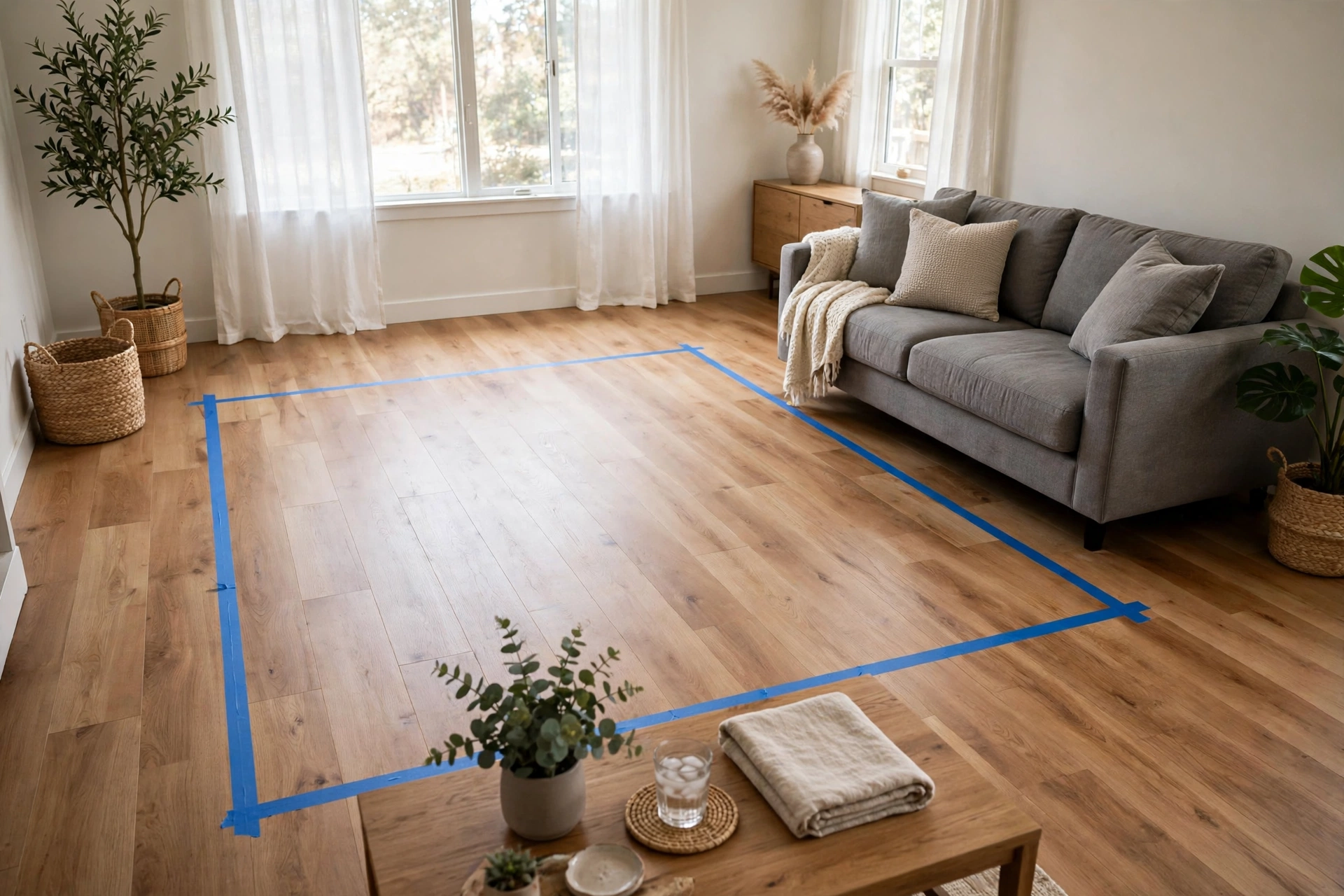
Charts are useful, but floors lie and tape doesn’t. Before you order, do what I now do for every room:
- Measure your furniture footprint — sofa width plus coffee table, table plus pulled-out chairs — and add the allowances above.
- Buy a roll of painter’s tape (a few dollars at any hardware store) and tape the candidate rug size directly on the floor. An 8×10 is 96 by 120 inches. Be honest with the corners.
- Live with the outline for two days. Walk the walkways. Sit down. Pull out an imaginary chair. Watch how the door swings.
- Adjust before you order, not after.
I taped out the dining room plan and caught something no chart would have told me: the 9-foot rug I was about to buy would have blocked the patio door’s swing by three inches. The 8-foot round went in instead, and the door clears it by a hand’s width. Two days of tape saved a return.
Small apartment workarounds (I lived this one)
Sometimes the right size costs more than the budget allows, and that’s fine — there are honest workarounds. Layering is the best one: a large, inexpensive natural-fiber rug (jute or sisal) underneath, with your smaller patterned rug on top. The bottom rug supplies the size, the top rug supplies the look, and the combination reads as intentional rather than cheap.
Renters who move every year or two should favor sizes that travel well: a 5×8 fits nearly any future living room, and two matching runners work in any hallway. And if all you own is a 5×8 in a room that wants an 8×10, use the front-legs-only placement from the golden rule — it’s the legitimate compromise, not a hack. For more small-space thinking, this small living room layout guide covers arrangements that make tight rooms feel bigger.
The verdict: size first, color second
Three rugs in five years taught me one thing: pattern and color are the fun 10 percent of the decision. Size is the 90 percent that decides whether the room looks finished or accidentally assembled. Get the size right and almost any color works; get it wrong and no pattern saves it.
And the sizes all exist. Grand View Research put the global area rugs market at $11.8 billion in 2024, growing toward $16.9 billion by 2030 at a 6.6 percent CAGR — manufacturers make every dimension you can imagine, so “I couldn’t find the right size” is never really true. My verdict, after the postage stamp, the return, and the tape: for a standard living room with a 3-seat sofa, 8×10 is the answer about nine times out of ten. Measure once, tape it out, buy once.
Ready to furnish the room the rug goes under? Browse sofas, coffee tables, and dining sets at FLNORW MALL — everything in this guide’s math came from real pieces in the catalog, so the numbers already fit.