I Bought Three Coffee Tables in Five Years. Here’s the Size Guide I Wish I’d Read First.
In 2019 I furnished my first real apartment and bought the biggest coffee table I could afford — a 48-inch slab that looked great in the showroom photo and terrible in my 10×12 living room. My 72-inch sofa practically disappeared behind it, the corners bruised two shins (mine, repeatedly), and the 14-inch gap between sofa and table made grabbing the remote an actual stretch. I sold it on a local marketplace for half what I paid and started over. This coffee table buying guide is the one I wish someone had handed me before that first purchase: real size math, shape logic, and the storage question nobody asks until it’s too late.

The 2/3 Rule: How Long Your Coffee Table Should Be
The single most useful rule in any coffee table size guide is this: your coffee table should be roughly two-thirds the length of your sofa, never longer than the seat cushions’ span. My 72-inch sofa wanted a 48-inch table, and on paper I followed the rule. The problem was the other rule I ignored — clearance — which I’ll get to below.
Designers use the 2/3 rule because it balances the visual weight of the seating. Go shorter than half and the table looks lost; go the full sofa length and the room reads crowded. For a standard 84-inch three-seater, that means a table in the 48-to-56-inch range. For a 60-inch loveseat, aim for 36 to 40 inches. Write your sofa’s measured length down before you shop, multiply by 0.66, and don’t let a pretty photo talk you out of the number.
Coffee Table Height: Stay Within 2 Inches of the Seat
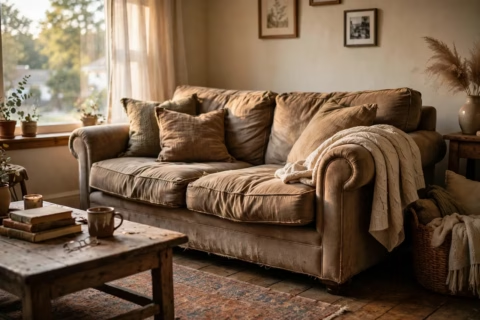
A coffee table’s height should match your sofa seat height, give or take an inch or two — typically 16 to 18 inches for most sofas. My second table was a stylish 14-inch low piece I loved for about a week, until I realized setting down a mug required a downward crane motion and my guests kept leaving cups on the floor.
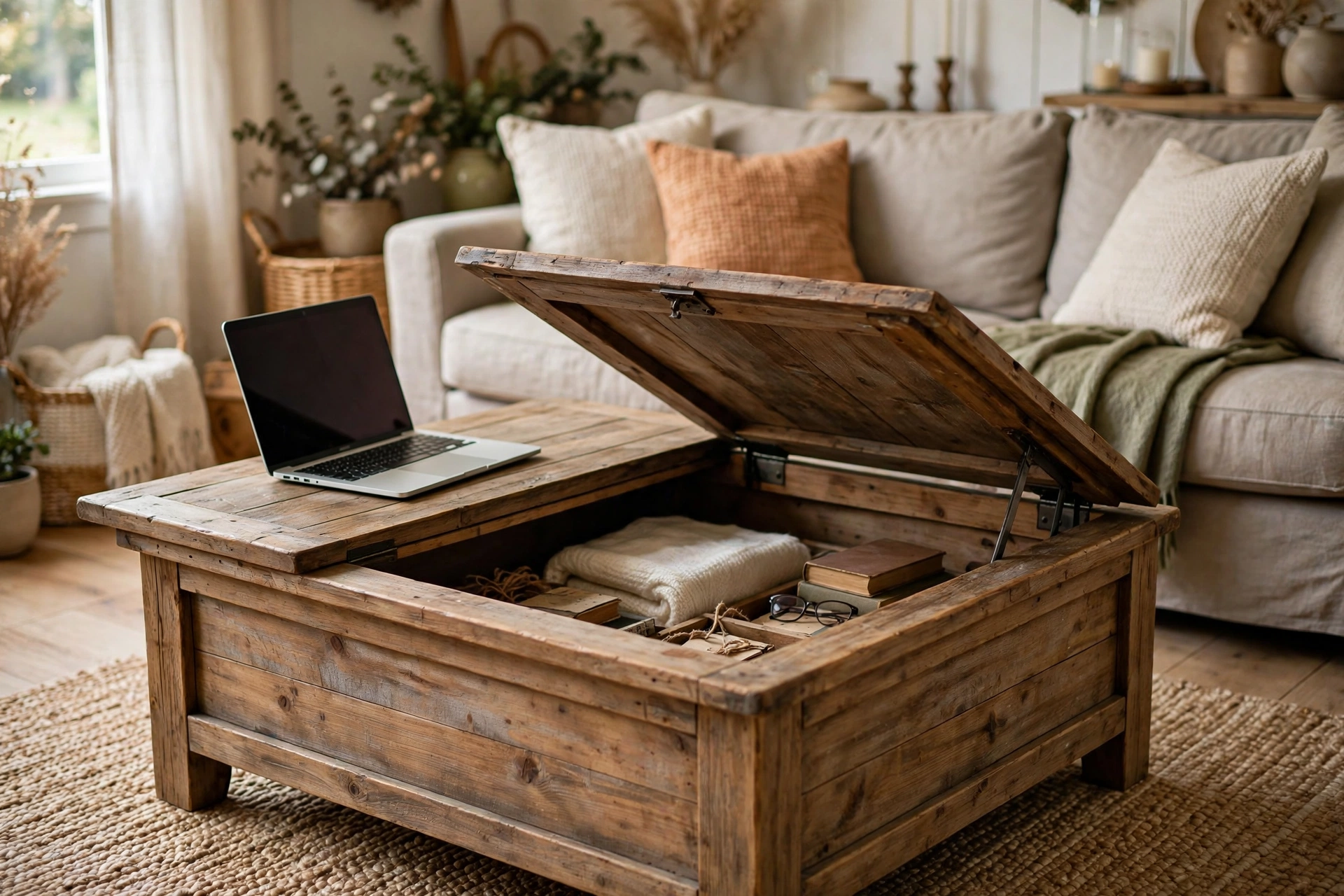
Measure from the floor to the top of your seat cushion, not the frame. If your sofa seat sits at 18 inches, shop tables between 16 and 19 inches. Taller than that and the table dominates the sightline; shorter and it becomes a back-breaker. The farmhouse lift-top coffee table I keep recommending sits at 18.5 inches — right in the sweet spot for standard seating, with the bonus that its lifted top rises to a usable laptop height when you need it.
The 18-Inch Rule: Reach, Legs, and Traffic Lanes
Between the front of the sofa and the coffee table, leave about 18 inches. Close enough to reach your drink, far enough for feet and legs. My first setup had 14 inches because the 48-inch table was too long for the rug, and every evening felt like a geometry problem.
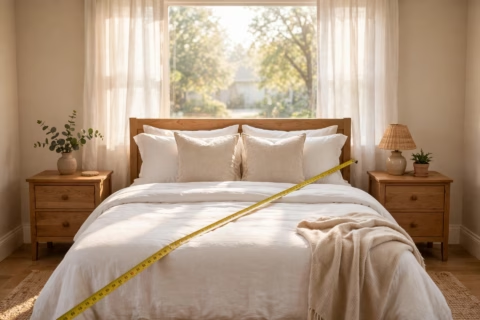
Traffic lanes matter more than people expect. Leave 30 to 36 inches of walkway between the table and any wall, TV stand, or chair you walk past regularly. In my current 11×13 living room, I tape the footprint on the floor with painter’s tape before anything gets delivered — a two-minute habit that has saved me two returns so far. If the tape outline crowds the walkway, the table’s too big, no matter what the 2/3 rule says.
- Sofa-to-table: ~18 inches for comfortable reach
- Table-to-wall or furniture: 30–36 inches of walkway
- Table length: ~2/3 of sofa length
- Table height: within 2 inches of seat cushion height
- Test it: painter’s-tape the footprint on your floor first
Round, Rectangle, or Square: Picking the Right Coffee Table Shape
Shape is a room-fit decision, not a style decision. Rectangular coffee tables suit longer sofas and larger rooms — they mirror the sofa’s line and fill the space without dead corners. Round and oval tables are the answer for tight rooms and homes with small kids: no corners to bruise shins or foreheads, and the footprint feels lighter in a small living room. Square tables work when the seating arrangement is a sectional L or a conversation pit, where the table anchors the middle evenly.
My current table is square — 31.5 by 31.5 inches — because my seating wraps in an L. A rectangle would have fought the chaise. One honest note on round tables: they’re harder to style with rectangular trays and they eat usable surface for remotes and books. If you go round, get a bigger diameter than your gut says — a 36-inch round feels small fast.
Lift Tops, Drawers, and Hidden Storage: the Storage Math
Here’s the question nobody asks in the store: what goes in the table? Remotes, chargers, the dog’s leash, board games, the throw blanket you use twice a week — a coffee table with storage absorbs all of it. A lift-top coffee table does double duty: closed it’s a normal table, hinged open it becomes a raised work surface for laptops or dinner, with storage caverns underneath.
The farmhouse lift-top table I linked above measures 31.5″ x 31.5″ x 18.5″, weighs 63.8 lbs, and sells for $228. Do the math against buying a separate lap desk ($30–50) plus a storage ottoman ($80–120): the lift-top replaces both in one footprint, and it doesn’t clutter the room. My sister has had hers for a year; the hinge hardware is the part to check — cheap air-support rods fail in 18 months, good ones don’t. The FLNORW MALL living room collection is where I found mine after filtering by in-stock only.
What Actually Survives Kids, Dogs, and Coffee Rings
Wood coffee tables dominate the market for a reason — Dataintelo’s 2025 Coffee Tables Market report puts wood at 42.6% of global revenue in a $12.4 billion market growing to $19.8 billion by 2034 (5.3% CAGR). Wood takes a beating and can be refinished. MDF with veneer looks fine new but chips at the edges within a couple of years in a house with a dog; I know because my second table was MDF and the corner veneer bubbled after one spilled iced coffee.
Glass tops show every fingerprint but never stain. Marble-look tops — like the contemporary faux-marble coffee table with caster wheels ($299) — give you the high-end look without the etch-and-stain anxiety of real stone, and the caster wheels mean you can roll it aside when the kids need floor space. If you have toddlers, skip sharp metal corners entirely; rounded edges or upholstered ottoman-style tables are the sane choice for two or three years.
Coffee Tables for Small Living Rooms: My 5.4-Square-Foot Fix
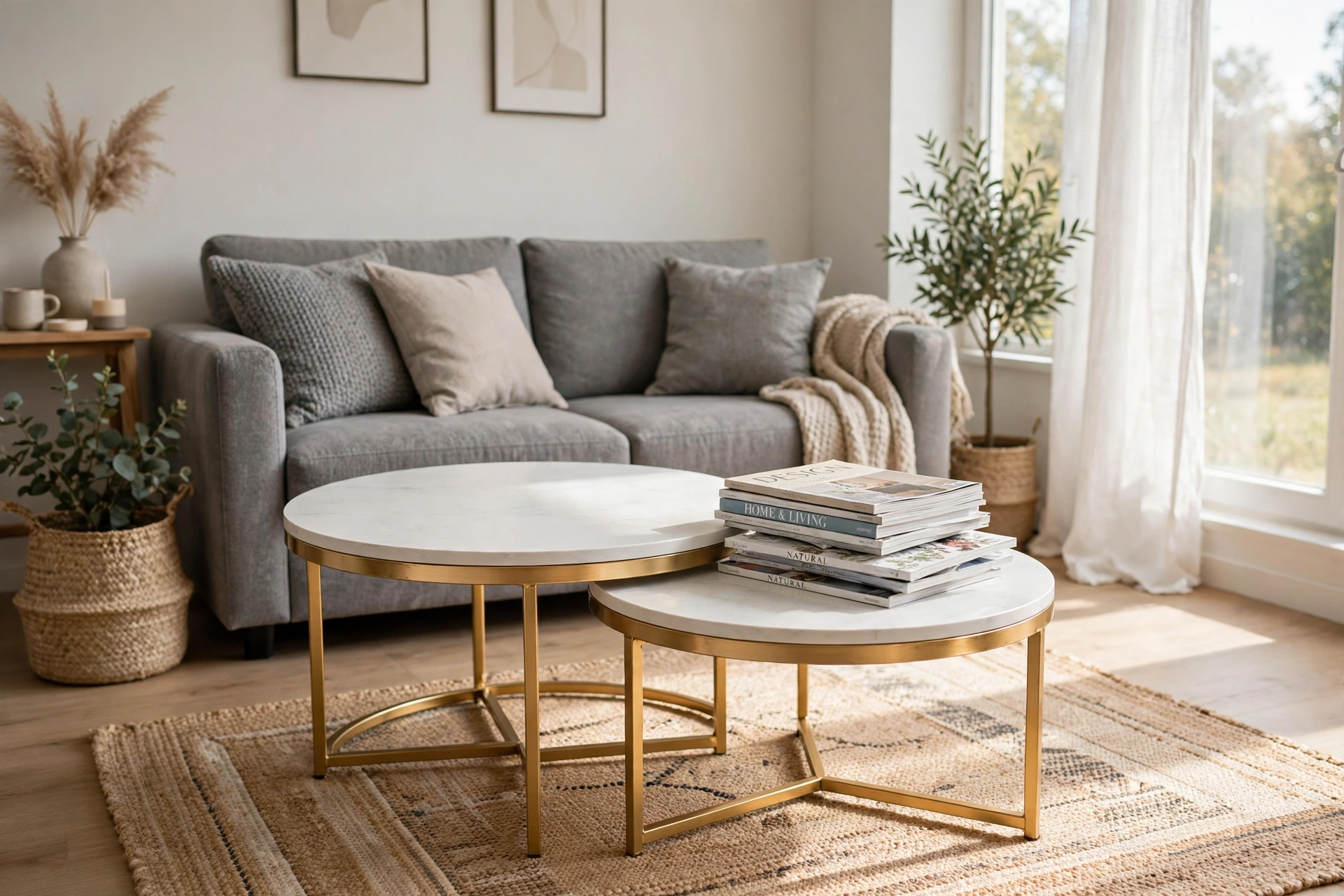
When I moved to a 450-square-foot studio, a full-size table was impossible, so I went with a nesting coffee table set — two tables that tuck together into one footprint. The round nesting set I use measures 31.5″L x 31.5″W x 16.9″H assembled, costs $399, has a 200-lb weight capacity, and the smaller table carries two storage drawers. Nested together they occupy about 5.4 square feet; pulled apart for a dinner party, they seat two zones.
Nesting tables are the best small living room coffee table trick I’ve found, because you don’t sacrifice surface — you stage it. Guests over? Pull the small one out. Movie night alone? Tuck it away and put your feet up. The MDF top with white-and-gold finish wipes clean, and two years of daily use hasn’t loosened the pedestal base. If your living room is under 150 square feet, I’d shortlist a nesting set before anything else.
My Verdict: the 5-Point Checklist Before You Buy
Three tables and five years later, here’s my verdict: measure first, and the numbers decide. Run this checklist before you click buy — it takes ten minutes and it beats a $150 return-shipping bill every time.
1. Sofa length x 0.66 = your table length ceiling. 2. Seat height ± 2 inches = your table height. 3. 18 inches sofa-to-table, 30+ inches of walkway — painter’s-tape the footprint. 4. Shape follows the room: rectangle for long sofas, round for tight rooms and toddlers, square for sectionals. 5. Storage pays for itself: a lift top or drawers replace a side table and a storage bin in one footprint. Browse the FLNORW MALL blog for more living-room sizing guides, and if your room is small, start with the nesting set — it’s the one purchase in five years I haven’t second-guessed.