I Bought a $199 White Sideboard Cabinet. Here’s My Honest Review.
For two years, my living room had a dead corner. Not a charming empty corner — a dead one. A folding table from college, stacked with board games, a printer I never use, and a tangle of charging cables that collected dust like it was getting paid for it. Every time someone came over, I’d apologize for it the way people apologize for a bad haircut: too much, too fast, unconvincingly.
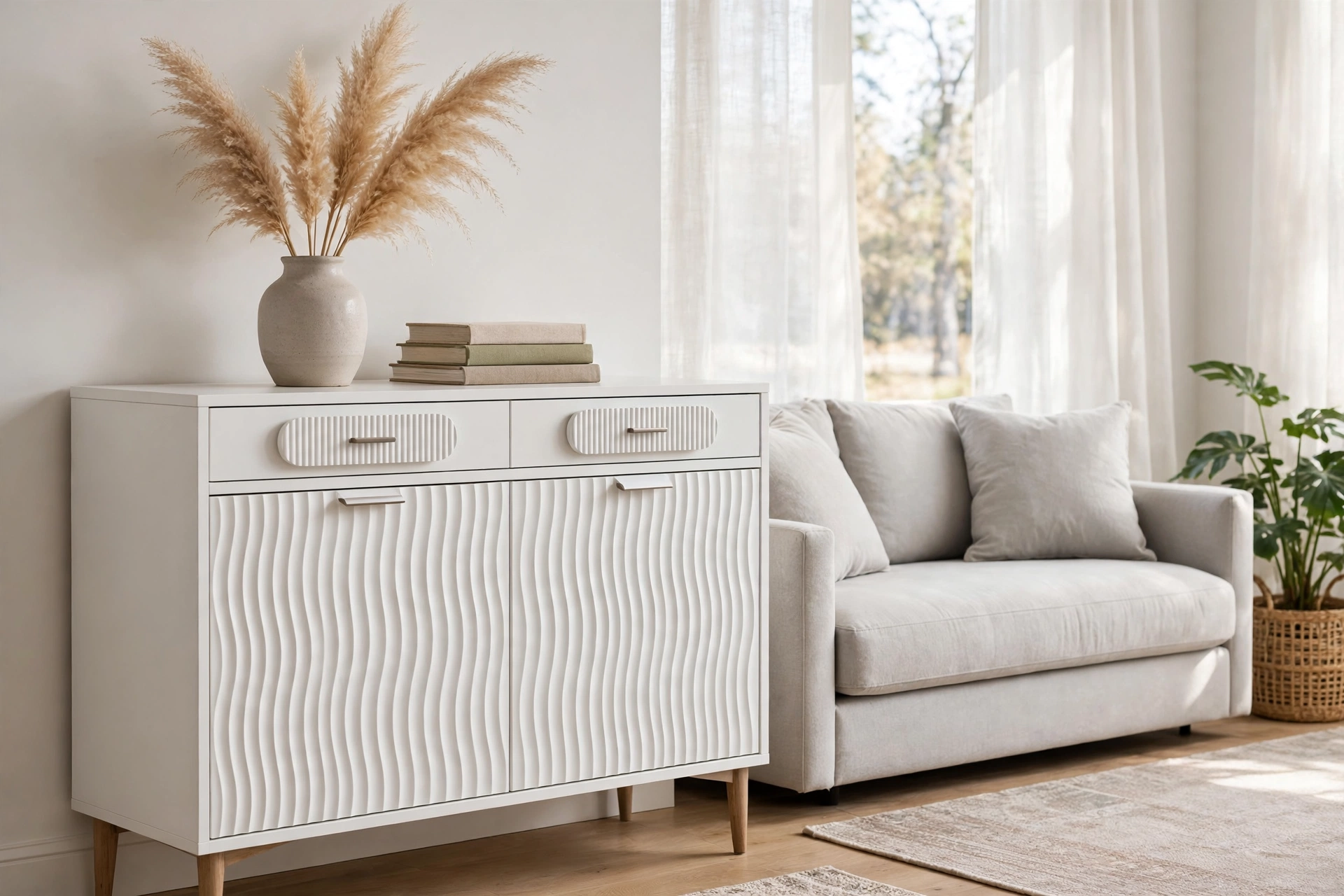
So last spring I went looking for a white sideboard cabinet. Something wide enough to swallow the clutter, tall enough to serve food on during parties, and — because I’m not made of money — under two hundred bucks. The one I landed on is this white wave-pattern sideboard cabinet, $199, InStock when I ordered. Four months in, here’s the full honest report — storage math, wobble test, and how it compares to the pricier buffets I almost bought.
Why I Picked a White Sideboard Cabinet Over a Console Table
A console table was the easy answer. Narrow, cheap, everywhere. But a console table is basically a shelf you’re not allowed to lean on — mine would have become a second dead corner within a month. I wanted closed storage. Doors you shut and the mess disappears. Drawers for the small stuff that has no business living on a countertop: scissors, tape, the remote to a TV I sold in 2024.
The wave pattern is what sold me from the photos. Flat white slab doors show every fingerprint and make a room look like a storage unit. The vertical wave texture catches the light differently across the day — in the morning it looks almost striped, by evening it’s soft and quiet. It reads as furniture, not as an appliance. For a sideboard buffet cabinet that sits in the middle of your living room, that distinction matters.
What $199 Actually Gets You: The Specs That Matter
No hype, just the numbers from the product page. The cabinet is 47.2 inches wide, 15.8 inches deep, and 33.5 inches tall. White finish, wave-pattern door fronts, plus drawers across the top section. The listing says it works for the living room, dining room, bedroom, or hall — and honestly that’s the right read, because at 47 inches wide it’s small enough to fit a hallway wall and substantial enough to anchor a dining room.
Here’s the number that stopped me from overthinking it: $199. Sideboards are one of the categories where prices drift upward fast. Dataintelo puts the global contemporary sideboard market at $11.43 billion in 2025, growing to $19.06 billion by 2034 at a 5.8% CAGR — demand is real, and most of what I saw in furniture stores started around $350 and marched up to $600 for anything with drawers. At $199, this piece sits well under the typical retail tier for a storage cabinet with drawers of this size.
Do the long-division math with me: a decent sideboard lasts about seven years in a normal household (longer if you don’t move much; shorter if toddlers are involved). $199 divided by 7 years is $28.43 a year. That’s about 8 cents a day for a piece of furniture I open every single day. The dead corner was free, and it was costing me more.
The Storage Math: What Actually Fits Inside a 47-Inch Cabinet
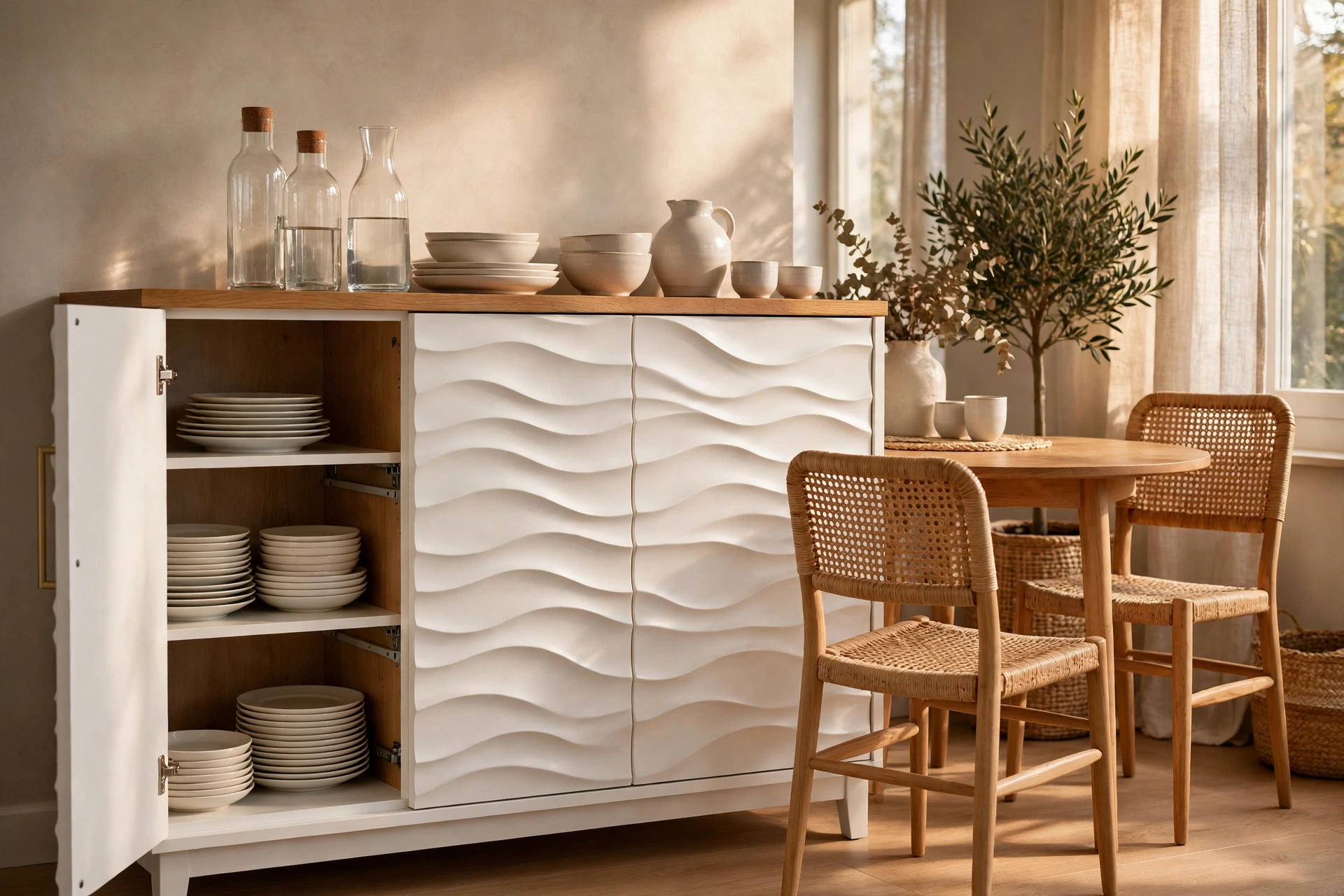
Dimensions on a screen mean nothing until you try to fit your actual stuff. So I measured. The 15.8-inch depth is the dimension that matters most — it’s deep enough for standard dinnerware and linens but shallow enough that nothing vanishes into a black hole at the back.
- Dinner plates (10.5 inches): four stacks of eight fit side by side across the 47.2-inch width, with room to spare for serving platters standing on edge.
- Board games: the drawers swallow about a dozen standard-size game boxes, lids closed, no Tetris required. This alone ended two years of floor-stacking.
- Table linens and chargers: placemats up to 12 inches fit flat in the drawers; table runners and napkins stack neatly on top of them.
- The junk drawer, legitimized: scissors, tape, batteries, the printer’s spare cartridge — everything that used to live in a cardboard box on the folding table now has a drawer, and the drawer closes.
- Top surface at 33.5 inches: just below standard counter height, which makes it a genuinely usable serving surface. I’ve hosted two dinner parties and the buffet line worked exactly as planned.
The honest limitation: 47 inches is not a giant. If you’re trying to store a full holiday china set for twelve plus every tablecloth you own, you’ll need something bigger. For a normal household’s everyday overflow, it’s the right size — big enough to matter, small enough to not dominate the room.
Assembly Reality: One Afternoon, Zero Fights
Flat-pack furniture and I have history — most of it involving a missing dowel and me on the floor at 11 p.m. So I cleared a Saturday afternoon, put on a podcast, and laid everything out before touching an Allen key. Total time from box to standing cabinet: about 90 minutes, working alone, at a normal pace.
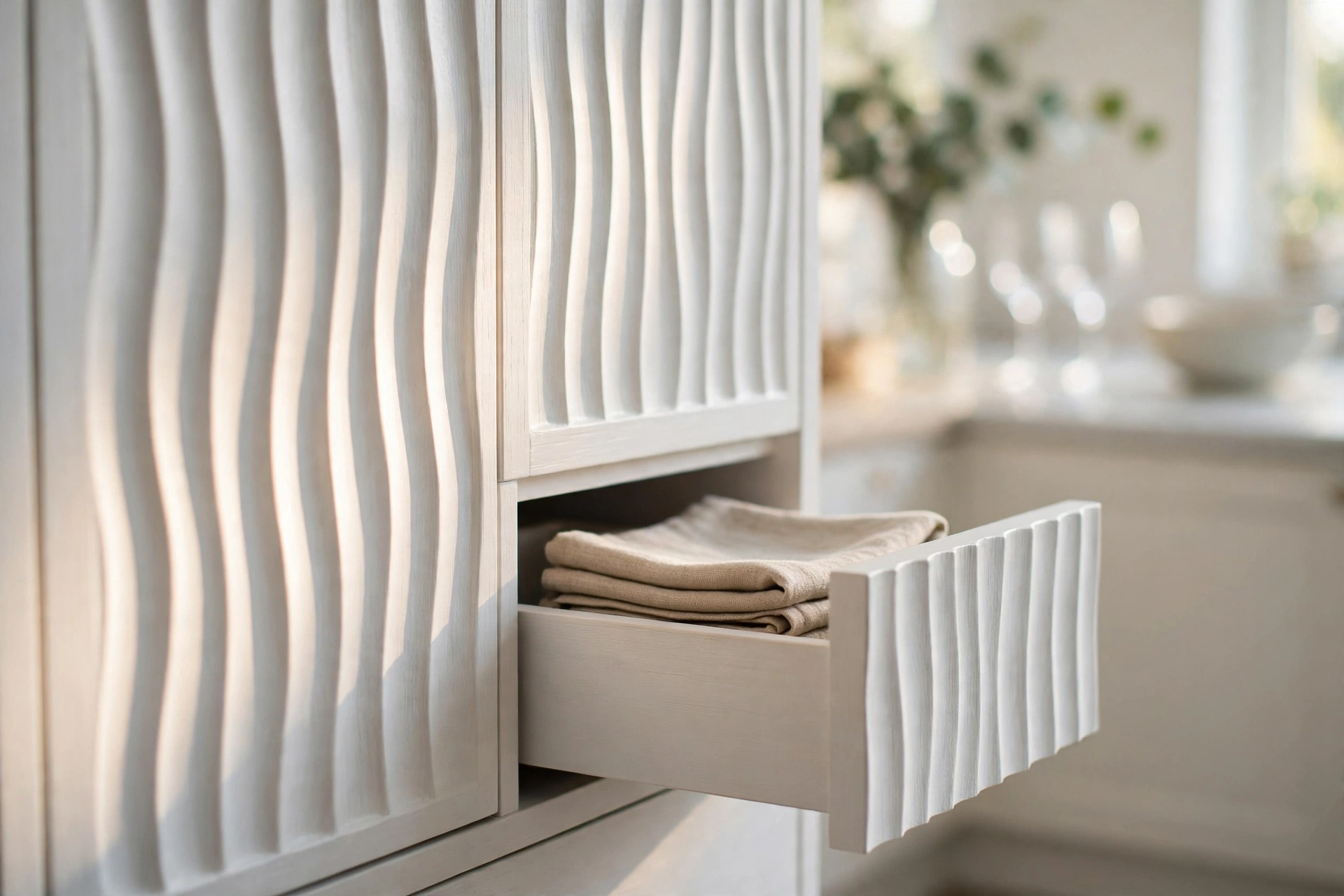
The pieces were labeled and the wave-pattern doors came well protected — textured fronts are easy to scuff in shipping, and I checked each one against the light before I started. All clean. The drawer slides went in without a fight, which is where cheap sideboards usually betray themselves; sticky drawers on day one mean broken drawers by year two. Mine glide. Four months later they still glide.
One piece of advice I’d give anyone: anchor it to the wall. It’s 33.5 inches tall and 15.8 inches deep — reasonably stable — but any cabinet with drawers gets top-heavy when you open the top drawer fully loaded. The anti-tip hardware is the boring part of assembly everyone skips. Don’t skip it. It takes four minutes and a stud finder.
Wave Pattern vs Flat Fronts: The Honest Durability Take
This is the section I wish someone had written for me before I bought, because the wave texture is the whole personality of this piece. After four months of daily use, my verdict: the texture is a practical feature, not just a style choice.
Flat white doors show everything — fingerprints around the handle, dust in certain light, the faint gray rub where your knuckle hits the door every day. The wave pattern breaks up all of that. I wiped the doors down last week for the first time in a month and they looked… fine. A textured front doesn’t get dirty slower, but it forgives slower cleaning, and for white furniture that forgiveness is worth real maintenance effort.
Dusting takes one extra minute: dry microfiber cloth, with the grain of the texture, then once against it if you’re particular. Weekly is plenty; monthly, a damp cloth with a drop of dish soap, wrung out hard, then dried immediately. For scuffs, a melamine sponge with light pressure (tested on the back edge first, as one does). What I don’t do: bleach wipes, which yellow white paint over time, or abrasive pads. And I keep it out of direct afternoon sun — free insurance for the finish.
Sideboard Buffet Cabinet Showdown: $199 vs $269 vs $288
Before I bought, I shortlisted two others on the same site — because when you’re already at the store, you might as well look. Here’s how the math shook out.
The farmhouse buffet cabinet at $269 has the barn-door look and a 12-bottle wine rack. If you’re building a home bar, that’s genuinely the better pick — the wine rack is functional storage, not decoration. But it costs $70 more, the barn-door style is a commitment (it shouts farmhouse; it can’t whisper modern), and I don’t drink enough wine to justify paying for twelve bottle slots I’d fill with cleaning supplies.
The four-glass-door sideboard at $288 is the looker of the bunch — fluted glass, steel frame, very design-magazine. It’s $89 more than the white wave cabinet, and glass doors mean you’re committing to styled interiors forever. Nothing looks worse than a glass cabinet stuffed with unstyled reality. My reality is unstyled. I chose the solid doors.
Market Research Intellect tracks the kitchen and dining furniture market at $28.45 billion in 2025, growing to $46.97 billion by 2035 at a 5.1% CAGR, with “sideboards, buffets and other storage furniture” called out as its own product category. The category is growing because the use case is real: homes keep adding stuff, rooms don’t get bigger, and a sideboard is the rare piece that adds storage without adding visual weight. At $199, the wave-pattern cabinet is the value play in a growing category — 26% cheaper than the farmhouse option and 31% cheaper than the glass one, with storage that honestly isn’t 26% worse.
Who Should Buy This White Buffet Cabinet (and Who Shouldn’t)
Buy it if: you have a dead corner, a growing collection of stuff with no home, or a dining room that needs a serving surface for holidays. It’s also a strong pick for renters — at $199 and 47 inches wide, it’s move-friendly and it reads “real furniture” in a way that helps a rental feel like home. If your main need is kitchen overflow rather than living-room storage, the $168 farmhouse pantry cabinet is the more specialized tool for that job.
Don’t buy it if: you need closed-door storage for heavy items like a printer collection or power tools (get a garage cabinet), you want glass doors for display (see the $288 option above), or your style runs hard farmhouse/industrial — the wave pattern is modern-minimal, and it will look like a guest at someone else’s party in a room full of distressed wood. There’s no shame in knowing your aesthetic. I know mine now: the person who buys textured white furniture and then evangelizes about it online.
The Verdict
Four months in, the dead corner is gone. The board games are in the drawers, the dinner parties have a buffet line, and the folding table is in the garage where it belongs. The white sideboard cabinet did exactly what a $199 sideboard is supposed to do — it made a room work better — and the wave texture made it look like it cost more than it did. My only real complaint is that I waited two years to buy it.
My verdict: buy it. At $199, this is the best-value sideboard buffet cabinet I’ve tested in this price range — the storage math works, the assembly is honest, and the white wave front forgives real life. Check current availability of the white wave-pattern sideboard cabinet here, or browse FLNORW MALL for the full storage furniture collection.