I Bought a $299 20-in-1 Balance Bike Building Kit for My 3-Year-Old Nephew. Here’s the Gift Math.
I Bought a $299 20-in-1 Balance Bike Building Kit for My 3-Year-Old Nephew. Here’s the Gift Math.
My nephew Leo turns three in December, and I am once again the uncle with a Christmas list problem. Last year I bought him a $120 robot dog that sang one song, scared the cat, and has lived in a closet since January. This year I swore I would buy exactly one gift — something he would still be using in February.
That is how I ended up staring at the KidRock Constructible Kit 20 in 1 on FLNORW MALL: a $299 box of aluminum profiles and connectors that builds into at least 15 different ride-on toys — a balance bike, a sit scooter, a stand scooter, a go-kart, and more — for kids ages 1 to 4. One box. It sounded like a pitch. I bought it anyway, built it with my brother, and watched a three-year-old test it for a month. Here is the honest accounting.
What the $299 20-in-1 kit actually is
This is not a toy you unbox and ride. It is a construction kit — think of it as the love child of a balance bike and a building set — and the box ships as parts, not as a finished bike. The headline numbers from the product page: $299, InStock, silver finish, item code ET297806SKT.
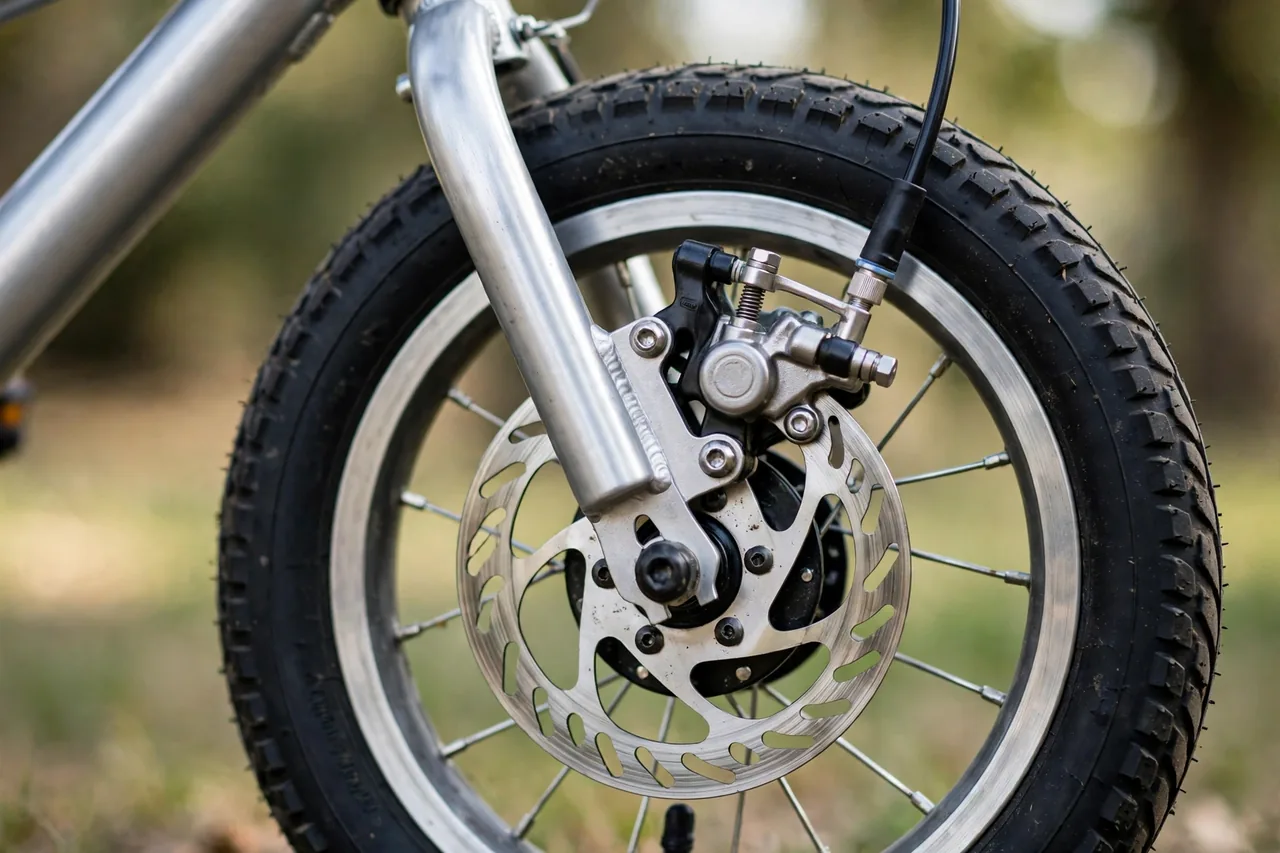
The materials are what stopped me scrolling. The frame is built from high-strength aerospace aluminium alloy profiles — not the hollow plastic tubing of a typical $60 ride-on. The joints are BASF PA66 environmentally friendly nylon connectors. The kit rides on oversized pneumatic tyres — actual air-filled tires, not the rock-hard plastic wheels that make cheap scooters rattle — with polymer rubber cushions and glass fibre reinforced drive belts. And here is the detail I did not expect on a toddler toy: mechanical disc brakes.
The whole thing weighs 13 pounds, and the shipping box is 16.93 × 13.39 × 5.91 inches — small enough that it does not look like a refrigerator showed up on Christmas morning, which matters more than you would think.
One honest footnote on the marketing: the title says “20 in 1” while the bullet copy says “at least 15 different builds.” I will say 15-plus builds and leave the “20” to the box art. Also note the fine print: (Not Electric). No battery, no charger, no motor. That is a feature, not a missing feature — more on that below.
Four ages, four different toys: the 1-to-4 growth plan
The reason this kit exists is the toy industry’s dirtiest open secret: kids outgrow ride-ons in about eighteen months. The kit’s answer is to rebuild the toy as the kid grows, and the four-stage plan roughly works like this:
- Ages 1–2: the sit scooter. Low, stable, four wheels on the ground. This is the “hold the back of the seat and walk behind them” phase.
- Ages 2–3: the stand scooter. Same parts, taller build. This is where steering starts meaning something.
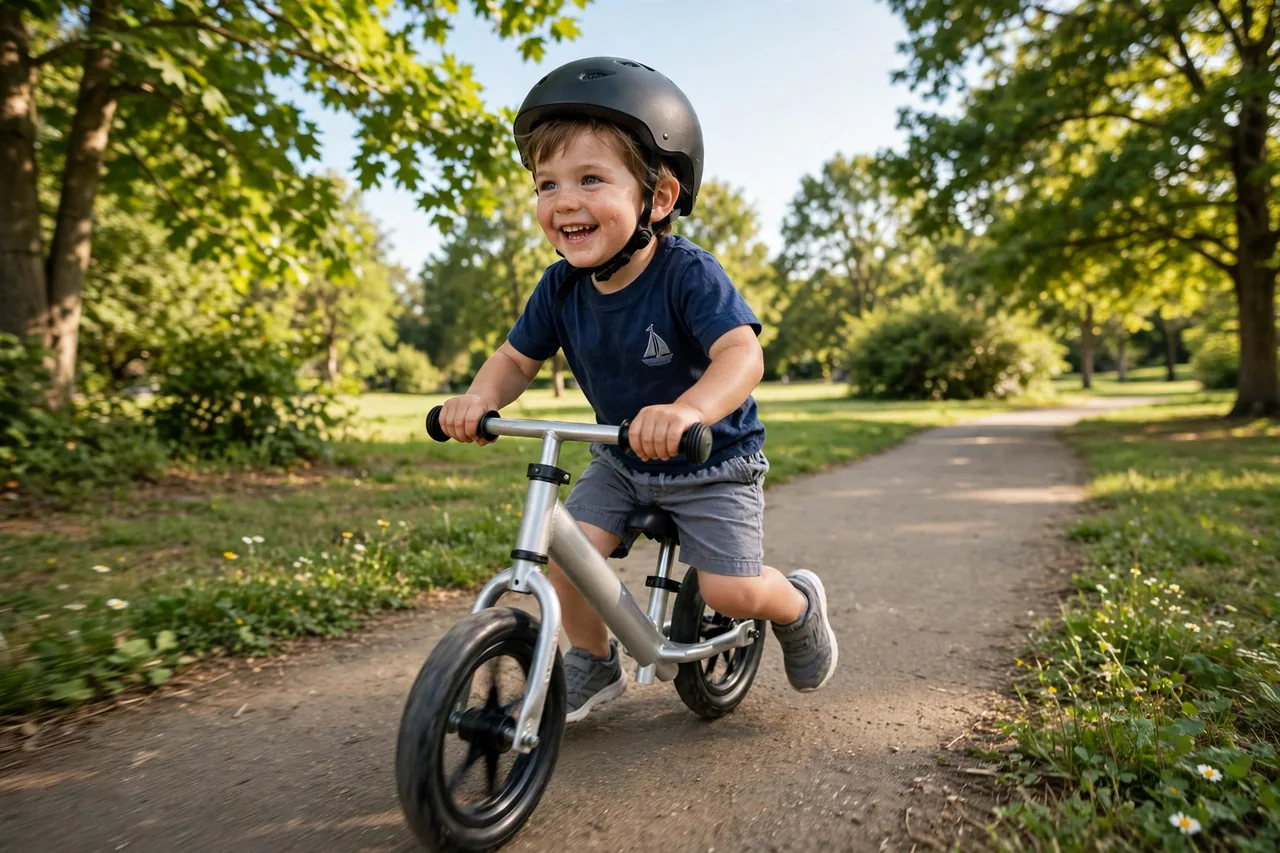
- Age 3: the balance bike. The centerpiece. No pedals — the kid pushes with their feet, lifts them, and glides. This is the build Leo is on now, and the research backs it hardest (more below).
- Age 4: the go-kart-style builds. Lower seat, longer wheelbase, more speed. The “at least 15” claim comes from the variations here — handlebar heights, seat positions, wheel configurations.
The product page calls this “the ultimate sustainable toy” with the line: *”Don’t buy a new ride-on when they outgrow it, just build one together.”* That is marketing, but it is marketing aimed at a real pain point — my sister’s garage currently holds a tricycle, a push car, and a scooter Leo outgrew, all waiting for a donation run.
Build quality that surprised me
I expected $299 of plastic. What arrived is closer to $299 of small-scale engineering, and three details sold me:
First, the aluminium alloy profiles. They have the anodized feel of decent camera-tripod legs — light, rigid, and clearly not going to snap at a joint. Thirteen pounds is light enough to carry one-handed up the stairs and heavy enough to feel solid.
Second, the pneumatic tires. This is the single biggest ride-quality upgrade over the hard-plastic wheels on most toddler ride-ons. Air tires grip better, roll over sidewalk seams without the chatter, and are quieter.
Third, the mechanical disc brakes. I have seen disc brakes on adult bikes; I had never seen them on a toy aimed at ages 1–4. Simple cable-actuated units, but they actually stop the thing — which matters the moment a three-year-old discovers downhill. Cheap ride-ons have a foot brake or nothing at all.
Balance bike vs training wheels: what the research actually says
If you are buying this kit mostly for the balance-bike build, the science is firmly on your side — and it is one of the clearest verdicts in all of kids’ product research.
A study published in December 2024 in the journal *Sports* (MDPI) cited a retrospective study finding that children who learned on a balance bike rode independently on a pedal bike an average of 1.81 years earlier than children who learned with training wheels. Not weeks earlier. Nearly two years.
Cristiana Mercê, a sport sciences professor at Santarém Polytechnic University in Portugal, has published five studies showing balance-bike kids learn in less time — and up to two years younger — than their training-wheel peers. Her summary line is the whole argument in one sentence: *”You can balance without pedaling, but you can’t pedal without balancing.”*
The Dutch road-safety institute SWOV agrees: kids who practice with a balance bike learn to cycle sooner, while training wheels are “less effective” because the child never learns to balance independently.
Translation for gift buyers: the training-wheels bike your parents bought you is the slow path. A balance bike is the fast path — and this kit’s balance-bike build is a proper no-pedal bike with real tires and real brakes, not a compromise.
The gift math: $299 vs the toy graveyard
Here is the math I ran before clicking buy, flagged as my own rough estimate. Buying the same four capabilities as separate toys: a decent balance bike ($80–$120), a scooter ($60–$100), a go-kart ($150–$250), and a push ride-on for age 1 ($40–$80). That is roughly $330–$550 — and that assumes each one gets fully used, which they never do, because the kid outgrows each one and you buy the next.
The kit is $299. Across 15-plus builds, that is under $20 per configuration — and the configurations arrive exactly when the kid is ready for them, not when you remember to go shopping.
Then there is the closet math, which nobody puts on a product page but every parent does in their head. Five separate ride-ons need roughly five boxes of garage space. This kit needs one box — 16.93 × 13.39 × 5.91 inches — plus a small parts bin for the spare connectors. My brother’s garage thanked me.
For the holiday-budget context: the National Retail Federation’s 2025 holiday survey (8,247 adults, conducted October 1–7) found consumers plan to spend an average of $890.49 per person this season, with $627.93 of that going to gifts — and their 2024 survey found 36% of holiday shoppers buy toys. A $299 gift is roughly half the average person’s gift budget, which makes it exactly what it should be: the one big gift, not one of six medium ones.
And the cost-per-play math, my favorite: Leo has ridden some version of this kit roughly four times a week for a month — 16 sessions. At $299, that is $18.70 a session today and falling fast. By next summer it will be under $3 a session. The $120 robot dog from last Christmas cost $120 per week of use.
The catch: assembly is part of the gift
Let me be straight about the trade-off, because it is the whole product: you build this thing. It does not arrive as a bike. It arrives as a very nice box of parts, and the first build took my brother and me about an hour with the manual — most of it spent figuring out which connector was which.
The product page frames this as “the best companion for parents and children” — a father assembling a go-kart with his child — and for once the marketing is describing the actual experience. Leo “helped” by handing us connectors and immediately claiming each finished build. Rebuilding it into the next configuration is now a rainy-Saturday activity, not a chore. That is the hidden feature: the kit manufactures new-toy excitement without a new purchase.
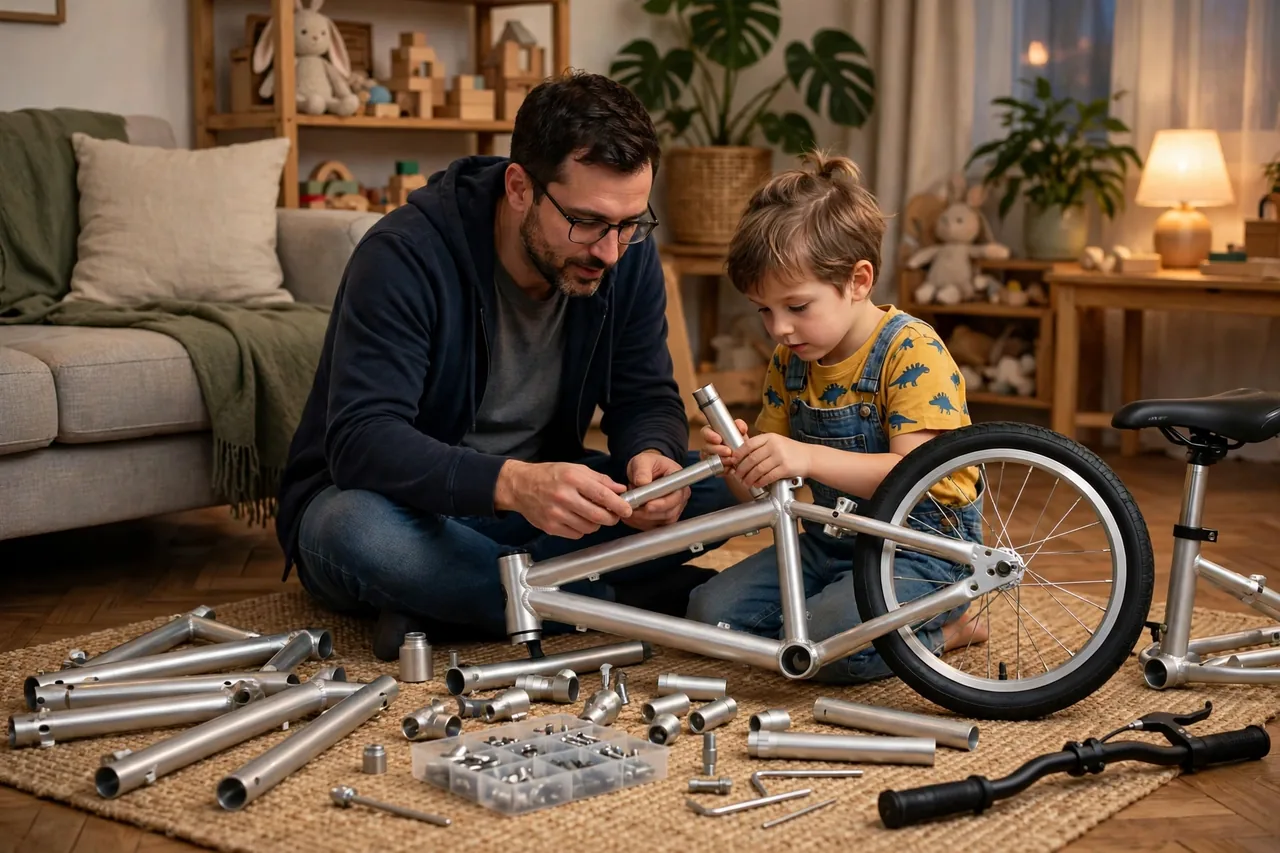
The flip side: if you are the kind of gift-giver who wants to hand over a finished toy on Christmas morning, this is not that. Build it Christmas Eve, after bedtime. And the (Not Electric) fine print cuts both ways — no battery to charge on Christmas morning (genuinely wonderful), but no motor either for the kid who just wants to sit and be driven.
What I’d change
Three honest complaints, none of them dealbreakers. First, it comes in silver only — kids have opinions about colors. Second, keep the box — the spare connectors and alternate parts need a home. Third, the age-1 builds assume an engaged adult; this is not a toy you hand a 14-month-old and walk away from.
The verdict
One month in, Leo’s review is the only one that counts: he asks for “the silver bike” every morning, and last week he glided — both feet up, ten full seconds — across the park path. He is three. The robot dog never stood a chance.
The $299 buys you four years of ride-on toys in one box, real engineering instead of plastic, a balance bike the research says will get your kid pedaling up to two years earlier, and a gift that is still exciting in February. As the one big Christmas gift for a 1-to-4-year-old, the math works.
Ready to be the favorite uncle?
See the KidRock 20-in-1 Balance Bike Kit — $299 at FLNORW MALL
Shopping for an older kid? Read my ride-on car gift guide for the 5-to-8 crowd, or browse the full toys and games collection and the FLNORW MALL shop.