Counter Height vs Standard Dining Table: I Tested Both Heights in Real Kitchens
Two kitchens ago, I bought a dining set the way most people do — I liked the photos, I checked the price, and I completely ignored the line in the listing that said “counter height.” It arrived, we unpacked it, and my first thought was that the table looked wrong. The chairs looked wrong. Everything was about six inches too tall. That was my introduction to the fact that a dining table is not just a table — its height decides your posture, who can sit down comfortably, how the room flows, and honestly, how often the thing gets used at all. After six weeks with a 35.4-inch pub-height set and two years of eating at a standard 30-inch table, here is the honest breakdown, with the actual numbers.

The Three Dining Table Heights, Decoded
Furniture listings use these terms loosely, but the numbers are consistent enough to work with. Standard dining height is 28 to 30 inches tall, paired with chairs whose seats sit 17 to 19 inches off the floor — the table you grew up with. Counter height runs 34 to 36 inches, with stools at 24 to 26 inches. Bar height goes 40 to 42 inches, with stools at 28 to 30 inches.
The confusing part: “pub height” in most online listings means counter height, not bar height. The $288 pub-height 7-piece set I tested is 35.4 inches tall — squarely counter height. If a listing says pub and a table photo looks like a bar, check the inch number. Always check the inch number.
The 10-12 Inch Rule: The Physics of a Comfortable Sit
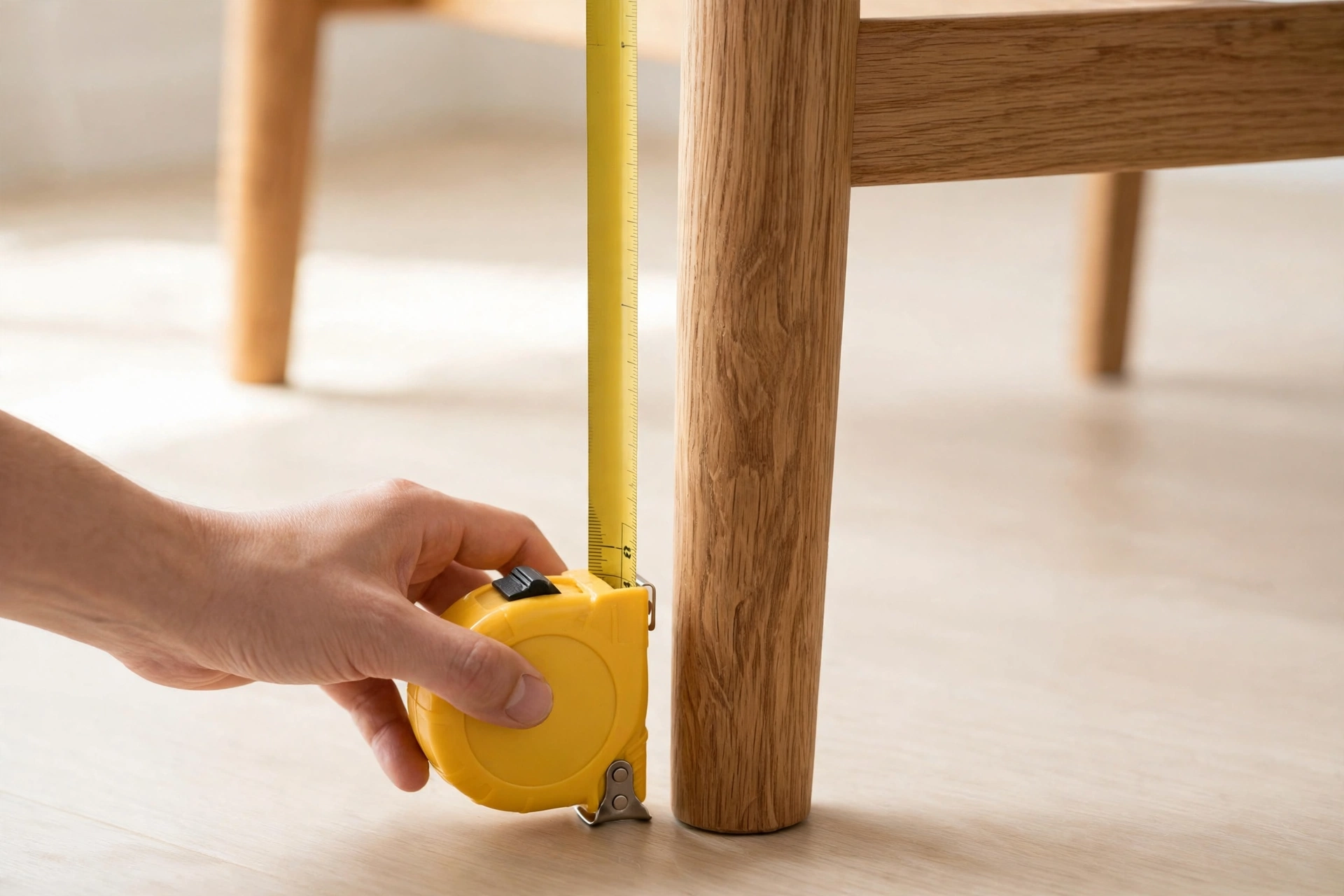
Here is the single measurement that matters more than style, brand, or price: the gap between the seat top and the underside of the table should be 10 to 12 inches. Drop below 9 and your thighs press against the table apron. Go past 13 and your shoulders hunch to reach your plate.
The math works out cleanly at both heights. A standard 18-inch chair seat under a 30-inch table with a 1.2-inch top gives you about 11 inches of clearance. A 24.5-inch counter stool under a 35.5-inch table gives you roughly the same. The $188 bar table set I reviewed earlier nails it: a 24.41-inch seat under a 35.43-inch table, an 11-inch gap my knees can personally confirm.
The footnote nobody prints in the listing: at counter height, a footrest stops being optional. Dangling feet go numb in twenty minutes. The ring footrest on that $188 set is what turns a 15-minute perch into a real dinner seat.
Where a Counter Height Dining Table Wins
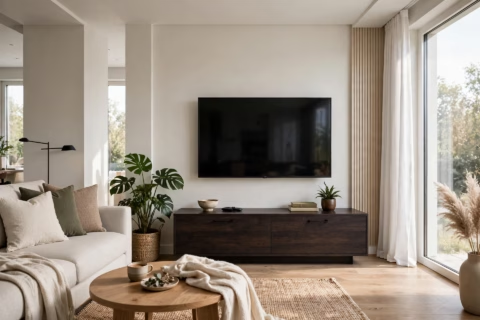
Counter height was born in open kitchens, and that is still where it shines. If your table sits in the kitchen rather than a separate dining room, counter height matches the surrounding counters — the sightline stays clean and the table reads as part of the kitchen, not furniture parked in it. It is also the natural choice when the table doubles as a standing-height work surface during the day.
There is a cultural shift behind the trend, too. The NKBA 2024 Design Trends Report found that roughly half of kitchen designers surveyed said clients want maximized seating around the island — American kitchens keep drifting toward raised, perch-style seating. Quick meals benefit most: breakfast, coffee, homework supervision while dinner simmers. The raised sightline lets you cook and keep an eye on the table at the same time.
And the small-space argument is real: taller tables let sightlines pass over them, so the room feels less boxed in. More on the floor math in a minute.
Where Standard Height Still Wins
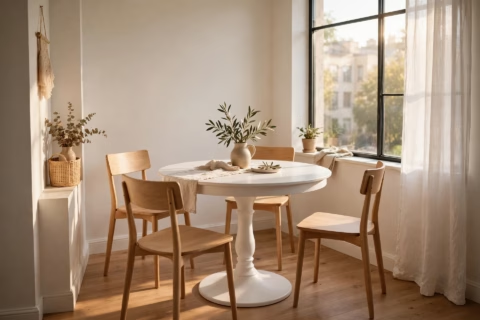
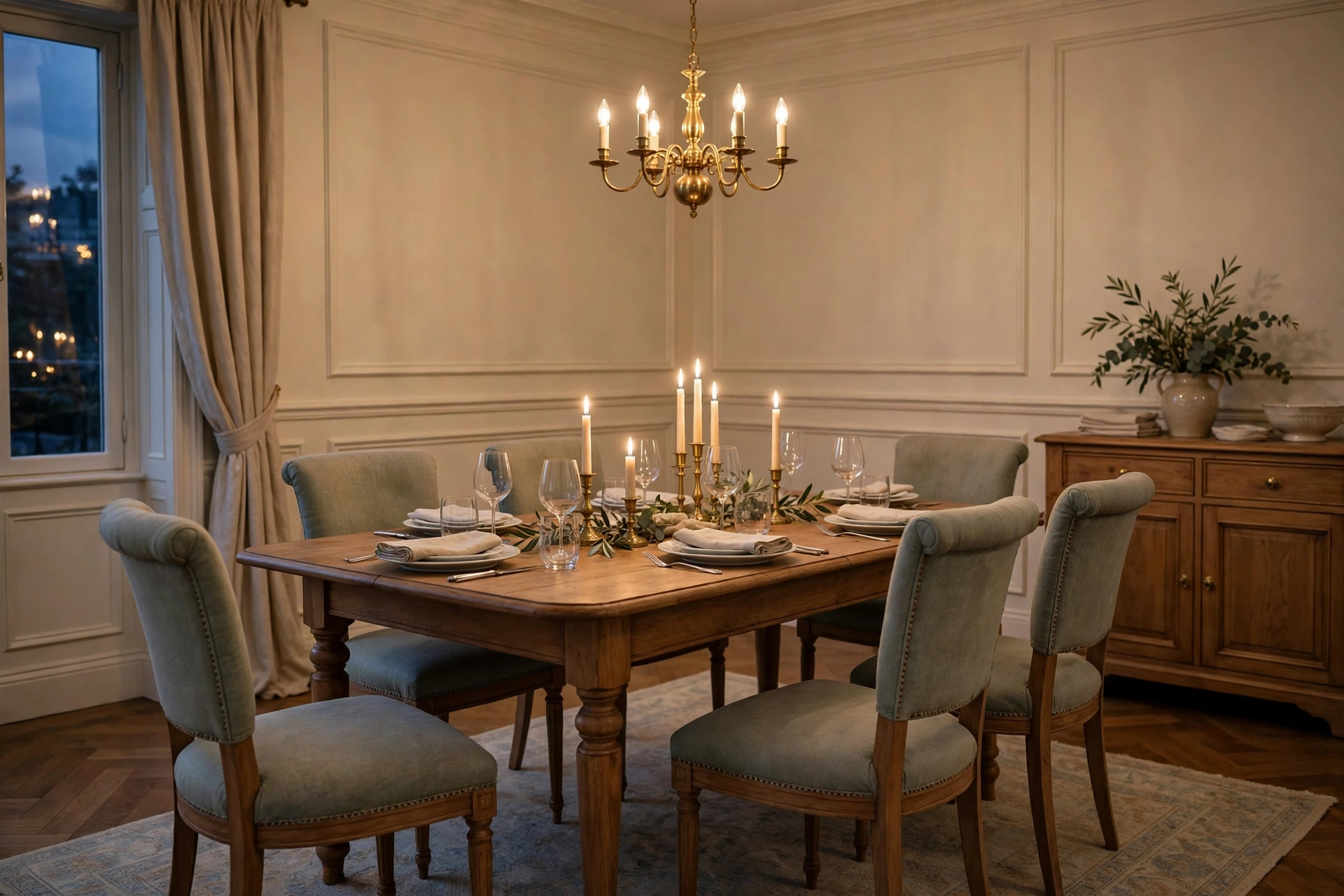
Standard height wins anywhere people linger. Real chairs with real backs beat stools after ninety minutes — full stop. Older guests will thank you: a 17-inch chair is a sit; a 24-inch stool is a climb. Small kids belong at a standard table, period. And if you host actual dinner parties, standard height is the default for a reason — counter height in a formal dining room reads like a pub crashed someone’s wedding.
Versatility counts too. Standard is the reference everything else is measured against. Future chair swaps, reupholstery projects, hand-me-downs from your parents — they all assume 30 inches.
My Real-World Test: The $288 Pub-Height Set and One Noisy Saturday
Specs first, because they are the honest part: the $288 pub-height 7-piece set is a 47.2 by 23.6 inch table at 35.4 inches tall, industrial style, with six PU-leather chairs. Per-seat math: $288 divided by seven pieces is about $41 a seat, table included. For comparison, the $188 bar table set for two works out to $94 a seat — the pub set is the better deal per seat, and the small set wins on footprint.
Taco night was the stress test: six adults, one 47-inch side. The seating capacity math says 24 inches per diner — 47.2 inches split two ways gives each side about 23.6 inches per person. Snug, but nobody’s elbows filed a complaint. Cleanup took one damp cloth. The PU chairs wipe down like the material was invented for taco night, which it basically was.
The stool-fatigue check: at 60 to 90 minutes, the chairs were fine — these are padded chairs, not backless stools, and that matters. But here is my one honest complaint: at 35.4 inches, guests kept trying to sit “normally” and finding that normal doesn’t apply. Counter height is a commitment. You buy the full set or you buy nothing.
The Small-Kitchen Floor Math
A standard 30-by-48-inch table eats 10 square feet of floor. The little 23.62-inch square bar set takes 3.9 square feet — and because both stools tuck completely under it, stored footprint and in-use footprint are the same number. The pub 7-piece’s table is about 7.8 square feet.
Then add the clearance tax: you need roughly 36 inches of open floor behind each side people actually sit at. RentCafe and Yardi Matrix put the average new apartment at about 887 square feet in 2025 — in a studio or a galley kitchen, the gap between 3.9 and 10 square feet is the gap between a walkway and a squeeze. That is the real argument for counter height in small homes: not the look, the floor.
Three Honest Warnings Before You Buy Counter Height
- Kids under about five feet climb. A 24-inch seat with no armrests is a small adventure, and not the fun kind. If toddlers are regulars, standard height is the answer and this is not a debate.
- Stool fatigue is real. Even good counter stools lack the full-back support of a dining chair. For 20-minute meals it is a non-issue; for a three-hour board game night, it is the whole issue.
- Heights do not mix. A counter-height table with standard chairs puts your elbows at your ears. I have seen this exact mistake in a rental listing photo. Commit to the full set, stools and all.
One more practical note: check the round vs rectangle table shape guide before you lock in a footprint — at counter height, a round 42-inch top seats four with zero corners to bump into.
The Verdict
Pick by how you eat, not how the listing looks. If most of your meals are quick, kitchen-adjacent, and casual — and especially if your kitchen is small — counter height earns its keep. The raised sightline, the doubled work surface, the floor savings: they are all real advantages, not marketing. If you host, linger, or regularly seat grandparents and toddlers, standard height still rules — comfort over two hours beats style points every time.
My own kitchen keeps the counter-height set, because my life is 20-minute meals standing next to a stove. My dining room, when I finally have one, gets the standard 30 inches. That is the whole decision, and it took me six inches of surprise to learn it.
Want the full spec sheet and current price? See my review of the $288 pub-height 7-piece set or the $188 bar table set for two at FLNORW MALL.