Furniture Anchoring: the 10-Minute Safety Fix That Could Save Your Kid
Furniture Anchoring: the 10-Minute Safety Fix That Could Save Your Kid
My sister called me in a panic last spring. Her two-year-old had pulled out the bottom two drawers of the dresser in the nursery, climbed them like stairs, and was standing on the open top drawer waving at her when she walked in. Nothing fell. Nothing broke. But she sent me the photo anyway — her hand shaking in the corner of the frame — with the text: “Do all dressers do this?”
Yes. They do. That photo sent me down a rabbit hole I had been avoiding for years: furniture anchoring. I spent the next weekend anchoring every tall piece of furniture in my apartment and hers. Ten minutes a piece. I am still embarrassed it took a scare to make me do it.
If you have kids, grandkids, or just a wobbly bookshelf in your life, this is the single highest-value home safety job you can do this weekend. Here is the honest version — the data, the hardware, the wall types, and what it actually costs.
Why Furniture Tip-Overs Happen (It Is Not a Freak Accident)
A dresser is basically a lever waiting for the wrong moment. Pull out two drawers and all the weight shifts forward. A 30-pound toddler climbing those drawers adds a force multiplier the designer never planned for — most dressers are engineered for upright, closed-drawer stability, not for a kid using them as a ladder.
Bookshelves are worse. A 75-inch-tall bookcase is top-heavy by design: the mass sits high, the footprint is narrow. A kid reaching for a book, a heavy plant on one shelf, an earthquake tremor — and the center of gravity walks right past the front feet.
The engineering behind the CPSC’s Anchor It! campaign is brutally simple: a furniture tip-over is a physics problem, and a wall anchor is a two-dollar physics solution.
What the CPSC Numbers Actually Say About Tip-Overs
These are from the U.S. Consumer Product Safety Commission itself:
- 17,700 emergency-room visits were linked to furniture, TV, or appliance tip-overs in 2021 alone (CPSC tip-over annual report, February 2023).
- 592 deaths were reported involving tip-overs between 2000 and 2021 — and in 2021, all six reported tip-over fatalities involved furniture (same report).
- For clothing storage units specifically — dressers, chests, bureaus, wardrobes — the CPSC counted 234 fatalities from January 2000 through April 2022, including 199 children, plus an estimated 84,100 ER-treated injuries between 2006 and 2021 (CPSC news release, October 19, 2022).
- The agency has issued 43 recalls for tip-over hazards on clothing storage units, involving more than 21 million units.
- In October 2022 the CPSC approved a new mandatory federal safety standard for clothing storage units — and the STURDY Act, the Stop Tip-overs of Unstable, Risky Dressers on Youth Act, was signed into law in December 2022.
The good news buried in that report: tip-over injuries have fallen by more than half since 2014. Awareness works. The bad news: furniture tip-overs declined far less than TV tip-overs (22,100 in 2012 to 14,400 in 2021), because furniture is still the piece most of us forget to anchor.
Which Furniture to Anchor First: My Priority List
Not everything needs a wall strap. Here is the order I used in my own apartment, based on height, top-heaviness, and where kids actually go:
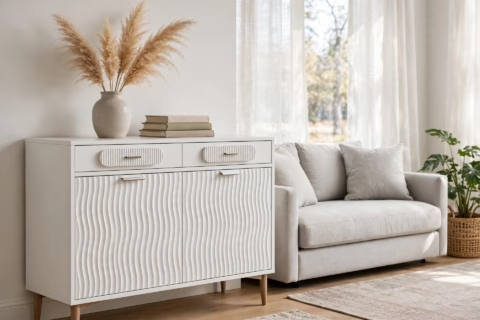
- Tall dressers and chests of drawers first. Anything over 27 inches tall qualifies under the CPSC’s clothing-storage-unit definition. My tall 6-drawer dresser stands 48 inches high — a climbing kid’s paradise.
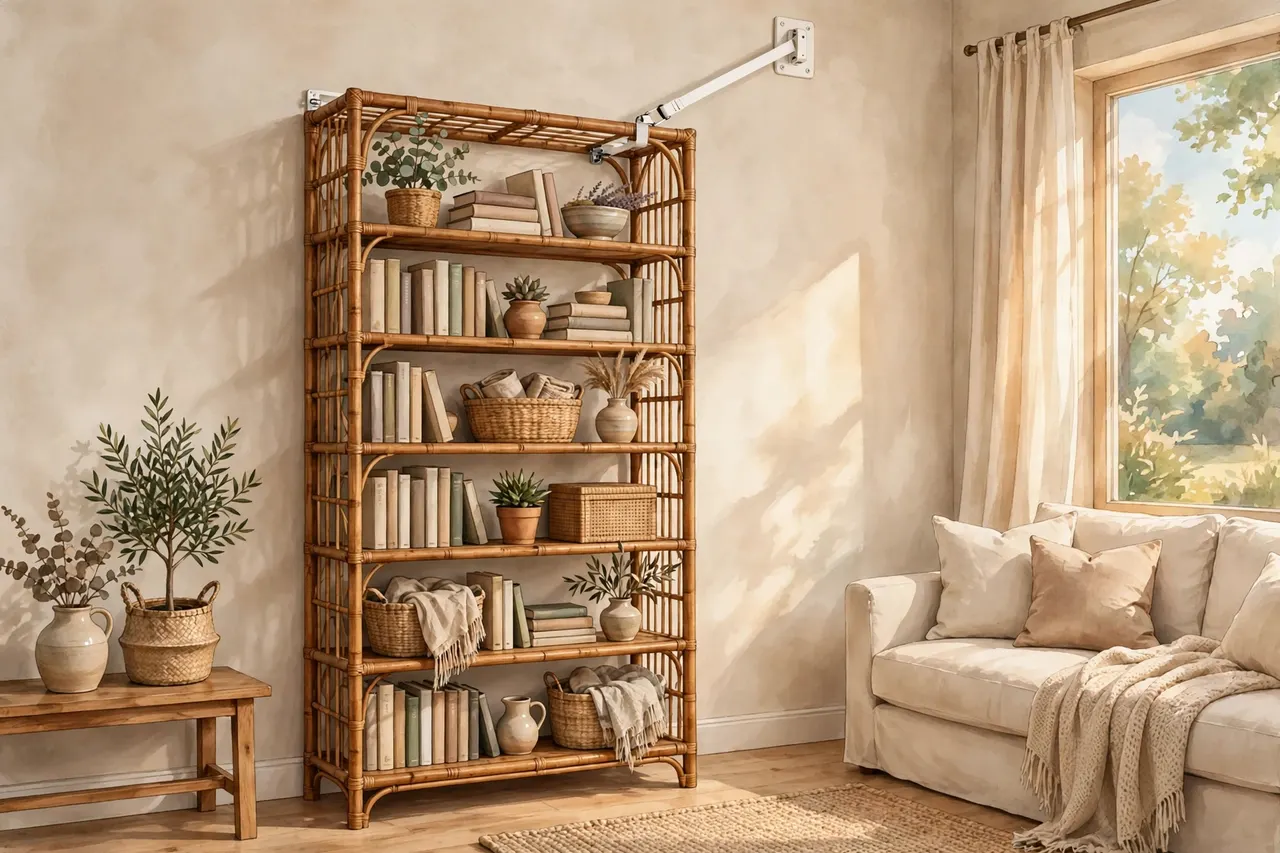
- Bookshelves and bookcases. Tall and narrow beats short and wide for danger. A 75.6-inch, seven-tier bookcase with a 13.8-inch footprint is exactly the shape that tips.
- TV furniture. The CPSC counts TV tip-overs together with furniture for a reason — the furniture under the TV tips with it. A $188 TV stand with a 55-inch TV on top is a cantilever.
- Wardrobes and armoires. Heavy doors that swing open shift the weight forward the same way drawers do.
- Anything you have already watched wobble. If it rocks when you pull a drawer, it will not survive a climbing toddler.
The two pieces in my own home that worried me most were the 75.6-inch rattan bookshelf ($238) — tall, narrow, and loaded with books — and the 48-inch tall 6-drawer dresser ($225). Both are now strapped to studs.
The 10-Minute Furniture Anchoring Method (Step by Step)
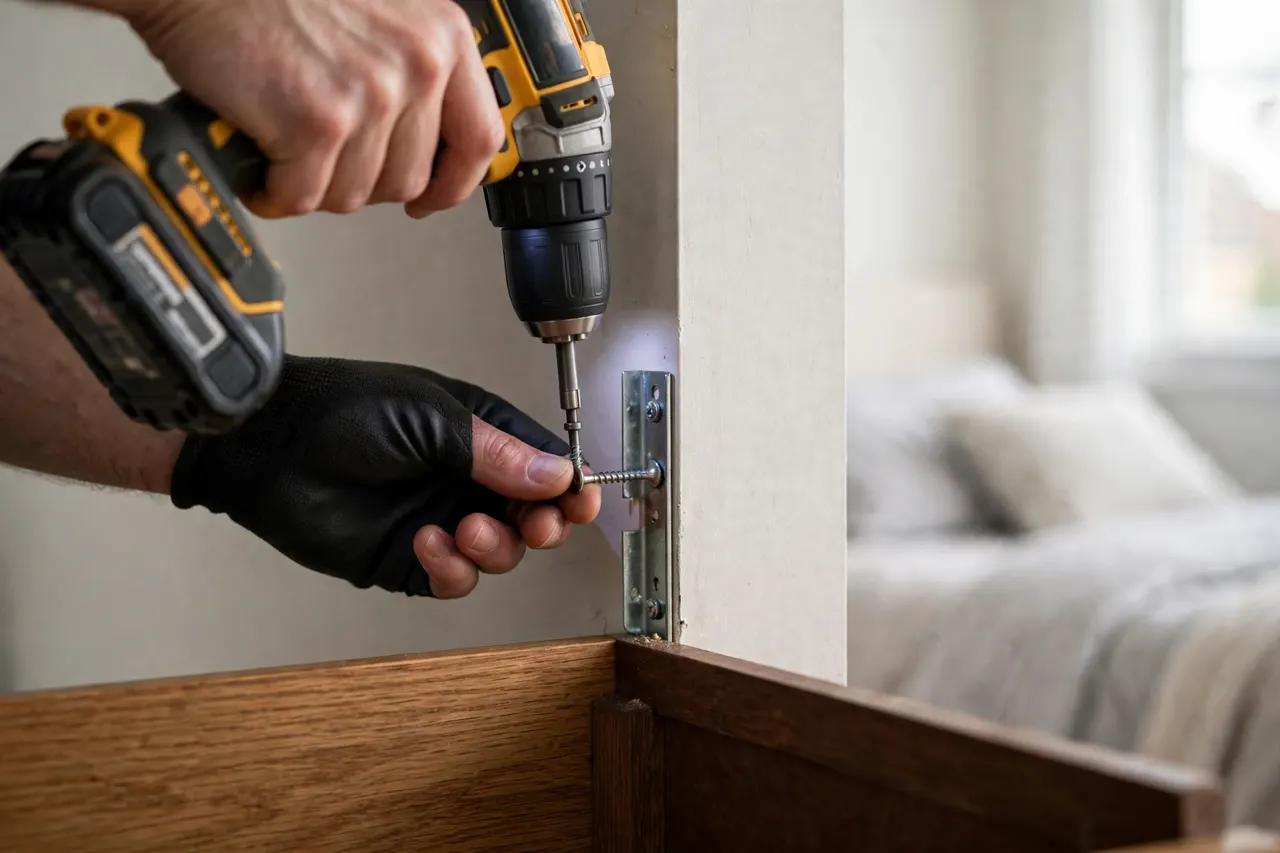
Most furniture ships with an anti-tip kit in the box — a strap, an L-bracket, or a cable plus screws — that most of us throw in the junk drawer. Lost yours? A universal anti-tip kit costs $8 to $15 at any hardware store. Here is the whole job:
- Find a stud. A $15 stud finder, or the knock-and-listen method (a hollow thud is drywall, a solid thump is a stud). You want the anchor going into wood, not just drywall. Mark two studs 16 inches apart if you can.
- Position the furniture 2 to 3 inches from the wall — close enough to hide the strap, far enough to work behind it.
- Attach the furniture-side bracket. Drill a pilot hole into the top back rail or the back panel frame of the furniture — never just the thin fiberboard back panel, which will tear out under load.
- Drive the wall-side screw into the stud. A 2-inch wood screw into a stud holds hundreds of pounds in shear. This is the step that does all the work.
- Connect the strap or cable and pull it snug. Leave almost no slack. The strap should be taut when the furniture is pushed back against the wall.
- Test it. Pull the top of the furniture toward you with real force. If it does not budge, you are done. I have done this in seven minutes on a dresser, nine on a bookcase.
One honesty note: the straps that come in the box are fine, but I replaced mine with metal-cable kits on the two tallest pieces. A steel cable kit costs about $12 and removes the one failure mode cheap nylon straps have — UV and heat degradation over years near a sunny window.
Drywall, Plaster, Concrete: Picking Hardware by Wall Type
The stud method above covers standard American drywall-over-wood-stud walls, which is most houses and apartments. For everything else:
- Drywall with no stud in reach: use a toggle bolt or molly bolt rated for at least 50 pounds each. Mark this as the one exception — toggle bolts work, but a stud is always better. If the only available position is hollow drywall, use two bolts and check them yearly.
- Plaster walls (pre-1950s homes): plaster crumbles under point loads, so pre-drill carefully and use the stud behind it. A masonry bit for the pilot hole prevents the plaster from cracking outward.
- Concrete or brick: drill with a masonry bit and use a concrete sleeve anchor or Tapcon screw. This is a 15-minute job instead of 10, and the anchor will outlast the furniture.
- Rental with a no-holes lease: be honest with yourself about what actually works. Adhesive pads are not a substitute for a mechanical anchor on a tall dresser. My actual advice: talk to your landlord — most allow small screw holes that are filled at move-out — or choose low, wide furniture (under 27 inches) for kids’ rooms, which the physics favors.
The Real Cost Math: $12 vs. Everything Else
Let me do the math the way I do every other purchase, because the numbers here are almost funny:
- Anti-tip kit: $8–$15 if you lost the one in the box. Mine was $12.99 for a steel-cable two-pack.
- Stud finder: $15, used once, lent to three neighbors since.
- Time: 10 minutes per piece, maybe 30 for your first one while you find the stud.
- The furniture you are protecting: a $238 bookshelf or $225 dresser that you would have to replace if it smashed — plus the flooring, plus whatever was on the shelves.
- The ER visit you are preventing: the average ER visit for a fall injury runs into the thousands of dollars (Healthcare Cost Institute, 2023).
That is the cheapest insurance in home improvement: about twelve dollars and ten minutes to eliminate a risk linked to roughly 17,700 ER visits a year.
Kids, Pets, and the Drawer Habit: The Behavioral Half
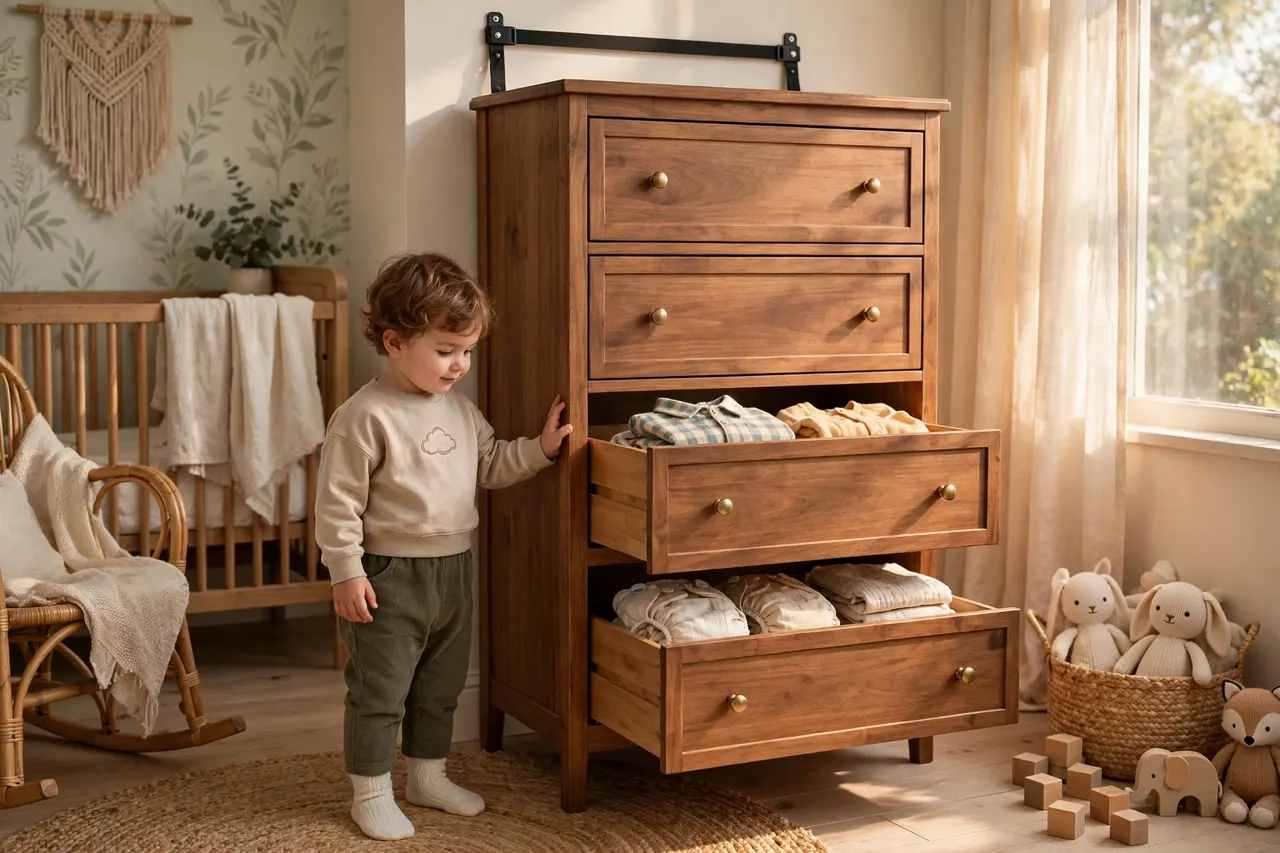
Hardware is only half the story. My nephew did not tip the dresser because it was defective — he tipped it because kids use open drawers as stairs, and 72 percent of clothing-storage-unit tip-over injuries happen to children (CPSC, 2022).
A few habits that cost nothing:
- Keep drawers closed. The CPSC’s own testing shows open drawers are the single biggest instability factor on dressers.
- Put heavy items low. Books go on the bottom shelves, knick-knacks on top. It looks slightly less artful and is dramatically more stable.
- Never let kids climb. Say it out loud the first time, every time. My sister now has a household rule: feet stay on the floor around the dresser, full stop.
- Anchor anyway. Rules fail at 6 a.m. when you are half asleep. The strap does not.
Cats deserve a mention too — a 12-pound cat launching off the top of a bookshelf is a real, repeated dynamic load. Mine did it weekly until I anchored the shelf. The strap held.
My Verdict After Anchoring Five Pieces
I anchored five pieces of furniture across two apartments in one afternoon: two dressers, two bookshelves, and a TV stand. Total cost: about $40 in hardware, roughly an hour of my time. Every piece now passes the pull test — I can yank the top toward me with both hands and nothing moves.
Was it overkill? The CPSC’s February 2023 report says furniture tip-overs sent an estimated 14,400 people to the ER in 2021. My sister’s photo said her toddler was standing on an open dresser drawer last spring. You tell me.
Furniture anchoring is the rare home project where the cost is trivial, the effort is ten minutes, and the thing you are preventing is genuinely catastrophic. Do the dressers first, do the bookshelves second, and do it this weekend. The ten minutes will be over before your coffee cools.
Start with the tall pieces in your own home. My two most anchor-worthy buys this year were the 75.6-inch rattan bookshelf and the 48-inch tall 6-drawer dresser — and if you are furnishing a whole room and want to avoid the other expensive mistakes first, read the 7 buying mistakes I will not repeat before you shop.