I Moved 5 Times in 10 Years. Here Is How to Pack Furniture for a Move.
Move number one was a college buddy’s pickup truck, three flights of stairs, and a dining table that arrived at the new apartment with its corner crushed like a stepped-on cardboard box. Move number two was a particleboard bookshelf that went into the truck with four legs and came out with three. By move number five — a one-bedroom across town last spring — I finally had a system. Here is how to pack furniture for a move without turning your best pieces into moving-day casualties.
The packing math: $52 versus $1,100+
The reason most people skip packing furniture properly is that it feels like an extra chore. The math says it is the highest-return hour of your move. moveBuddha’s moving-cost data puts professional packing at an average of $0.15 to $0.21 per pound — and the American Moving and Storage Association estimates the average household ships around 7,400 pounds of belongings. Run that out: $1,110 to $1,554 just for packing labor and materials.
A do-it-yourself furniture packing supplies kit runs roughly $52 at big-box prices — my estimate from two shopping trips: a mattress bag, two rolls of stretch wrap, four moving blankets, tape, markers, and zip bags. That is a 20-to-1 ratio on the raw numbers, and it skips the worst part. Furniture China Review’s packaging guide reports that roughly 65 percent of cargo damage claims trace back to poor packing, not the drive itself. The Census Bureau’s 2024 American Community Survey 1-year estimates (released September 2025) counted 39.6 million movers — 11.8 percent of the population — down from 12.1 percent in 2023. A lot of people are moving a lot of furniture, and most of the damage is preventable.
How to pack furniture for a move: the $52 kit
This is the whole kit. Buy it two weeks before moving day, not the night before:
- Two large rolls of stretch wrap — binds blankets in place, seals drawers shut, bundles table legs together.
- Four quilted moving blankets — the real armor. Thin felt pads tear on truck rivets; quilted pads do not.
- One queen mattress bag — a mattress without one is a sponge for truck grime and rain.
- Packing tape, a permanent marker, and gallon zip bags — the hardware kit. This is where moves are won and lost.
- Foam corner protectors — optional but cheap insurance for glass, mirrors, and lacquered corners.
Disassemble first: the golden rule of how to pack furniture for a move
On move two I disassembled a desk with fourteen screws, three connector types, and a cable tray I could not re-derive from memory. Never again. The rule: photograph everything before you touch a tool. Every joint, every wire routing, both sides of every bracket. A thirty-second video of the underside saves a two-hour reassembly.
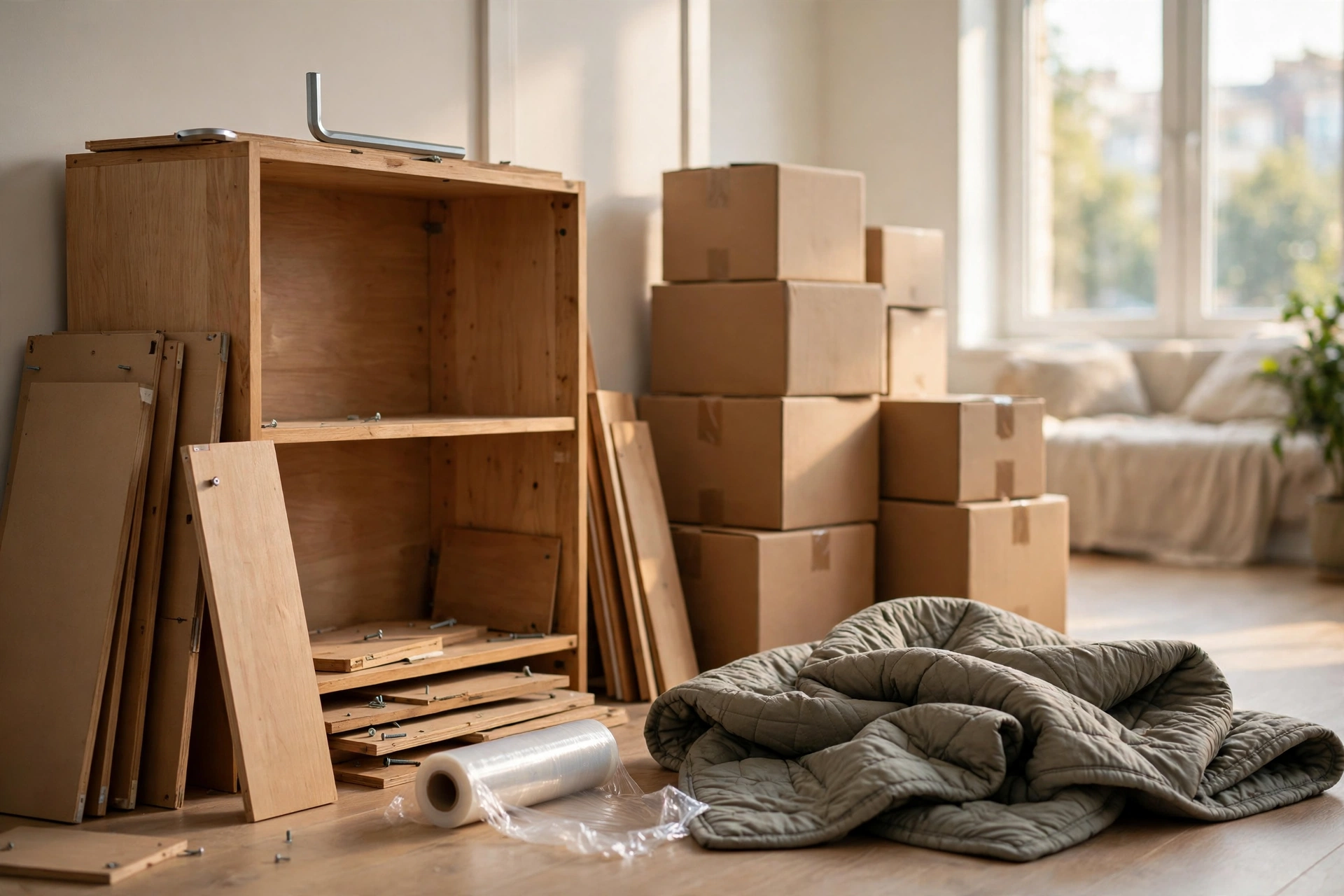
Every screw, bolt, and cam lock goes into a zip bag labeled with the marker, and the bag gets taped to the piece’s largest panel. Then the piece travels the way it arrived: if it came flat-packed, it travels flat-packed. Particleboard is the hard lesson here — its cam locks loosen on disassembly and never re-tighten to the same bite. Moving a particleboard bookcase fully assembled is how legs snap in the truck, which is exactly what happened to mine on move two.
Wrap corners like your deposit depends on it
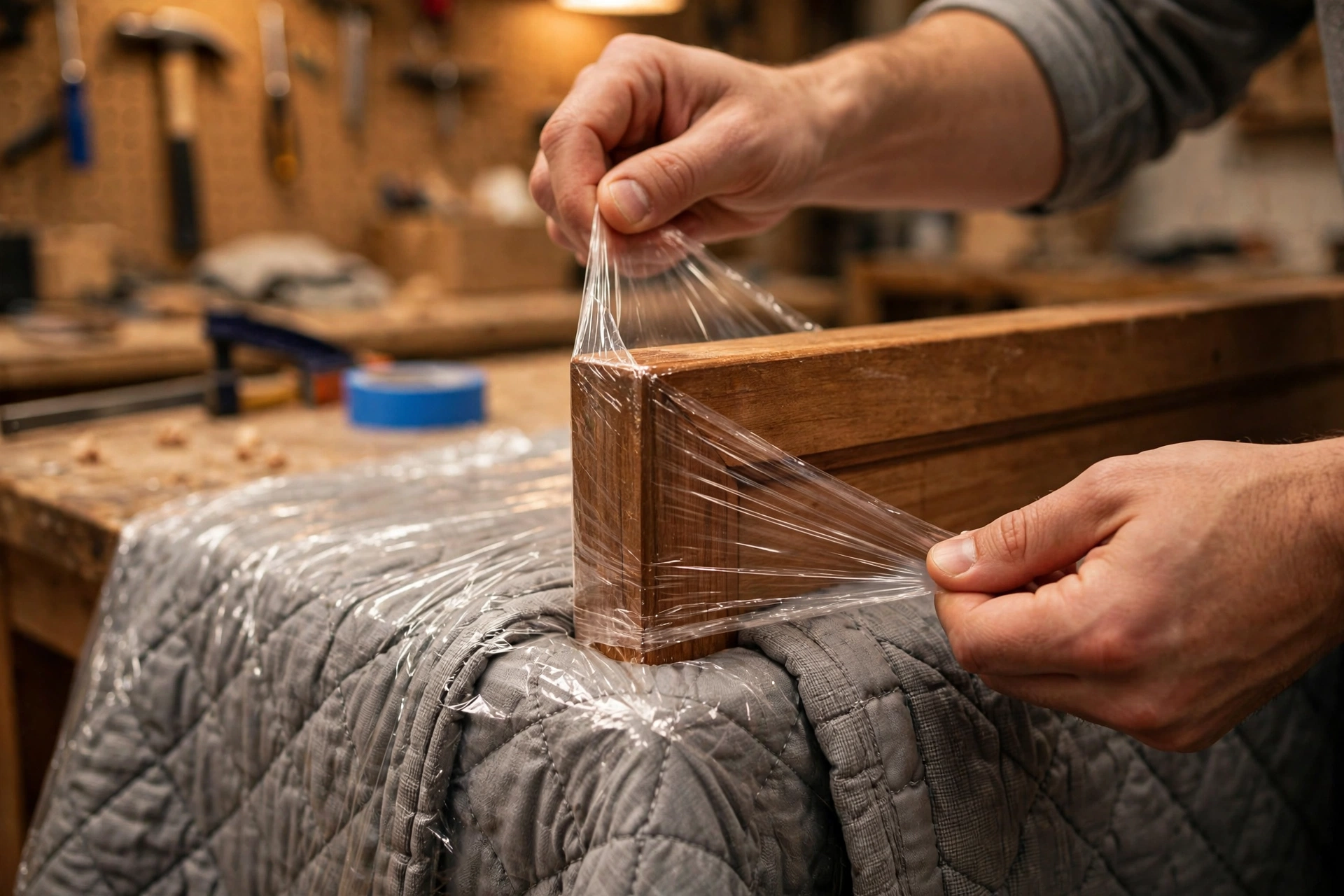
Blanket first, stretch wrap second, and never let the wrap touch bare wood directly — plastic against wood on a warm day can leave a haze you will sand for an hour. Corners are the casualty zone: give every corner a double fold of blanket or a foam guard, because corners are what hit doorframes, truck walls, and each other.
Tape drawers shut after padding the gaps; latches bounce open on the first speed bump. Pull shelves out and wrap them as a bundle. Remove legs and feet from sofas where they unscrew — a 6-foot sofa becomes a 4-foot box, and it stops hooking every doorway on the way out. On move one, the crushed dining-table corner was a corner I “didn’t have time” to pad. I have had time for every corner since.
Upholstery has its own rulebook
Move three taught me this one the expensive way: never put tape directly on fabric or leather. The adhesive pulls finish and leaves a tape ghost you will see forever. A leather-look armchair of mine still wears a faint rectangle where I taped a blanket down. Blanket against the upholstery, wrap over the blanket — tape only ever touches tape or plastic.
Cushions travel inside bags or pillowcases, labeled by piece. Fabric sofas and mattresses get bagged — rain on loading day is a matter of when, not if, and one damp mattress is a $500 problem. If you only buy one thing for upholstery, make it the mattress bag.
Load the truck like a game of Tetris
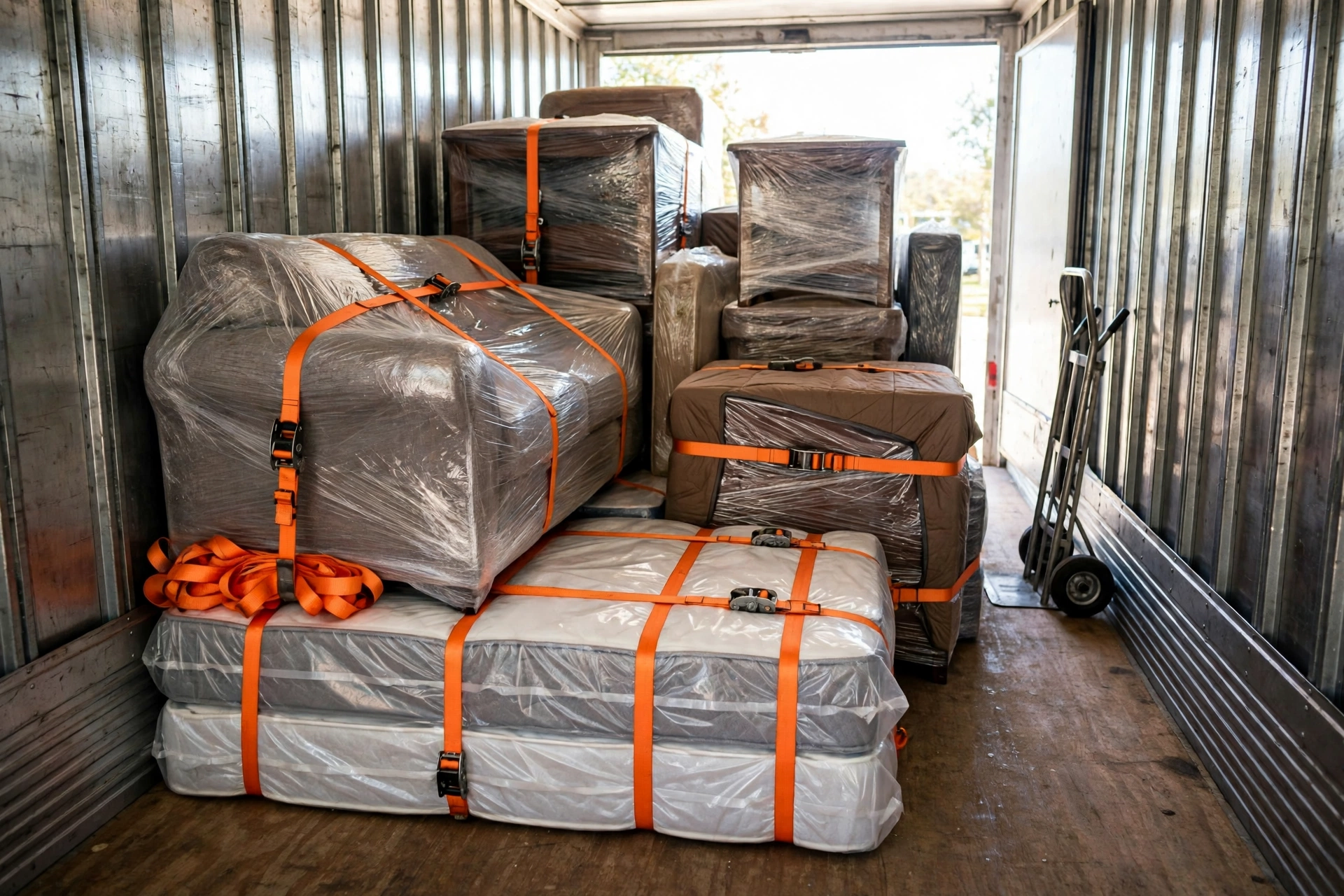
The heaviest furniture goes against the cab first — dressers, chests, appliances — because physics favors the front axle. Mattresses become the walls between furniture sections, standing on edge and strapped so they cannot fold. Glass and mirrors ride upright, padded between soft items, never flat under weight; a painter’s-tape X on the glass is the mark movers recognize instantly.
Strap every layer before building the next one. Nothing sits on upholstery except blankets. Flat pieces — table tops, shelves — ride on edge, because a flat span flexes and an edge-on span does not. The rule of thumb I use: if it shifts when you push it, it will shift at the first red light, only harder.
The first-night furniture box. Move four, I spent two hours at midnight digging through forty boxes for the bed bolts while the mattress sat on the floor. So now there is one box, labeled OPEN FIRST, containing the Allen keys from every flat-pack piece, the labeled screw bags, a cordless drill, furniture pads for the new floors, and the light bulbs for every lamp you own. Keep it in the truck cab, not the back. Your 11 p.m. self will thank you.
Buy furniture like you are going to move it
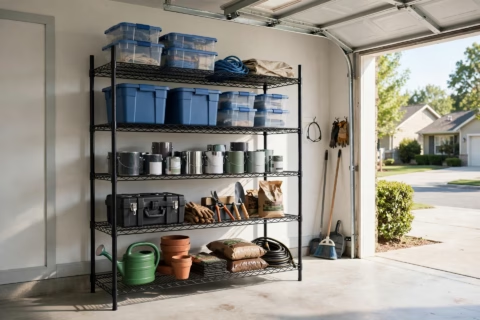
Five moves also rewrote how I buy. Every piece in my apartment now passes three tests: it disassembles flat, it weighs under 100 pounds assembled, or it cost so little I will not grieve it. I keep a full breakdown of the strategy in my renter friendly furniture guide — the $128 room divider needs zero disassembly at all, and the $99 garage shelving unit comes apart in minutes with no tools. For the other end of the scale — the 454-pound sectional class of furniture — I now pay for white glove delivery, where the $150-to-$400 assembly tier buys specialist crews and an inspection before the piece crosses your threshold. RentCafe’s 2025 analysis found the average US studio reached 457 square feet in 2024 — when your rooms are that small, every piece has to earn its square footage twice, on move day too.
The verdict
Five moves, roughly $52 a move in supplies, and exactly one damaged piece since move two — a bookshelf corner I wrapped in a hurry, which proves the rule rather than breaking it. The system is four verbs: photograph, disassemble, wrap, strap. Do those in order and the truck can be as bumpy as it wants. Your furniture will still look like it did on the listing page, and the only thing move day costs you is sweat.
Ready for move day? Browse FLNORW MALL for furniture built to move — flat-pack designs, sub-100-pound pieces, and full dimensions on every listing so you can measure your doorways before you order.