I Bought a $999 Full Body Massage Chair. 90 Days Later, Here’s the Real Math.
There is a specific kind of tired that only comes from sitting at a desk for nine hours. By the time I hit thirty, my lower back had filed a permanent complaint. A standing desk helped. Stretching helped. Then one Tuesday night, back sore enough that I caught myself googling “massage chair under 1000,” I stopped lying to myself that a foam roller was going to fix anything. Ninety days ago, a full body massage chair showed up at my door in a crate nearly as big as my couch. It cost $999. Here is what I actually learned.
What a $999 full body massage chair actually buys you
Let us get the specs out of the way, because this is where most massage chair reviews get vague and I refuse to do that. The chair I bought — FLNORW MALL’s Full Body Massage Chair With Zero Gravity Recliner — runs on 22 massage balls across 8 fixed points, covering neck, shoulders, back, waist, and hips with kneading and inversion-kneading motion. On top of that, 18 airbags squeeze your shoulders, arms, hips, thighs, and calves. It has five modes — kneading, shiatsu, strong, leisure, and sleep — plus a lumbar heating element and a Bluetooth speaker. Two control panels: a big smart screen and a rotary dial you can reach without getting up.
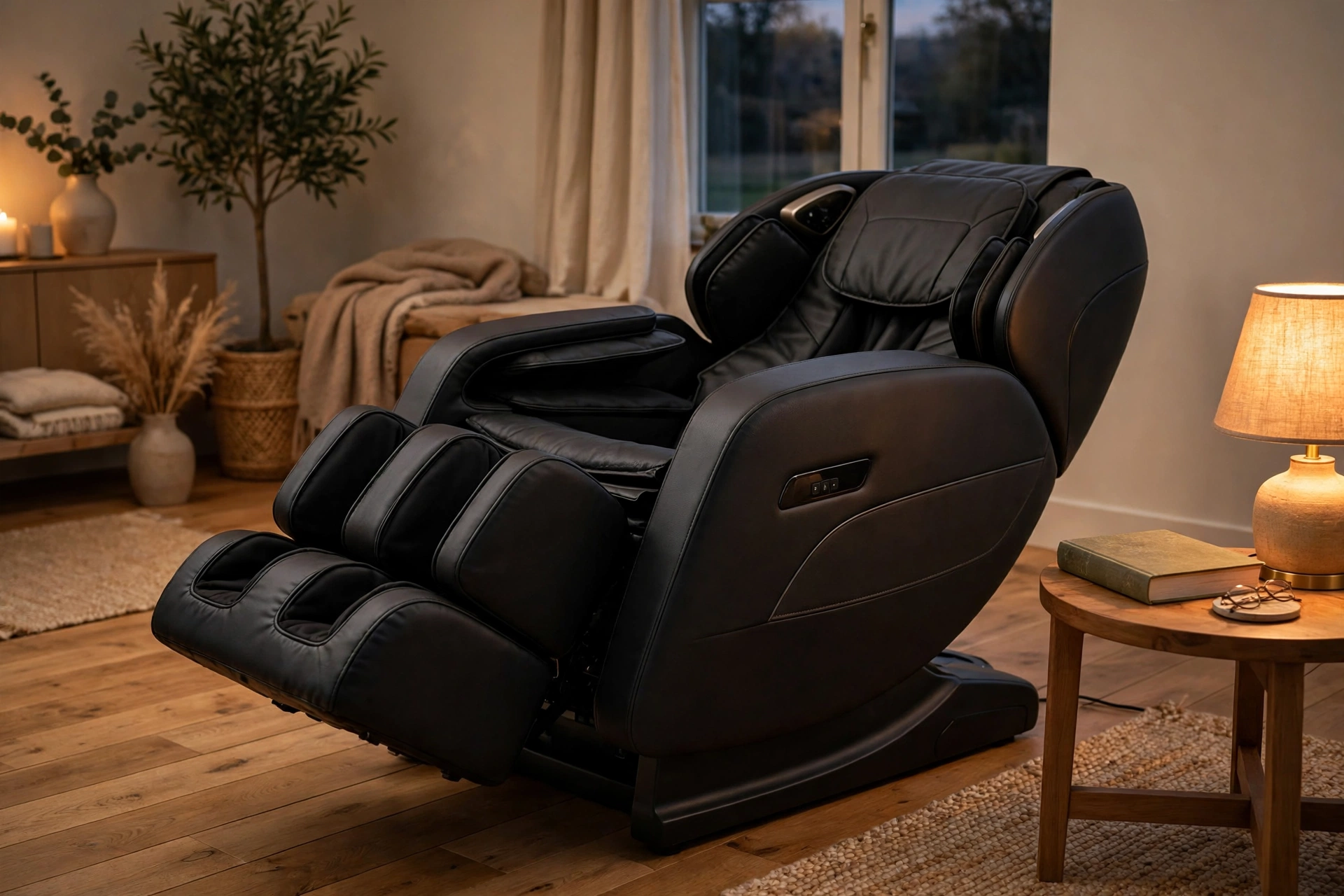
The physical footprint matters more than you think. Assembled it measures 54.33 inches long, 29.92 inches wide, and 39.76 inches tall, and the chair itself weighs 115.74 lbs. My garage-to-living-room move required two people and a dolly; the shipping box was 53.54 × 29.53 × 31.89 inches and 147.71 lbs. Measure your doorways before you order. The weight limit is 220 lbs and it draws 120W — about as much as a laptop and a lamp running together, so your electric bill will not notice it. Upholstery is PU leather, black, with a retractable footstool and rollers underneath so you can shuffle it around a room solo once it is in place.
The massage-parlor math that sold me
Here is the part where I did the arithmetic that actually convinced me, and you should do it too. A standard 60-minute massage session in the US runs $50 to $150, with most people paying around $75 — those are 2026 figures from Veeva Clinics’ national cost roundup. My neighborhood spot charges $85 an hour. At $999, the chair costs the same as roughly twelve to thirteen parlor visits.
I was going for a massage about once every six weeks, spending around $680 a year. The chair paid for itself in about seventeen months of that schedule — and I use it five times a week, not every six weeks. Even at a conservative three sessions a week, fifteen minutes each, you break even in well under a year. That is my own estimate based on my usage; your math will differ, but the structure is the same: divide the sticker price by what you actually pay per hour of massage.
Zero gravity: the one feature I would pay for twice
If you buy a zero gravity massage chair, you are buying it for one thing above all: the recline. Press the button and the chair tips you back until your knees sit slightly above your heart — the position NASA designed so astronauts’ bodies bear launch stress evenly. In practice, it does something immediate and physical: the pressure drains out of your lower back and your weight spreads across the seat instead of stacking onto your spine.
I measured the difference in a completely unscientific but convincing way. After a long writing day, fifteen minutes flat on the couch leaves my back about the same. Fifteen minutes in zero gravity with the kneading mode running on my lumbar zone and I stand up feeling like the chair handed me back an hour of my day. It is not magic — it is just physics plus rollers — but it is the single feature I would not give up if this chair broke tomorrow.
Shiatsu mode versus the real thing: honest expectations
A shiatsu massage chair does not have thumbs. I will say that plainly, because nobody else selling one will. What it has is rollers that press, roll, and twist along fixed tracks across your back, and the shiatsu mode is the closest to a human-style deep press. I run it on medium — the “strong” setting genuinely surprised me the first time, and I weigh 178 lbs with no particular sensitivity issue.
The honest comparison: a $999 chair delivers maybe 60% of a skilled therapist’s session on your back and shoulders, available whenever you want it. For my chronic desk-worker stiffness, that trade wins on frequency alone. A parlor massage is a rare, deep reset. The chair is daily maintenance. Both have a place, and the chair did not replace my occasional deep-tissue visit — it just stretched the interval from every six weeks to every three months.
One thing I wish I had known: the rollers cover your back beautifully, but the airbags do most of the work on your legs and arms. If your main complaint is calf pain after running, make sure the leg coverage fits your height — at 5’10” the airbags hit my calves and soles of the feet just right.
The lumbar heat element: my favorite part of the whole chair
The heating pads sit in the lumbar zone and pair with the zero gravity position. Warmth plus that reclined posture is the combination that melts the knot between my shoulder blades faster than anything else this chair does. The product description claims heat therapy increases blood circulation and loosens tense muscles, and that much is ordinary physiology — warm muscle relaxes easier than cold muscle.
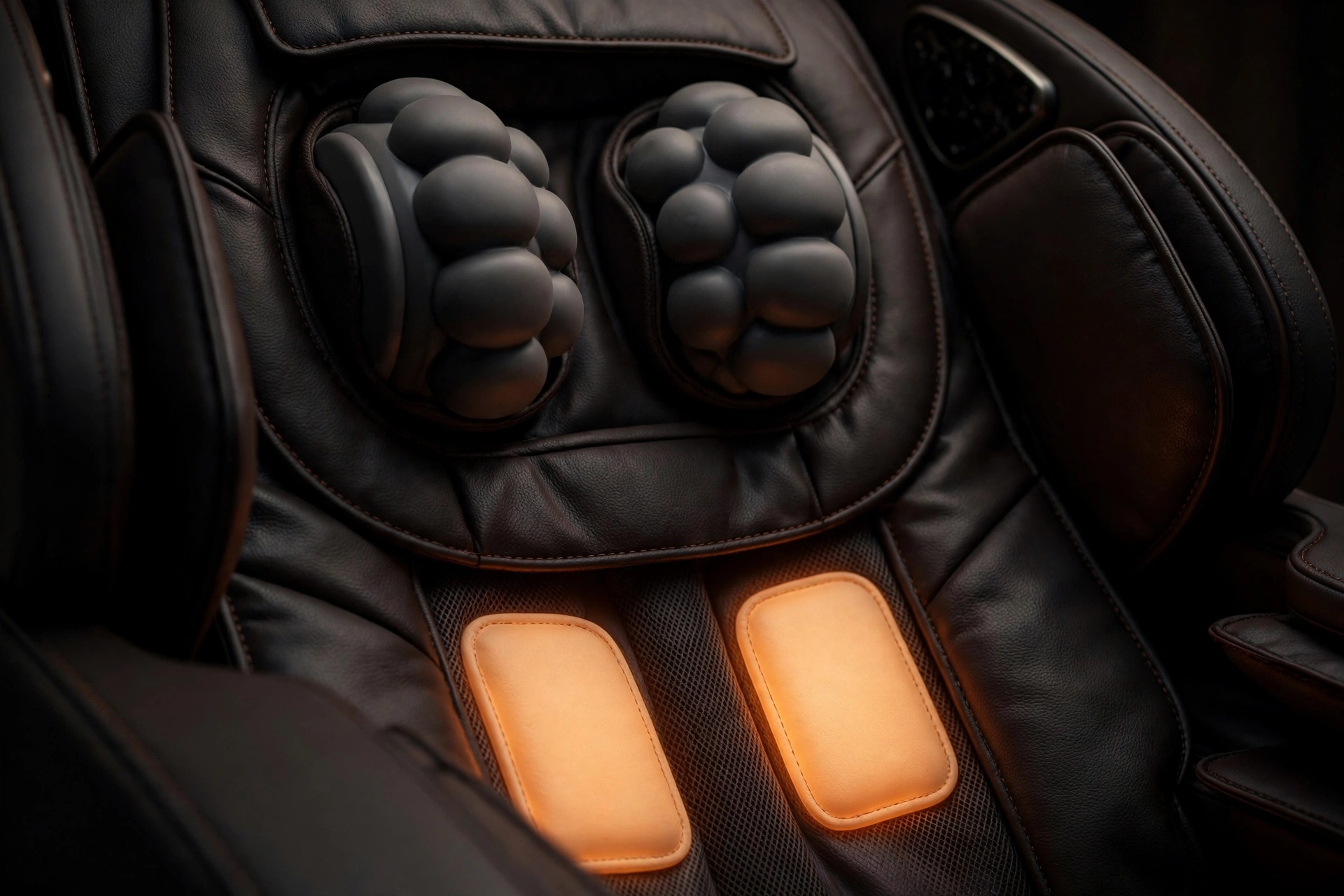
Practical notes: the heat takes about three to four minutes to reach full warmth, so start it first and then pick your massage mode. On winter evenings I run heat plus the lumbar massage zone alone for twenty minutes and fall asleep half the time — which is exactly what the “sleep” mode is for. Also note the PU upholstery gets warm to the touch with the heat on; do not drape a blanket over the lumbar zone while the heater runs.
Living with it: delivery, noise, and the 220 lb limit
A few real-life details the product page will not tell you. First, noise: the rollers hum at the level of a quiet dishwasher, and the airbag compressor puffs softly — fine for evening use, but I would not run “strong” mode during a Zoom call. Second, the Bluetooth speaker is a genuinely nice touch; I pair my phone and listen to podcasts while the chair works on my shoulders. Third, the chair needs about four inches of clearance behind it to fully recline, so do not shove it flush against a wall.
Fourth, the 220 lb weight limit is real and worth respecting — it is about the frame and the roller mechanism, not a suggestion. Fifth, cleaning: PU leather wipes down with a damp cloth in about a minute. With a dog that sheds, I wipe the seat weekly and it still looks new after three months.
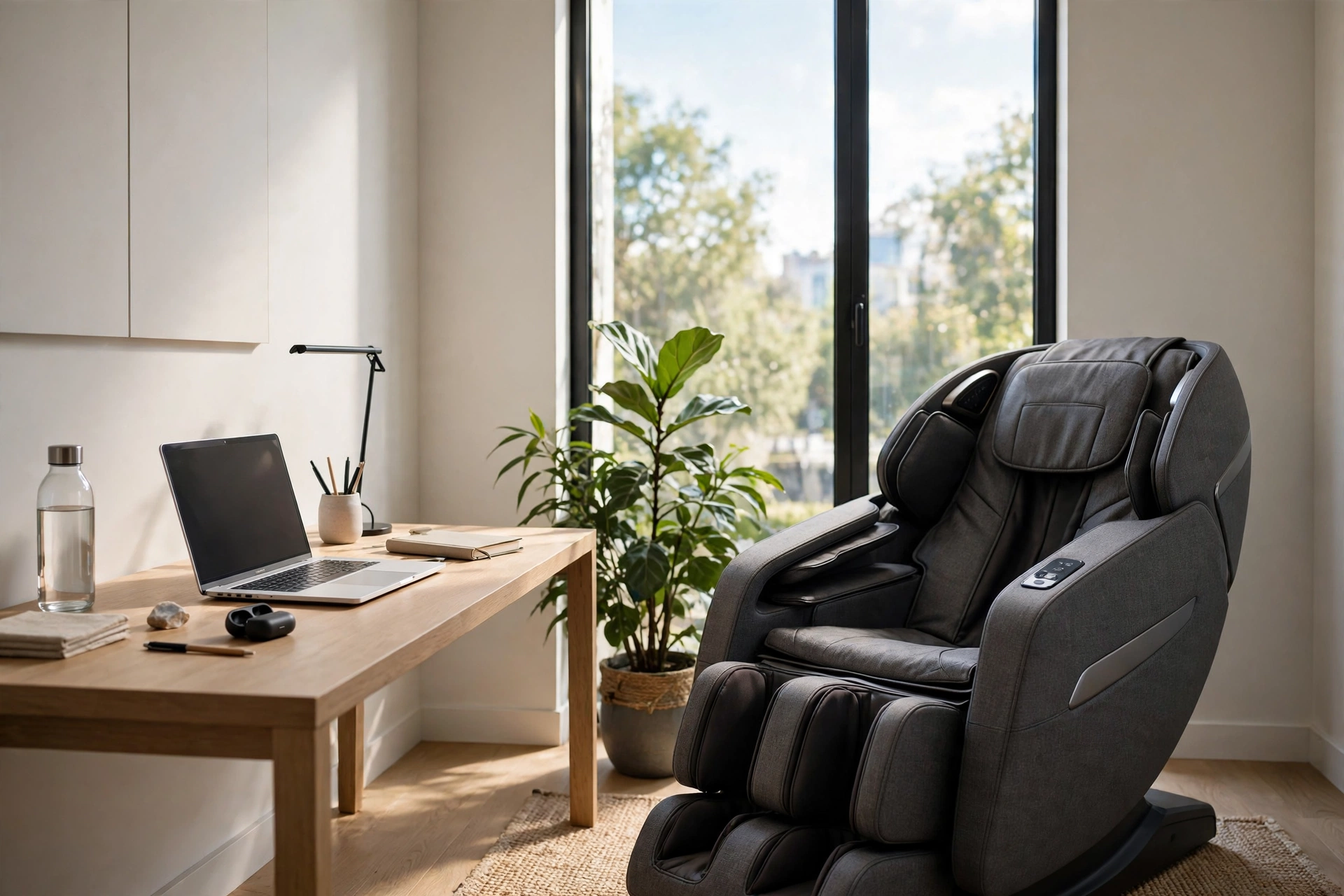
Mine lives in the corner of my home office now, where it replaced an armchair I never used. It draws 120W, so I leave it plugged in. The retractable footstool means it looks like a normal-ish armchair when folded up — guests have sat on it without realizing it is a massage chair, which says something about the design.
Who should buy this — and who should not
Ninety days in, the picture is clear. This home massage chair makes sense for:
- Desk workers with chronic back stiffness — daily fifteen-minute sessions beat sporadic parlor visits for maintenance.
- People who already spend $50+ a month on massage — the chair pays for itself in about a year at that pace (my estimate).
- Anyone who struggles to book appointments — shift workers, parents, rural folks far from a good spa.
- Folks with mild chronic lower-back pain — heat plus kneading on a daily schedule is genuinely helpful.
It does not make sense if: you weigh over the 220 lb limit; you want a true deep-tissue experience (keep seeing your therapist); you are buying it as a medical device for a diagnosed condition (talk to your doctor — this is furniture with features, not treatment); or you do not have about five feet of floor space to spare.
One more comparison worth making: FLNORW MALL also carries a pricier Massage Chair Recliner with Zero Gravity at $1,999 with more rollers and programs. I compared the specs side by side and could not justify the extra thousand for my needs — the $999 chair has the same core formula: rollers, airbags, heat, zero gravity. And if you only want gentle vibration plus heat in a living-room recliner without the full roller system, the 350 LBS Power Lift Recliner Chair at $600 is the budget-friendly alternative I reviewed in depth before this purchase.
My verdict after 90 days
I bought this chair as an experiment in daily maintenance for a back that earns its stiffness at a desk. Ninety days and roughly sixty sessions later, the verdict is simple: it earns its floor space. The zero gravity position is the star, the lumbar heat is a close second, and the shiatsu rollers do honest work on a bad back — as long as you do not expect them to be human hands. At $999, it costs about thirteen massages, and I have already had more than sixty.
Is it perfect? No. The 220 lb limit will exclude some buyers, the crate is enormous, and “strong” mode will not replace your deep-tissue therapist. But as a daily tool for the kind of ordinary, accumulated stiffness that most of us carry around, this is one of the better $999 decisions I have made for my house — and my back.
Ready to do your own massage math? Browse the full FLNORW MALL furniture collection or see the Full Body Massage Chair With Zero Gravity Recliner — $999 and check whether it fits your space and your routine.