I Compared Two Twin-Over-Twin Bunk Beds with Trundles ($268 vs $399). Here’s What I’d Actually Buy for My Kids.
Two kids, one bedroom, ten feet by eleven. My eight-year-old reads until ten. My eleven-year-old needs blackout-dark silence by nine. And between them, somehow, we are supposed to fit sleepovers, grandparents, and the occasional cousin crashing after a holiday dinner. That was the math that sent me shopping for a twin over twin bunk bed — specifically one with a trundle, because two sleeping surfaces solve the kids, but three solve the guests.
I narrowed it to two beds from FLNORW MALL, both twin over twin bunk beds with trundles, and spent two weeks comparing them the way I compare everything now: specs first, kid-chaos second. Here is the honest side-by-side.
Why a twin over twin bunk bed with a trundle won the family vote
Two twin beds side by side eat about 46 square feet in a 110-square-foot room. A bunk bed cuts that to roughly 23 square feet, and the trundle underneath adds a third sleeping spot for zero extra floor space when it is tucked in. That is the whole sales pitch, and in a kids’ room it is genuinely unbeatable: sleep three, park two, store everything else around them.
The trundle also turned out to be the feature my wife vetoed cutting. Her exact words: “Grandma sleeps over on holidays, and she is not climbing a ladder.” Fair point. A pull-out trundle at floor level is the only guest bed an aging grandparent will accept without a look.
The two contenders: $268 steel vs $399 New Zealand pine
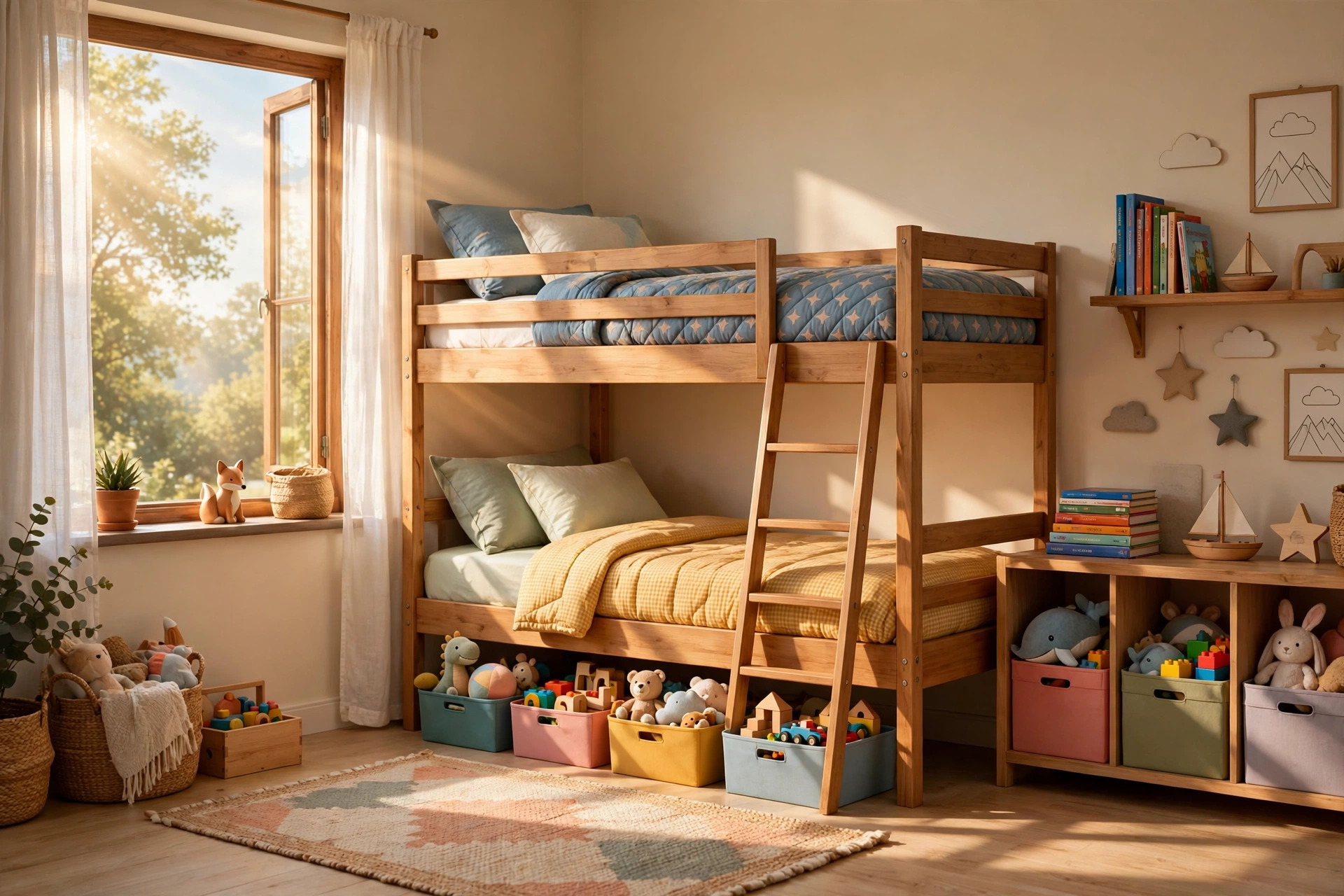
On paper, both beds check the same boxes: twin over twin, pull-out trundle, separable into individual beds later. The differences live in the materials, the weight limits, and about $130.
Contender 1: the Twin Over Twin Metal Bunk Bed Frame with Trundle (upgrade reinforcement version), $268. Heavy-duty steel, black finish, rated 250 lbs on the upper bunk, 350 lbs on the lower, 250 lbs on the trundle. Measures 78.00″L x 41.50″W x 65.20″H, and it splits into three separate beds if the kids eventually get their own rooms.
Contender 2: the Twin over Pull-out Bunk Bed with Trundle, White, $399. Solid, knot-free New Zealand pine with hand-applied low-VOC finishes, rated up to 400 lbs per sleeping surface. Slightly bigger footprint — 81.38″L x 44.84″W x 59.84″H — and like the steel one, it separates into three beds. It claims to meet or exceed US and EU safety standards.
Safety first: rails, weight limits, and the numbers that changed my mind
Here is the stat that reordered my priorities. A U.S. Consumer Product Safety Commission analysis estimated roughly 36,000 bunk-bed-related injuries treated in US emergency departments each year (that figure is an estimate from published CPSC analyses), mostly children under 15, and the large majority involve falls from the top bunk. Reading that before buying made the guard-rail spec — and the bunk bed weight limit printed right below it — the two most important lines on either product page.
The metal bunk bed ships with guard rails on all four sides of the upper bed — that is the detail the page leads with under “protect your kids,” and honestly it is the configuration the safety data argues for. Four-sided rails beat two-sided rails every time when the sleeper is eight and occasionally performs gymnastics in their sleep.
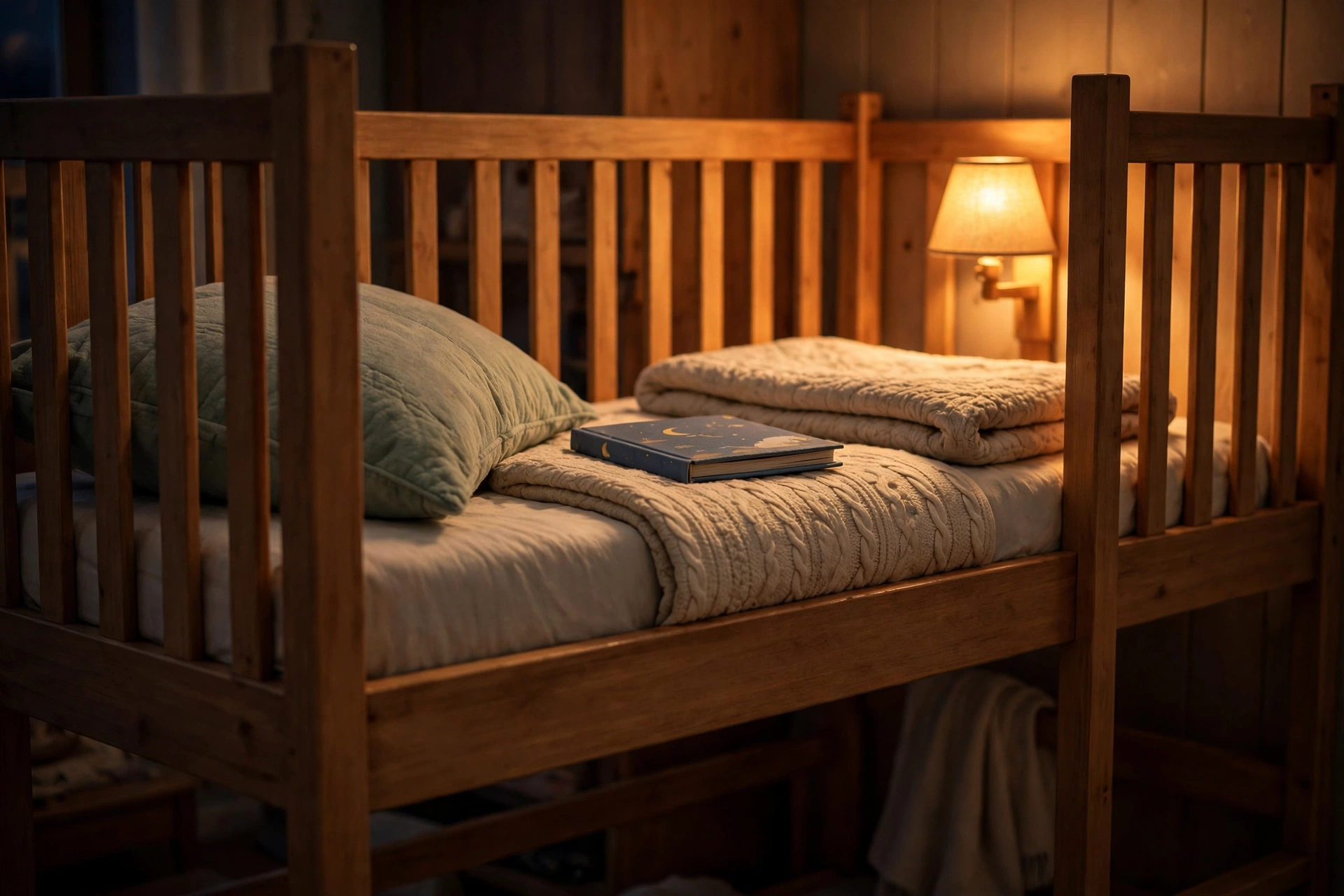
The wood bunk bed leans on its structure instead: plywood slats, metal support rods, metal-to-metal connections, and that 400-lb-per-surface rating. That rating matters if a teenager lands on the top bunk in five years — or if an adult has to climb up to comfort a sick kid at 2 a.m. (Ask me how I know that happens.)
Metal vs wood twin over twin bunk bed: what three years of kid life does to each
Steel bunk beds have a reputation I can confirm from dorm memories: indestructible, slightly industrial-looking, and occasionally squeaky. The $268 steel frame answers the durability question with a heavy-duty steel build and reinforced joints — it will survive being jumped on, and the 350-lb lower bunk rating means it will also survive the parent who sits down to read the bedtime story. The tradeoff is aesthetics: black metal reads “dorm room,” and at 65.2 inches tall it is the taller, more imposing of the two.
The $399 pine frame is the one that looks like it belongs in a house. New Zealand pine is a dense, stable furniture wood, and the white hand-applied finish with low VOC is the detail that sold my wife — the bed sits three feet from where our kids breathe for nine hours a night, and a finish that does not off-gas matters to her. At 176.37 lbs shipped in two boxes, it is also the heavier, more substantial build. Pine dents more easily than steel, but it creaks less and looks better doing it.
The trundle test: sleepovers are the real boss fight
Here is where the two beds diverge in daily life. The metal bed’s trundle rolls under the lower bunk and takes a 6″-8″ mattress like the bunks above it. The wood bed’s trundle fits a standard single mattress up to 6 inches thick — thinner, because its underbed clearance is lower.
Practical translation: if you already own a spare twin mattress, measure it before you order. Anything over six inches rules out the wood trundle, and you will end up buying a new mattress — which can erase half the price gap between these two beds. Both trundles roll on casters and hide completely under the bed when not in use, and both pages confirm the same delivery terms: USA only, delivered within 8 days.
Also note what neither bed includes: mattresses. Budget another $100-$200 per sleeping surface for decent twins. A bunk bed that “sleeps three” really costs the frame plus three mattresses, and that is true of every bed on the market, not just these two.
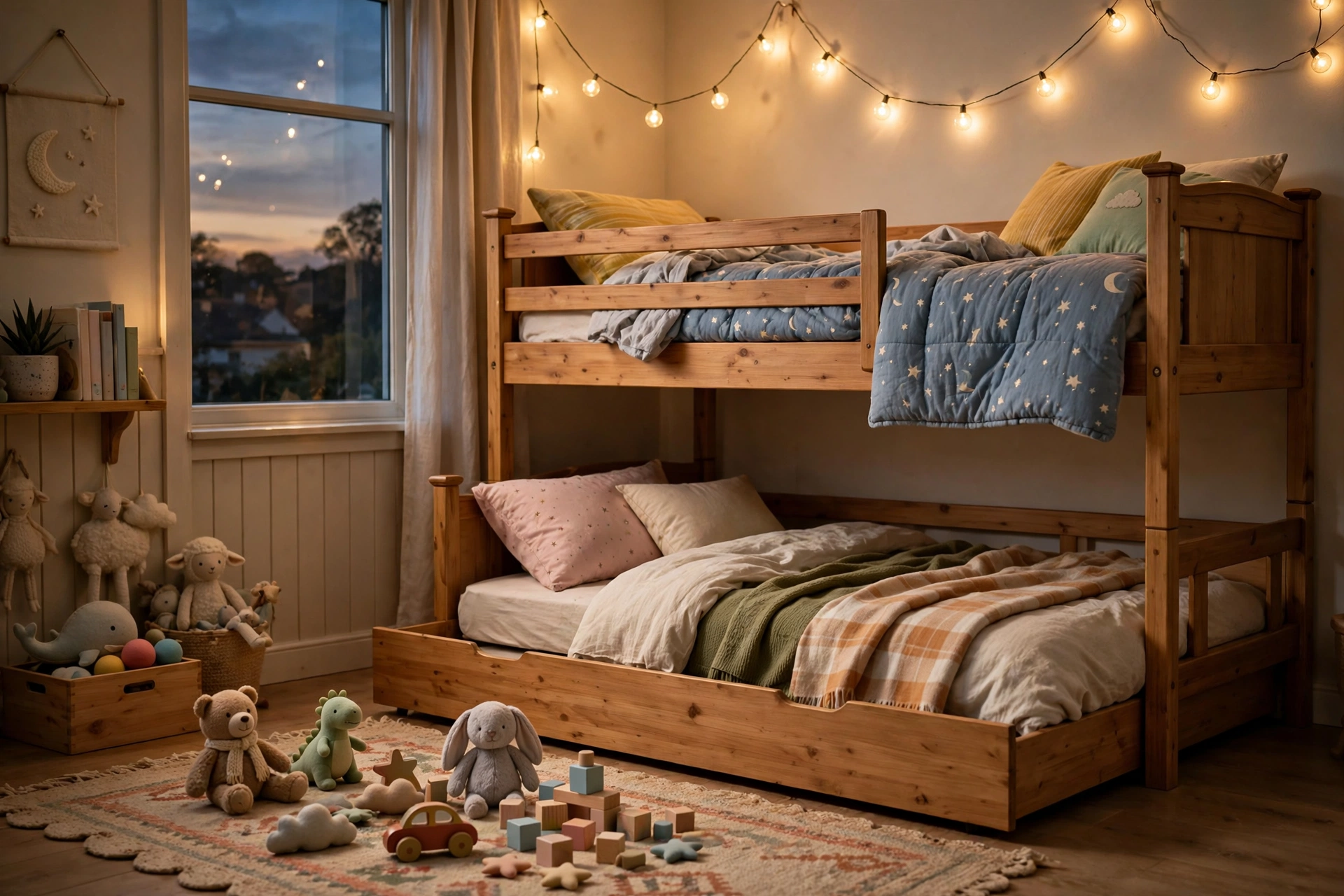
Assembly, shipping, and the stuff the product pages bury
Both beds require assembly — neither page pretends otherwise. The metal frame arrives in one box roughly 81.9″ x 14.6″ x 7.5″ (about 105 lbs), and steel frames of this type are generally the faster build: bolts, slots, an Allen key, maybe 90 minutes with two adults. The wood frame ships as two heavy boxes (93.7 lbs + 94.8 lbs) with slats and rods to fit; expect closer to two hours and a second pair of hands.
One detail I appreciated on both pages: the conversion story. Each bed separates into three standalone beds — twin, twin, and trundle-as-a-bed — which means the purchase is not dead money when the kids outgrow the bunk phase. Furniture that plans for its own second act is rare under $400, and it is the single best argument that either of these is a better buy than a cheap bed you replace in three years.
And the boring-but-real stuff: both ship from the same warehouse terms (FLNORW MALL ships USA-only, 8-day delivery), both have bulk-order contact options, and neither includes a box spring — which is fine, because slat-based bunk beds do not need one.
Who should buy which? A quick checklist
- Pick the $268 metal bunk bed if: your kids are climbers, budget is the deciding factor, you want four-sided upper rails, or the lower bunk doubles as parent story-time seating (that 350-lb rating earns its keep).
- Pick the $399 pine bunk bed if: the bed goes in a room guests see, you want the higher 400-lb-per-surface rating, low-VOC finishes matter to you, or you prefer furniture that looks warm instead of industrial.
- Measure twice either way: the metal bed needs 78″ x 41.5″ of floor; the wood bed needs 81.4″ x 44.8″. Leave 2+ feet of clearance on at least one long side for the trundle to roll out.
- Budget the mattresses separately: plan on 6″-8″ twins for the metal bed, an 8″ twin plus a 6″-or-under trundle mattress for the wood bed.
The verdict: which one I would actually buy
For my house — eight and eleven, sleepovers monthly, grandma twice a year — I would take the $399 New Zealand pine bed. The four-sided rails on the $268 steel bed are genuinely excellent, and if the kids were under six it might have won on safety alone. But the 400-lb-per-surface rating, the warmer look in a small bedroom, and the low-VOC finish are the things we will still care about in year five, and $130 spread over five years is $26 a year for furniture I do not have to think about again.
If money is tight or the room is pure kid-territory, the steel bed is not a consolation prize — it is a legitimate $268 three-bed system with the best rail configuration of the two. There is no bad answer here, only a better answer for your specific room.
See them both: the $268 metal bunk bed with trundle and the $399 New Zealand pine bunk bed with trundle are both in stock at FLNORW MALL — and if you are still comparing, the full furniture collection has every bed, table, and cabinet the store carries, USA shipping included.