Dresser vs Chest of Drawers: the $63 Difference I Finally Understood
Dresser vs Chest of Drawers: the $63 Difference I Finally Understood
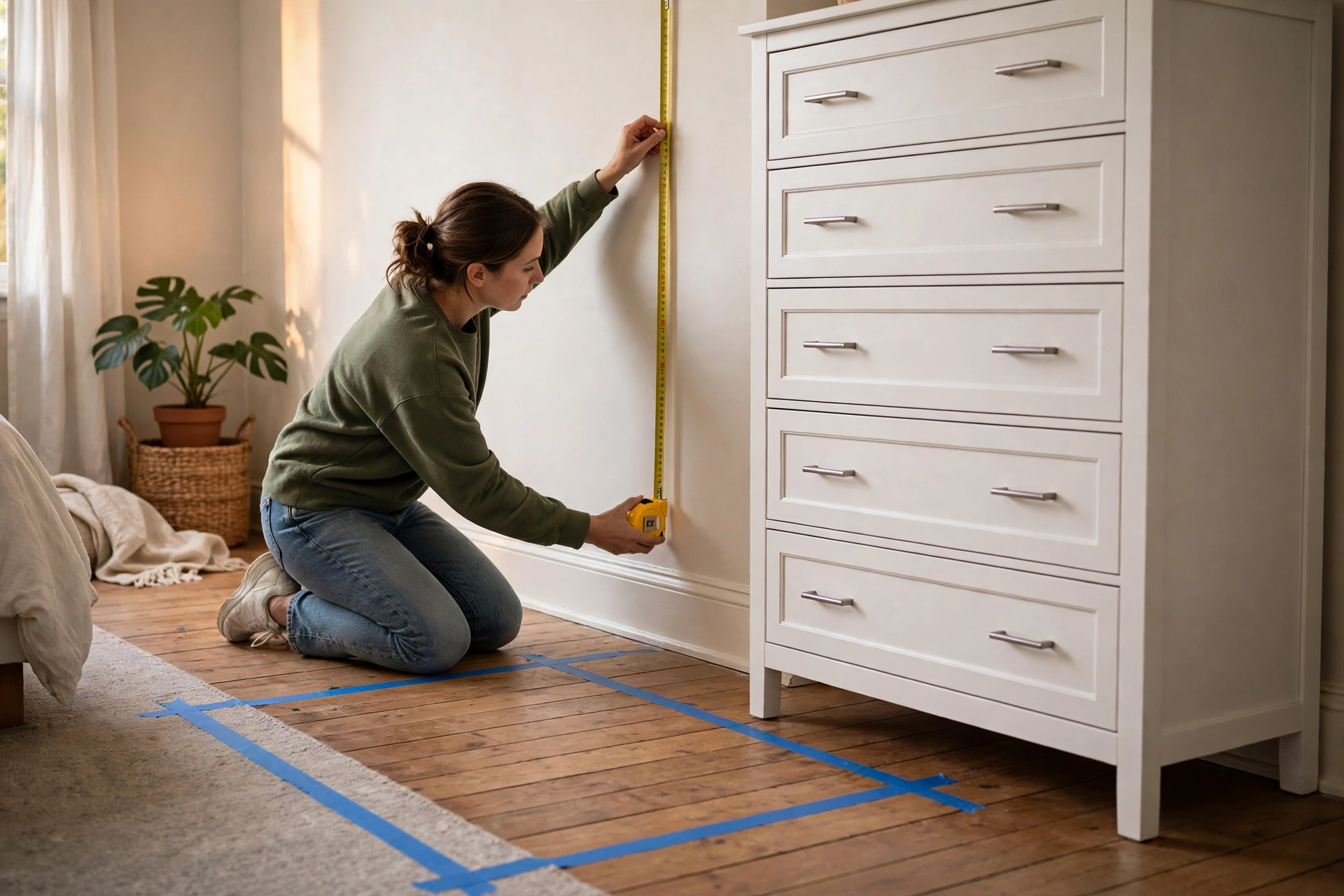
Last month my younger brother signed a lease on a one-bedroom apartment and called me with the kind of question that sounds simple until you start shopping: in the great dresser vs chest of drawers debate, which one should he actually buy? I told him they were basically the same thing and nearly steered him into a $288 mistake. They are not the same thing, and the difference showed up the moment I taped both footprints on his bedroom floor.
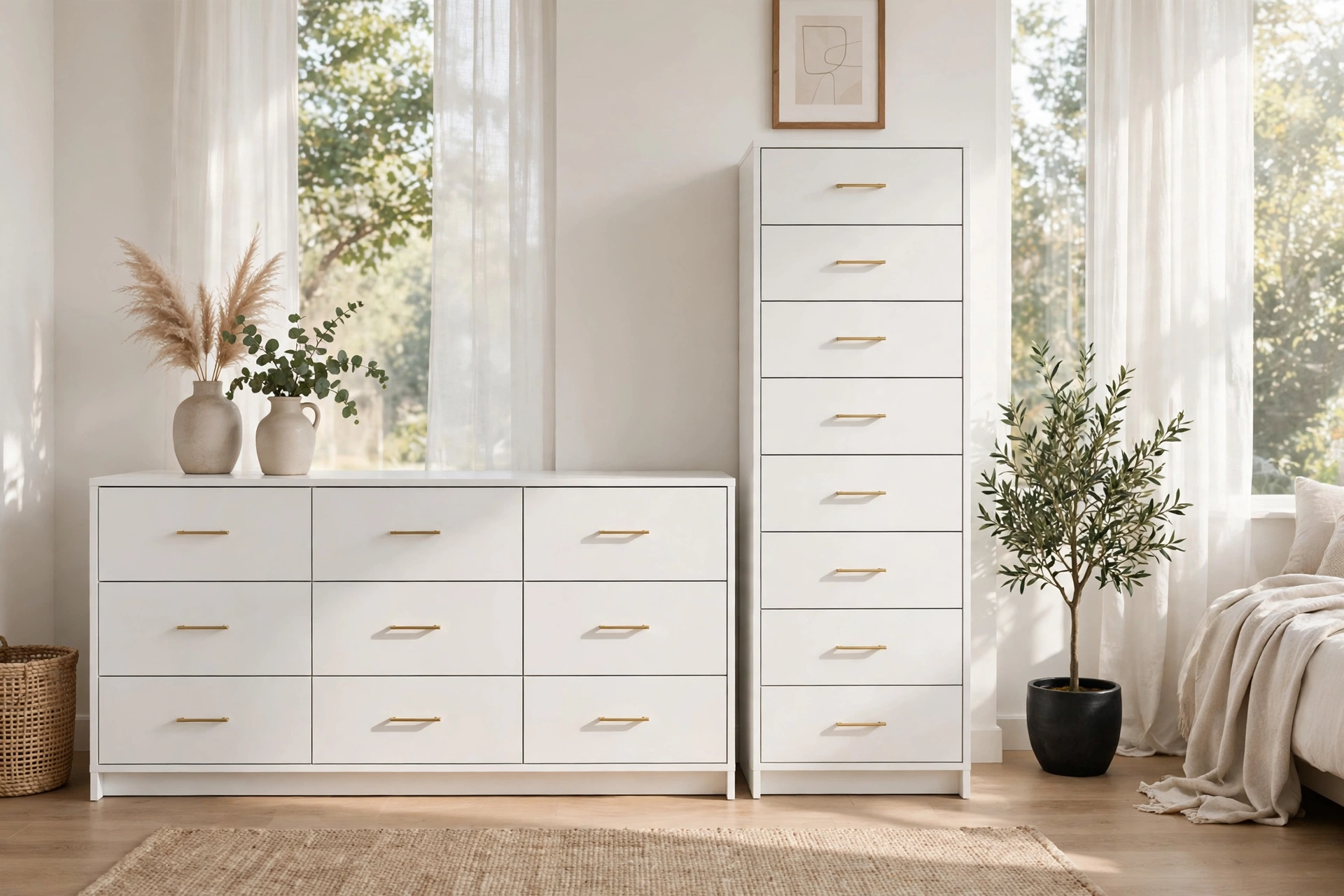
His bedroom has exactly one usable wall — 72 inches between the window trim and the closet door. FLNORW MALL’s 9 drawer long dresser is 47.56 inches wide; the Modern 6 Drawer Dresser, a tall chest, is 29.53 inches wide. On that wall, one of them fits with room to spare and the other swallows two-thirds of the wall. That week I measured everything I could find on both pieces, and this is the comparison I wish someone had handed my brother on day one.
Dresser vs chest of drawers: what each one actually is
A dresser is wide and low — it spreads its drawers across a horizontal front, usually under 36 inches tall. A chest of drawers is narrow and tall — it stacks its drawers vertically, usually 40-plus inches high. Both store folded clothes. The difference is which dimension they consume: wall width or vertical air.
Retailers muddy this constantly. Half the listings on the internet call a tall chest a “dresser,” and for years I did the same — if it had drawers, I called it a dresser and moved on. The shape is what matters, not the label: if it is wider than it is tall, shop it like a dresser; if it is taller than it is wide, shop it like a chest. Once I started reading the dimension lines instead of the titles, half my confusion evaporated.
The two real pieces on my brother’s shortlist
To keep this honest, every spec below is from two actual product pages I read line by line — nothing invented, nothing rounded up.
The tall contender: FLNORW MALL’s Modern 6 Drawer Dresser, $225.00, in stock. Six drawers stacked in a 29.53 × 15.75 × 48.03-inch cabinet that weighs 90.20 lbs. Main material MDF with a warp-resistant particleboard cabinet, gloss-painted drawer fronts with textured borders, wide metal drawer slides, and it ships with anti-toppling devices. Comes in gray or white.
The wide contender: the 9 drawer long dresser, $288.00, also in stock. Nine drawers in a 47.56 × 15.75 × 34.45-inch farmhouse-style body with antique handles, weighing 126.06 lbs. Main material particle board, marketed as CARB P2 & TSCA certified eco-friendly manufactured wood, with a 200-lb static load rating on the top surface and roughly two hours of assembly.
The price gap between them is $63. The rest of this article is about whether that $63 buys you anything — and which shape your room actually wants.
The footprint math: 3.2 square feet vs 5.2
This is where the tape measure did the talking. The tall chest’s footprint is 29.53 × 15.75 inches — about 465 square inches, or 3.2 square feet of floor. The wide dresser takes 47.56 × 15.75 inches — about 749 square inches, or 5.2 square feet.
Two square feet sounds trivial until you stand in a 110-square-foot bedroom. On my brother’s 72-inch wall, the wide dresser would leave roughly 24 inches of breathing room before the trim; the tall chest leaves about 42 inches — enough to open the closet door without the sideways shuffle. In a small bedroom, vertical storage is not a style preference. It is arithmetic.
None of this is a niche problem, either. Dataintelo’s 2025 bedroom furniture report puts the global market at $228.4 billion for 2025, growing toward $368.7 billion by 2034 at a 5.5% compound annual rate — and the dressers and chests of drawers segment alone accounts for roughly 15.8% of that revenue. Millions of shoppers a year are making exactly this shape decision, most of them without a tape measure.
Height decides what the top surface is good for
The wide dresser tops out at 34.45 inches — right in the zone where the top becomes genuinely useful furniture. That height works as a TV stand, a changing-table-height surface, or a landing pad for a lamp, a stack of books, and the keys you always lose. The product page rates the top for 200 lbs of static load, which is more than enough for a mid-size TV and a soundbar.
The tall chest tops out at 48.03 inches. That top holds a plant, a framed photo, maybe a small speaker — and nothing you need to see or reach every day. It sits above the eye line of a seven-year-old, which is either a feature (the decor survives) or a frustration (no, he cannot reach the lamp switch). If you want a surface that works as furniture, the wide dresser wins. If the top is just a bonus shelf, the tall chest of drawers asks far less of your wall.
The drawer math: $32 per drawer vs $37.50
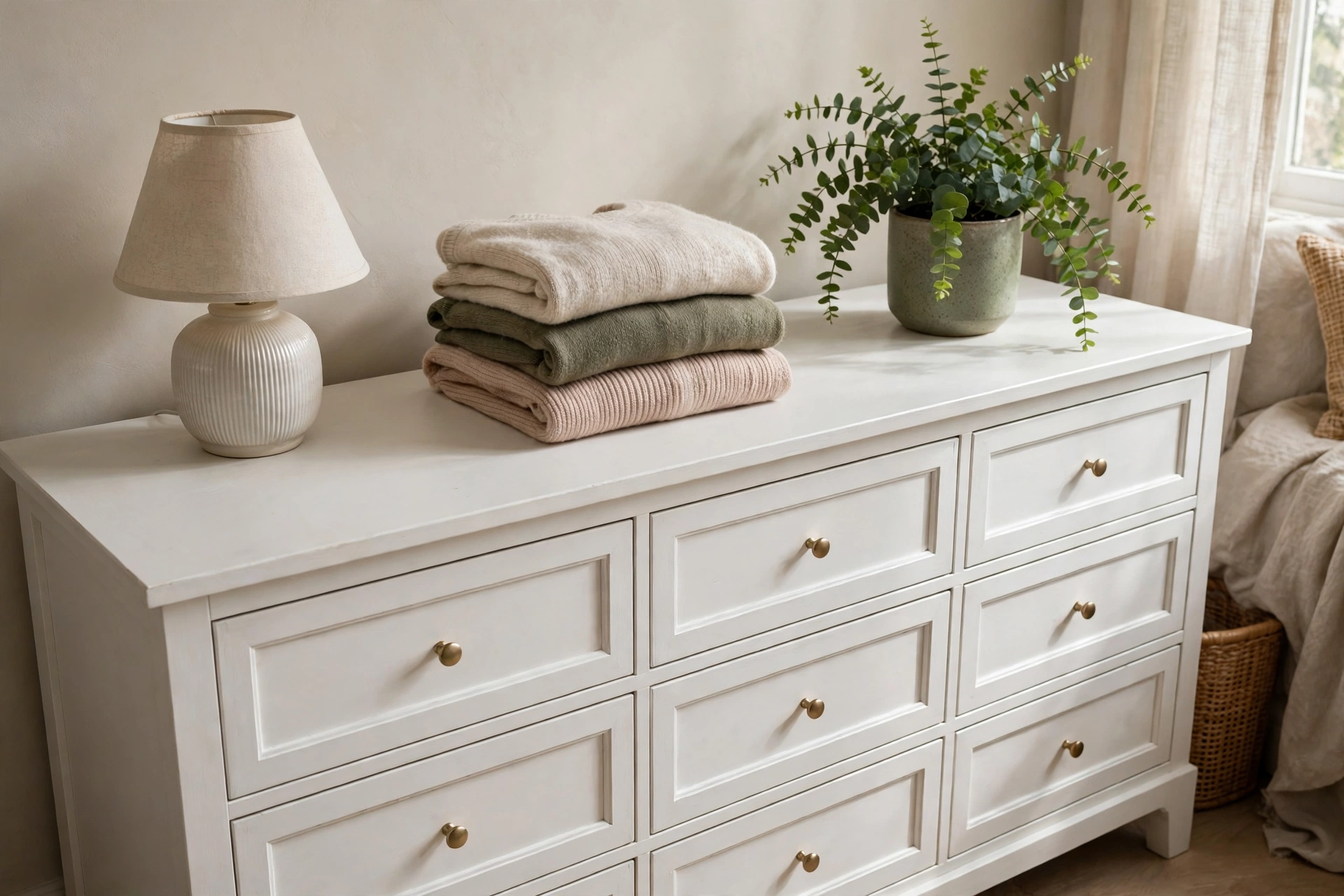
Nine drawers for $288 is $32.00 per drawer. Six drawers for $225 is $37.50 per drawer. On paper, the wide dresser gives you more drawers per dollar — but drawer count is not drawer usefulness.
The tall chest’s six drawers are deep, full-width boxes riding on wide metal slides. I wrote a full durability report on this exact unit after months of daily use, and the glide held up under a seven-year-old’s lawnmower-pulling technique. The 9-drawer’s drawers are shallower by necessity — nine of them have to fit inside a 34.45-inch tall body. For folded jeans, sweaters, and the bulky stuff that actually fills a bedroom, I would rather have six deep drawers than nine shallow ones.
There is also the sorting question. Nine drawers let you give every category its own home — socks, underwear, tees, gym gear, pajamas, and still have four left over. Six drawers make you double up. My brother is an “everything lives in three piles” person. He did not need nine.
The tall one needs its bracket screwed into the wall
Physics is not neutral here. A 48-inch-tall cabinet that is only 15.75 inches deep is more tip-prone than a 34-inch unit with the same footprint — that is just leverage, and no finish or styling changes it. The tall chest ships with anti-toppling devices, and they are not optional equipment.
I dug into the safety numbers properly when I wrote that durability report: the U.S. Consumer Product Safety Commission’s 2023 release documented hundreds of clothing-storage-unit tip-over fatalities, overwhelmingly children, and Congress’s STURDY Act made stability testing mandatory for units manufactured after September 2023. Installing the bracket took me eleven minutes with a drill. If your household has kids, or a cat with climbing ambitions, screw it in the day it arrives — whichever shape you buy.
The 5-minute tape test I make everyone do now
Before my brother clicked buy, I made him run this. It takes five minutes and has already saved one return in my family:
- Measure the wall, then subtract 24 inches. You need clearance on both sides — not just for looks, but so drawers open without kissing the trim. If the piece is wider than wall-minus-24, it is the wrong shape.
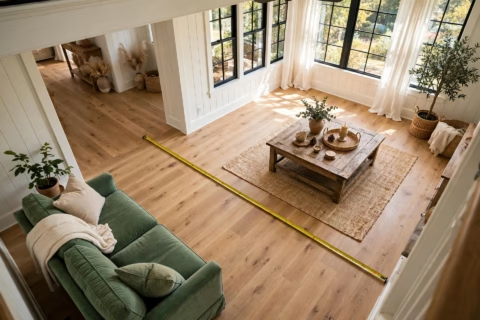
- Tape the footprint on the floor. Painter’s tape, the exact width and depth. Live with it for a day. Walk past it. Open the nearest door. This is the cheapest return policy in furniture.
- Decide the top-surface plan. TV going on it? You want the wide dresser’s 34-inch height. Just a plant and a photo? The tall chest’s 48-inch top is plenty.
- Count your categories, not your clothes. Nine drawers reward organizers; six deep drawers reward minimalists. Match the drawer count to how you actually sort, not how you wish you sorted.
- Measure the delivery path. The tall chest ships in one flat box at 101.20 lbs; the wide dresser arrives in a 53.50-inch box weighing 134.86 lbs. Both have to survive your hallway, stairwell, and doorway.
The verdict: dresser vs chest of drawers, room by room
My brother bought the $225 tall chest. His wall demanded it — 72 inches with a closet door on one end made the wide dresser a daily annoyance, and the $63 he saved covers the rug. But I would have told him the opposite if his wall had been 90 inches: then the $288 9-drawer’s 200-lb-rated top and nine shallow drawers would have been the better buy, and the TV would have a proper home.
Rough cost math, flagged as rough: over an estimated seven years of daily use, the tall chest runs about $32 a year and the wide dresser about $41 a year. Either way, you are under four dollars a month for the piece of furniture that holds your clothes. The shape decision matters more than the price decision — measure the wall, tape the floor, and let the room pick.
Ready to measure? Compare the Modern 6 Drawer Dresser and the 9 drawer long dresser on their product pages, browse the full furniture collection at FLNORW MALL, and read the durability report if you want the long-term verdict on the tall one.