Queen Bed Rug Size: What I Learned After Buying the Wrong Rug Twice
Three years ago I bought a beautiful 5-by-7 rug for my bedroom, wrestled my queen bed onto it, and spent six months annoyed every single morning. My bare feet hit cold hardwood on both sides of the bed, and the rug looked like a postage stamp parked under the frame. That rug now lives in my laundry room. What follows is the queen bed rug size cheat sheet I wish someone had handed me before that first purchase — the exact sizes that fit under a queen bed, where the rug should actually sit, and the one placement rule that fixes ninety percent of bad setups.
The $180 Mistake That Started This
The 5-by-7 was my first error. A queen mattress is 60 by 80 inches, and my frame added a few inches more on every side, so a 60-by-84 rug barely cleared the mattress — let alone the frame. I then “upgraded” to a 6-by-9, which covered the sides but buckled every time my foot caught its edge getting out of bed. Rug number three, an 8-by-10, finally looked right.
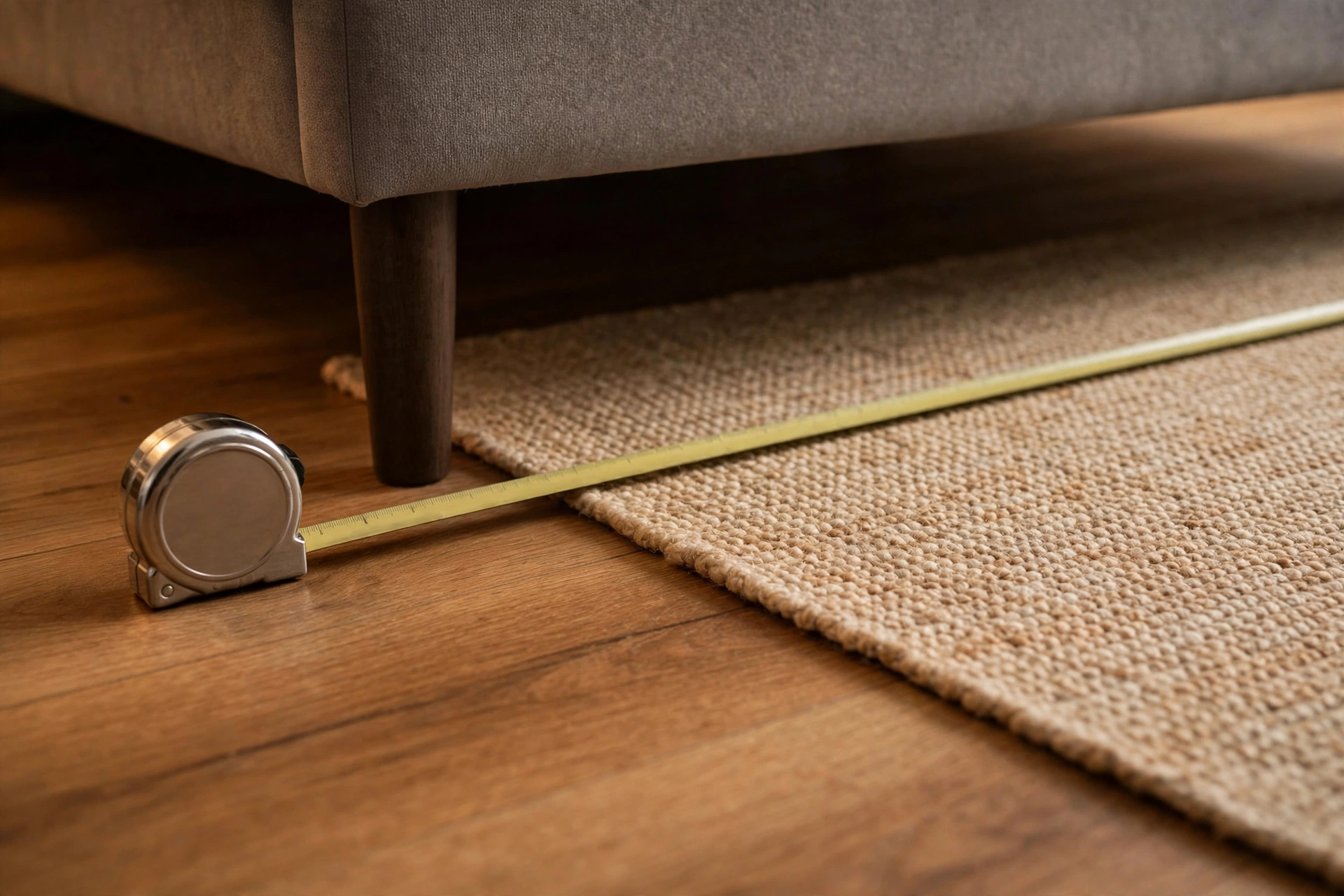
Rough math, flagged as rough: the 5-by-7 cost me about $62, the 6-by-9 about $89, and the 8-by-10 around $119 at typical online prices. That is roughly $150 in rugs plus $30 of return shipping — about $180 — to arrive at the answer a tape measure would have given me in four minutes. This article is that four minutes.
Queen Bed Rug Size: The Short Answer
If you typed “what size rug for queen bed” into a search box, here is the cheat sheet, no hedging:
- 8×10 feet is the standard queen bed rug size. It fits roughly nine out of ten queen bedrooms and is the size every designer I have read defaults to for a queen.
- 9×12 feet if your bedroom is large (13×15 or bigger) and you want the rug to frame the bed plus nightstands.
- 6×9 feet is the minimum viable option — it works in a tight room, but the margin for error is thin.
- 5×8 or smaller: do not put it under the bed. Use it as a runner beside the bed instead.
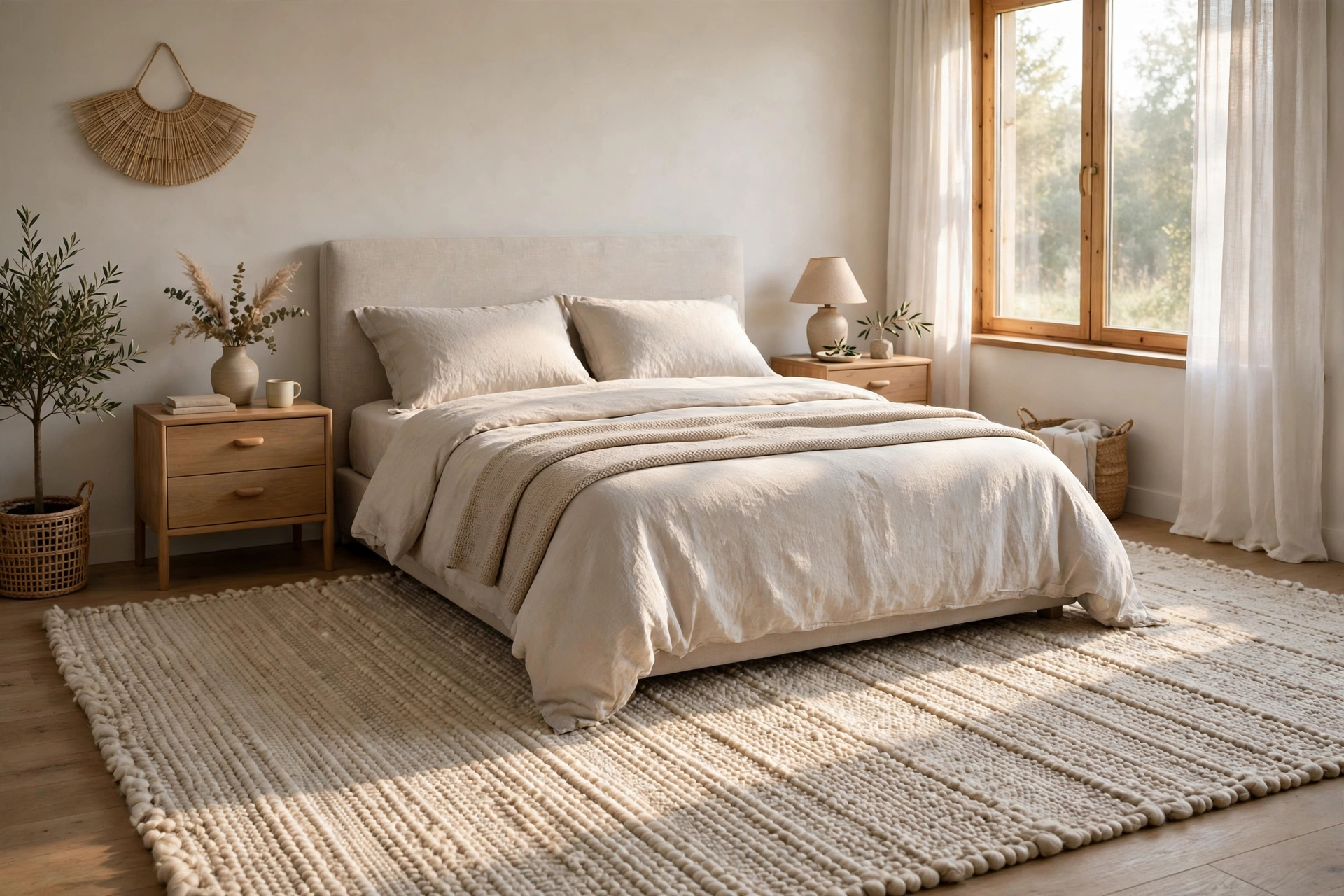
The reason is simple arithmetic, and it is worth doing once: a rug under a queen bed should give you roughly 18 inches of rug on each side of the bed, so your feet land on something soft when you get up. Anything under about 12 inches per side looks skimpy and feels pointless. The 8×10 hits that number on a typical frame; smaller rugs do not.
The Math: What an 8×10 Actually Covers
Let me do this with two real bed frames from FLNORW MALL, both measured and listed, so the numbers are not hand-wavy. An 8×10 rug under a queen bed is the default recommendation — here is what it actually covers.
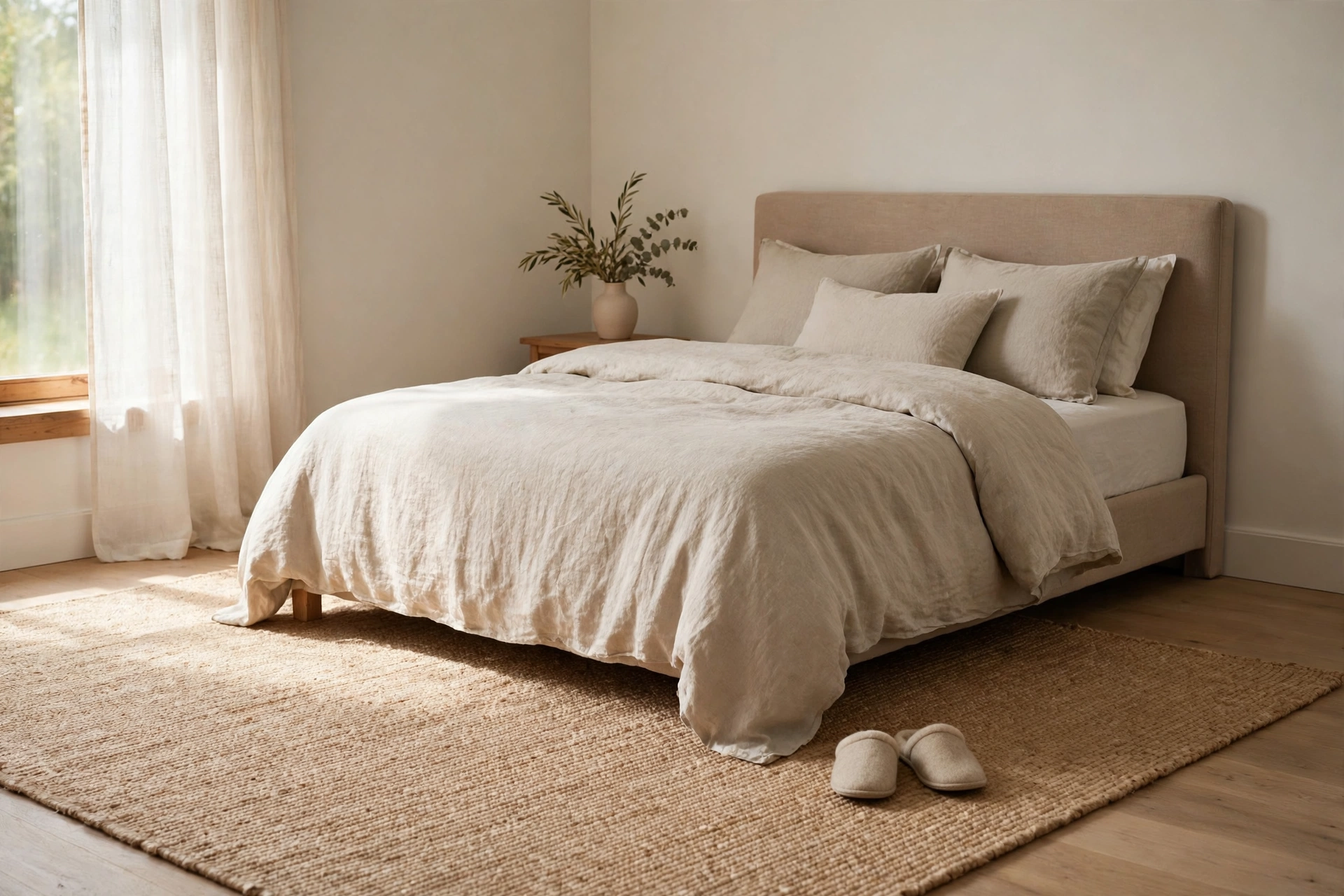
My $299 PU leather queen bed frame is listed at 79.92 inches long by 60.24 inches wide. Lay an 8×10 rug (96 by 120 inches) under it and you get (96 − 60.24) ÷ 2 ≈ 18 inches of rug on each side, plus about 40 inches of rug past the foot of the bed. That is the sweet spot — feet land on rug, the frame sits stable, and the rug reads as intentional rather than accidental.
The second frame is a cautionary tale in the other direction. The $498 low-profile platform bed frame with USB charging measures a full 86.8 by 78.1 inches — a wide, heavy (276.5 lbs), drawer-equipped frame. Under an 8×10, that leaves barely 9 inches of rug per side. It still works, but it is tight, and it is the reason you should measure your frame instead of trusting the word “queen.” Mattress size is standardized — my mattress sizes chart article has the full table — but frame footprints vary by a foot or more.
The Two-Thirds Rule: Where the Rug Goes Under the Bed
Here is the placement rule that saves you money: the rug goes under the bottom two-thirds of the bed, not the whole bed. The head end of the bed sits on bare floor, the rug starts roughly at the nightstands and runs past the foot.
Why this works: nobody sees the rug under the head of the bed — it is blocked by the frame and bedding. And nobody walks there. By starting the rug a foot or so in front of the headboard, an 8×10 covers the sides (where your feet land) and the foot (where you walk around), and you are not paying for square footage hiding under a headboard. This is also how you avoid the classic mistake of a rug that pokes out two inches on one side and eight on the other — it looks like a measuring error because it was one.
One more placement detail worth getting right the first time: leave the rug at least 18 inches short of the wall on the sides, and never jam it flush against the wall. A border of bare floor frames the rug and makes the room look bigger; a rug crammed wall-to-wall makes the bedroom feel like a carpeted hallway.
Queen Bed Rug Size Placement: 3 Layouts That Work
The rug under bed size question is really two questions: how big, and where. Bedroom rug placement comes down to your room width. Measure the wall the bed sits against, subtract the bed width, and pick a layout:
- Full-width 8×10, centered. For rooms 11 feet wide or more. The rug extends about 18 inches past each side of a standard queen frame. This is the magazine look and the most forgiving option.
- Side runners instead of one big rug. For narrow rooms under 10 feet wide, skip the under-bed rug entirely. Run a 2.5-by-8 runner down each side of the bed. You get the warm-feet benefit for about half the price, and nothing looks squeezed.
- Foot-only placement. If the door swings into the bedroom and blocks a full-width rug, place a 5-by-8 across the foot of the bed. It catches your morning landing zone without fighting the door.
I ran layout 1 in my 11-by-13 guest room and layout 2 in a narrower rental bedroom years ago. Both worked. The mistake is always the same: buying the rug before measuring the room, then discovering the door hits it.
The Nightstand and Drawer Gotchas
Two furniture details can ruin an otherwise perfect rug choice, and both showed up in my own bedroom.
First, nightstands. My $99 rattan nightstand set of 2 is 15.75 inches square. With an 8×10 rug giving me 18 inches of rug beside the bed, the nightstands landed right on the rug’s edge — two legs on, two legs off, and a permanent wobble. The rule I live by now: all four legs of the nightstand on the rug, or all four off. Half-on is the wobble zone. Either slide the rug further under the bed so the nightstands sit fully on it, or pull the rug short so they sit fully on the floor. There is no middle option.
Second, storage drawers. That $498 platform frame I mentioned has two pull-out drawers in the base. A thick, plush rug butted against the drawer side will catch the drawer bottoms and drag them open every time you walk past. If your frame has drawers, buy a low-pile rug (half an inch or less) and keep the rug’s edge a couple of inches clear of the drawer openings. I learned this the embarrassing way, watching a sock drawer glide open every morning for a week.
Low Pile vs High Pile Under a Queen Bed
Bedroom rugs take a special kind of beating: bed legs concentrate hundreds of pounds on four small points, and the rug barely moves, so dents become permanent. This is the one place in the house where I actively recommend against the cloud-soft high-pile rug.
Low pile (0.25 to 0.5 inch) wins under a bed for three reasons: it does not swallow the bed’s feet and tilt the frame, drawers and doors clear it, and vacuum lines actually show up. High pile feels luxurious for the first month, then develops four permanent craters where the legs sit. If you want softness, get it from the rug’s material — a dense wool-blend low-pile feels far softer than its thickness suggests — not from pile height.
One more practical note: whatever pile you choose, put a rug pad under it. On hardwood, a $30 pad stops the slow overnight creep that eventually sends the rug six inches off-center. Mine moved a full foot in three months before I added one.
My Verdict After Three Rugs
Here is where I land after buying the wrong size twice and measuring like an engineer the third time: for a queen bed in a normal bedroom, buy the 8×10. Measure your frame first — if it is a wide platform style over 72 inches, do the per-side math before you order. Start the rug at the bottom two-thirds of the bed, keep every nightstand fully on or fully off the rug, go low-pile if you have storage drawers, and tape the footprint on the floor with painter’s tape before you click buy. That tape step takes five minutes and it is the only part of this process that is genuinely non-negotiable.
The rug market agrees with the attention, by the way: Emergen Research sized the US area rug market at about $3.5 billion in 2024, growing around 4 percent a year toward $5.2 billion by 2034 — a lot of us are out there tape-measuring bedrooms. Join us. Just measure before you buy, not after.
Ready to fix your own bedroom landing zone? Start with the frame — the $299 PU leather queen bed frame (79.92 × 60.24 in) is the one I measured my rug against, and the mattress sizes chart will make sure the rest of the math lines up. Browse the full FLNORW MALL bedroom collection to finish the room.