I Bought a $168 Rattan Sideboard. Four Months Later, Here Is the Hosting Math.
My dining room had a problem that took me two years to name. The rattan sideboard I bought in July finally solved it, and the fix cost $168.
Here is what the problem actually was. Our dining room is 10 by 12 feet, which sounds fine until you try to host Thanksgiving for nine people. The table seats six. The other three get folding chairs and paper plates balanced on their knees, because there was nowhere within arm’s reach to park the gravy boat, the extra rolls, or the second pitcher of iced tea. Every hosting night turned into a relay race between the kitchen and the table, and I was always the runner.
So I started shopping for what normal people call a buffet and what my grandmother called a server. I wanted three things: a flat top wide enough to hold a turkey platter without hanging off the edge, closed storage for the table linens I kept buying and never using, and something that didn’t make my rental feel like a furniture showroom. The rattan sideboard from FLNORW MALL hit all three, and four months later it has become the hardest-working piece of furniture I own.
Why a Rattan Sideboard Beat a Regular Cabinet for Me
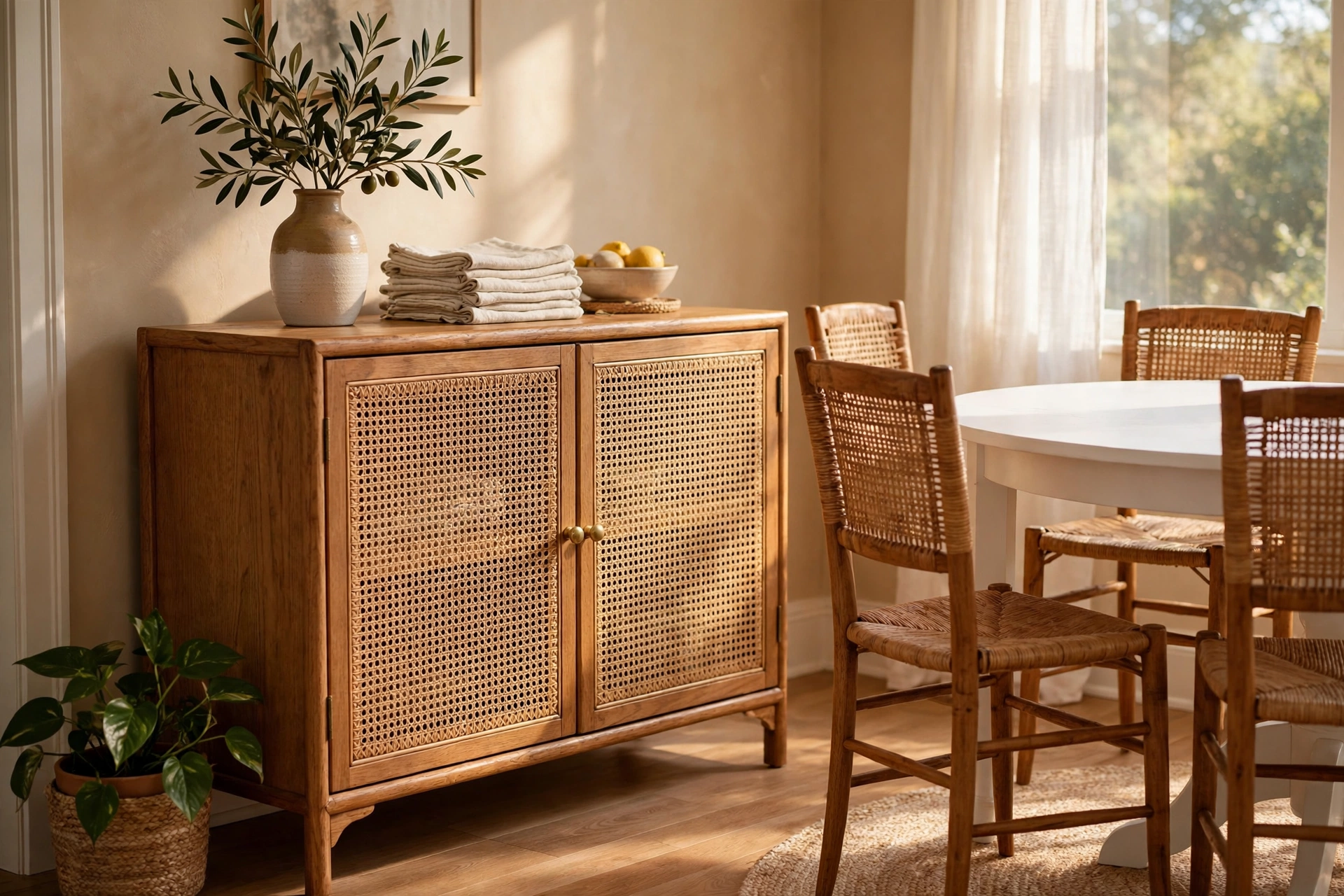
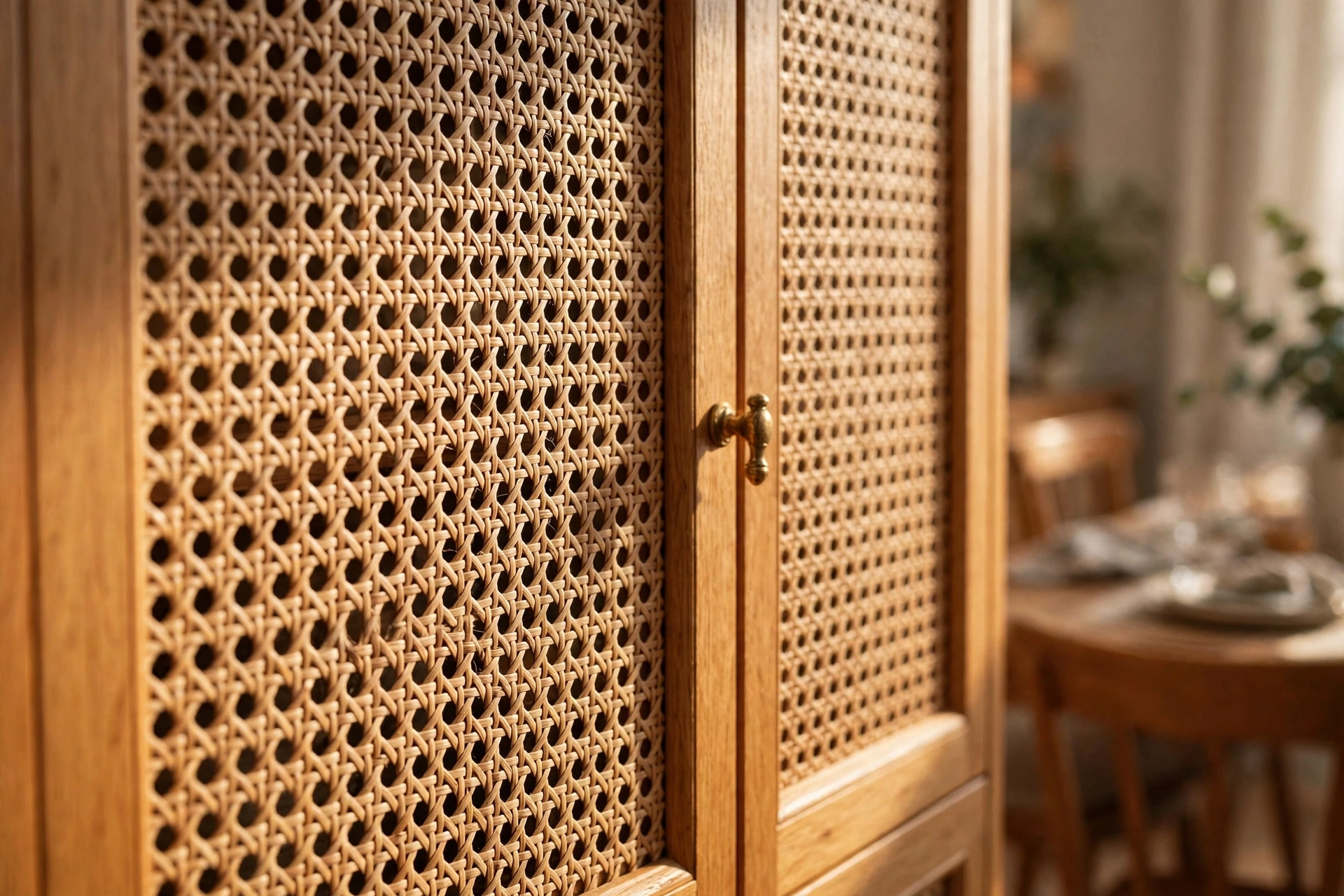
I’ll be honest about the first reason, because it was shallow: I loved how it looked. The two woven cane door fronts in natural rattan sit in a honey-toned wooden frame, and in my apartment’s north-facing light they glow a little. My couch is gray, my rug is a tired beige, and this cabinet is the one piece of furniture guests ask about. A flat gray cabinet would have stored things fine. The rattan doors make the whole room feel warmer, which matters when the rest of the room is landlord beige.
The second reason was practical and I didn’t expect it. Rattan is breathable. Behind those doors I keep tablecloths, cloth napkins, and the cloth placemats I never wash as often as I should. In a solid-door cabinet those would go musty; the cane weave lets air move. Four months in, nothing smells like a closed cupboard. If you live anywhere humid, that single feature is worth more than any finish upgrade.
The Real Numbers: $168 Rattan Sideboard vs the $269 Farmhouse Buffet
Before I bought, I compared this piece against the store’s $269 farmhouse buffet cabinet, and the comparison is worth laying out honestly, because the buffet wins on paper in several ways.
The farmhouse buffet is bigger: 39.37 inches long, 15.75 inches deep, 34.65 inches tall, and it weighs 90.2 pounds. It has two drawers, twelve wine racks, and removable shelves. It’s solid MDF in espresso, which reads as one coherent statement piece. The rattan sideboard is 31.5 inches wide, noticeably smaller, made of particleboard with an iron frame, and weighs in lighter. On raw storage volume, the buffet wins.
Here’s why I still picked the rattan piece. My dining room is 10 feet wide. The buffet at nearly 40 inches long would have swallowed a third of the only open wall. The 31.5-inch rattan cabinet fits with nine inches to spare on either side for a floor plant and a basket. And the price difference was $101 — money I put toward the white mid-century dining table I was eyeing at the same time. In a small dining room, the right size beats the biggest box every single time.
What Four Months of Daily Use Actually Taught Me
Assembly took me 40 minutes on a Tuesday night, alone, with the box on the rug. The instructions were diagrams only, which I usually hate, but the parts count was small enough that it didn’t matter. The iron frame goes up first, the panels slot in, and the doors hang on pre-drilled hinges. My one tip: don’t fully tighten the frame bolts until both doors are hung. I did, and the left door sat crooked until I backed everything off and redid it. Ten minutes of my life I’m not getting back.
What surprised me was the open bottom shelf. I bought the cabinet for the closed storage, but the open shelf underneath the doors has become the most-used six square feet in my dining room. It holds two woven baskets: one with the table runners and chargers, one with the kids’ craft supplies that used to colonize the dining table every afternoon at 3:30. The elevated design — little feet with anti-slip pads — means the robot vacuum glides under it instead of eating the cords I used to stash there.
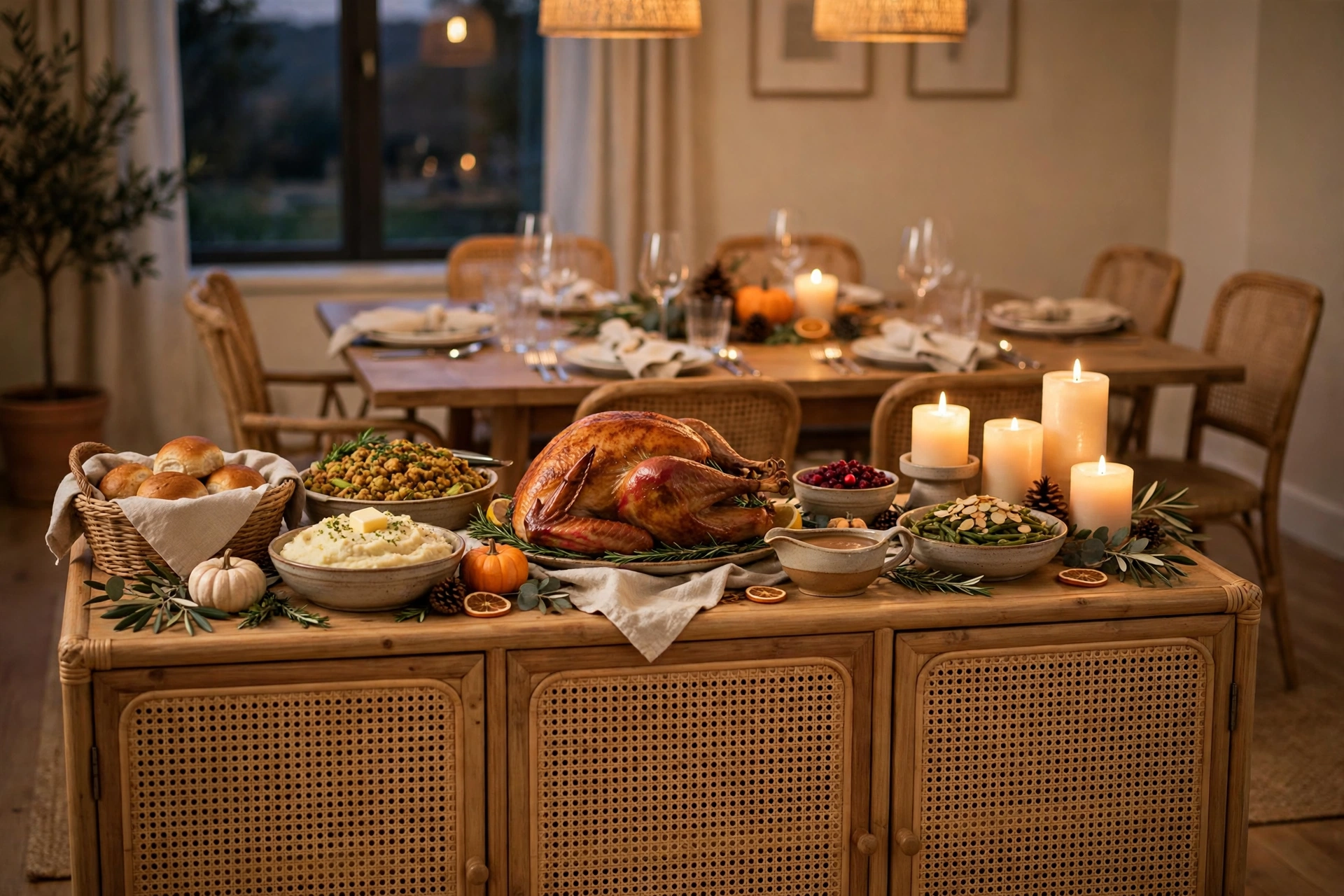
The top is the real workhorse. It’s a flat, smooth 31.5 inches, and on a normal week it holds the fruit bowl and the mail tray. On hosting nights it transforms. Last month I served a birthday dinner for eight from that top: slow-cooker pulled pork, two sides, a salad, the cake. Nobody bumped into anybody, because the food had left the kitchen counter entirely. That was the moment the $168 felt like the best money I’d spent all year.
Rattan Storage Cabinet Care: The Three Rules I Follow
A rattan storage cabinet is not a laminate box, and I learned the care routine fast, partly from the store’s notes and partly from a small mistake. Here’s what works:
- Dust the cane weave weekly, dry cloth only, following the weave direction. A vacuum with a brush attachment once a month pulls out the crumbs the cloth misses. The weave is beautiful and it is also a dust magnet. Accept this.
- Wipe spills on the wood frame immediately. The frame is particleboard under a natural finish, not solid teak. I set a sweating iced-tea pitcher down without a coaster in August and got a faint ring. It faded after a day, but now coasters live on the top permanently, no exceptions.
- Keep it away from direct heater blasts. Natural rattan dries out and gets brittle if you park it next to a radiator or a heating vent. Mine sits on the opposite wall from the baseboard heater, about four feet away, and the cane still feels supple.
None of this is hard. It’s maybe five minutes a week. But people who skip it are the same people who write one-star reviews about rattan cracking, so I’m writing it down.
How It Handles Thanksgiving: the Hosting Math
Thanksgiving is November 26 this year, and I’ve already run the rehearsal in my head — actually, on paper, with a tape measure, because that’s who I am now. A standard turkey platter is about 20 inches long. The sideboard top is 31.5 inches wide. That leaves roughly 11 inches for the gravy boat and a stack of warm dinner plates, which is exactly the serving triangle my six-layer Thanksgiving tablescape formula calls for: turkey and carving tools on the buffet, sides along the middle of the table, candles at the ends.
The math that sold my husband: we host four big dinners a year. Before the sideboard, I made an average of six extra kitchen trips per dinner, and each trip was about three minutes of ferrying and apologizing. That’s 72 minutes a year of me being gone from my own table. The cabinet didn’t eliminate the trips, but it cut them to two per dinner — the top holds the cold stuff, the built-in shelf holds the serving spoons and extra napkins, and the open bottom shelf holds the dessert plates I used to stack on the stairs. My estimate: I’m back at my chair about 45 minutes sooner per holiday season. You can’t buy that at any price, but $168 is a pretty good down payment.
Sideboard With Rattan Doors: Who Should and Shouldn’t Buy One
Buy this style if your dining room is small and your hosting is big. The sideboard with rattan doors is at its best in rooms under about 150 square feet, where a bulky espresso buffet would dominate the wall. It’s also the right call if you want the piece to look good from the couch — the cane reads as decor, not storage, so it earns its footprint even on non-hosting days.
Skip it if you need serious concealed storage for heavy items. Particleboard and iron will hold dishes and linens all day, but if your plan is to stash a stand mixer, a case of wine, and the good china in one cabinet, the bigger farmhouse buffet with its drawers and 90-pound build is the sturdier answer. And skip the natural finish if your house has a very formal dining room with dark wood everywhere — the light honey tone will look like it wandered in from a beach house. (In my gray-and-beige apartment, that beach-house energy was exactly the point.)
The Market Behind It: Sideboards Are Having a Moment
I’m not the only one buying storage furniture for the dining room. Market research firm 360iResearch’s 2025 report puts the global living and dining room furniture market at $116.65 billion in 2024, growing to $195.29 billion by 2032 at a 6.65% annual rate — and sideboards are one of the product types they track separately. That tracks with what I see in my friends’ apartments: the dining room is no longer just a table and four chairs. It’s the home office at noon, the homework station at 3:30, and the holiday command center in November. Storage that looks like decor isn’t a luxury anymore; it’s how a 10-by-12 room does three jobs.
Verdict: Four Months In, Would I Buy It Again?
Yes, and I’d buy it sooner. The $168 rattan sideboard solved my actual problem — no staging area for hosting — without eating my small dining room or my budget. It’s not the biggest cabinet, it’s not the heaviest, and the farmhouse buffet wins the spec-sheet fight. But the right size, the breathable cane doors, and that endlessly useful open bottom shelf made it the piece I reach past every other cabinet to use. Four months, four hosted dinners, zero regrets, and one Thanksgiving still to come.
Ready to fix your own dining room relay race? See the rattan sideboard with 2 woven cane doors — 31.5 inches of natural-finish storage for $168 — or browse more dining room storage at FLNORW MALL.