How to Choose an Entryway Shoe Bench: 5 Rules I Wish Someone Had Told Me
I bought my first entryway shoe bench because the photo on the listing looked tidy. I returned it three days later because it stopped the front door from opening all the way. The second bench I bought has been sitting in my hallway for two years now, holding shoes every morning and my full weight every evening. The difference between the two was not price. It was five rules nobody told me before I clicked buy.
This guide is those five rules, written the way I wish someone had written them for me: with real dimensions, real numbers, and the two products I actually measured against. Both come from FLNORW MALL — a $99 acacia shoe rack bench that doubles as seating, and its $99 foldable 3-tier acacia sibling that trades the seat for an extra shelf. Same wood, same price, very different buying decisions.
Rule 1: Measure the Door Swing, Not Just the Wall
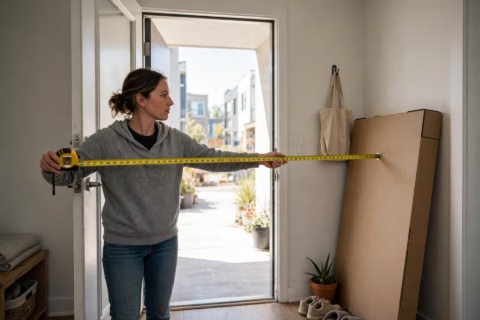
Everyone measures the wall where the bench will go. Almost nobody measures the door that swings next to it. That is the mistake that cost me a return shipment.
My foyer is four feet wide — 48 inches. The bench I kept is 11 inches deep, which sounds slim until you remember the front door swings through roughly 30 inches of that same space. The leftover walkway determines whether your small hallway shoe storage actually works or becomes an obstacle you curse every morning.
The rule I use now: the walkway past the bench needs at least 30 inches of clear width, and 36 inches feels comfortable. My setup leaves about 33 inches — workable, not luxurious. Before you buy anything, do the painter’s tape trick: lay a strip of tape on the floor in the bench’s footprint, then swing the door open and walk through with a pair of shoes in your hand. If you have to shuffle sideways, pick a slimmer bench or a different wall.
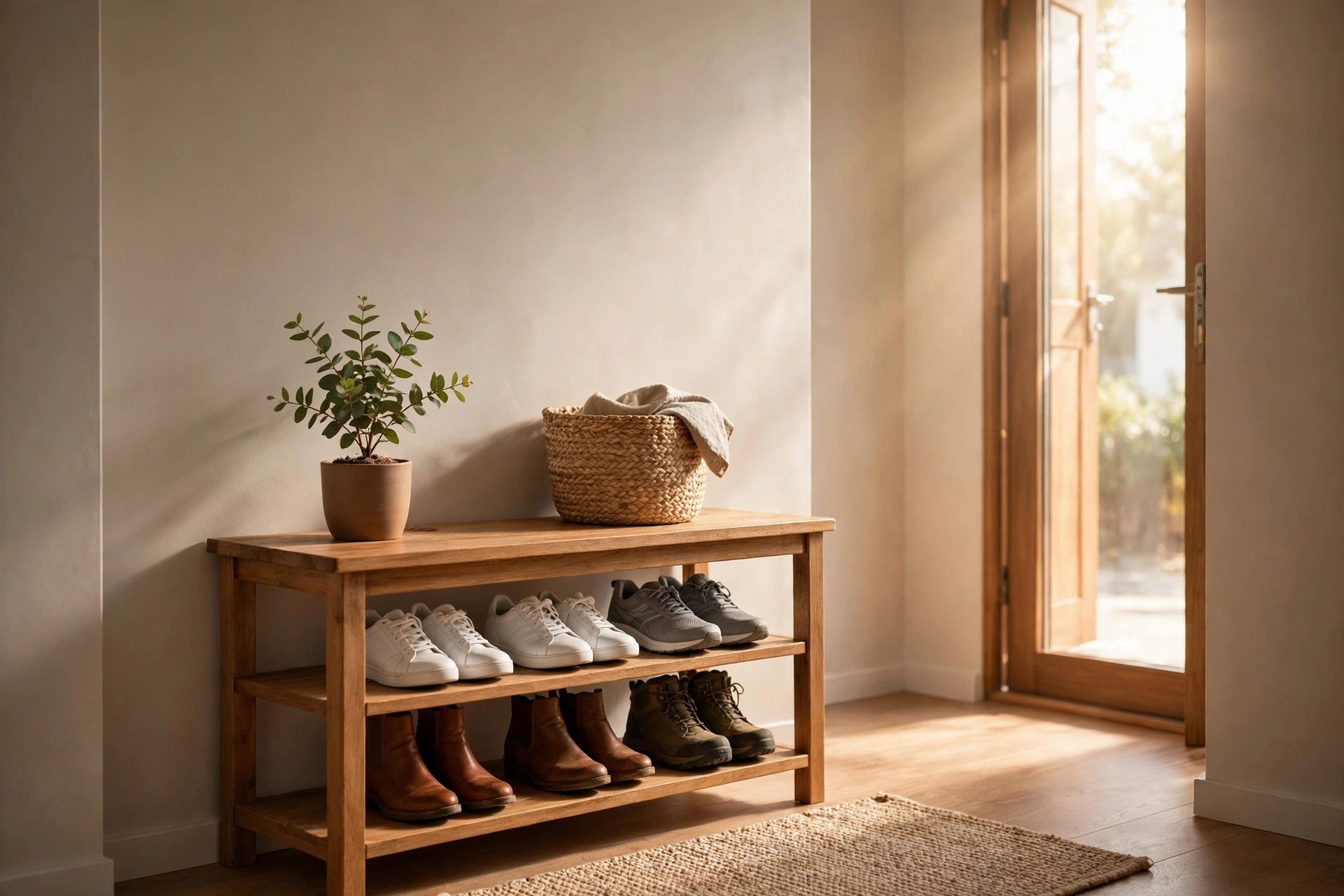
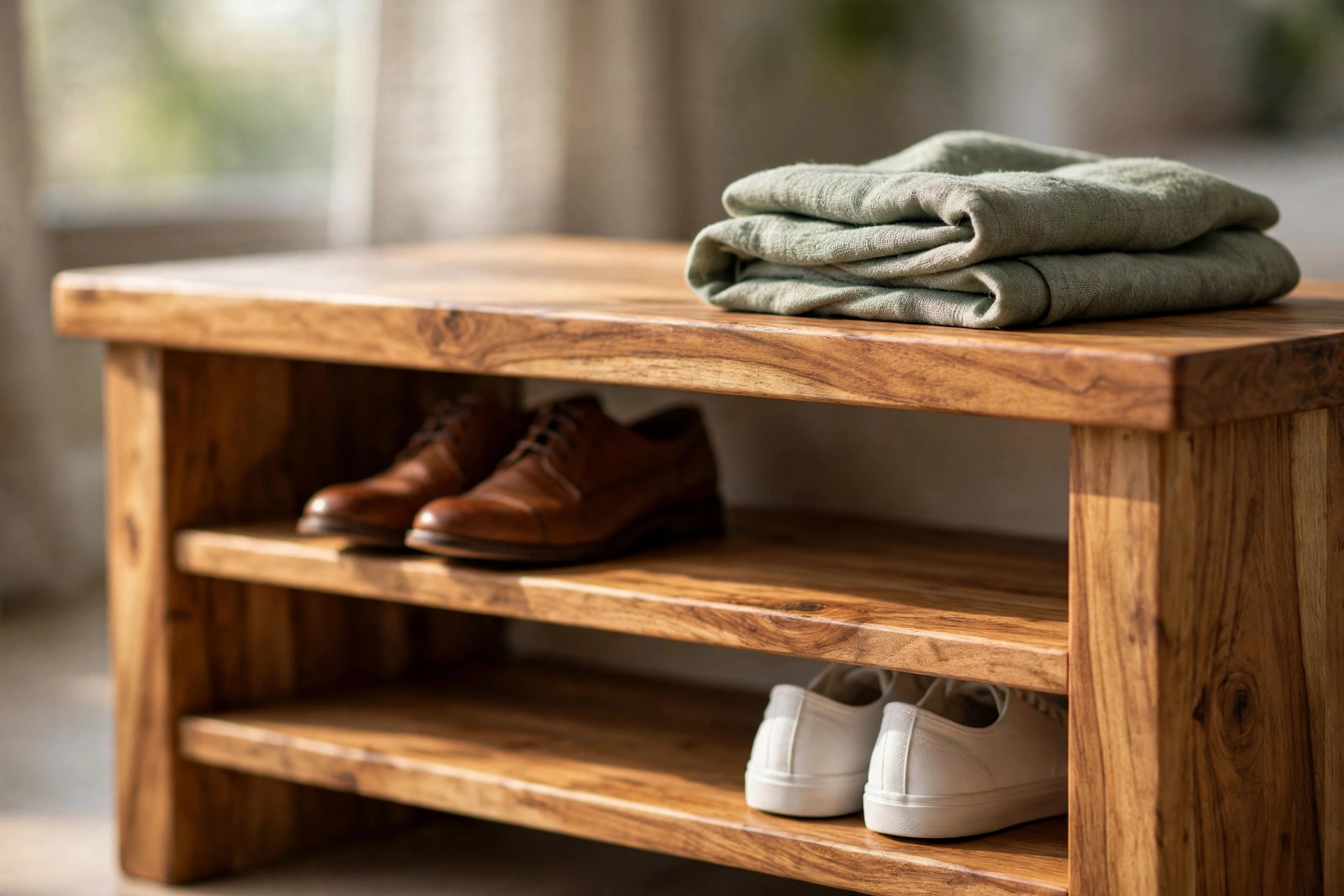
Depth is the spec that matters most in a small entryway. The acacia shoe rack bench runs 27.6 inches long by 11 inches deep — about half the depth of a standard enclosed shoe cabinet. That slim profile is the whole reason it survives in a 4-foot foyer where a cabinet could not.
Rule 2: Seat Height — 17 to 19 Inches, or It Is Not a Bench
A bench you cannot comfortably sit on is just an expensive shoe shelf. The seat-height window that works for adults is 17 to 19 inches — roughly standard dining-chair height, which is about 18 inches for most American dining chairs.
The FLNORW bench measures 17.8 inches tall. Sitting on it to tie shoes feels exactly like sitting on a kitchen chair: knees at a natural angle, easy to stand back up. Anything under 16 inches and you are squatting; over 20 inches and shorter adults and kids dangle their feet and slide off.
If you are shopping in person, do the ten-second sit test: sit down, cross one ankle over the opposite knee, and mime tying a shoe. If your back complains within ten seconds, the bench is too low. Shopping online, the height number in the spec table is your only defense — and this is one spec sellers rarely exaggerate, because returns on furniture are expensive.
Rule 3: Read the Weight Rating Like a Contract
Here is a number that stopped me mid-scroll: the average American man weighs just under 200 pounds, per CDC’s NHANES survey for 2017–2018. The acacia bench I bought is rated for up to 200 pounds. That means the rating sits right at the line for an average adult man — fine for me at 180, but not a number to shrug past if the biggest person in your house is heavier.
Weight ratings on cheap benches are often printed without any testing story behind them. On this bench, the rating held up in real use: two years of my 180 pounds, daily, plus a nine-year-old who treats it as a launchpad. Zero wobble, zero creaks. That is the standard to hold every candidate to — not “will it hold me once,” but “will it hold the heaviest person in my house 240 times a month,” because a family of four putting shoes on twice a day gets there fast.
One more note on this rule: kids will jump on any entryway bench, period. This one’s edges are sanded smooth — the product page says so, and my bare feet can confirm it.
Rule 4: Tier Clearance Decides What Actually Fits
Storage capacity on a bench is not “how many tiers” — it is the clearance between tiers. This is the spec that separates a bench that fits your life from one that fits only half of it.
The FLNORW bench gives you 6.8 inches of clearance between its two storage tiers. Here is what that holds: sneakers (usually 3 to 4 inches tall), loafers, flats, sandals, and kids’ shoes. Here is what it does not hold: men’s boots (8 to 10 inches), rain boots, high-top sneakers, and my winter hiking boots. They live on a boot tray beside the bench — the top is the seat, not storage.
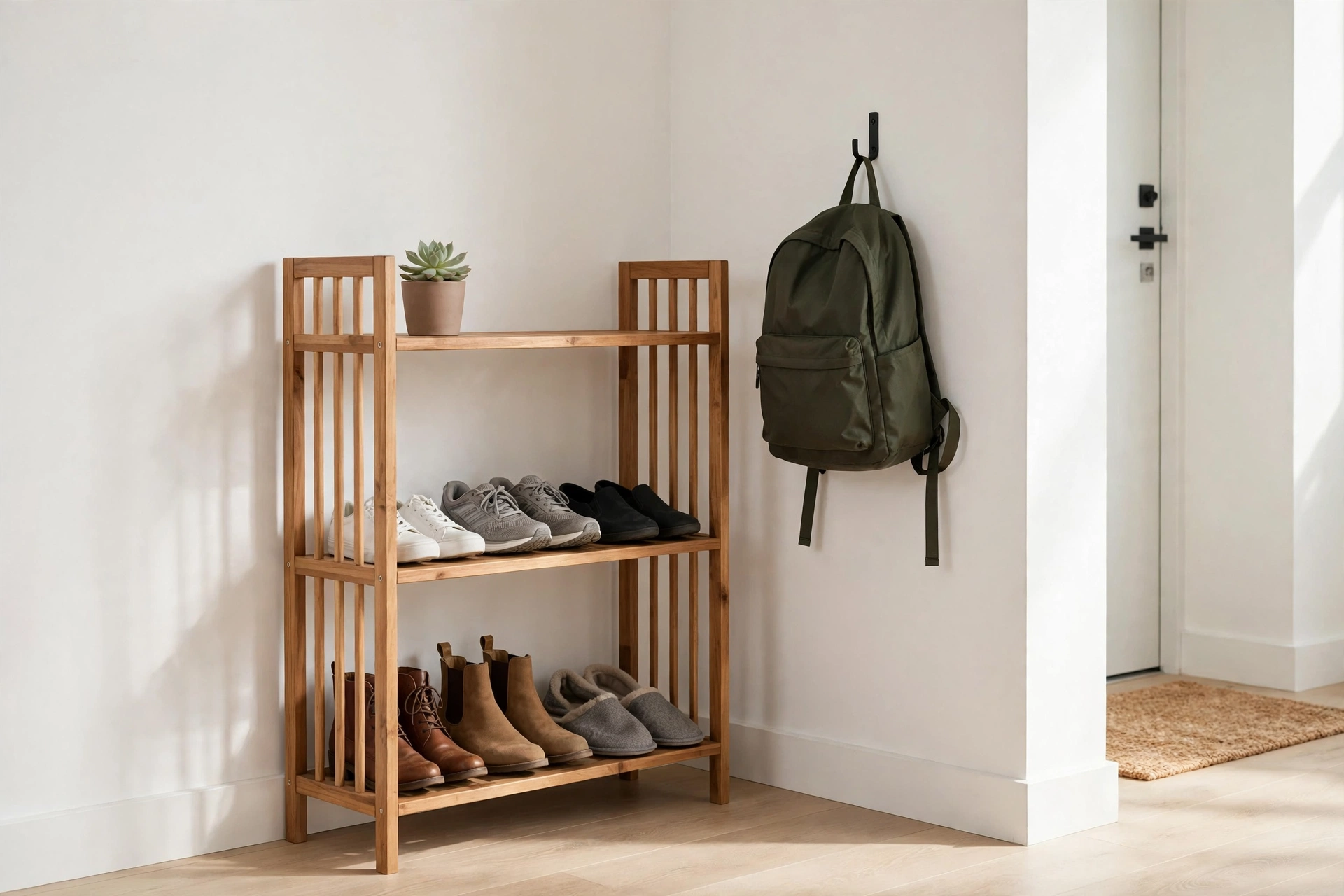
Measure your tallest everyday pair before you buy, then compare it to the clearance number with at least an inch of headroom. If you live in boots half the year, the foldable 3-tier acacia rack is the better call: its tiers are 11.8 inches apart, which swallows boots easily, and it folds flat if you ever need it gone. Same $99, same solid acacia — you are trading the seat for boot clearance and a third tier.
Rule 5: Solid Wood Outlives Flat-Pack Every Time
An entryway is the wettest room in the house that nobody calls a wet room. Rain drips off shoes. Snowmelt pools on the floor. Road salt eats everything it touches. Material choice is not aesthetics here — it is survival.
The two benches I am recommending are 100% acacia wood, a dense hardwood that handles humidity far better than the MDF and particleboard most budget benches are built from. Acacia’s tight grain shrugs off the damp shoes that would make a particleboard shelf swell and sag within a season. The water-based coating under a light glossy topcoat gives the wood a starter shield — water beads on it instead of soaking in — which is why the product page lists these for indoor and outdoor use.
Solid wood still asks for two things, and I will be honest about both. First: wipe up salty slush the same day, because road salt is wood’s worst enemy. Second: rub in a light coat of furniture or teak oil once a year — five minutes, keeps the grain from going gray and thirsty. Do those two things and a $99 solid-wood bench outlives three generations of flat-pack. Skip them and even acacia eventually looks tired.
Rule 6: Do the $99 Math Against the $40 Rack
The cheapest option is the four-tier wire rack for about $40. I owned three of them across a decade, and every one ended the same way: leaning, with a snapped plastic connector, looking like a dorm-room accident. Two replacements over six years cost $120 — more than the bench — and you still cannot sit on it.
Spread over a realistic ten-year life, the math gets simple:
- Wire rack: $40 now, replace twice in ten years — roughly $120 total, no seat, leans by year three.
- Acacia shoe bench: $99 once — about $10 a year over ten years (my estimate) — solid wood, sit-on-it seat, survives kids.
- Full hall tree with hooks and mirror: $200 to $500 at most US retailers — worth it if you also need coat storage, overkill if you just need shoes and a seat.
The bench wins the middle of the market: the cheapest entryway storage bench that is actually furniture instead of temporary equipment. The foldable 3-tier rack at the same $99 is the right pick when shoe density beats seating — bigger families, boot-heavy winters, rental entryways where every inch is storage.
The Industry Numbers: Entryway Benches Are a $4.8 Billion Category
I got curious about whether anyone else is buying these things, so I looked it up. Dataintelo’s Entryway Bench Market report puts the global market at $4.8 billion in 2025, growing to $7.2 billion by 2034 at a 4.8% annual clip. Shoe benches specifically are the second-largest segment at 22.3% of the category, and nearly three-quarters of all sales — 72.3% — go to residential buyers. The report names small-space living as the primary growth driver, which matches exactly what I see in my own 4-foot foyer.
The broader entryway furniture market tells the same story at bigger scale: Dataintelo values it at $15.82 billion in 2025, heading to $26.34 billion by 2034, with shoe storage the fastest-growing product segment at 7.1% a year. Translation: hallways keep shrinking while shoe collections grow, and the shoe bench is the category’s answer to both.
Your 5-Rule Buying Checklist
Tape this to your phone before you shop:
- Measure the door swing first. Tape the footprint on the floor, swing the door, walk through. Keep 30+ inches of walkway.
- Demand 17–19 inches of seat height. If the spec is missing, assume it is wrong for sitting.
- Buy a weight rating with margin. 200 pounds covers most adults; the heaviest person in your house should be under it with room to spare.
- Match tier clearance to your tallest shoes. 6.8 inches handles sneakers; boots need 8+ inches or a tray on the side.
- Choose solid wood for the wettest dry room. Acacia or rubberwood with a sealed finish; plan on oil once a year.
The verdict. I would not buy an entryway shoe bench today without running all five rules, and I would not buy one that failed any of them. The $99 acacia shoe rack bench passes all five for my hallway — slim 11-inch depth, 17.8-inch seat, honest 200-pound rating, sneaker-friendly tiers, solid wood that has survived two years of salt and mud. If your house runs on boots instead of sneakers, take the foldable 3-tier at the same price and keep a stool nearby for tying laces. For the full sit-down story, here’s six-week review of the acacia shoe rack bench with the shoe-capacity math.
Ready to fix your entryway?