I Bought a $999 Zero Gravity Full-Body Massage Chair. Here Is the Honest Math.
My lower back filed its complaint in March. Ten hours a day at a desk, a mattress with too many birthdays behind it, and one morning I stood up and something in my lumbar region just said no. Chiropractor visits ran $75 a pop; the parlor down the street charged $80 for fifty minutes. That math ended at a $999 zero gravity massage chair from FLNORW MALL. Six months later, here is everything I learned — the good, the heavy, and the honest accounting.
What $999 actually buys you
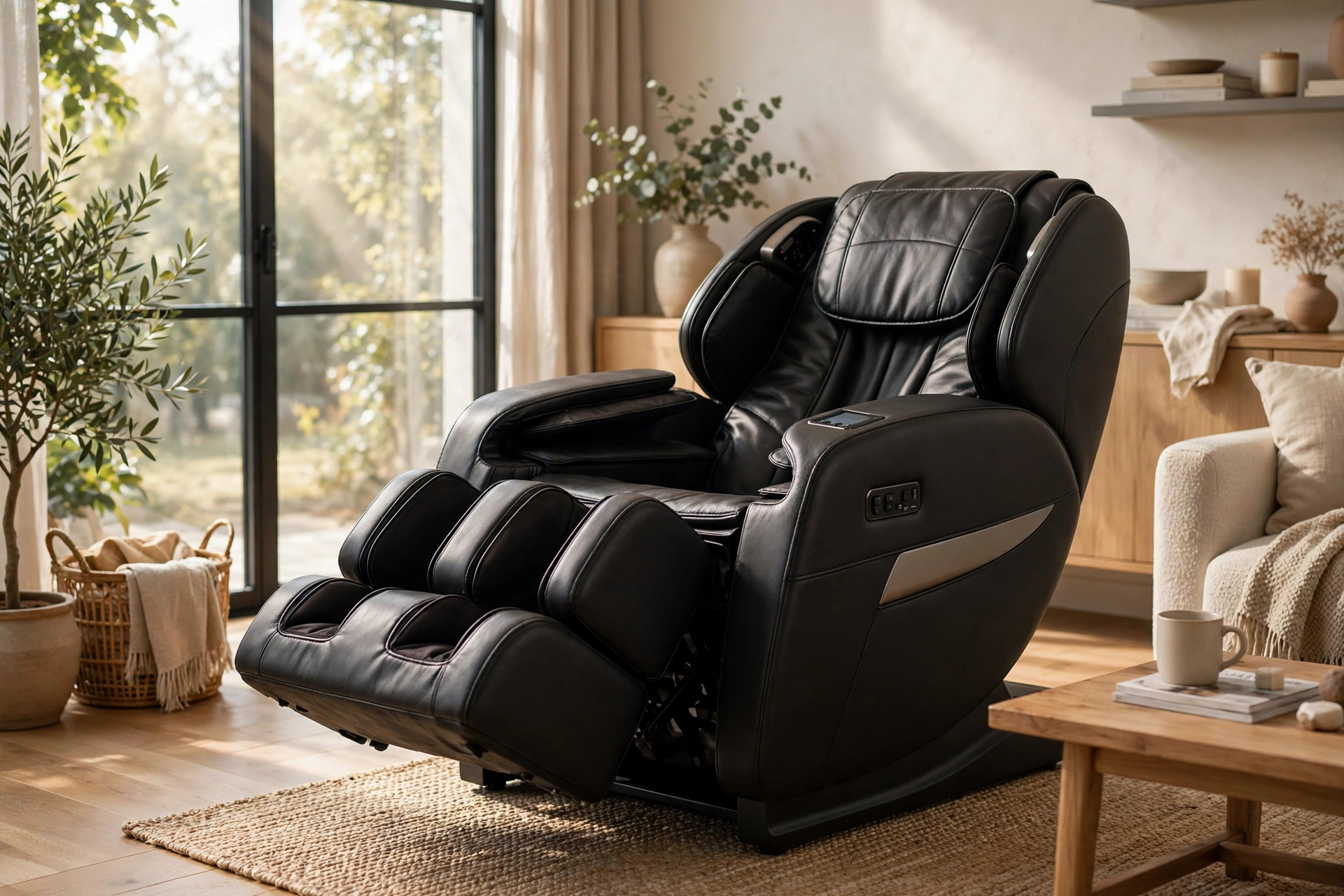
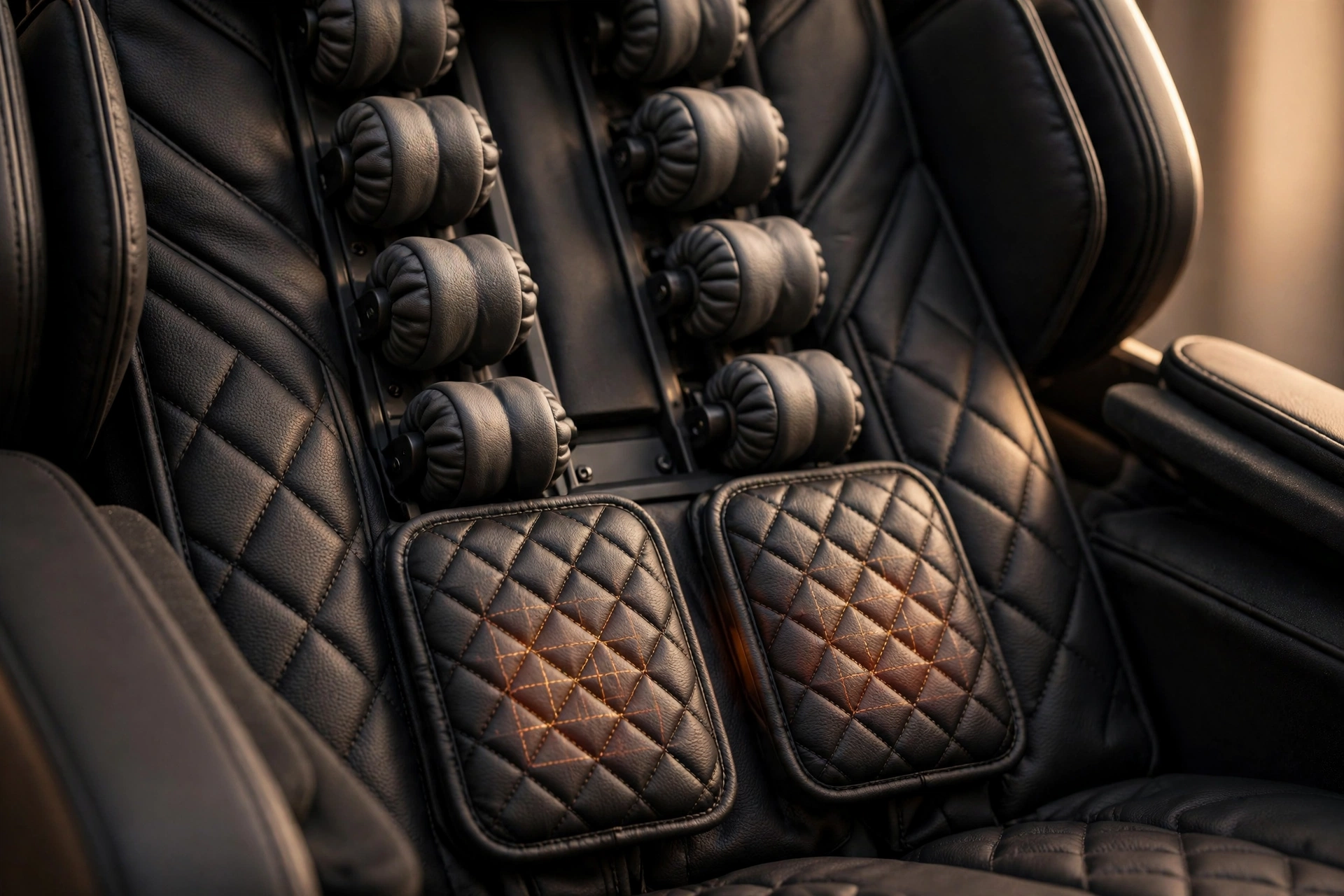
FLNORW MALL lists it as the Full Body Massage Chair With Zero Gravity Recliner (item W60783534, black, PU upholstery), and the headline numbers are 8 fixed massage points with 22 massage balls working your neck, shoulders, back, waist, and hips with kneading and inversion-style motion. That is a roller system, not a vibrating pad — the distinction matters, and I will come back to it.
Wrapped around the rollers: 18 airbags across the shoulders, arms, hips, thighs, and calves; a lumbar hot-compress heater; five auto programs — Kneading, Shiatsu, Strong, Leisure, and Sleep; a one-button zero gravity position; Bluetooth audio; and two control panels (smart large screen plus a rotary switch you can reach without lifting your head). It runs on 120W, supports up to 220 lbs, measures 54.33″ × 29.92″ × 39.76″ assembled, and weighs 115.74 lbs on its own. The box it arrived in weighed 147.71 lbs. Remember that number.
Zero gravity is not a marketing word — the 128-degree math
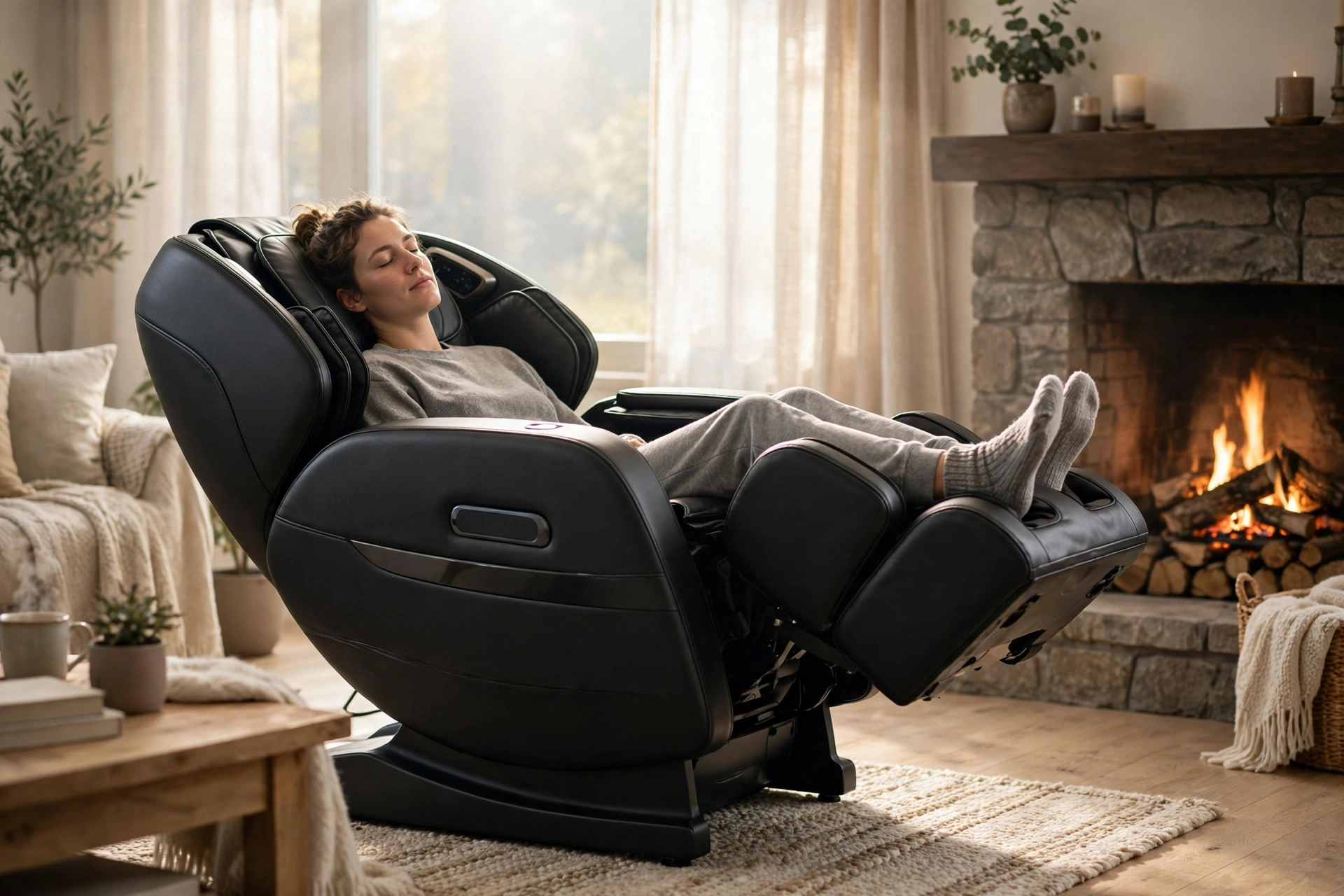
I assumed “zero gravity” was ad copy until I felt it. The position NASA identified as the neutral body posture — about 128 degrees of hip angle, knees lifted slightly above the heart — is what the chair’s button reproduces. The reason it feels so different from just leaning back is spinal loading: classic disc-pressure research (Nachemson’s work in the 1960s, still cited in ergonomics courses) found that sitting upright loads lumbar discs roughly 40% more than standing. The zero-gravity recline spreads your weight across the backrest instead of stacking it on your lower spine, and your back notices within about ninety seconds.
This is the single biggest difference between this chair and a vibration-style lift chair. Vibration loosens surface muscle; zero gravity unloads the spine. If your problem is “my lower back is compressed by 9 p.m.,” the recline angle does half the work before the massage even starts.
Three massage systems, three different jobs
After six months I think of the chair as three machines sharing one frame. The 22-roller track handles the deep work — neck, shoulders, back, waist, hips — with actual kneading pressure that finds knots instead of just buzzing the area. The five auto programs run it in different patterns; Shiatsu is my workhorse for an angry back, Sleep is slow and soft enough that I have dozed off in it more times than I will admit. The 18 airbags are the squeeze: rhythmic compression on arms, hips, thighs, and calves like blood-pressure cuffs taking turns. And the lumbar heat is the sleeper feature — a hot-compress pad that, combined with the rollers, does more for my evening stiffness than either would alone.
One honest calibration: the calf airbags run snug if your legs are thick. My 15-inch calves are fine; my brother-in-law’s soccer-player calves found them assertive. If you sit near the 220-lb limit, adjust expectations accordingly.
The delivery nobody warns you about
The box measured 53.54″ × 29.53″ × 31.89″ and weighed 147.71 lbs. The driver got it to the porch; my neighbor and I got it inside. Budget two adults and a dolly, and do not plan delivery for a day you are alone. Assembly was simple — mostly unfolding and connecting panels — but the assembled 115.74-lb chair is also a two-person move, so pick its spot before unboxing. The built-in roller wheels help on hard floors.
Wall clearance is the other thing to measure twice: at full recline the chair extends 54.33″ and needs room behind it to tilt. I gave mine 2.5 feet of clearance from the wall and it has never touched. Tape that out before you commit to a corner.
The honest cons
- 220-lb weight limit — 130 lbs below the $600 lift chair’s 350-lb rating, and the chair is built around that number. Near the limit, take it seriously.
- The footprint — 29.92″ wide, over 4.5 feet long reclined. It does not disappear into a room; it declares itself.
- PU upholstery — looks sharp and wipes clean, but it is not breathable. In summer you feel it, and it wants conditioning a couple of times a year.
- No stand-up assist — if getting out of a chair is your main problem, a lift chair is the tool. Read the power lift recliner comparison and my recliner types guide instead.
$999 vs the $600 vibration lift chair — which is actually for you?
FLNORW MALL sells both, and this is the question everyone asks. Buy the $999 zero gravity chair if your goal is real massage — roller-based kneading, airbag compression on the limbs, and spinal unloading. It is the deeper, more therapeutic machine, aimed at backs that hurt.
Buy the $600 350-lb power lift recliner if your priority is mobility: standing up without a fight, a 350-lb capacity, washable cushions, cup holders, and USB charging. Its 8-point vibration massage is pleasant but surface-level — relaxation, not therapy. It is also the better pick for a parent or grandparent, where the lift mechanism is the whole point.
The gap is $399. Spread over five years of nightly use (estimate), that is about $0.22 a day for a fundamentally different massage technology. For my back it was worth it. For my father’s knees, the lift chair would be.
The industry numbers: why everyone seems to be buying one
I am clearly not alone. Research and Markets’ 2021–2031 industry report puts the global massage chair market at $4.21 billion in 2025, growing to $6.07 billion by 2031 at a 6.29% compound annual rate. Dataintelo’s household-segment data has full-body models at a 42.5% share — the biggest slice of the home market. And the American Massage Therapy Association’s 2024 survey found that 61% of consumers sought massage for health or medical reasons, not luxury. That last number explains the category: people are buying pain relief they can reach without an appointment, in their pajamas, at 10 p.m.
The verdict — and the honest math
A parlor session runs $60–$100 where I live. At $80 a session, the $999 chair equals roughly 12–13 sessions — and I have used it about 170 evenings in six months. Even counted conservatively, it paid for itself in under two months of nightly 15-minute sessions. Electricity is a rounding error: 120W × 15 minutes is 30 watt-hours a day, a fraction of a cent (rough estimate). The real costs were the delivery workout and the floor space.
Would I buy it again? Yes. For a desk worker’s back, the combination of roller massage, airbag compression, lumbar heat, and the zero-gravity unload is the closest thing to a daily reset I have found. It is not a therapist and not a medical device, and the 220-lb limit and footprint are real constraints. But six months in, it is the most-used piece of furniture in my house after the bed. If your back keeps the same hours mine does, see the exact $999 zero gravity massage chair here, compare it with the $600 power lift recliner, and browse the FLNORW MALL furniture collection.
Ready to stop paying $80 a session? Check the $999 zero gravity full-body massage chair — InStock now with Bluetooth audio, lumbar heat, and 22-roller shiatsu massage. Or start at the FLNORW MALL homepage and compare the full relaxation lineup.