I Never Used to Winterize Outdoor Furniture. One April Taught Me Better.
I Never Used to Winterize Outdoor Furniture. One April Taught Me Better.
The April I learned to winterize outdoor furniture properly, I was standing in my backyard holding a seat cushion that had gone green with mildew over the winter. It belonged to a $490 patio dining set that had looked brand new the previous October. I had left the whole set out through four months of freeze-thaw, wind, and one memorable ice storm — no cover, no cleaning, nothing — because I kept telling myself I would get to it next weekend. The chairs survived. The cushions did not. Two armrest welds on the frames had cracked, and the set had aged about three years in a single winter. That was the last time I skipped the fall routine. Here is the five-step version I do now, every October, and it takes one afternoon.
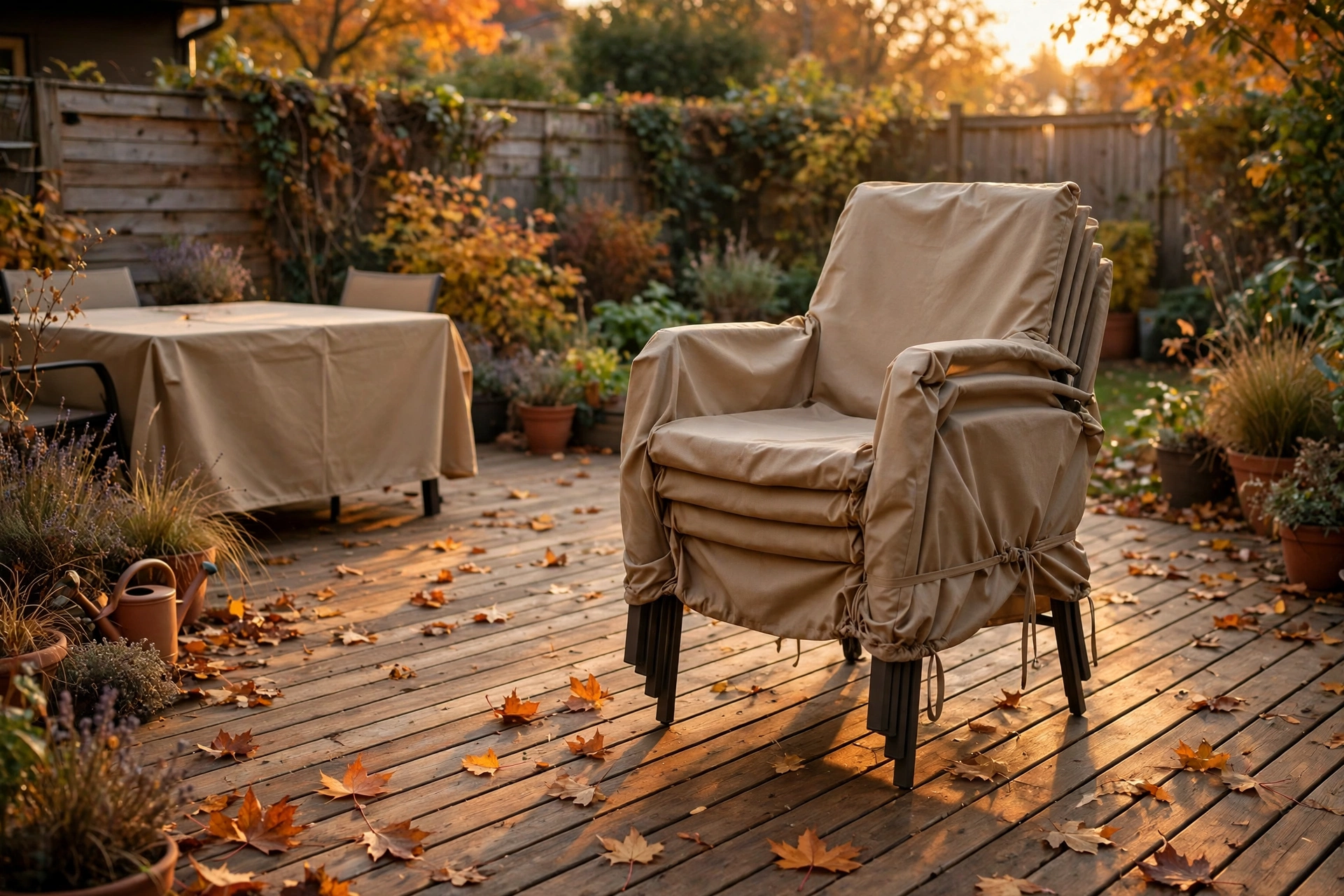
What winterize outdoor furniture actually means
It is not one product and not one chore. Winterizing means doing, before sustained cold, the four things winter destroys furniture through: moisture sitting in joints, UV and freeze-thaw cracking surfaces, wind turning your set into yard debris, and rodents nesting in your cushions. You clean, you repair small damage, you cover or store, and you anchor. Nothing on this list takes more than an hour, and most of it is work you would do anyway if you were being honest about maintenance.
My rule of thumb: start when overnight lows drop into the 40s consistently. Covers on, cushions in, done before the first hard frost. If you are south of the frost line, scale back — a deep clean and UV protection still apply.
Steps 1 and 2: Clean it, then fix the small stuff while it is cheap
Winter grime is an accomplice to every kind of damage. Dirt traps moisture against frames, pollen feeds mildew on fabric, and a season of sunscreen plus burger grease will not age gracefully under a cover.
My cleaning routine, learned the slow way:
- Frames: mild dish soap, warm water, soft brush. On powder-coated aluminum — like the frame of my retractable pergola — wipe down, do not scrub with anything abrasive.
- Fabric and cushions: vacuum off loose debris, then wash with soap and water. Let them dry completely in the sun, which matters more than any product you buy.
- Wicker and rattan: vacuum the weave first, then wipe. Grit left in the weave acts like sandpaper under patio furniture covers all winter.
- Metal hardware: dry thoroughly. Water that freezes in a bolt hole expands, and that is where hairline cracks start.
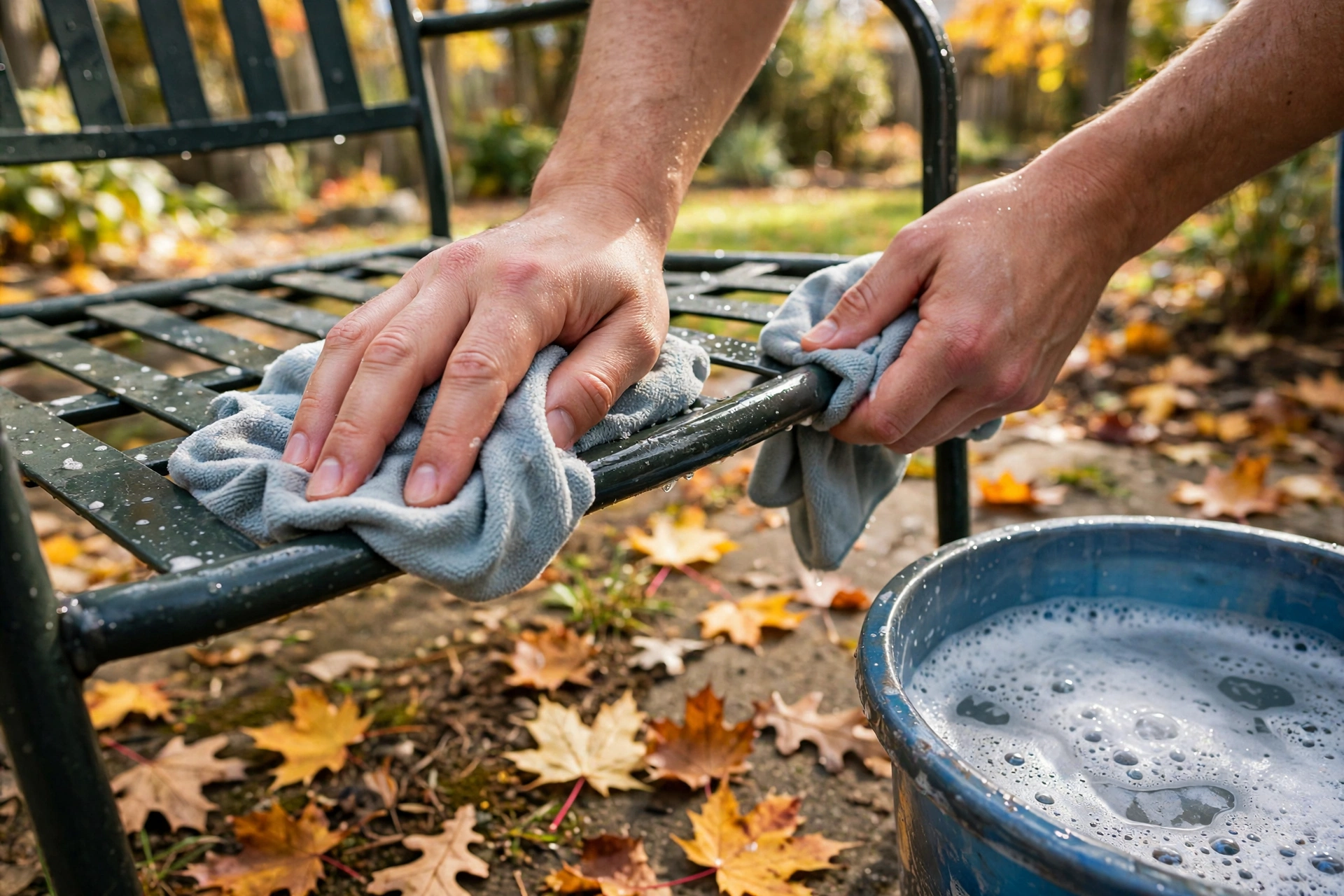
The whole cleaning pass on my setup — dining set, two loungers, side table — takes about 90 minutes with a podcast on. It is the single highest-value step here.
While everything is clean, walk the set with a wrench. October is when a loose bolt is a two-minute fix; April is when it is a snapped weld and a $60 replacement part. Tighten every bolt on the dining set and lounge chairs — aluminum frames work fasteners loose over a summer of sitting. Check welds and joints for hairline cracks, which is exactly how I lost those two armrests. Sand any rust spot on steel hardware to bare metal, hit it with a rust-inhibiting primer, and top with exterior paint. Oil umbrella hinges and any moving parts on the gazebo frame. My pop-up gazebo frame is powder-coated steel, and two seasons in it has zero rust — entirely because of this October pass. Steel does not forgive neglect, but it rewards about twenty minutes of attention.
Step 3: Cover what stays out
Not everything needs to come inside. My $448 retractable pergola stays put all winter — the powder-coated aluminum frame is built for it — but the canopy gets retracted, strapped, and covered with a fitted breathable cover. The breathable part matters: a cheap tarp traps condensation underneath, and trapped moisture rots fabric and pits metal faster than rain ever would.
Cover rules I live by:
- Breathable, water-resistant, fitted. Look for vents and drawcord hems. A cover that flaps in the wind is a sail.
- Strap it down. Wind is the underrated killer. My $249 pop-up gazebo weighs 38.58 lbs and has a 20-lb snow-load rating on the canopy — that canopy comes off and goes in the shed, and the frame gets anchored and covered. The snow-load spec is for snow, not for you leaving it up in a blizzard.
- Prop covers so water sheds. A flat cover pools water, pooled water finds seams, and seams leak. A cheap beach ball under the middle of a chair cover works embarrassingly well.
One more honest note: covers last two to three seasons. Budget a replacement every few years — a $40 cover protecting $1,000-plus of furniture is the cheapest insurance in this whole guide.
Step 4: Cushions and fabric go inside — or into the shed
This is the step I skipped the year everything went wrong, and it is the easiest one. Cushions, pillows, and any fabric canopy panels come off, get their final cleaning, and go somewhere dry: garage, basement, or a storage shed.
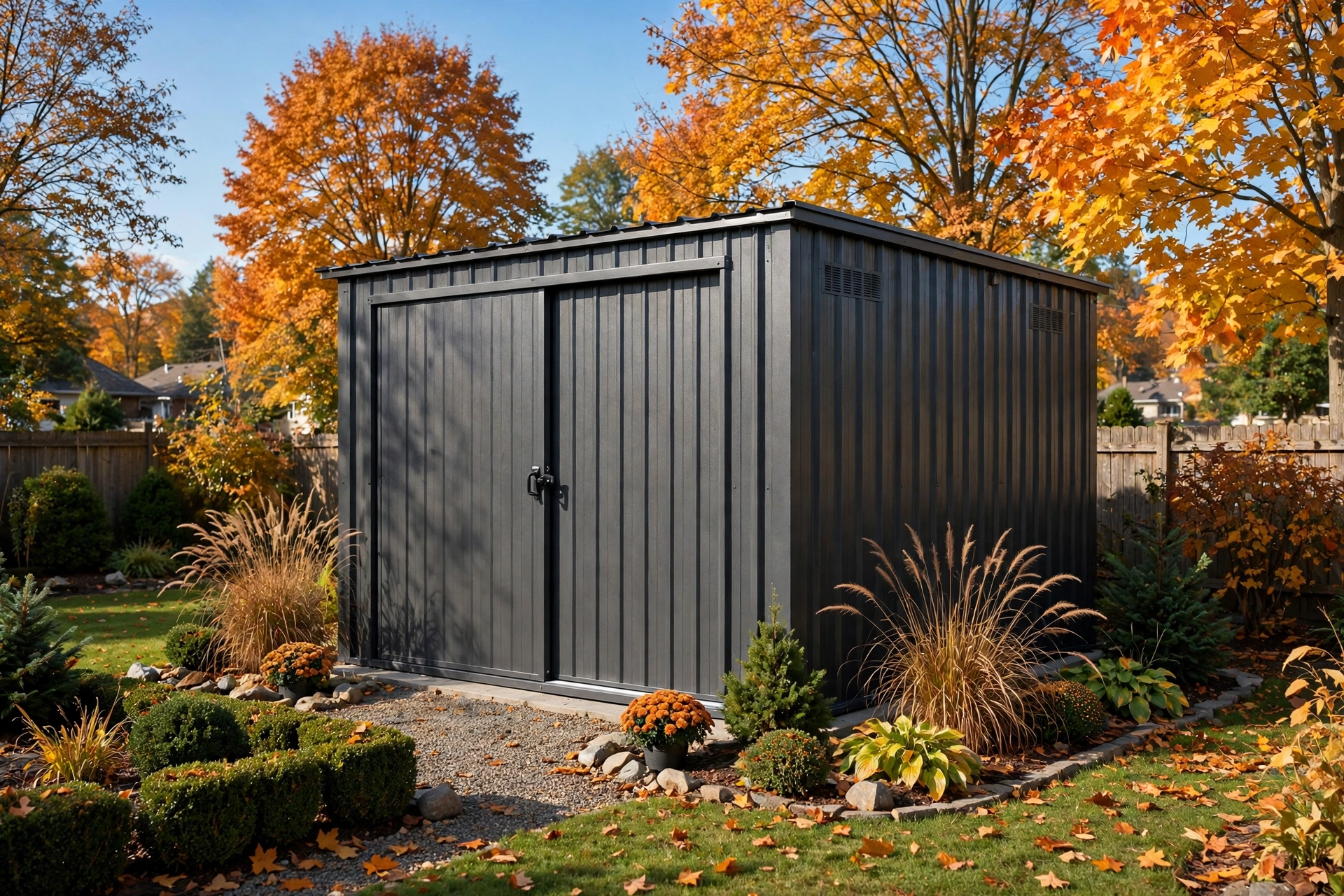
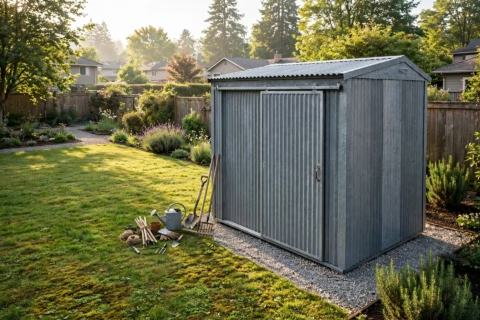
I keep mine in a $380 6ft x 4ft outdoor metal storage shed — 24 square feet of galvanized steel with sliding doors, which swallows every cushion, the gazebo canopy, and the grill cover with room to spare. If you have not seen the full breakdown, my outdoor storage shed buying guide runs the size math for exactly this kind of inventory. Store cushions off the floor if you can, leave a little airflow, and toss in a couple of moisture absorbers. That is the whole secret of outdoor furniture winter storage: dry, dark, and off the ground.
Why cushions specifically? Fabric holds water, water plus dark plus months equals mildew, and mildew on outdoor foam is essentially permanent. The frames can survive a winter uncovered — the cushions cannot.
Step 5: Anchor everything against winter wind
Winter wind does not ask permission. Before the first storm:
- Stack and strap lighter chairs together, or store them in the shed.
- Anchor the gazebo frame with its stakes or weights, even covered — a 38-lb frame becomes a kite in a 40-mph gust.
- Lay umbrellas flat or store them. An open patio umbrella in a winter storm is a structural experiment you do not want to run.
- Move planters and decor off the patio edge where ice can send them sliding.
My pop-up gazebo review has the full anchoring story — including the night a spring storm tried to relocate it. Winter is the same lesson with colder consequences.
The storage math — and why replacement season is a business model
Rough math, flagged as rough. My backyard inventory: a $490 patio dining set, a $448 retractable pergola, and a $249 pop-up gazebo — $1,187 total, not counting loungers and the grill.
Industry sources put quality patio furniture lifespans at 15+ years with care — cast aluminum 15+ years, synthetic wicker 15+ years, wrought iron 25+ (Today’s Patio, 2023) — while homekitdecor notes that one in three homeowners replace their patio furniture within five years, often simply because they did not know how to take care of it. Do the per-year arithmetic on my inventory: $1,187 over 5 years is $237 a year. Over 15 years it is $79 a year. That afternoon of winterizing is worth roughly $158 a year in avoided replacement, every year.
The $380 shed amortizes into the same picture. Over ten years it is $38 a year to protect $1,187 of furniture — and it also stores the mower, the bikes, and the holiday bins. I wrote up the full size math when I bought it; the storage payback beat a monthly unit by a mile.
The replacement cycle is not an accident — it is the industry’s favorite customer. Expert Market Research puts the US outdoor furniture market at about $6.49 billion in 2025, growing around 5.6% a year to roughly $11.19 billion by 2035. Research and Markets found that 59% of US consumers planned to buy new outdoor furniture in 2025, with Millennials leading at 76% intent. And Renub, citing the National Retail Federation, notes that spring and early summer are the peak outdoor furniture shopping seasons — which is exactly when everyone discovers what winter did to their sets and rushes to replace them. The stores count on you forgetting this checklist. A weekend of cleaning and covering is the entire difference between you and the replacement rush.
The verdict: winterize outdoor furniture before the first frost
Three Octobers since the mildew spring, and the setup looks essentially new. Total annual investment: about four hours, one $40 cover every few years, and a $380 shed that earns its keep year-round. The pergola canopy is still crisp, the gazebo frame has no rust, and not a single cushion has gone green since. Winter does not damage furniture — winter damages furniture you ignored. Do the five steps, and April you will thank October you.
Everything in my routine lives at FLNORW MALL: the $380 outdoor storage shed that holds the whole winter inventory, the full outdoor storage shed buying guide with size math, my $249 pop-up gazebo review with the anchoring story, and my $448 retractable pergola review for the frame-care details. Start at the FLNORW MALL homepage and search any of them by name.