I Bought a $448 Retractable Pergola. Two Seasons Later, Here’s the Honest Verdict.
Our patio faces west, which meant that from about 2 p.m. every July afternoon, our outdoor furniture sat baking in full sun like a car parked at the mall. We ate dinner inside with the blinds drawn, looking out at a backyard we were paying a mortgage for and could not use. My wife finally put it plainly: we were renting our own patio to the sun. Two weeks later I bought a retractable pergola — the 10×10 Ft Outdoor Patio Retractable Pergola from FLNORW MALL at $448. Two full seasons later, here is the honest accounting: what it is, what fits under it, what assembly is really like, and whether 100 square feet of backyard shade was worth it.
What a $448 retractable pergola actually is
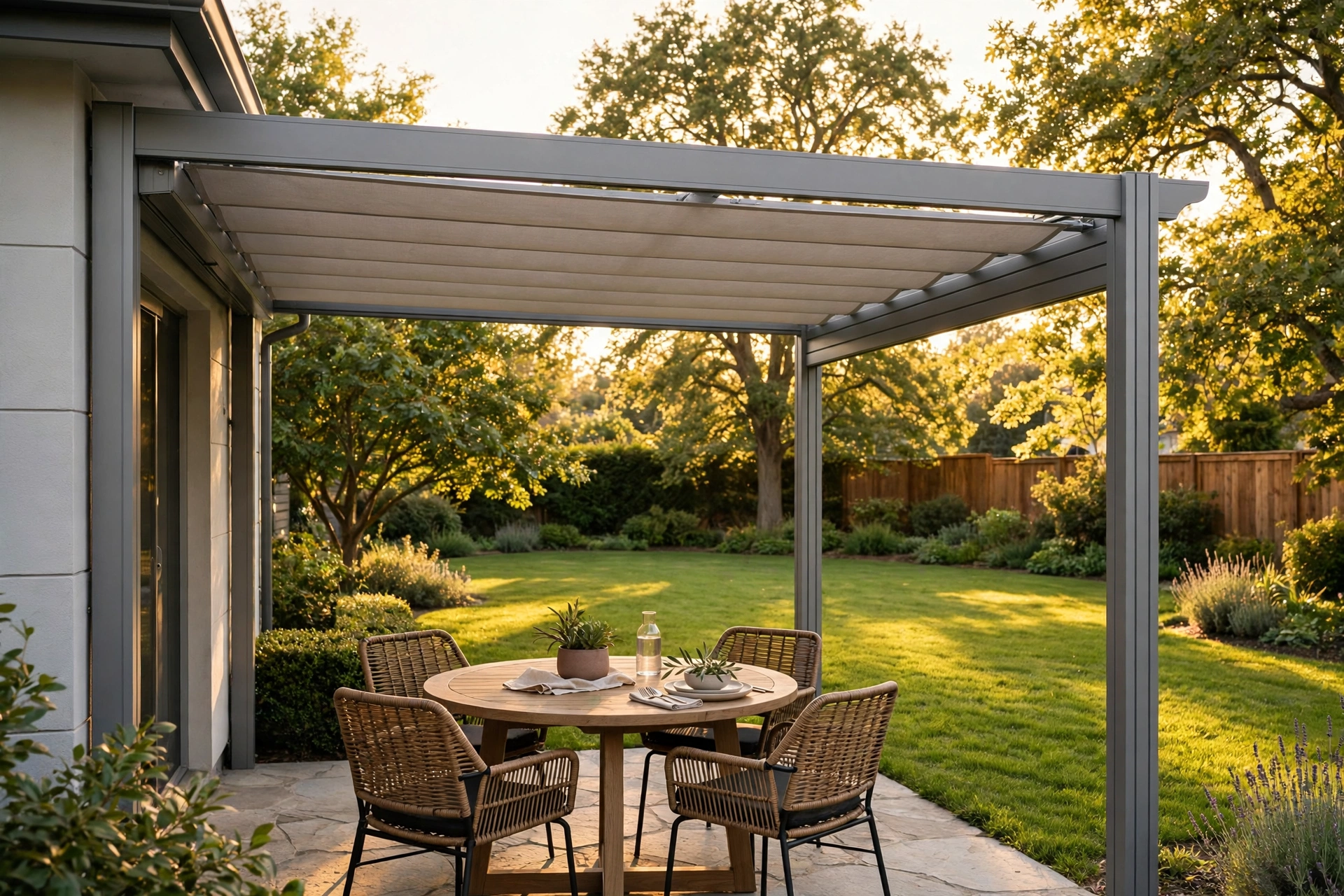
Lets get the facts on the table first, all from the product page (item code W41940784). The assembled footprint is 116 × 116 × 85 inches — a true 10-by-10-foot square standing 7 feet 1 inch tall. The frame is rust-resistant powder-coated aluminum, with a 2.54-inch foot tube and a 7.09-inch foot chassis for stability. The whole thing weighs 59.1 pounds — I expected something that needed a crew, and it does not.
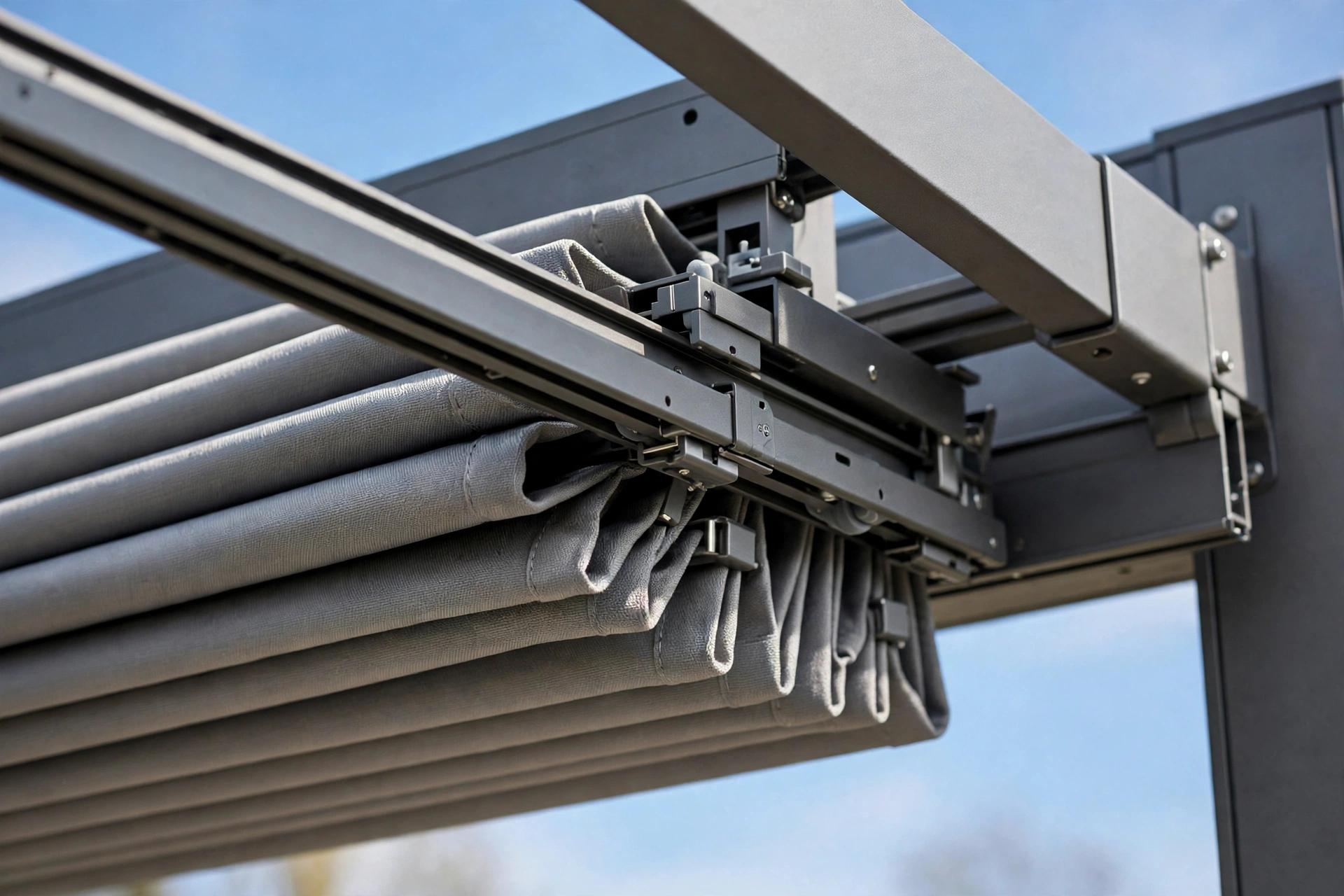
The canopy is high-quality polyester, protecting against sun and light rain — and that “light rain” qualifier turns out to be load-bearing, as I will explain. The headline feature is the retractable canopy: it slides along the frame so you can open it for morning sun or close it against the afternoon blast. Parts come labeled with numbers, and the page promises assembly in under 60 minutes.
It is not a contractor-built cedar pergola, and it does not pretend to be one: aluminum frame, fabric canopy, bolt-down feet. At roughly one-sixth the installed price of a custom build, the expectations it sets are very friendly.
The shade math: 100 square feet, and what fits under it
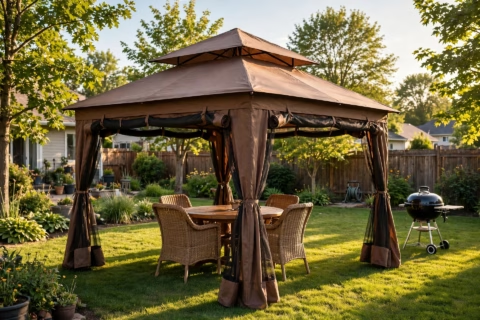
Ten by ten is 100 square feet of shaded floor, and square footage is the only number that matters when you are deciding between shade products. Our round 5-piece patio dining set — table plus four chairs — sits under it with roughly two feet of walking room on every side. The rule I use now: your furniture footprint should be about 20% smaller than the shade footprint, and 10×10 passes that test for any normal dining set.
The 85-inch height is the Goldilocks number. I am six feet tall and I walk under the crossbars without ducking. Much lower and a pergola feels like a tunnel; much taller and the late-afternoon sun slides straight under the canopy edge. Seven feet one inch gives you headroom without giving away the shade.
One measurement people forget: the assembled 116 × 116 inch footprint needs about 11 × 11 feet of clear patio or lawn, including margin for the anchor bolts. Measure twice, order once — a pergola is not furniture you rearrange on a whim.
Assembly day: the truth about “under 60 minutes”
We put it up on a Saturday morning — me, my brother-in-law, and a thermos of coffee. The numbered parts genuinely help; the frame goes together in a way that feels designed rather than improvised, which is not something I say about flat-pack furniture often. At 59 pounds, two adults can lift and position the whole skeleton without heroics.
The honest number: about 90 minutes with coffee breaks. The “under 60 minutes” claim is achievable if you have done one before and skip the coffee. The step that eats the clock is the one the page undersells: anchoring. Those 7.09-inch foot chassis bolt down, and on our concrete pavers that meant renting a masonry drill bit for the afternoon. Wood deck? Lag bolts and twenty minutes. Either way, plan the anchoring first — everything else is the easy part.
Retractable vs fixed canopy: the slider earned its price
The retractable canopy is the whole reason to pick this pergola over a fixed-roof model. A backyard is not a static problem: morning coffee wants sun on your face, the 2 p.m. western blast wants a roof. A fixed canopy gives you one answer all day; the slider gives you the right answer for each hour. We run it closed from noon to about 6 p.m. in summer, open in the mornings and on mild days when we want the sky.
That flexibility is also a weather strategy: light rain is fine, the polyester sheds it, but I retract the canopy before any real storm. A 100-square-foot fabric panel in a gusty storm becomes a sail, and no $448 kit out-engineers that. Retract, wait out the storm, re-extend — thirty seconds of work.
Pergola vs gazebo vs umbrella: picking the right shade tool
I now own or have owned all three, so here is the field guide I wish someone had handed me. The solar LED patio umbrella at $129 shades about 54 square feet over one table and is the right answer when you need shade for a single dining set and want it portable — I wrote a full review of mine two summers in, and the built-in lights are genuinely the best part. But it is one table, one angle, and it needs a heavy base.
The 11×11 pop-up gazebo at $249 covers 121 square feet with a powder-coated steel frame and removable mesh netting — a more enclosed, tent-like feel that is great for events or bug-prone evenings. It sets up fast but reads as a temporary structure.
The retractable pergola at $448 covers 100 square feet as a walk-under structure that stays up all season. It defines an outdoor room rather than a tent, and the retractable canopy handles sun angles an umbrella cannot. If you are covering a bigger area, the 13×10 retractable pergola at $468 buys you 130 square feet for twenty dollars more — the better pick for large patios, in hindsight.
My rule of thumb: one table, pick the umbrella. Events and bugs, pick the gazebo. A permanent-feeling outdoor room you will use daily, pick the pergola.
Two seasons later: the honest durability report
The powder-coated aluminum frame is the reason I would buy this again: two seasons of rain, sprinkler overspray, and one memorable hailstorm, and there is not a spot of rust or a chip in the coating. The anchor bolts I drilled into the pavers have not budged.
The polyester canopy held up better than I expected and worse than I hoped, which averages out to fine. The gray has not faded unevenly — no zebra stripes where the pleats fold — and spring pollen hoses off in two minutes. The honest footnote: polyester is a fabric, and fabric in weather is a wear item. After two seasons there are no tears and the sliding still glides, but I can see it being a replaceable part in year five or six rather than a lifetime component. For a kit at this price, that is fair.
Two annoyances worth knowing. First, in genuinely heavy rain the canopy fabric pools water between the rails if you leave it extended — the page says “light rain” and means it. My rule now: extended for drizzle, retracted for downpours. Second, wind: I retract the canopy when gusts get serious (my estimate: sustained winds above ~30 mph), because a pleated fabric panel is a sail no matter how good the frame is. The frame itself has shrugged off everything.
The money math: $448 against a contractor-built pergola
A professionally installed cedar pergola in this size typically lands in the low thousands — easily six to eight times the $448 kit price (estimates vary by region, but four-figure quotes are the norm). The custom build wins on longevity and lumber aesthetics; the kit wins on everything else.
Here is my per-use math, flagged as rough: over two seasons we have had roughly 140 days of real patio use under the pergola — dinners, work-from-home afternoons, one birthday party. That puts the cost at about $3.20 per day of shade so far, and every additional season drives it down. The umbrella it replaced cost less upfront but only shaded one table; the pergola shaded the whole scene.
The broader trend is real: the International Casual Furnishings Association reported that 59% of consumers planned outdoor living purchases in 2025 — and patios have stopped being decoration and become living space. A pergola is the cheapest structural way to make that room official.
The verdict
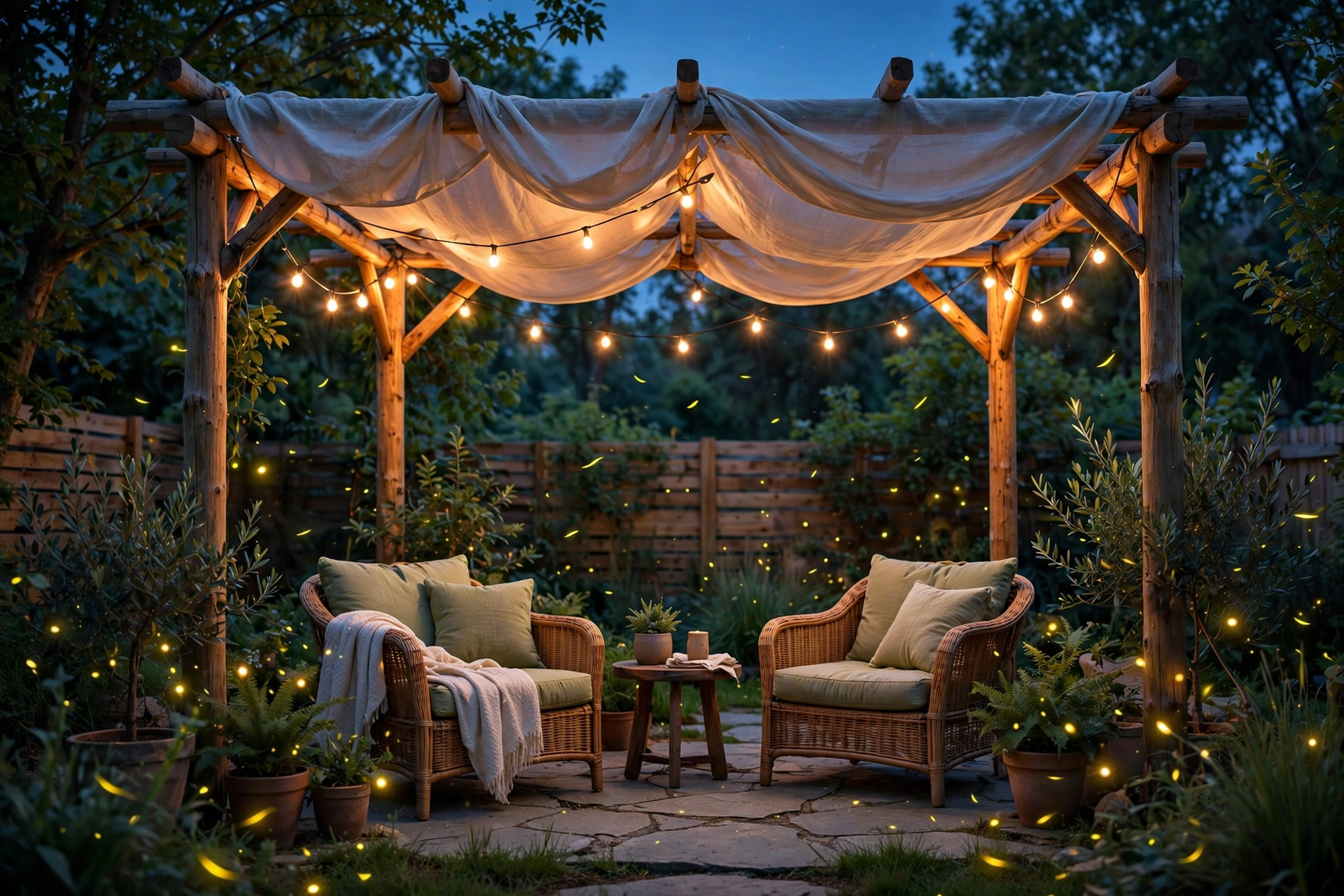
Two seasons in, the retractable pergola did the one thing I bought it for: it gave us our patio back. We eat outside most summer evenings now, my wife reads under it on weekend afternoons, and the string lights I hung under the canopy turned it into the room the house was missing. The $448 bought 100 square feet of usable outdoor space — and the frame shows zero signs of quitting.
Is it perfect? No. The canopy needs retracting in real storms, the polyester will eventually want replacing, and the 90-minute assembly is not the 60 minutes the page claims. But those are kit-honest trade-offs at a kit price. If you have a west-facing patio like mine and a backyard you are currently renting to the sun, this is the cheapest honest way to take it back.
Winter care routine, five minutes twice a year:
- Retract the canopy for winter in snow country — fabric plus snow load is a bad combination.
- Hose the canopy down each spring to clear pollen and dust before it bakes in.
- Check the anchor bolts every spring; frost heave can loosen them.
- Wipe the slider rails so the retraction stays smooth.
- Hang string lights under the canopy, never over it.
Ready to reclaim your patio? Get the $448 10×10 retractable pergola at FLNORW MALL — need more room? The 13×10 version at $468 covers 130 square feet. And if you are building out the whole outdoor setup, my solar LED patio umbrella review and standing patio heater review cover shade and heat for every season. Start at the FLNORW MALL homepage for this season outdoor picks.