Floor Lamp Buying Guide: 7 Rules I Wish I’d Known Before My First One
Three years ago I bought a floor lamp for $34 at a discount store, carried it home feeling clever, and set it next to my reading chair. That night I turned it on and immediately knew something was off. The shade hung at chin level when I sat down, the light blasted straight into my eyes, and the bulb it came with threw a cold, bluish glare that made my living room feel like a gas station at 2 a.m. I returned it the next weekend. That lamp taught me more than any lighting showroom ever did: a floor lamp is one of the few pieces of furniture where placement math matters more than style. Get the height, brightness, and bulb warmth right, and even a $50 lamp looks expensive. Get them wrong, and the prettiest arc lamp in the catalog becomes an eyesore. This floor lamp buying guide is everything I wish someone had told me before that first purchase.
Start With Height: The Eye-Level Rule
Most floor lamps sold in the US stand between 58 and 64 inches tall. That range exists for a reason, and it has nothing to do with ceilings. The rule lighting designers repeat: the bottom of the shade should sit roughly at your eye level when you are seated, about 42 to 48 inches off the floor on a standard sofa or armchair. At that height, the light pools over your book or your conversation, not into your retinas.
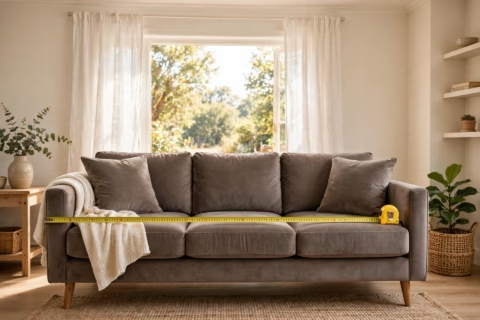
My $34 mistake was a 54-inch lamp with a short shade — when I sank into my reading chair, the bare bulb sat right at eye level. Before you buy, do the tape-measure test I do now: sit where the lamp will go, have someone hold a tape at your eye level, and write down the number. Compare it against the lamp’s listed height minus roughly 8 to 10 inches for the shade. If the math does not land within a couple of inches, keep shopping.
Arc, Torchiere, or Pharmacy: Pick the Shape First
Style is the last thing you should pick, not the first. There are really only three floor lamp shapes that matter for real rooms, and each one solves a different problem:
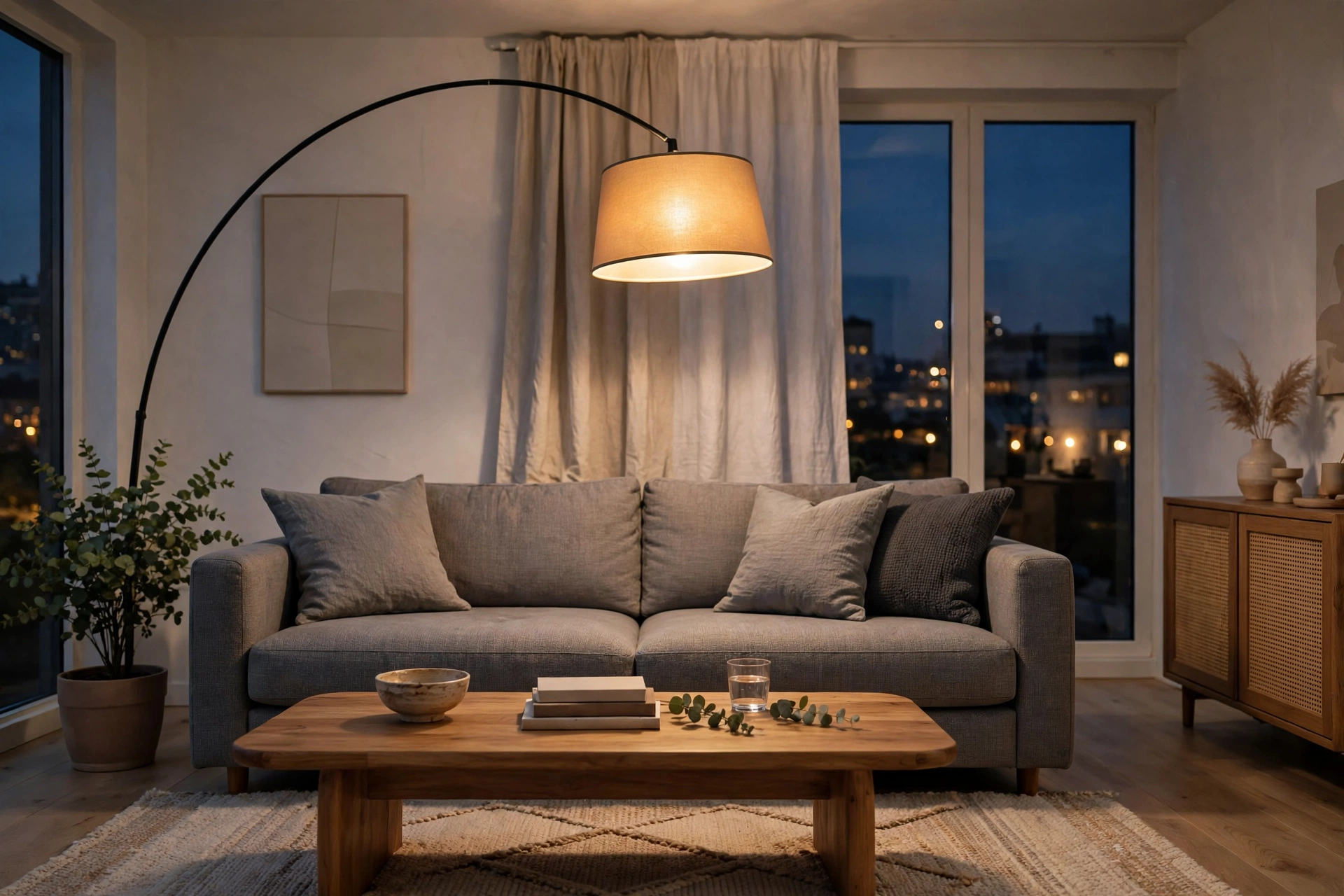
Arc floor lamps curve the light out over a sofa or reading chair. They are the best choice when you want reading light but have no side table to park a lamp on — the arc delivers the bulb exactly where you sit. They need the most floor space, usually a 3-foot arc footprint, so measure before you fall in love.
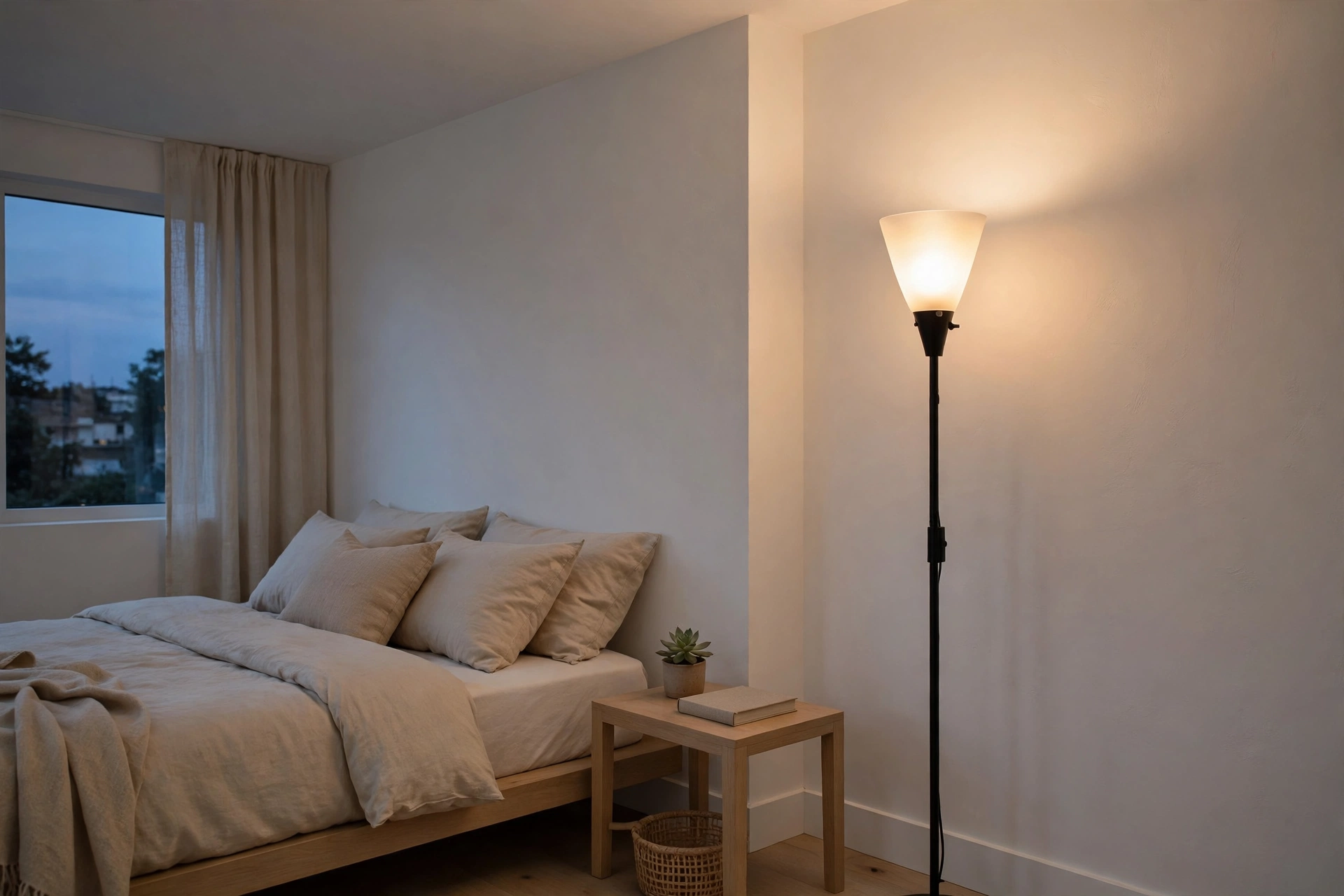
Torchiere floor lamps point their shade upward and bounce light off the ceiling. They are ambient-light machines: one torchiere in a corner can raise the whole room’s glow without a single harsh hotspot. If your living room has one sad overhead light and nothing else, a torchiere is the single biggest upgrade per dollar I know.
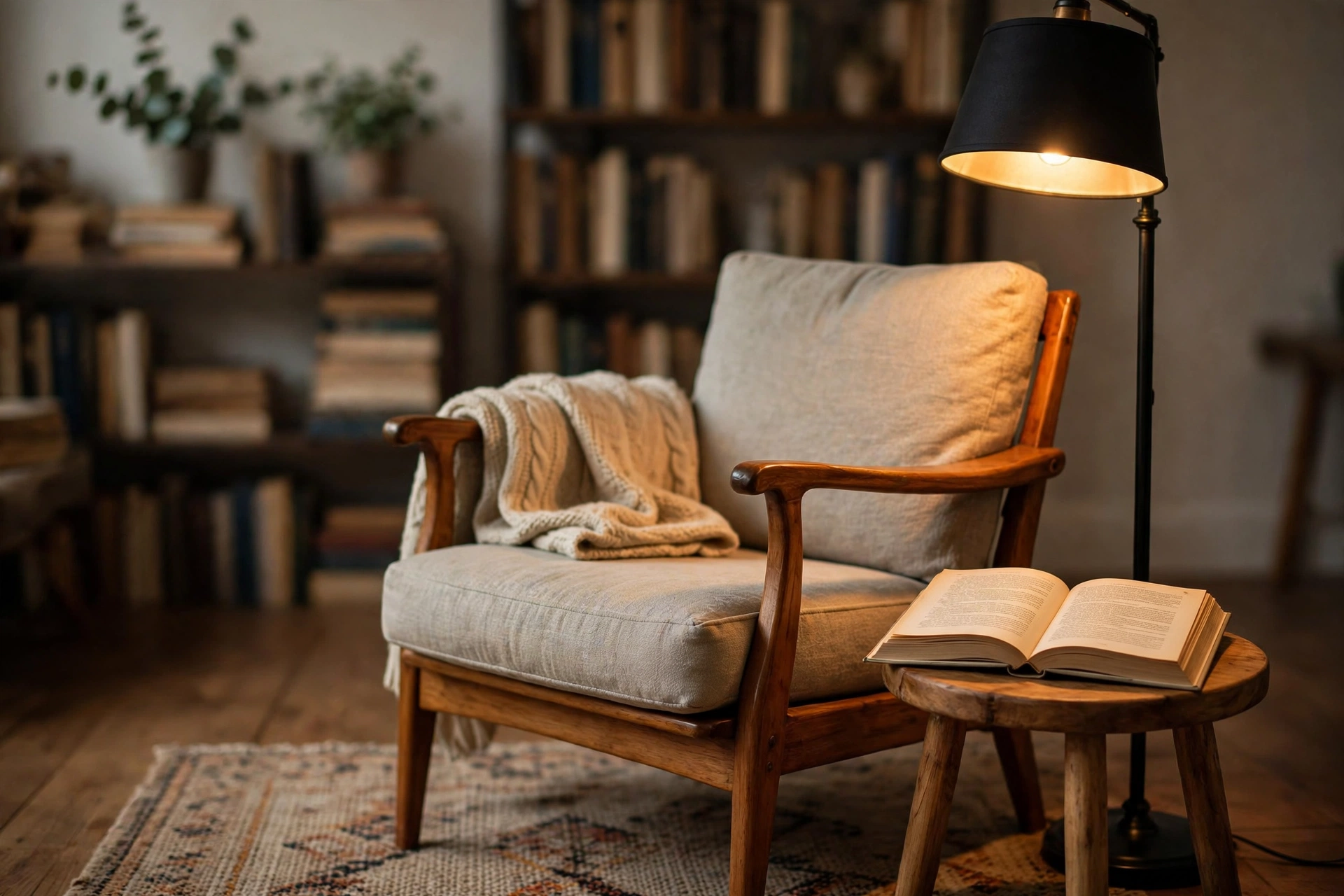
Pharmacy and task floor lamps are the skinny, adjustable ones with a small shade you can aim. They tuck behind an armchair or next to a desk and throw a focused pool of light for reading or crafting. They are the cheapest of the three and the easiest to place.
Lumens, Not Watts: How Bright Is Bright Enough
Ignore wattage entirely — it measures energy use, not brightness. What you want is lumens. A classic 60-watt-equivalent LED bulb puts out about 800 lumens, and for most living rooms that is the sweet spot for a single floor lamp. For a reading chair, 450 to 800 lumens aimed at your book is plenty; anything dimmer and you will be squinting, anything much brighter in a small shade and the glare gets harsh.
Here is the number that changed how I buy bulbs: an ENERGY STAR–certified LED bulb uses up to 90% less energy than a traditional incandescent bulb, according to ENERGY STAR. A typical 9-watt LED floor lamp bulb running four hours a night costs roughly $2.25 a year to power at average US electricity rates — my own back-of-the-envelope math, so call it an estimate. The old 60-watt incandescent version of the same light would cost close to $15 a year and need replacing every 12 months. The bulb math alone pays for a better lamp.
The 2700K Sweet Spot: Warm Light vs. Daylight Bulbs
Bulb color is measured in Kelvins, and this is where most people go wrong. 2700K to 3000K is warm white — the color of lamplight, candles, and cozy evenings. 5000K is daylight white, and in a living room after 7 p.m. it feels like an interrogation room. My gas-station lamp came with a 5000K bulb. Swapping it for a 2700K LED would have fixed half my complaints for $8.
My rule now: 2700K for living rooms and bedrooms, no exceptions. If you want a lamp that does double duty for daytime reading and evening wind-down, buy a dimmable bulb — dimming a warm LED makes it feel even warmer, which is exactly what you want at night. Skip the “daylight” bulbs entirely unless the lamp lives in a home office where you need to stay alert.
Where to Put It: Three Placements That Work in Every Living Room
After moving my lamp around the room for a week like a chess piece, I landed on the three placements that work in nearly every living room I have ever been in:
1. Beside the reading chair. The classic. Put the lamp 18 to 24 inches from the chair’s arm, shade bottom at your seated eye level, light falling over your shoulder onto the book. This is the pharmacy-lamp home run.
2. In the dark corner behind the sofa. Every living room has one — the corner the overhead light never reaches. An arc lamp here curves light over the sofa for reading; a torchiere here bounces light off two walls and the ceiling at once. Either way, the room instantly feels finished.
3. The bedroom corner. A torchiere in a bedroom corner replaces a harsh ceiling light for the last hour of the night. I moved my good lamp into the bedroom for a month as an experiment and nearly kept it there — falling asleep to bounced warm light instead of a glaring fixture was a genuine upgrade.
Five Rookie Mistakes I See in Every Rental
I have helped three friends pick floor lamps since my $34 disaster, and the same mistakes keep showing up. Run through this list before you check out:
- Buying the lamp before measuring the chair. Height is a math problem, not a vibe. Tape measure first, cart second.
- Matching the lamp to the room instead of the task. Decide what the lamp must do — read, glow, or both — then pick the shape.
- Keeping the bulb that came in the box. Most included bulbs are harsh 5000K or dim novelty bulbs. Budget $8 to $12 for a proper 2700K LED.
- Placing it against a dark wall. Light needs something to bounce off. A torchiere next to a navy wall loses half its magic; pull it toward the corner where two light walls meet.
- Forgetting the switch. A lamp whose switch is behind the sofa is a lamp you will never turn on. Foot-switch or pull-chain within reach, always.
The $60 Math: What a Floor Lamp Really Costs Over Ten Years
Let me do the cost-vs-value math the way I wish someone had done it for me. A decent $55 floor lamp with a $10 dimmable 2700K LED bulb costs $65 out the door. Electricity runs about $2.25 a year (my estimate, four hours a night at average US rates). The LED bulb lasts 10 to 15 years at that usage, so you may never replace it. Ten-year total: roughly $87.
Now the cheap route: a $30 lamp with a flimsy socket that dies in year three, a second $30 lamp to replace it, incandescent bulbs at $15 a year in power, and new bulbs every year or two. Ten-year total: easily $200-plus — and you spent a decade reading under bad light. The $55 lamp is not the expensive choice. It is the cheap one, amortized. This is the same math that convinced me to stop buying disposable furniture altogether — the rug size guide I wrote earlier this year came from the same realization about measuring before buying.
The Verdict
A floor lamp is the rare purchase where seven rules beat a big budget: height at seated eye level, shape matched to the task, 450–800 lumens, a 2700K warm bulb, one of the three proven placements, and ten-year math that favors the $55 lamp over the $30 one. I have lived with my current arc lamp for two years now, and it is the piece of my living room I would replace first if it broke — which tells you everything about how much a well-chosen lamp matters. Browse the furniture collection to build the room around it, and check the FLNORW MALL blog for more room-by-room guides like this one.
Ready to fix your lighting? Start at the FLNORW MALL homepage — measure your chair tonight, pick your shape, and buy the bulb separately. Your evenings will thank you.