I Bought a $288 Walk-In Backyard Chicken Coop. Here Is the Beginner’s Guide I Wish I Had.
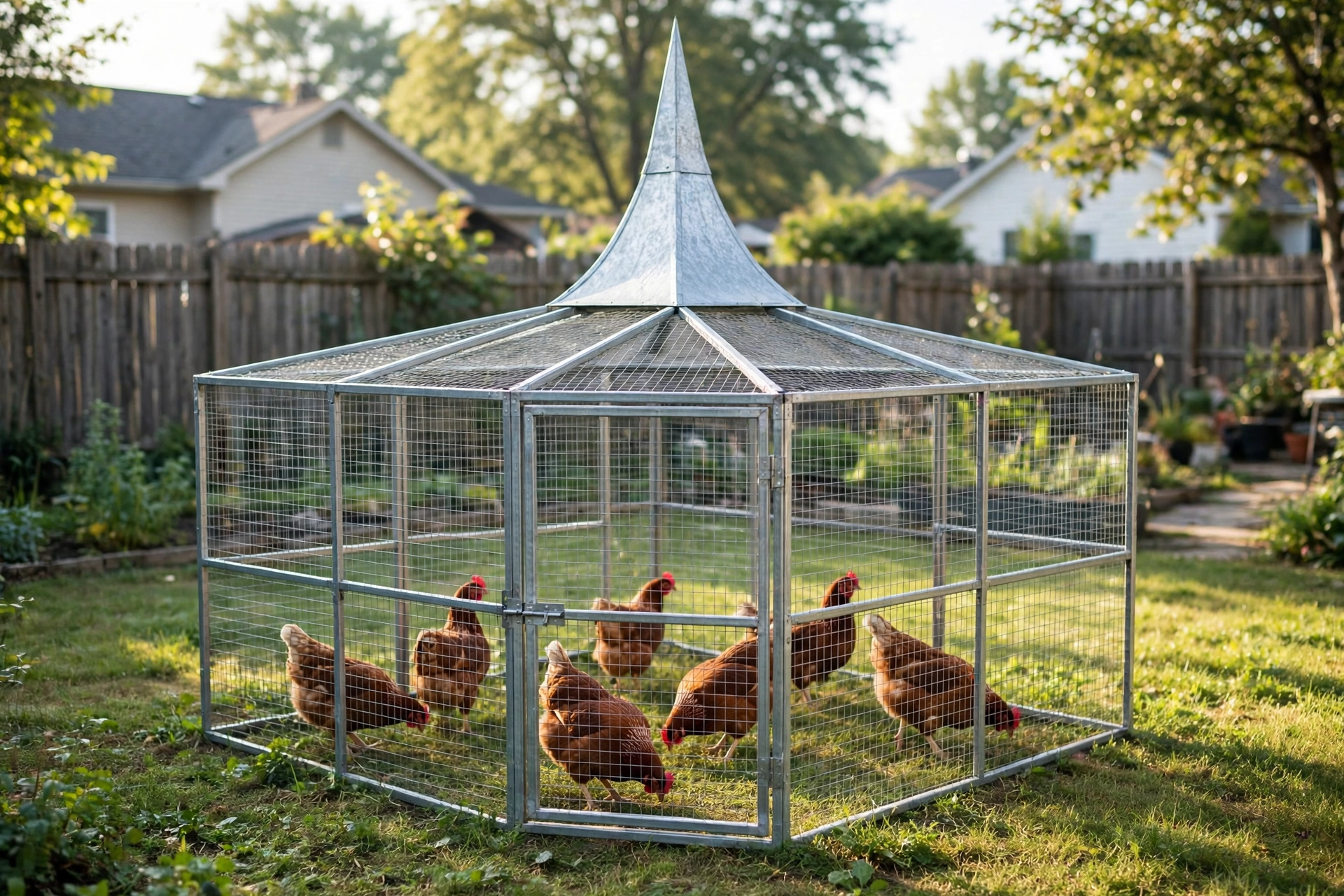
Six months ago I did the math on eggs and lost my mind a little. A dozen Grade A eggs peaked at roughly $6.22 in March 2025 (USDA Economic Research Service data, via earth911’s 2026 chickenomics roundup), and my family eats about two dozen a week. I am not the only one who cracked: the American Pet Products Association counted about 11 million U.S. households keeping backyard chickens in 2025, up 28% from 2023 and nearly double the 5.8 million in 2018. So I joined them. I bought a $288 walk-in backyard chicken coop — 10 feet long, 13 wide, 6.4 tall — and six hens moved in last spring. Here is everything the first season taught me, including the mistakes.
The egg math that sold me on hens
Start with the grocery bill, because that is where I started. Two dozen eggs a week at the March 2025 peak price of $6.22 a dozen is about $650 a year. Even at a calmer $4 a dozen, it is $416. That is real money disappearing into a cardboard carton.
Now the hen side. Six laying hens, each giving roughly five eggs a week across a 45-to-50-week laying year, produce something like 1,350 to 1,500 eggs — call it 112 to 125 dozen. At $4 a dozen, that is $450 to $500 of egg value a year, my rough estimate. Layer feed runs me about $22 a month, or $264 a year. Startup costs: the $288 coop, $5-a-chick pullets, a feeder, a waterer, and bedding — roughly $400 all in, my estimate.
The honest verdict on the money: year one roughly breaks even, maybe slightly ahead. Year two onward, with the coop already paid for, the hens beat the grocery store by a few hundred dollars a year. The USDA’s own numbers say I am riding a wave — the APHIS Backyard Animal Keeping 2024 study (published September 2026) found 6.7% of U.S. adults now keep poultry, and in Denver, chicken ownership rose from 0.7% of adults in 2012 to 2.4% in 2024. Chickens are not a fringe hobby anymore; they are a line item in the family budget.
What $288 buys: the walk-in coop specs
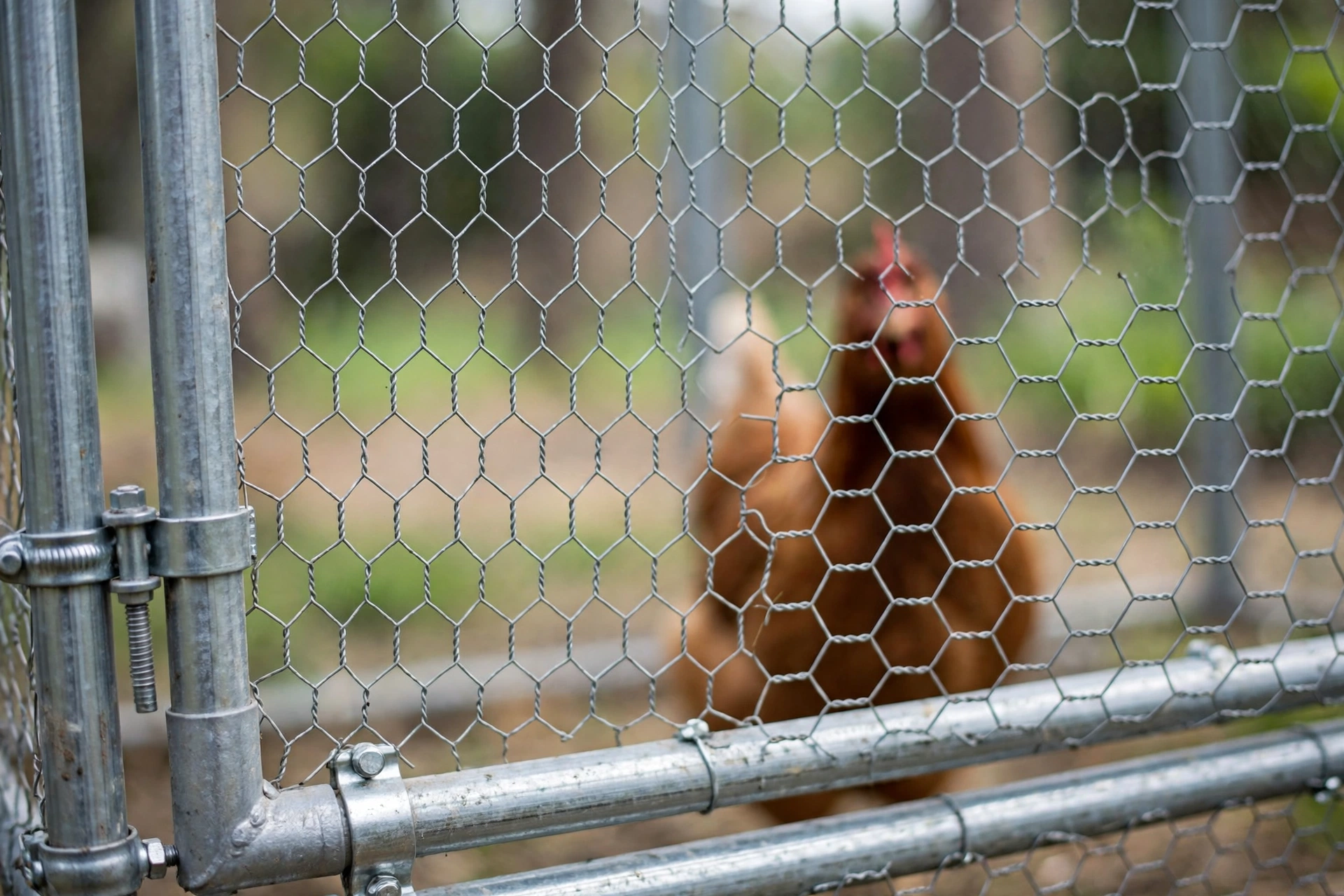
I shopped coops for two weeks before I bought, and the spec sheet on this one is what closed it. The walk-in metal chicken coop measures 10 feet long, 13 feet wide, and 6.4 feet tall — 130 square feet of covered run. The frame is 1.26-inch galvanized steel pipe, the roof is 210D waterproof, UV-resistant Oxford cloth in a spire shape that sheds rain, and the walls are PVC-coated hexagonal wire mesh. It weighs 71.6 pounds, bolts together, and the product page lists it at $288.00, InStock, item W112941609.
The number that matters most is 6.4 feet. I am 5-foot-11, and I walk into this run standing fully upright, feed scoop in hand, without ducking. Every small wooden hutch I looked at would have had me crouching or kneeling to clean, feed, and catch a sick bird. If you have a bad back or bad knees — or plan to keep chickens for more than one summer — buy the height first and the looks second.
The space math: 130 square feet and the 10-square-foot rule
Backyard chicken guides repeat one rule of thumb more than any other: about 4 square feet per bird inside the coop and 10 square feet per bird in the run. It is the standard extension-service guidance, and it is the math I used.
At 130 square feet, this run comfortably holds 10 to 13 birds by that rule. I keep six, and the surplus space is the whole reason cleaning takes me 15 minutes a week — I can walk the full perimeter with a rake, and the droppings never concentrate enough to stink. Crowded runs get muddy and smelly; space is odor control.
Height buys you a second kind of space: air. A 6.4-foot peak over 130 square feet holds a lot of air volume, and ammonia from droppings dissipates instead of hanging at beak level. My hens chose to dust-bathe in the middle of the run all summer, which is chicken for “the ventilation is fine.”
Assembly day: 71.6 pounds of steel pipe
The shipping box is a flat 78 by 12.2 by 6.3 inches at 77 pounds — it fit in my SUV with the seats down, barely. Assembly is a bolt-together job: steel pipes, corner connectors, mesh panels that bolt to the frame, then the Oxford cover stretched over the spire roof. My neighbor and I did it in about two and a half hours on a Saturday. The included instructions are genuinely usable, which is not always true at this price.
Three tips from the build. First, lay out every pipe and count them before you start — the 1.26-inch poles all look alike and the instructions assume you sorted them. Second, assemble the spire roof frame on the ground, then lift it onto the wall frames; it is light and awkward, and two people make it a one-minute job instead of a twenty-minute fight. Third, stake or anchor it on day one. At 71.6 pounds with a fabric roof, this coop is a sail in a real gust. I drove ground anchors at all four corners before the hens ever moved in, and it has not budged through two summer thunderstorm lines.
One honest note on the cover: the 210D Oxford cloth sheds rain beautifully and the spire shape means water, leaves, and debris slide off instead of pooling. But it is a fabric cover, not a barn roof. I take mine down before the first heavy snow each winter and put it back up in spring — ten minutes of work to protect a $288 purchase. That is my practice, not a manufacturer rating; the product page makes no snow-load claim, so I do not invent one.
Metal walk-in vs the $178 wooden hutch
The other coop I seriously considered was the solid wood chicken coop at $178: fir construction, kiln-dried with waterproof paint, 35 by 21 by 25 inches, 20 pounds, assembles with just a screwdriver. It is a handsome little hutch, and for two or three bantams — or as a brooder, a hospital cage, or a grow-out pen for chicks — it is arguably the better buy.
But run the per-square-foot math. The wooden hutch gives you roughly 5 square feet of footprint for $178: $35.60 per square foot. The walk-in gives you 130 square feet for $288: $2.22 per square foot. They are different tools. The hutch is a bedroom; the walk-in is a bedroom plus a yard. My six full-size hens would have been miserable in the hutch within a month — and miserable hens stop laying.
The middle option exists too: a 113-inch wooden coop at $399 for keepers who want the farmhouse look. I chose function over looks, and a season in, I would make the same call.

Predator-proofing: the checklist I almost skipped
Here is the part of chicken keeping nobody puts on the box. A coop is only as good as its weakest gap, and predators are patient. This is my checklist, built from one season and a lot of reading:
- Check every mesh edge weekly. The PVC-coated hexagonal wire on this coop has small gaps that keep hens in and most predators out — but zip ties loosen and bolts back off. Five minutes with a wrench every Sunday.
- Apron the wire outward. I laid a 12-inch skirt of spare wire flat on the ground around the perimeter, pinned down, so anything that digs hits wire. Digging predators go for the fence line, not the middle.
- Upgrade the latches. Raccoons open simple slide latches the way you open a soda. I added carabiner clips to every access point — a $6 fix.
- Strap the cover in wind. The Oxford cover’s straps are fine in calm weather; in storm season I add two ratchet straps over the spire. Cheap insurance.
- Close the run at dusk. Hawks hunt by day and owls by night; the mesh handles both, but a locked-up routine handles the one time you forget.
One health note the USDA data backs up: the 2024 APHIS survey found that among backyard poultry keepers with young children, 65.3% always supervise handwashing for kids under five after leaving the poultry area. Chickens can carry Salmonella without looking sick. I keep a water jug and soap at the run door, and handwashing is non-negotiable in our house. Build the habit on day one.
Backyard reality checks before you buy
Two things to verify before the coop ships. First, check your local ordinance. Most U.S. cities allow hens — one public-health review found 93% of the 150 most populous cities permit them — but many ban roosters or cap flock size. A five-minute call to your city clerk beats a fine. Second, tell your neighbors. I brought eggs to both adjacent houses the first week of laying. Fresh eggs buy a remarkable amount of goodwill.
Also worth knowing: hens do not lay at peak forever. Expect strong laying for two to three years, then a taper. My egg math above assumes the productive window. The coop outlasts the first flock, and the second flock of chicks costs less than one month of store eggs did at peak prices.
The verdict
One season in: six hens, roughly 110 dozen eggs by my count, zero escapes, one hawk scare where the mesh did its job, and 15 minutes of cleaning a week. The $288 walk-in backyard chicken coop solved the exact problem I bought it for — giving a beginner flock room to be chickens without turning my yard into a construction project. The height is the killer feature, the per-square-foot price embarrasses every wooden hutch I compared, and the assembly is a single Saturday.
It is not perfect. The fabric cover is a maintenance item, not a lifetime roof. The bolt-together frame needs a seasonal wrench check. And at 71.6 pounds, you will anchor it or you will chase it. None of that is a surprise if you read the spec sheet first. For a first-time keeper who wants six to ten hens and a coop that respects their spine, this is the right tier to buy in.
Ready to start your flock? Shop the $288 walk-in metal chicken coop at FLNORW MALL — and compare it with the $178 solid wood chicken coop if you are starting with just two or three birds. For the rest of the backyard, read my outdoor storage shed buying guide and my pop-up gazebo review, or browse the full FLNORW MALL collection.