I Compared a $300 Regular Toilet With an $800 Smart Toilet. Here Is the $500 Verdict.
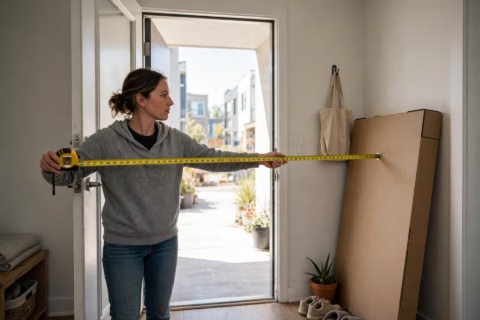
Our hall bathroom toilet was nineteen years old and flushed like it was doing me a favor. The tank sweated in summer, the flapper needed jiggling by October, and last month it finally gave up mid-flush with guests in the house. That embarrassment became an experiment: I replaced it with a solid $300 dual-flush one-piece toilet, and at the same time put an $800 smart toilet — heated bidet seat, auto open/close lid, warm-water wash — in our master bath. Two months, two bathrooms, one household, notes kept. Here is the $500 question answered honestly: what the extra money buys, what it does not, and which one I would buy again.
What the $300 regular toilet actually is
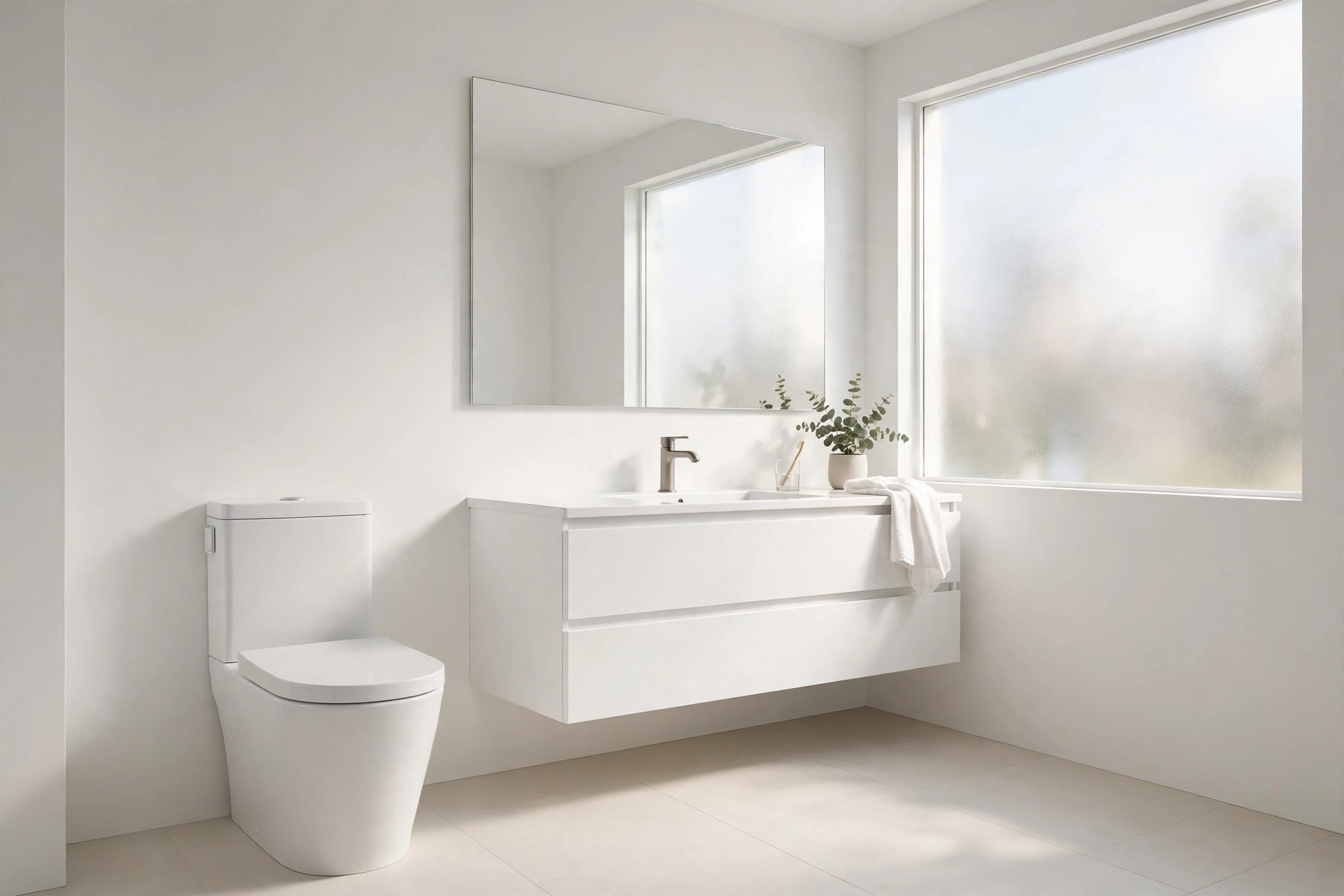
The regular toilet is FLNORW MALL’s 1.1/1.6 GPF dual-flush one-piece in gloss white — 27.17 inches long, 15.55 wide, 30.71 tall, 106 pounds of ceramic. One-piece means the tank and bowl are a single casting: no seam behind the tank collecting dust, no tank-to-bowl bolts to weep in ten years. The elongated bowl is the comfort shape most American bathrooms already have.
The dual-flush is the whole point of this price tier. Two buttons on top: a 1.1-gallon partial flush for liquids, a 1.6-gallon full flush for solids. The soft-close seat shuts with a fingertip and never slams — the first thing my wife noticed, and the feature she now refuses to live without. Installation was a normal Saturday: out with the old, new wax ring, set the 106-pound casting (a two-person lift, do not be a hero), bolt down, connect the supply line, done. No power, no app, no manual thicker than a pamphlet.
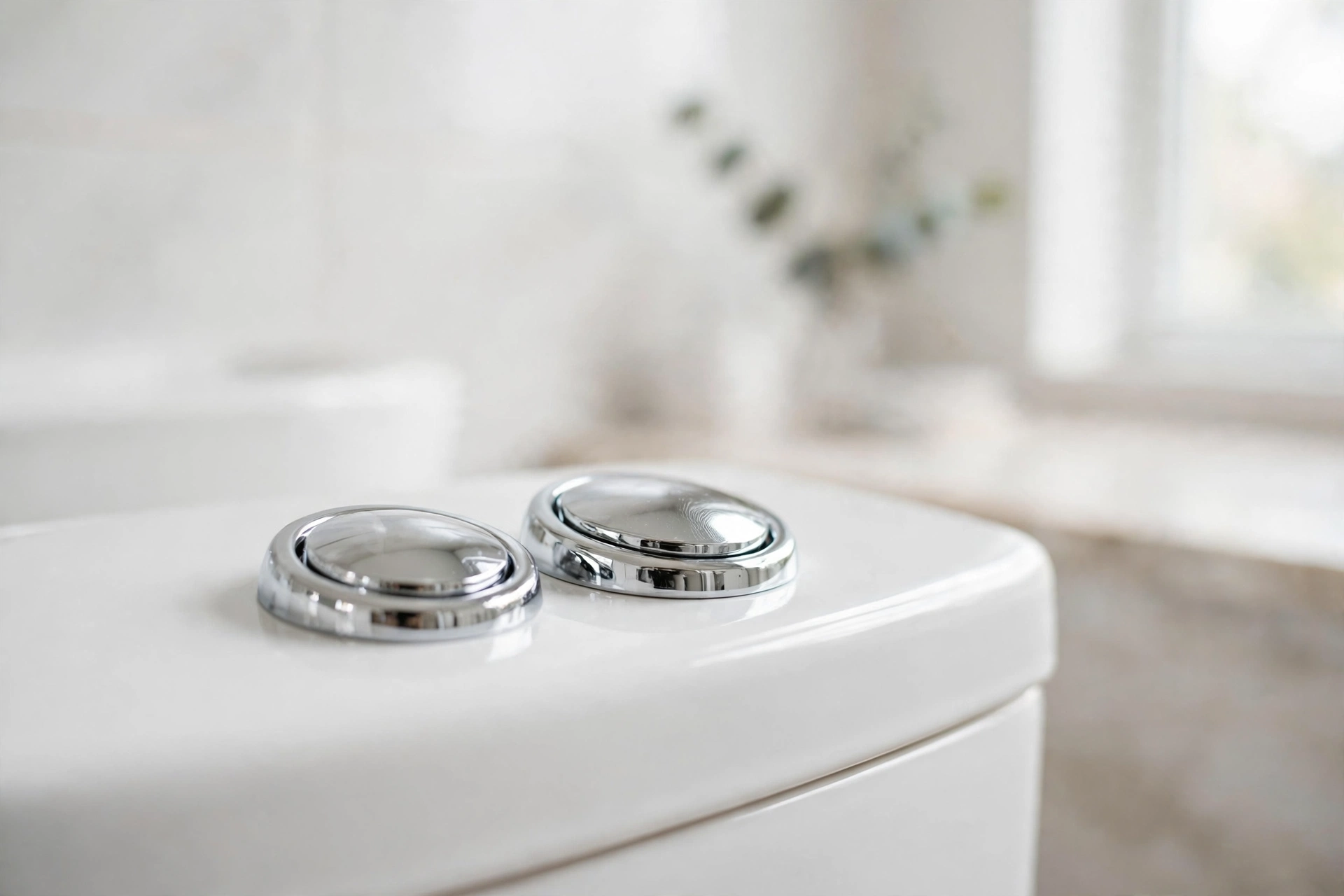
Two months in, the honest report: it flushes decisively, the partial flush handles its job, and the one-piece body wipes clean in one pass. It is, in the best sense, boring. Nothing to learn, nothing to charge, nothing to explain to guests.
What $800 buys: the smart toilet, feature by feature
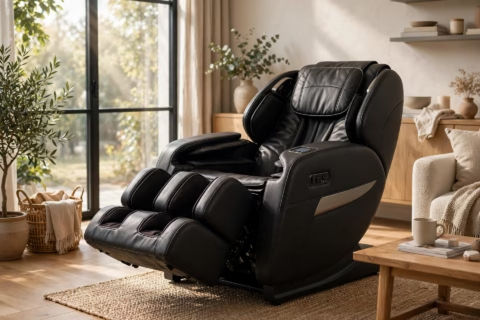
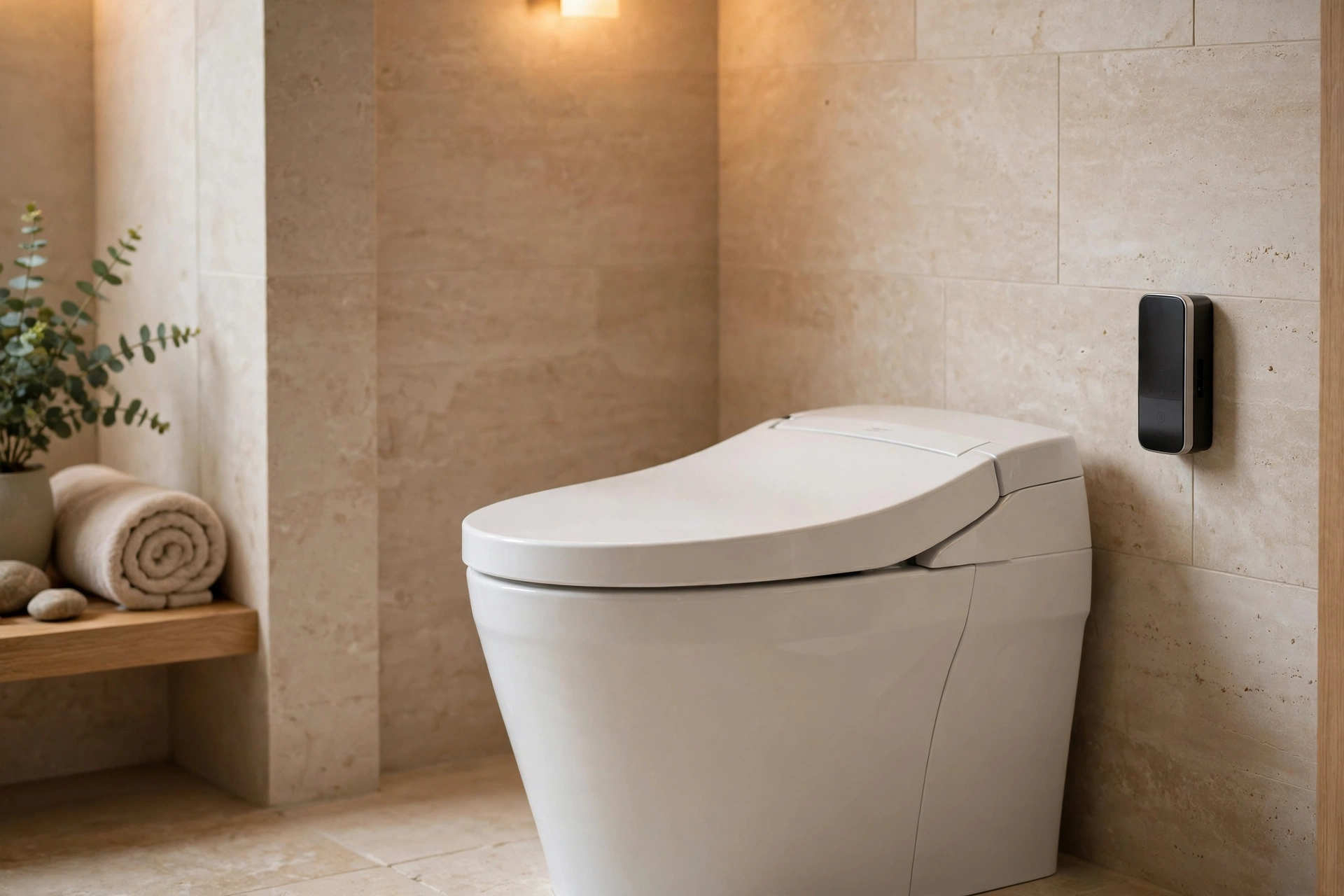
The smart toilet is a different animal wearing the same white ceramic. It is a tankless one-piece with a heated bidet seat, and the feature list reads like a gadget unboxing: auto open/close lid that lifts as you approach, warm-water bidet wash, warm-air dryer, wireless remote control, and a 1.28 GPF siphon-jet flush. It is smaller and lighter than the regular one — 26.38 x 15.35 x 18.11 inches, 79.36 pounds — because there is no tank at all; it flushes straight off your home’s water pressure.
That tankless design is the catch hiding in the spec sheet. The listing is explicit: it needs 0.15–0.75 MPa water pressure, a rough-in of at least 11.8 inches (a standard 12-inch works), a drain outlet between 3.94 and 4.72 inches in diameter, and — the one people miss — a GFCI outlet within reach of the toilet. No outlet, no heated seat, no bidet, no auto-lid. Our master bath had one behind the vanity; the cord reached, barely. If yours does not, that is an electrician visit before the $800 even starts working.
The flush math: dual-flush vs 1.28 GPF
Here is where the numbers get interesting, because both toilets are water misers — just differently. The EPA’s WaterSense program notes that toilets account for nearly 30% of an average home’s indoor water use, and that WaterSense-labeled models use 1.28 gallons per flush or less versus the federal standard of 1.6. Replacing an old 3.5 GPF dinosaur with a WaterSense model saves roughly 13,000 gallons and about $140 a year in water costs, per EPA estimates.
Our old toilet was exactly that dinosaur, so both new ones were going to win. But head to head: the smart toilet flushes a fixed 1.28 GPF every time. The regular toilet gives you 1.1 GPF for liquids — and in our house, roughly three out of four flushes are liquids (a rough estimate from two months of paying attention, which is exactly as scientific as it sounds). Weighted out, the regular toilet averages around 1.2 gallons per flush in real use, a hair better than the smart one’s fixed 1.28. The $800 toilet does not win on water. It wins elsewhere.
The install truth nobody puts on the box
The regular toilet installed like toilets have installed for fifty years. The smart toilet installed like a small appliance. The physical part was easier — 79 pounds, one piece, no tank to level — but the checklist was longer: confirm the 12-inch rough-in (ours measured 12 exactly, and the 11.8-inch minimum left no drama), confirm the drain outlet diameter fell in the 3.94–4.72-inch window, confirm water pressure in the 0.15–0.75 MPa band (city water, no problem; well-water homes should actually check this), and plug it into the GFCI outlet.
One honest snag: the bidet needs its own water feed via the included angle valve and hose, with 1/2-inch and 7/8-inch adapters in the box. It took an extra forty minutes and one trip under the sink. Not hard, but not nothing — and a reminder that the smart toilet has about six more failure points than the regular one. More parts, more things that can eventually need parts.
The smart toilet’s heated seat, tested on cold mornings
It is late October as I write this, and the mornings are just starting to bite. The heated seat was the feature I mocked and now defend. You do not notice it after the first week — that is the point. The bathroom stops being the coldest room in the house at 6 a.m. My wife, who runs cold the way some people run late, has declared it non-negotiable for every future bathroom we own.
The auto open/close lid is the party trick. Walk up, the lid rises. Walk away, it closes. Guests react in two stages: surprise, then the quiet question of whether their own toilet can be taught this. It never gets old, and the soft-close means the 2 a.m. bathroom trip is silent. Small thing. Big quality-of-life thing.
Two months of the bidet: the honest learning curve
I had never used a bidet before this toilet, so take this as a beginner’s report. The warm-water wash is genuinely pleasant once you stop bracing for cold — the water heats quickly, and the wireless remote sits on the wall where your hand expects it. The warm-air dryer works, with a caveat: it is warm air, not a towel, so a full dry takes longer than you expect. We still keep toilet paper; we just use dramatically less of it.
How much less? Rough math, flagged as rough: our household went from a 24-pack roughly every five weeks to one every nine or so. At about $25 a pack (my estimate from our usual warehouse buy), that is on the order of $100 a year not spent on toilet paper. Your house will vary — but the direction is unmistakable, and it is the quietest payback line in the whole comparison.
The learning curve is real but short: one week of remote fumbling, then muscle memory. The one thing I would change: I wish the remote had a bit more tactile difference between buttons for middle-of-the-night use. First-world complaint, fully acknowledged.
The five-year cost math
Let us put the $500 gap on a spreadsheet. Both toilets replace a 3.5 GPF relic, so both capture the EPA’s roughly $140/year water savings — call that a tie. The smart toilet adds the toilet-paper savings, roughly $100/year in our house (estimate, flagged). Electricity for the heated seat and dryer: I watched the bill for two months and could not find the bump — the seat cycles, the dryer runs a minute at a time. Negligible, by observation.
So the smart toilet pays back roughly $100 a year against its $500 premium: a five-year payback, after which it is pure savings — plus the comfort features the whole way. The regular toilet, meanwhile, costs $500 less on day one and asks for nothing ever again: no power, no filters, no remote batteries, no extra plumbing connections. Over five years, the regular toilet is the cheaper toilet by about the price of a nice dinner out per year. Over ten, the math flips if the smart unit holds up — which is the real bet you are making.
One more line item: longevity risk. The regular toilet is ceramic, a flapper, and a fill valve — parts that exist in every hardware store on earth. The smart toilet’s bidet module, sensors, and electronics are proprietary. In year eight, if something fails, you are calling the manufacturer, not the hardware store. That is the honest price of the $500 beyond the $500.
The verdict: which toilet won my bathroom
Here is the uncomfortable truth for a comparison article: I would buy both again, for different bathrooms. The $300 dual-flush one-piece is the right toilet for the hall bath, the kids’ bath, the rental, the guest bath — anywhere you want set-and-forget reliability, the lowest lifetime cost, and zero explanations to visitors. It is the smart money, no pun intended.
The $800 smart bidet toilet is the right toilet for the bathroom you use every morning. The heated seat, the auto lid, the warm-water wash — none of them are necessary, and all of them are the kind of daily comfort that compounds. The five-year payback on toilet paper alone makes the $500 premium defensible; the comfort makes it desirable. If your bathroom has a GFCI outlet within reach and your water pressure is normal city pressure, the install is an afternoon. If it does not, get the outlet sorted first — the smartest toilet in the world is an $800 paperweight without power.
Want the specs and install details? See the $300 dual-flush one-piece toilet — 1.1/1.6 GPF, 106 lbs, soft-close seat. Ready for the upgrade? The $800 smart bidet toilet has the heated seat, auto open/close, warm-water wash and dryer. Pair either with the anti-fog LED bathroom mirror we reviewed, or go full renovation with the $2,999 solid-wood bathroom vanity. Start from the FLNORW MALL homepage for the rest of the house.