I Put a $288 Compact Clothes Dryer in My 1-Bedroom Apartment. The Laundromat Math Settled It.
My Thursday nights used to belong to the laundromat. Two tote bags of clothes, a bag of quarters, a book I never finished, and 90 minutes under fluorescent lights that made everyone look slightly unwell. That was the deal in my 700-square-foot one-bedroom: the building had washers in the basement, but the dryers were always full, half of them ran cold, and one of them had eaten two of my socks. So last spring I bought a compact clothes dryer — FLNORW MALL’s 2.6-cubic-foot vented unit for $288 — and parked it in the corner of my bedroom. Three months later, here is the honest accounting.
What this compact clothes dryer actually is
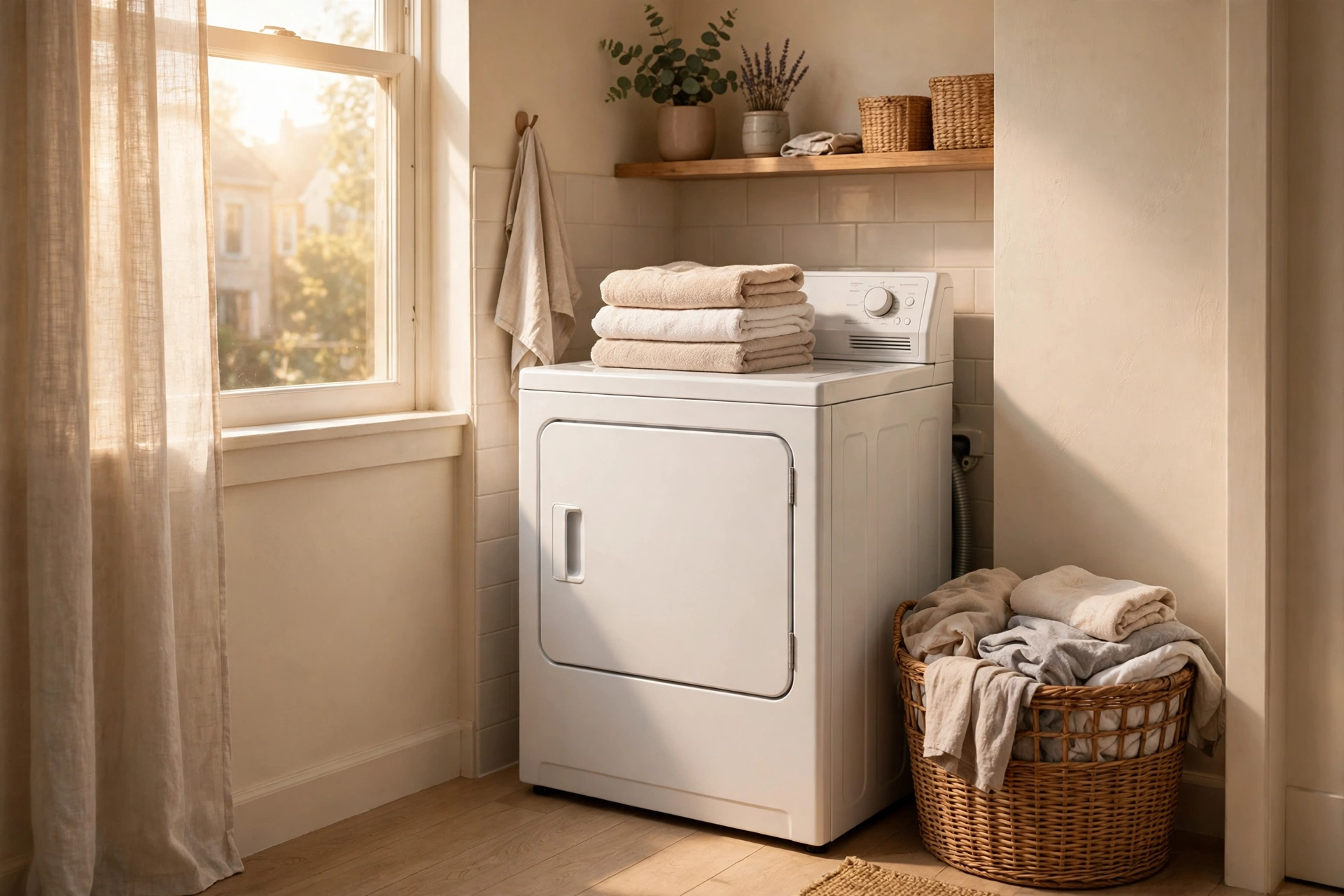
It is not a full-size machine. At 23.82 × 16.93 × 27.56 inches and 44 pounds, it is closer to a dorm fridge with ambition. The spec sheet lists 2.6 cu ft of capacity, a 13.3-pound rated load, 1350W PTC ceramic heating, a stainless steel drum, five drying programs (heavy, normal, anti-wrinkle, cooling, and a cool-air care mode), and 58–62 decibels of noise. The controls are old-school mechanical dials — no touchscreen, no app — with a clear display and auto power-off. The door opens a full 170°, and the machine stops when you open it mid-cycle, which my clumsy hands appreciate.
One note on the listing: FLNORW calls it a “vented gas dryer,” but the technical parameters show 1350W PTC electric heating on a standard plug. It runs on electricity, not gas — worth knowing so you size the circuit right. Mine shares an outlet circuit with a laptop and a lamp; no breaker has tripped in three months.
The 2.6-cubic-foot reality check: what this compact clothes dryer holds
A 13.3-pound rated load sounds abstract until you stand in front of it with a basket. Here is what I have learned fits: about 10 t-shirts, or 6 pairs of jeans, or two full sets of sheets, or one week of one person’s casual wear. It is a small-apartment machine and it behaves like one — you will not dry a king comforter in it. I do laundry in two smaller loads instead of one heroic one, and that has become a rhythm I prefer: start a load before dinner, fold during the evening news.
Drying time runs longer than the laundromat’s commercial monsters — a full load of jeans takes 60 to 90 minutes on the heavy program, where the industrial dryer did it in 40. My rough rule: fill the drum two-thirds full, never pack it. Packed clothes come out damp in the middle. I learned that the patient way.
The laundromat math that sold me
Let me show my work, flagged as rough. At the laundromat near me, a dryer load costs about $1.75 to $2.50, depending on the machine and how many quarters the heat cycle eats — I averaged about two dollars across a month of Thursday nights. I run three loads a week. That is roughly $24 a month, $288 a year. The dryer cost $288. On my usage, it pays for itself in about a year — a little less if your laundromat runs hotter prices, a little more if you do laundry less often than I do.
The hidden savings are the ones I did not put in the spreadsheet: the 90 minutes a week I no longer spend under fluorescent lights, the $3.50 in gas every Thursday, and the vending-machine soda that somehow happened every single time. At 90 minutes a week, I have bought back about six hours a month. That alone was worth the $288 to me.
What it costs to run: the electricity math
A compact dryer does not get a free pass on physics — heat costs money. The unit draws 1350 watts. A heavy load runs about an hour: 1.35 kWh per load, give or take. The U.S. Energy Information Administration put average residential electricity at about 17 cents per kWh in 2024, so a load costs me roughly 23 cents in electricity — my own rough math. Compare that to the $2 laundromat load and the running-cost gap is not close.
The auto power-off matters here: the machine does not sit humming heat after the timer ends, and the mechanical dial means there is no standby display sipping power all day. My electric bill went up by about $4 a month — a rough estimate across the two bills I have seen since it arrived, and noise-level against the laundromat savings.
Vented means vented: the one rule you cannot skip
This is the part people get wrong, and I got it wrong first. A vented dryer blows warm, moist air somewhere — a full-size machine vents it outside through a wall duct. This little one ships with a vent hose you route to a window. The first week, I ran it with the hose aimed vaguely at the room and turned my bedroom into a steam room. My mistake, honestly documented. A $12 window vent kit from the hardware store fixed it permanently: hose to the window, crack the window two inches, done.
The upside of vented over ventless: it dries faster and costs less to buy than condenser models of similar capacity. The tradeoff is the hose. If your layout gives you a window within a few feet, this is a non-issue. If your only option is an interior room with no window, buy a ventless/condenser unit instead — this is not the machine for that layout, and I would rather tell you that now.
The wall-mount trick that won back my floor space
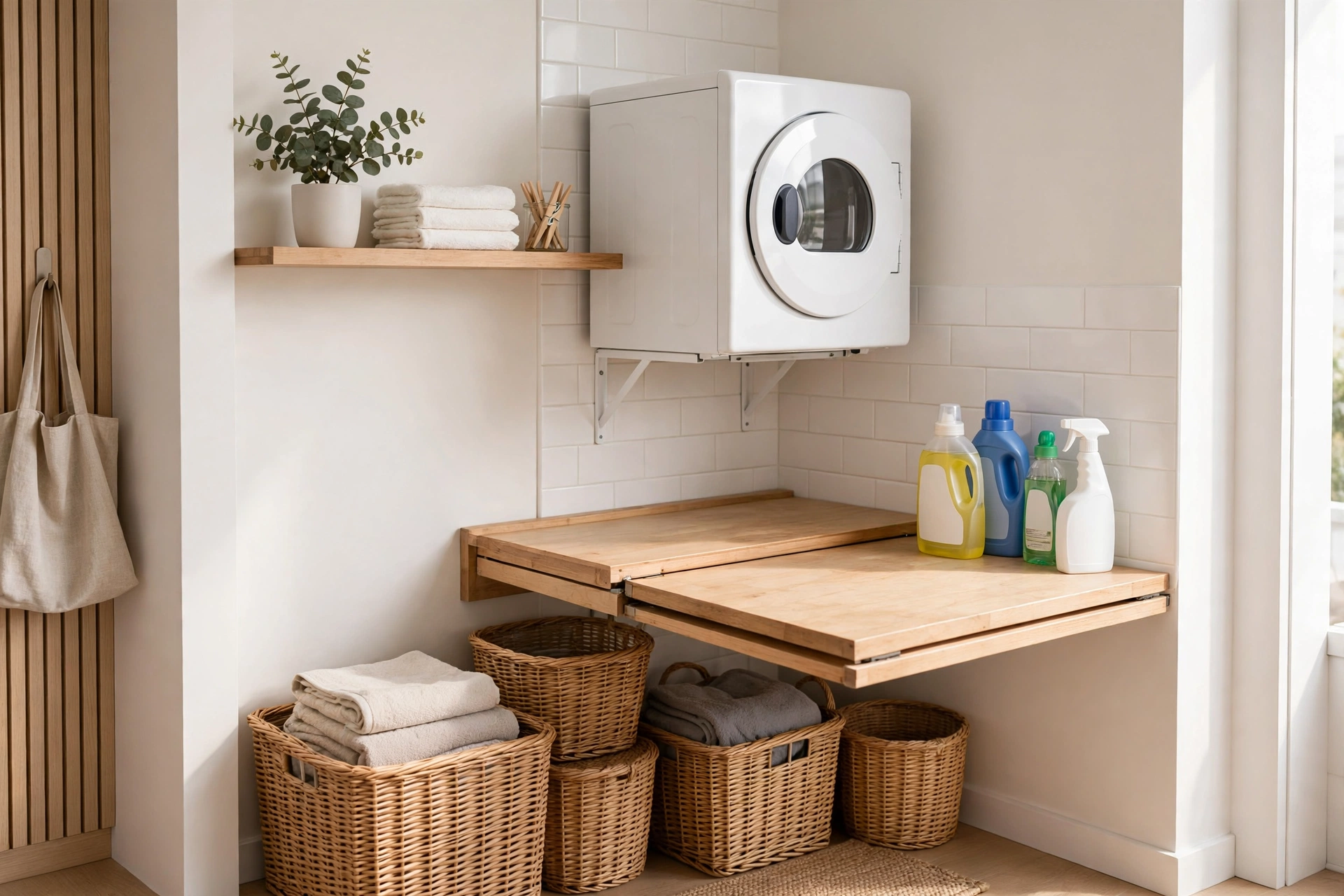
The product page mentions wall mounting, and this is where the machine earns its small-apartment keep. I spent a Saturday with a stud finder and mounted it above the folding counter I built on top of a $259 farmhouse storage cabinet — the cabinet top became my folding surface, the dryer floats above it, the laundry basket parks below. The whole station occupies about 4 square feet of floor. If your lease forbids drilling, the 44-pound unit also sits happily on a sturdy counter or cart — but check your lease first. Mine allowed wall anchors with written approval, which I actually got this time.
For renters who have done the no-drill dance before, I wrote a longer guide on renter-friendly furniture that survives moves — the same philosophy applies here: buy it like you are going to move it, because eventually you are. At 44 pounds, two people can carry this machine down a staircase without drama.

The 58–62 decibel question
The spec sheet lists 58–62 dB. For reference, a normal conversation sits around 60 dB and a microwave hums at about the same level. In practice: with the bedroom door closed, I cannot hear it from the living room. With the door open, it is a steady whoosh — noticeable, not annoying. I run loads at 7 p.m., never after 10, because the walls in my building are thin and I like my neighbors. One real data point: my downstairs neighbor has never mentioned it, and she has mentioned everything else.
The dual lint filtration — inlet and outlet filters, per the spec sheet — is part of why it stays quiet-ish: I clean the outlet filter after every single load (twenty seconds) and the airflow stays strong. Clogged filters are how small dryers get loud and slow.
The honest downsides
Three months in, the complaints are real but small. First, the black ABS exterior shows every fingerprint and collects dust on top — I wipe it when I fold, fine. Second, the mechanical dial gives you time presets, not sensor dry; you learn your loads’ times (towels: 60, jeans: 75, delicates: 40 on low) and it stops being a limitation after two weeks. Third, wrinkles: leave a load sitting an hour after the timer and you will press what you wore. The anti-wrinkle cool-down helps, but the real fix is prompt unloading — a habit problem, not a machine problem.
Also worth saying: this is a dryer only. If you do not have a washer, you are still hauling bags — just to the basement machines instead of the laundromat. It pairs best with in-building or portable washers.
The verdict. Three months, about 36 loads, one window vent kit, and zero laundromat Thursdays. The $288 compact clothes dryer paid back a quarter of its price in avoided dryer quarters alone, bought me back six hours a month, and turned the most resented chore in my rotation into background noise while I cook dinner. It is not fast, it is not big, and it needs a window — but for a small apartment with a laundry problem, it is the single best $288 I have spent on my home this year.
Want to check the specs yourself? The full product page for the 2.6 cu ft compact vented dryer is on FLNORW MALL — capacity, programs, dimensions, all of it.