I Compared a $199 Glass Credenza to a $269 Wood Buffet. The Winner Surprised Me.
I Compared a $199 Glass Credenza to a $269 Wood Buffet. The Winner Surprised Me.
Two months ago I stood in my dining room with a tape measure in one hand and a phone full of bookmarked sideboards in the other, and I could not make a decision. My dining room pulls double duty: it is where we eat, and three days a week it is my home office. I needed dining room storage that could hold work papers on a Tuesday and wine glasses on a Saturday.
I bought two pieces from FLNORW MALL to settle it: a $269 farmhouse buffet cabinet with a wine rack and barn door, and a $199 glass credenza with fluted glass doors. I parked them side by side against my dining room wall for three weeks. Here is everything I learned — the real measurements, the dust test, the storage math, and which one is still standing there today.
Why I Compared a Glass Credenza to a Wood Buffet Cabinet
Most reviews test one piece; nobody parks a glass credenza next to a wood buffet and asks which job each one actually does. They cost within seventy dollars of each other, they take up almost the same floor space, and they solve the same problem in opposite ways: one shows you your things, the other hides them.
The market says I am not alone in this dilemma. A 360iResearch report from 2025 puts the living and dining furniture market at $116.65 billion in 2024, projected to reach $195.29 billion by 2032 at 6.65% annual growth, with sideboards among the tracked categories. Verified Market Research values the broader US home decor market at $185 billion in 2024.
I host holiday dinners, but I look at this room every single day. The glass credenza promised light and display. The wood buffet promised hidden storage and a wine rack. Only one could keep the dining room wall.
The $199 Glass Sideboard Cabinet: What the Specs Mean in a Real Room
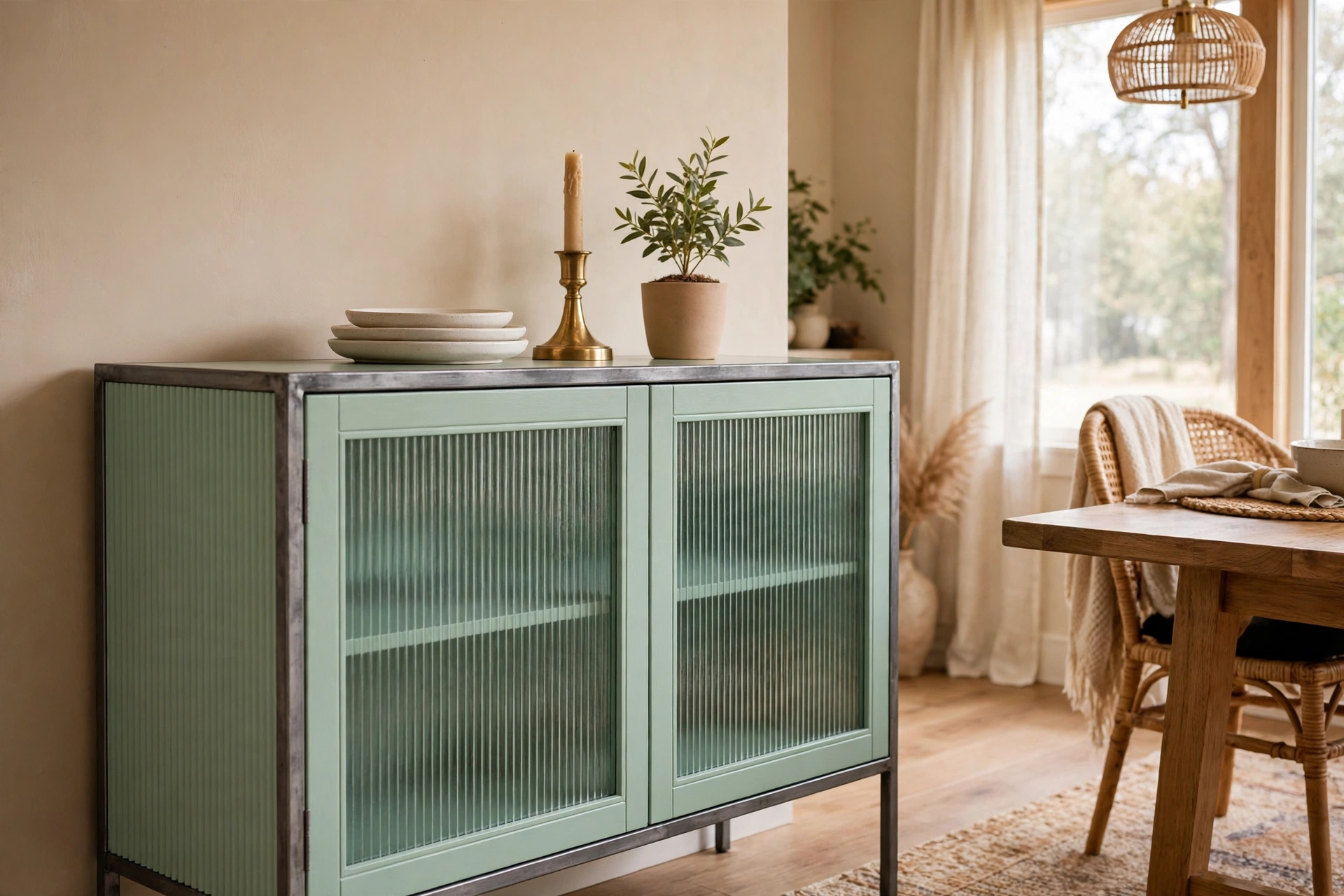
The official name is a mouthful — Double Door Tempered Glass Sideboard Console Table with 2 Fluted Glass Doors — but the specs are honest. It measures 43.31 inches wide, 35.75 inches tall, and 14.96 inches deep, and weighs 67.2 pounds. The build is tempered glass panels in a sheet-metal frame, and it comes in mint green, blue, or black (item W1673127676 on the product page).
Assembly took me about 45 minutes alone on the living room rug. The parts that mattered most were not the ones in the glamour photos: adjustable feet with non-slip pads leveled it on my uneven floor in two minutes, the magnetic door catch closes with a satisfying click, and the included anti-toppling device went into a wall stud — fifteen minutes, non-negotiable in a house with a cat who treats furniture as a launchpad.
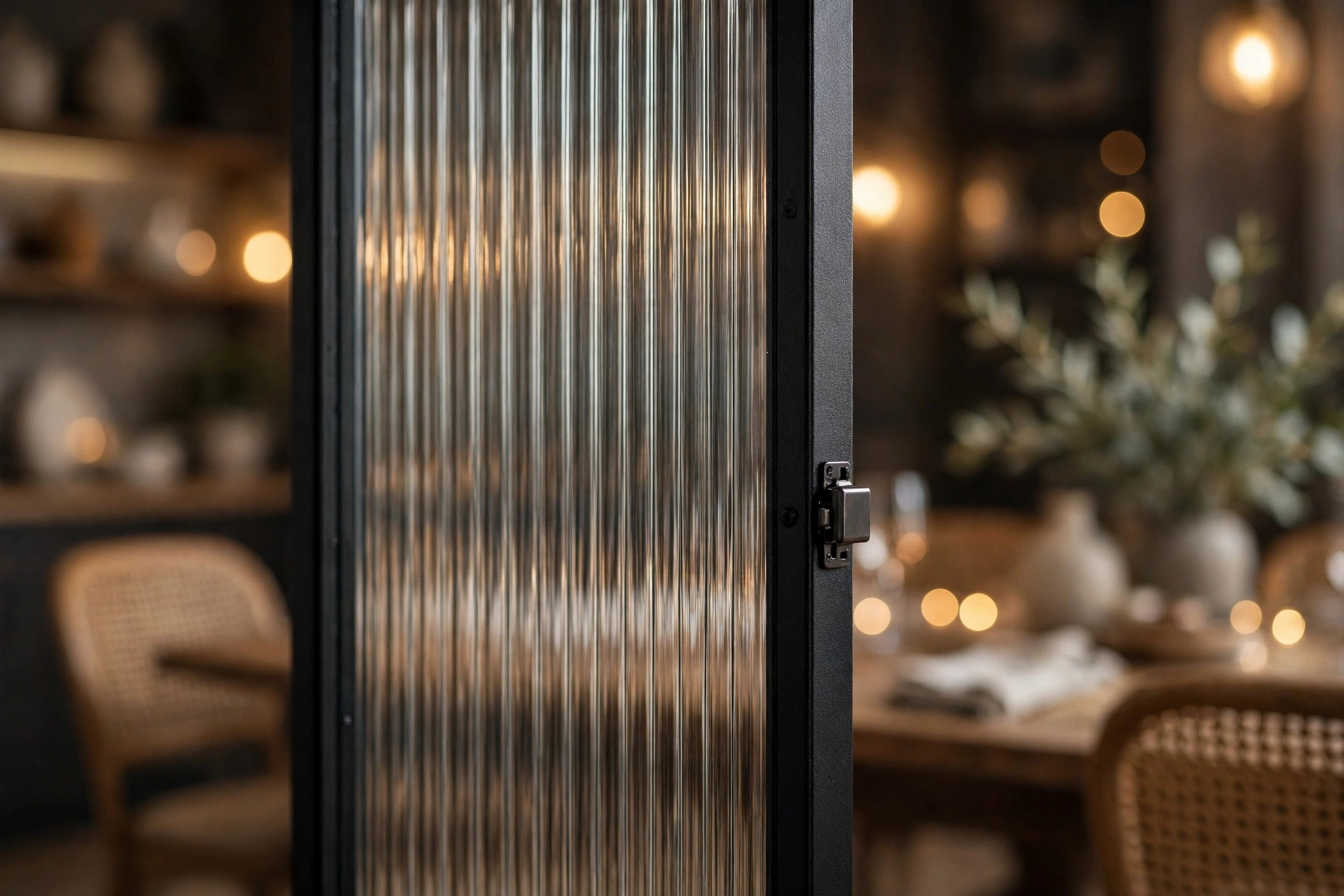
The mint green is the detail no listing settles for you. In afternoon daylight it reads like sea glass — pale, calm, almost glowing. The fluted glass doors do exactly what they promise: light passes through, but you see shapes and glow instead of clutter. My white dinner plates look styled; the printer paper behind them does not — which is the whole point. If you like this glass family, I also reviewed its arched-door sibling — the arched glass display cabinet — same steel-and-tempered-glass build in a vertical shape.
The $269 Farmhouse Buffet Cabinet: What the Specs Mean in a Real Room
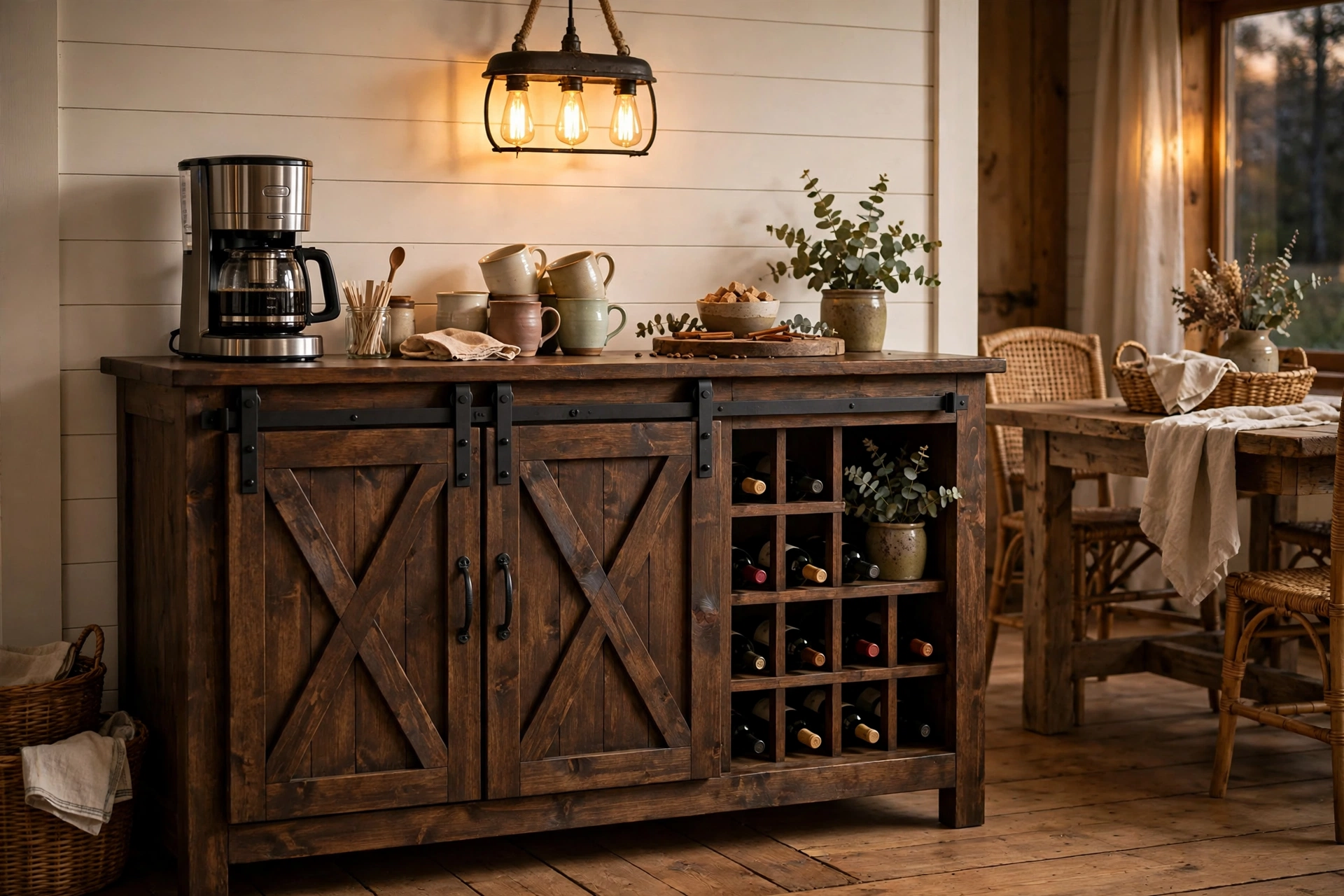
The buffet is the workhorse. It measures 39.37 inches wide, 34.65 inches tall, and 15.75 inches deep, and weighs 90.2 pounds. The main material is MDF with a rustic wood-grain finish in dark espresso (gray is also available), with a 12-bottle removable wine rack, two deep drawers, and a sliding barn door (item W2275P149110).
We assembled it in about 75 minutes — two people, one Allen key, no drama. I already wrote a full hosting review of this farmhouse buffet cabinet after it survived my parents’ 40th anniversary dinner: twenty-two people, zero bottles on the kitchen counter. The wine rack held six standard 750ml bottles plus two fat-bottomed champagne bottles without a wobble, and the two drawers swallowed my entire hosting kit — placemats, napkins, tablecloths, candles, and the extension-table hardware I used to lose twice a year.
The open wine rack collects dust. I wipe the bottles every couple of weeks — ninety seconds, done. And the espresso finish runs darker than the product photos: closer to roasted-coffee brown than red-toned wood. Fine with my walnut table; worth checking against a swatch if your dining set is light oak.
Credenza vs Sideboard vs Buffet: What Is Actually Different
The words get swapped constantly, so here is the practical version. A buffet is the dining room server: low, wide, built for dishes and hosting gear, usually with drawers. A credenza started life in offices as a low document cabinet — which is why the $199 piece’s listing calls it a kitchen credenza cabinet even though you would park it in a dining room. A sideboard is the catch-all term for any of these low storage pieces.
The dimensions tell the real story: both pieces are about 35 inches tall — classic buffet height, roughly counter height, so both double as serving surfaces. Both are wall-huggers at under 16 inches deep. The difference is not the label. It is the doors.
The Storage Math: Two Cabinets, Nearly Identical Footprints
I did the tape-measure math because product photos lie about scale. The glass sideboard cabinet footprint is 43.31 by 14.96 inches — about 4.5 square feet. The farmhouse buffet cabinet footprint is 39.37 by 15.75 inches — about 4.3 square feet. A fifth of a square foot separates them. By my rough math, each square foot of dining room floor costs you about $44 under the glass piece and $63 under the wood one.
Here is the honest capacity inventory for each:
- Glass credenza, upper bay (shelf raised): 12 dinner plates upright, 6 cereal bowls, and a row of glasses — the display zone, because the fluted glass shows shapes.
- Glass credenza, lower bay: board games, a stack of placemats, the odds and ends that used to live on the dining table — the hidden zone, which you cannot see unless you open the doors.
- Wood buffet, wine rack bay: 12 bottles in the rack — or pull the removable racks and fit a stand mixer instead.
- Wood buffet, two drawers: the entire hosting kit: linens, candles, serving tools. The glass piece has no drawers at all.
- Wood buffet, barn-door bay: the bulky stuff you never want to see: the gravy boat with the chipped handle, the spare paper plates.
The trade-off is clean. The glass credenza gives you two display-friendly bays behind fluted glass. The wood buffet gives you a wine rack, two real drawers, and a barn door hiding the ugly shelf. If your clutter needs doors it can hide behind, wood wins. If your clutter looks better as soft shapes, glass wins.
The Dust Test: Fluted Glass Credenza vs Wood and Open Shelving
For one week I wiped both tops on Sunday and checked them Saturday. The buffet’s espresso top needed a wipe mid-week — it is the drop zone for mail, keys, and my coffee. The glass credenza’s top stayed cleaner, because the tray, plant, and art books on top discourage the key-drop.
My cat Biscuit pressed her nose against the fluted glass twice, and both prints wiped off with one pass of a damp cloth. The fluted glass credenza hides fingerprints the way frosted bathroom glass does — you see them only if you are looking for them. My old clear-glass TV stand needed a wipe every three days; this one went two weeks of daily use before I felt like wiping it.
The honest caveat: the flutes cannot hide the shelf tops inside. When afternoon sun hits the cabinet at an angle, the interior shelf dust shows through the doors as a soft haze. Five minutes with a damp cloth once a month fixes it. My rough estimate: the glass piece costs me about 20 minutes a month of maintenance; the wood buffet costs about 30, mostly the wine-rack bottles.
Build and Care: Tempered Glass and Sheet Metal vs MDF
The $199 glass credenza is built to shrug off water, rust, and heat — tempered glass and sheet metal do not care about a damp mop or a sweaty cold drink. Care is one rule: a cloth dampened with mild cleaner, then dry. No abrasives on the flutes; they are glass, not armor.
The $269 buffet is MDF, and MDF’s enemy is standing water soaking into raw edges. I treat the top like any wood surface: wipe spills when they happen. A spilled glass of red wine sat overnight during the anniversary dinner and wiped clean in the morning — the finish held, no bubbling, no swelling around the top. My care rules for the buffet are three: wipe spills the same day, do not set a wet planter on it, and keep the barn-door track free of crumbs.
One shared rule for both: use the anti-tip hardware. The glass piece is 67 pounds and the buffet is 90, but both are top-heavy when loaded, and the glass piece’s magnetic doors are a toddler magnet. Fifteen minutes, two screws into a stud. Treat it as required, not optional.
The Verdict: The Glass Credenza Won the Dining Room Wall
I expected the wood buffet to win. It is the practical piece: more storage zones, a wine rack, drawers — seventy dollars buys real capacity. But three weeks of looking at both pieces every morning settled it. The glass credenza makes my small dining room feel bigger. The light comes through it, the fluted doors turn my mess into soft shapes, and it photographs like a piece that cost twice as much.
The buffet did not lose, though. It moved to the kitchen nook as our coffee and wine station, where the wine rack earns its keep daily. It is the better piece for someone who hosts monthly dinners. I host quarterly.
The final math, over a ten-year life (my rough estimate for both): the $199 piece costs about $19.90 a year; the $269 piece costs about $26.90 a year. Seven dollars a year separates them. Buy the one that matches how you actually live, not how you wish you lived.
I wish I lived the wine-rack life every weekend. I live the sea-glass-glow-on-a-Tuesday life. The glass credenza stays.
Ready to pick your side? See the $199 fluted glass credenza and the $269 farmhouse buffet cabinet on FLNORW MALL — full specs, all colors, and current stock.