I Bought a $278 5-Tier Plant Stand for My 40-Plant Jungle. Here Are the 5 Rules.
My plant collection hit forty-three last spring, and that is when the windowsills officially filed for divorce. Pots were stacked on books, balanced on the radiator cover, hanging from a curtain rod that was never meant to carry horticulture. My wife looked at the hallway jungle and said the words no plant person wants to hear: “Pick a stand or pick a room.” So I went shopping for a plant stand the way I do everything — by reading every spec twice, and by buying the wrong one first so I could learn something worth writing about.
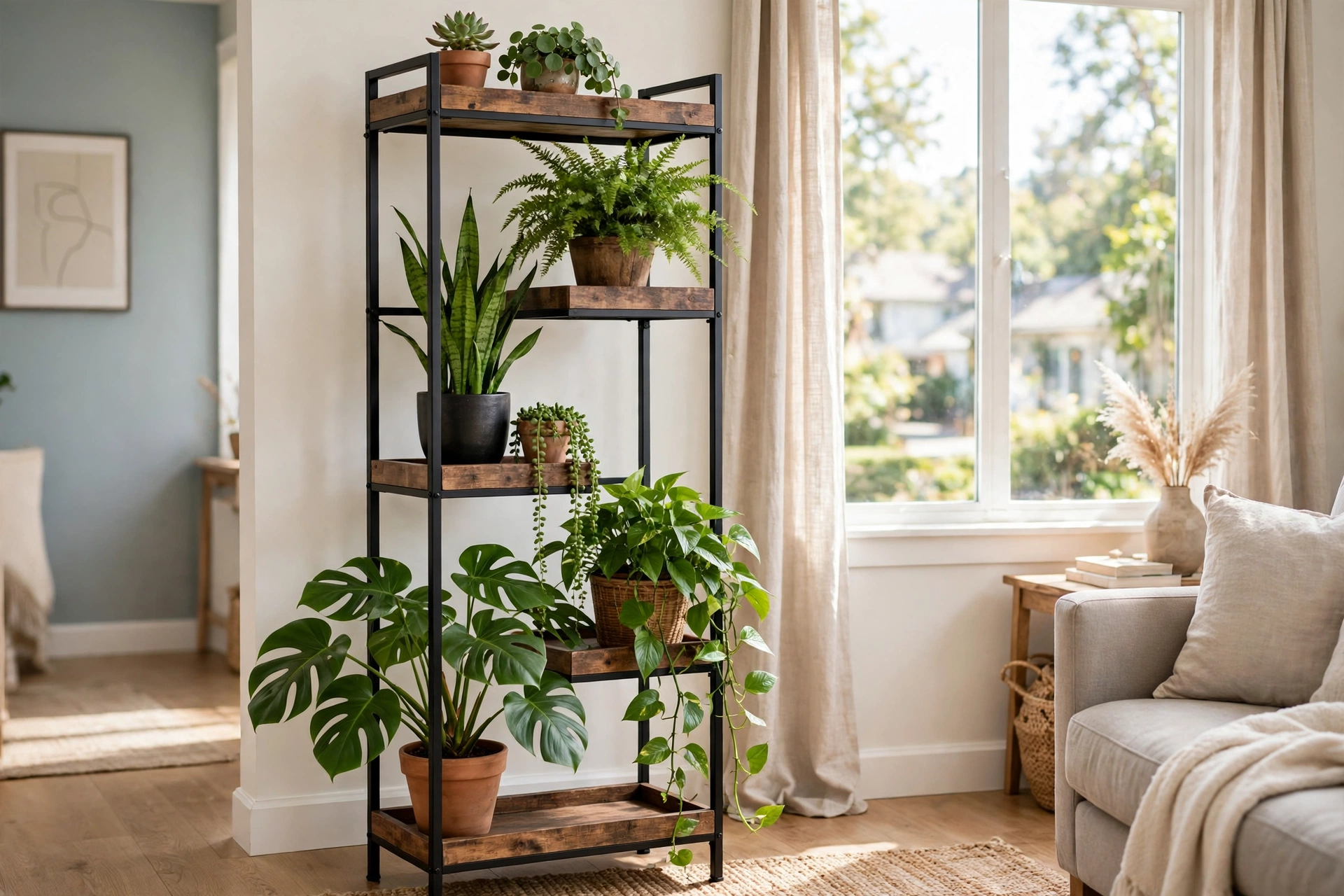
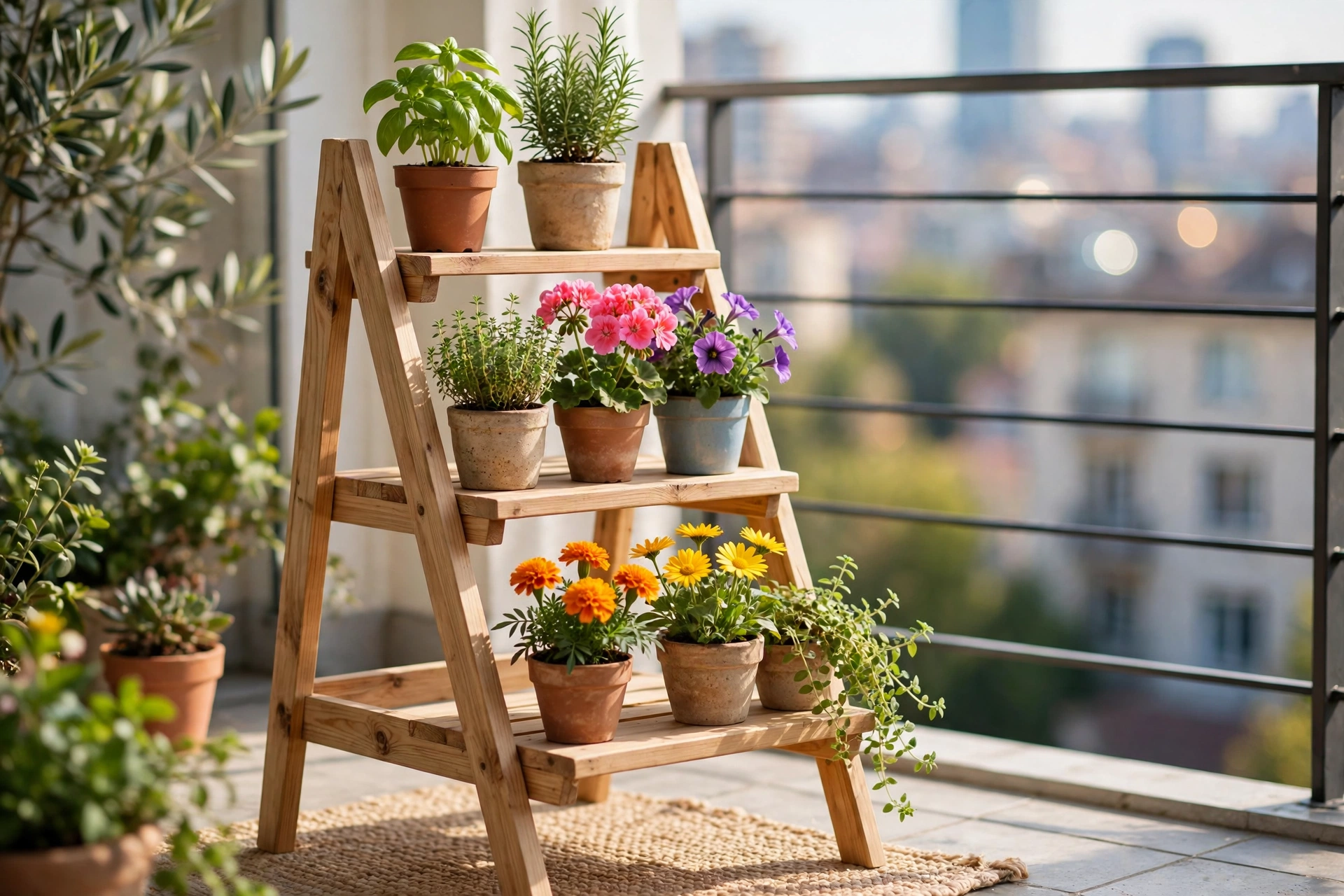
The wrong one was a $99 acacia 3-tier plant stand — 27.5 inches long, 12.2 deep, 24.8 tall, 8.8 pounds of foldable solid acacia. It was lovely. It was also full by Sunday. So three weeks later I added the big one: a $278.88 5-tier metal plant stand — 67 inches wide, 11.8 deep, 67 tall, 53.72 pounds of laminated wood shelves on a black iron frame. Six months and two full watering seasons later, here are the five rules I would hand anyone shopping for an indoor plant stand.
Rule 1: Measure the pots, not the shelf dreams
The number that decides everything is the space between shelves, not the overall height. The acacia stand lists 11.8 inches between tiers, which sounds generous until you remember a 10-inch nursery pot plus an inch of foliage needs every bit of it. My fiddle-leaf fig, all 14 inches of attitude, never fit — it went straight to the floor.
The big 5-tier is 67 inches tall, and here is a small honesty note: the product listing calls it a 5-tier, while the description copy mentions six open display shelves. The top surface counts as a level — either way, you get roughly 11 to 13 inches of clearance per level (my rough math, flagged as rough). Same lesson applies: walk your house with a tape measure, find your tallest pot, and add two inches. Then buy the tiered plant stand that clears it. A shelf your favorite plant cannot fit under is a very expensive bookshelf.
Rule 2: Water wins every argument — protect the material
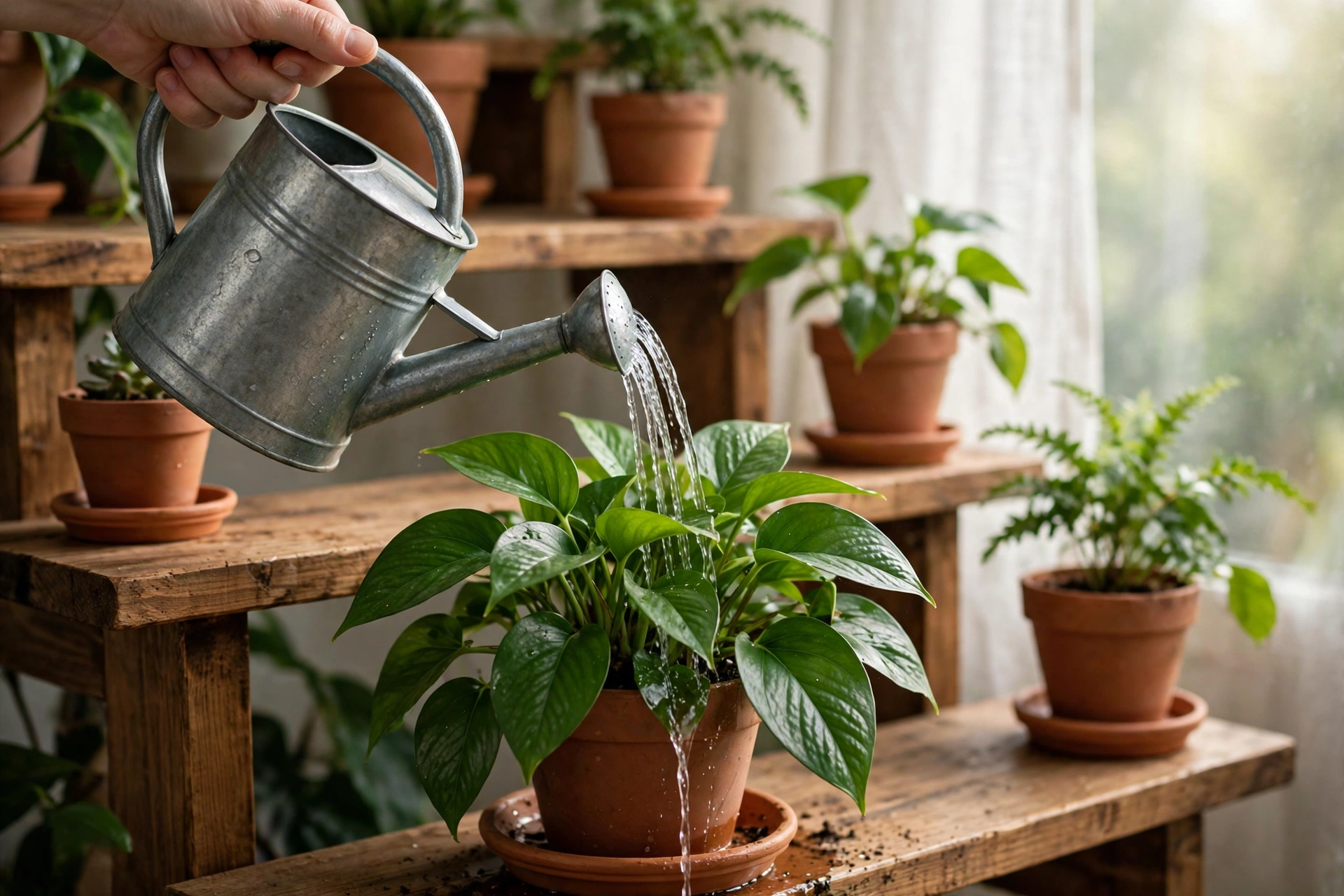
Here is the math nobody runs before buying. A 6-inch pot drinks roughly two cups of water per session. Twenty pots means you are pouring around two and a half gallons through that stand every week (rough estimate, and yes, it surprised me too). Some of it will miss. A saucer will overflow. A leaf will drip. Water always wins.
The big stand’s shelves are laminated particle board — perfectly fine under a saucer, genuinely unhappy under standing water. My rule: saucers under every pot, and any spill gets wiped the same day. Six months in, the shelves look new. The acacia stand has a water-base coating and is listed for both indoor and outdoor use, which buys you more forgiveness on the balcony, but “water-resistant” is not “waterproof” — I still wipe it down after a rainy week.
Cheap insurance that has paid for itself: a bag of clear plastic saucers, about a dollar apiece, and a set of cork pads under the heavy ceramic pots so grit does not scratch the laminate.
Rule 3: Weight is stability, and stability is everything
The big stand weighs 53.72 pounds before a single pot goes on it. I can bump it with my hip carrying laundry and nothing moves. The acacia stand weighs 8.8 pounds — I love it, I fold it flat for storage, and on a windy balcony day I lean it against the wall because it is a sail with plants in it.
Any 67-inch-tall unit holding that much greenery lives by the same physics as a bookcase. My bookcase buying guide runs through the same lesson: heavy units do not sway, and sway is what kills cheap shelving. The listing mentions foot pads that keep floors scratch-free and double as anchors against tipping. I still park the tall stand against a wall — free insurance, zero cost. If your house has toddlers, cats, or a dog with a wagging tail aimed at shelf height, that sentence was for you.
Rule 4: Arrange by light, not by looks
The Instagram version puts the trailing pothos on top and the fern at the bottom because it photographs well. The version that keeps plants alive puts the light-hungry ones at the top and sides near the window, and the low-light tolerant ones — the snake plants, the ZZ plants — on the bottom tiers where the shelf above shades them. My pothos trails from tier two, where it gets bright indirect light, and it has doubled in a season. The peace lily sulked on top for a month until I moved it down two levels; it flowered within weeks.
Turns out I am not the only one buying for the light math. PW Consulting’s 2025 report puts the global indoor potted plants market at $22.5 billion in 2025, growing to $32.19 billion by 2032 at a 5.25% CAGR, with North America the largest region and foliage plants holding a 39.9% share. A 2026 industry roundup lands in the same neighborhood — roughly $21 billion in 2025, growing 4 to 5% a year through 2030. And the US numbers: $6.71 billion in floriculture sales in 2024, with indoor and patio foliage plants alone at $928.4 million among larger growers (market.us, citing USDA-tracked figures). Translation: millions of us are bringing home more plants than our windowsills can hold, and a plant shelf is the infrastructure that makes the hobby survive the second year.
Rule 5: Do the per-pot math before you flinch at the price
$278.88 feels like a lot for a shelf until you divide it. The big stand holds roughly 25 small-to-medium pots, which works out to about $11.15 per plant (my estimate, flagged). A single decorative plant stand at a home store runs $15 to $30 (rough retail range, flagged) — five of those is $75 to $150 for five plants, with five times the floor footprint. The tiered unit pulls ahead the moment you own more than ten pots, and it looks intentional instead of accidental.
The $99 acacia plant stand is the starter-collection sweet spot: six to nine small pots at about $11 to $16 per pot, foldable, and light enough to chase the sun around the apartment. When it fills up — and it will — you will know exactly what size to buy next, because you will have the pot measurements tattooed on your brain.
The five rules, short version:
- Measure your tallest pot plus two inches before you buy — tier spacing decides everything.
- Saucers under every pot, and wipe spills the same day on laminated shelves.
- Heavy beats wobbly — 53 pounds of stand does not sway; park tall units against a wall.
- Arrange by light needs, not by what photographs well.
- Divide price by pot count — tiered stands win past about ten plants.
Specs worth understanding before you buy
- 67 x 11.8 x 67 in: the 5-tier unit is as tall as a refrigerator and nearly six feet wide — measure your wall, then measure the doorway it ships through. It arrives in a box roughly 54 x 18 x 9 inches.
- 53.72 lbs assembled: heavy enough to stay put. Two-person carry up the stairs, one-person assembly.
- Laminated particle board + black iron frame: handles vertical load fine; hates standing water and repeated re-assembly. Assemble once, keep it dry.
- 11.8 in between tiers (acacia): fits 10-inch nursery pots comfortably; tall plants go on the top or the floor.
- 8.8-lb foldable acacia stand: 27.5 x 12.2 x 24.8 inches, solid acacia with a water-base coating, listed for indoor and outdoor use. Folds flat for winter storage.
- Item codes: W116290852 (5-tier), W68535809 (acacia) — useful if you ever need to reorder or ask support a question.
The verdict
Six months in, the $278.88 5-tier holds thirty-one of my forty-three plants, the acacia holds nine more on the balcony, and the windowsills have their dignity back. The watering routine is one trip with a gallon jug instead of a room-by-room safari, and nothing has tipped, bowed, or swollen. Buy the big one when your collection passes ten pots and you plan to keep growing. Buy the $99 acacia when you want to test the habit — or when you need something that folds flat in October.
Ready to give your plants a real home? See the full specs and photos of the 5-tier metal plant stand and the foldable acacia 3-tier plant stand at FLNORW MALL.