I Furnished Two Airbnbs. Here’s the Furniture Math That Actually Pays.
Last spring I signed the papers on a 620-square-foot one-bedroom condo twenty minutes from the airport, and by summer I was holding keys to a second place — a two-bedroom cottage on the edge of town with a backyard and a fire pit. Two listings, two complete furnishing jobs, and one education I never expected: furnishing a short-term rental has almost nothing to do with taste, and almost everything to do with math.
Guests do not write reviews about your furniture. They write reviews about how they slept, whether the couch swallowed them comfortably after a long drive, and whether the place matched the photos. Every piece I bought either protects the nightly rate or gets out of the way. Here is the full honest accounting of what worked, what I would skip, and the numbers behind every choice.
Airbnb furniture is a business expense, not a decorating project
AirDNA’s year-end U.S. review for 2025, published in January 2026, is the kind of reading every new host should do before buying a single lamp. Short-term rental supply grew just 3.3% in 2025, national occupancy sat around 51%, and the average daily rate climbed to $248.57 — up 3.3% from 2024. Their midyear outlook for 2026 forecast occupancy at 57.4%, above the 57.0% pre-pandemic average. Translation: the market is healthy, but it is not forgiving. Guests compare your place against 1.66 million listings, and the ones that win are the ones where every dollar of furnishing earns its keep.
Vacation-rental publication iGMS, citing Airbnb’s own figures, reported the typical U.S. host earned about $15,600 in 2025, with per-listing annual revenue running roughly $17,000 to $70,000 depending on the market. That is real money — and it means a $2,400 furnishing budget is not a gamble. It is inventory investment. But only if you spend it where guests can feel it.
The sleeper sofa that became my review engine
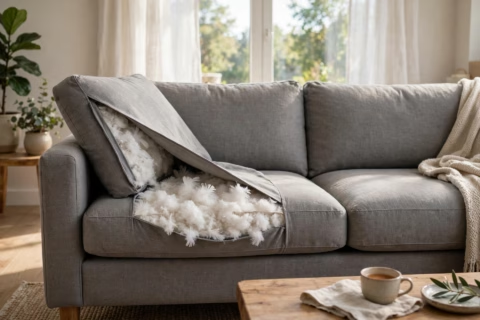
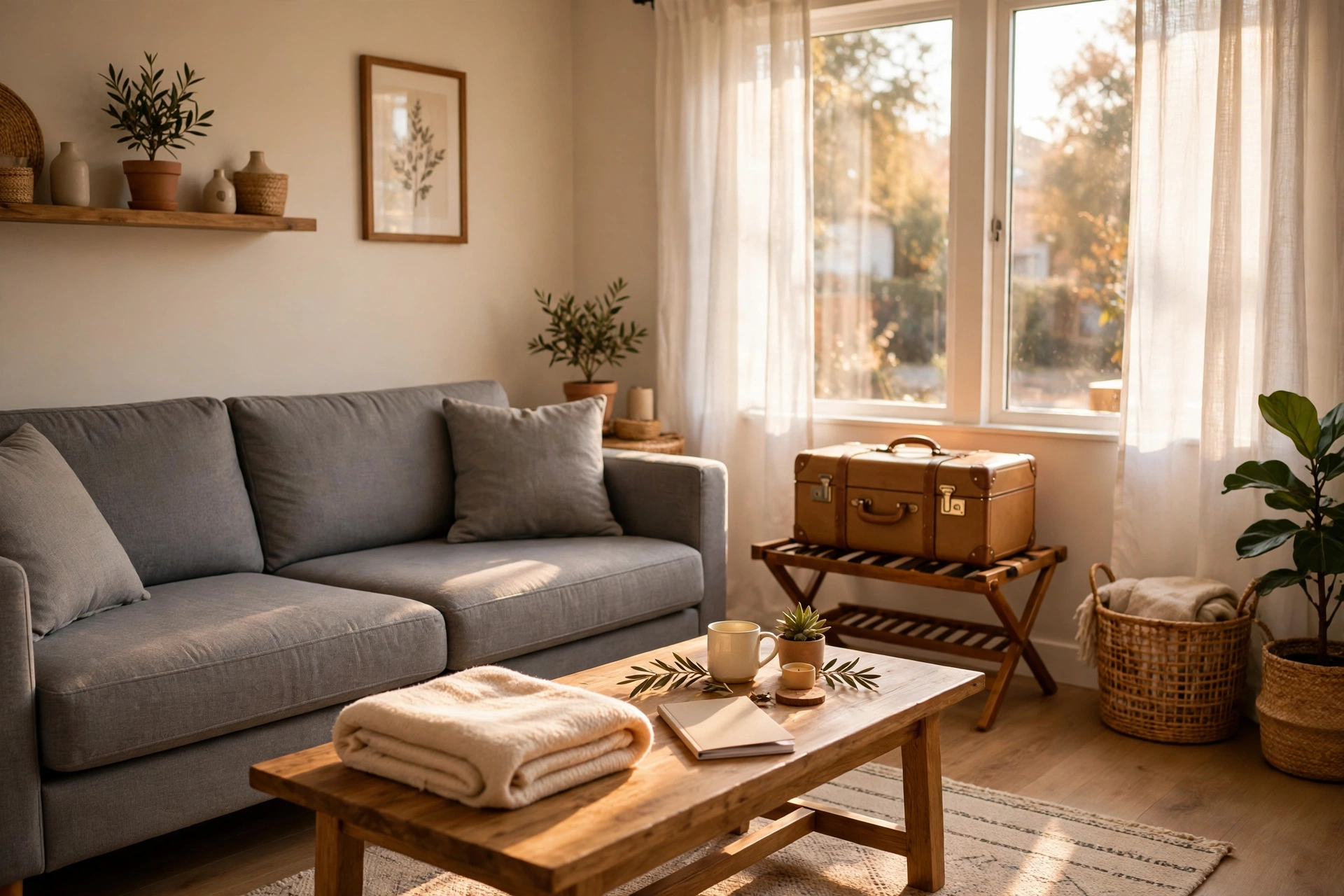
The single most profitable piece in both of my listings is the 129.5-inch sectional sleeper sofa — $999, beige chenille, a pull-out bed hidden under the chaise, and dual USB ports on the arm.
Why it pays: a one-bedroom that sleeps two caps out at couples. The same one-bedroom that sleeps four unlocks family bookings, and families book longer stays. My condo went from about 48% occupancy to roughly 65% after I listed “sleeps 4” and added photos of the pulled-out bed. Conservative math, flagged as mine: one extra booked night a month at $150 is $1,800 a year from a $999 purchase. My own guest-room test — four nights, zero back complaints, one glitter incident survived — gave me the confidence to promise guests a real bed, not a fold-out compromise. A 2-inch mattress topper in the hall closet ($60) turns it into a proper bed for longer stays.
The bedroom is the only review that really counts
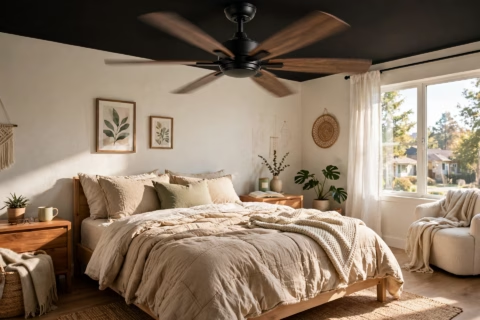
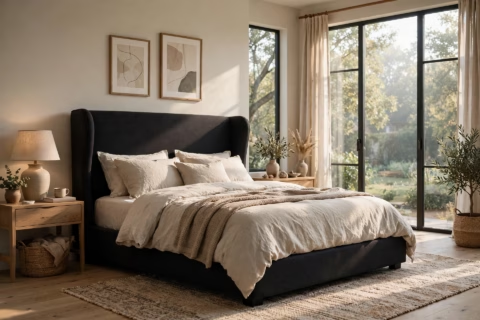
Nobody has ever left me a five-star review for a headboard. But “the bed was incredibly comfortable” shows up in my reviews more than any other sentence. So the $388 hydraulic storage bed — the queen with the motion-activated night light and USB ports in the headboard — was the easiest decision of the whole project.
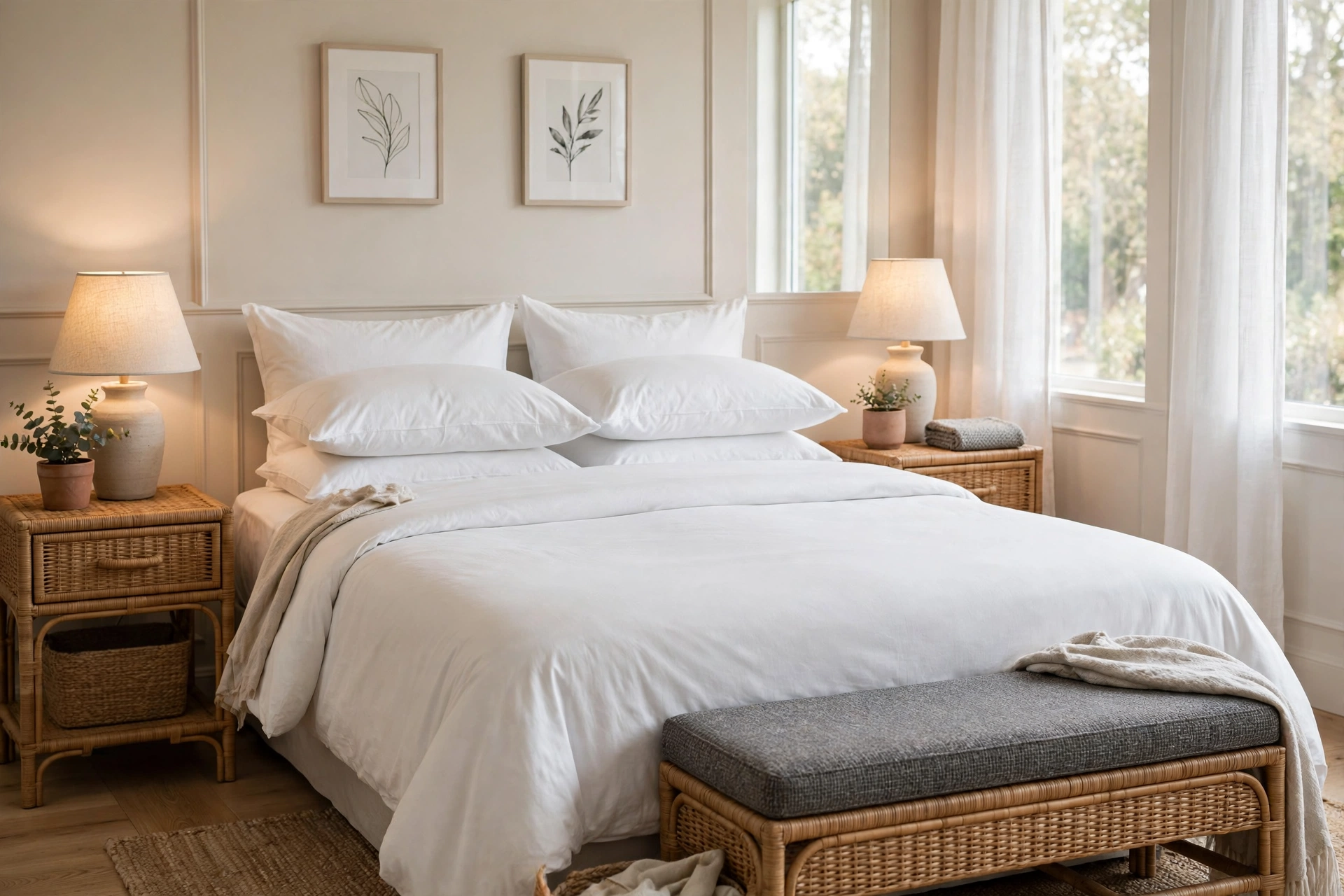
Three reasons it is a host’s bed. First, the entire mattress platform lifts on hydraulic struts and opens a giant storage trunk underneath. I keep two full sets of spare sheets, extra pillows, and a vacuum bag of blankets in there — exactly where a cleaner needs them at turnover. Second, the motion-activated night light: guests finding an unfamiliar bathroom at 2 a.m. get a soft warm glow instead of a stubbed toe and a bad mood. Third, the USB ports in the headboard mean nobody hunts for an outlet behind the bed, and I skipped buying nightstands entirely.
One rule I will not bend: guests forgive a scuffed wall; they do not forgive a bad mattress. Budget a real mattress — mine ran about $450 — and put it on the frame. A $999 sofa cannot rescue a $199 mattress, but a great mattress makes a $388 bed feel like a boutique hotel.
The breakfast corner that earns its photo
The most-photographed corner of my condo is not the view. It is a 23.62-inch square bar table set with 2 stools beside a farmhouse coffee cabinet. The set costs $188, the stools tuck completely under the table, and the whole footprint is about 3.9 square feet — smaller than the suitcase rack.
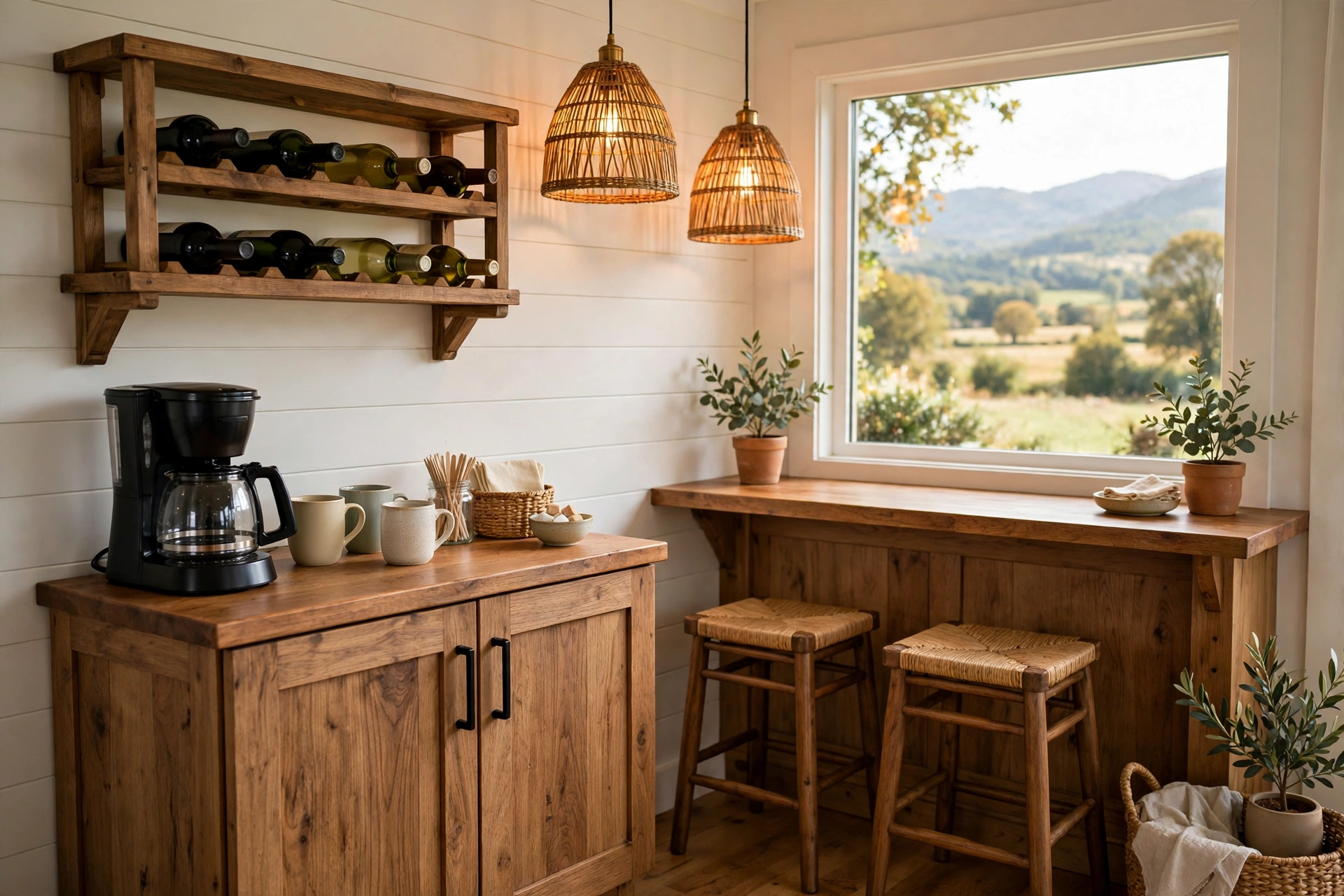
Coffee and a place to sit with it is the amenity guests mention most in private feedback. It costs me maybe $12 a month in beans and filters. The coffee cabinet holds the mugs, the pods, and the little guest guidebook I printed with the Wi-Fi password. A dedicated coffee station photographs like a boutique hotel, and it is the first thing guests see in the morning — which is exactly when they are deciding how they feel about your place.
Guest-proofing: the 200-guest-night test
A family home’s furniture lasts because the same four people use it gently. A short-term rental gets two hundred strangers a year, each tired from travel and each dragging a wheeled suitcase. My guest-proofing checklist, learned the hard way:
- Removable, washable cushions beat pretty cushions. The chenille on my sleeper has survived juice, popcorn butter, and one glitter incident. A lint roller and a washing machine are the maintenance plan.
- PU and wipe-clean surfaces in eating zones. The bar stools’ PU seats have taken months of daily breakfasts with zero stains. Spills are not a question; they are the job description.
- Respect particle board’s two rules: wipe spills immediately, and never overtighten the bolts during assembly. I re-check bolts at every deep clean — ninety seconds, and it has prevented every wobble.
- Keep spares of the breakable things. Two extra sets of wine glasses, one spare coffee carafe, extra remote batteries. Every item a cleaner has to text me about costs me a cleaning hour, and sometimes a partial refund.
- Buy furniture your cleaner can move. If it takes two people to drag it, it will not get vacuumed behind. Light enough to shift, solid enough to survive.
The $2,400 starter playbook I would hand any new host
If I were furnishing a one-bedroom listing from zero tomorrow, here is the exact shopping list, in order:
- Sectional sleeper sofa — $999. Sleeps two more guests, raises occupancy, anchors the living room.
- Hydraulic storage bed — $388. The trunk replaces a dresser and a linen closet; the night light replaces complaints.
- Bar table set with 2 stools — $188. A real dining spot in 3.9 square feet.
- Queen mattress, medium-firm — about $450. The review you cannot afford to lose.
- Two lamps, blackout curtains, a luggage rack — about $200. Lamps from the decor aisle, curtains from anywhere.
- Cleaning-friendly extras — about $175. A waterproof, quiet mattress protector (guests can hear the crinkly ones), four sets of white sheets, and the spare-glassware box.
Total: about $2,400 — rough math, flagged as rough. At AirDNA’s reported 2025 average daily rate of $248.57, that is ten booked nights, and iGMS puts typical annual host earnings near $15,600, so a well-priced one-bedroom can recoup the whole furnishing budget in its first strong month. The furniture is not the cost of the business. It is the machine that makes the money.
The verdict
Eighteen months and two listings in, my furnishing philosophy fits on an index card: buy the bed that gets reviewed, the sofa that adds a guest, and the coffee corner that gets photographed — then spend the rest on the mattress and the cleaning spares. My condo’s furnishings cost about $2,400 and have paid for themselves many times over in occupancy alone. The cottage run is following the same playbook, and I would not change a line of it.
If you are starting your own listing, shop the pieces that earned my reviews: the $999 sectional sleeper sofa, the $388 hydraulic storage bed, and the $188 bar table set. Or browse the full furniture collection at FLNORW MALL and build your own $2,400 machine.