I Bought a $399 Twin House Bed With a Built-In Socket for My Daughter. Two Months Later, the Honest Verdict.
My daughter turned seven this fall, and her old bed had started to feel like a toddler costume — a little too small, a little too babyish, and the mattress had the permanent dip of a hammock. I needed a twin bed that would carry her through the next five or six years, and I kept coming back to the same problem: her room is small, she owns approximately four hundred books, and her tablet charger cable had formed a permanent colony under her nightstand.
That is why I ended up buying the $399 Twin Size House Bed with Bench, Socket and Shelves from FLNORW MALL. It is a house-shaped twin bed — white and gray, with a pitched roof frame, a bench at the foot, storage cabinets on both sides, drawers underneath, open shelves, and a built-in power outlet with USB ports and wireless charging. Two months in, here is the full report.
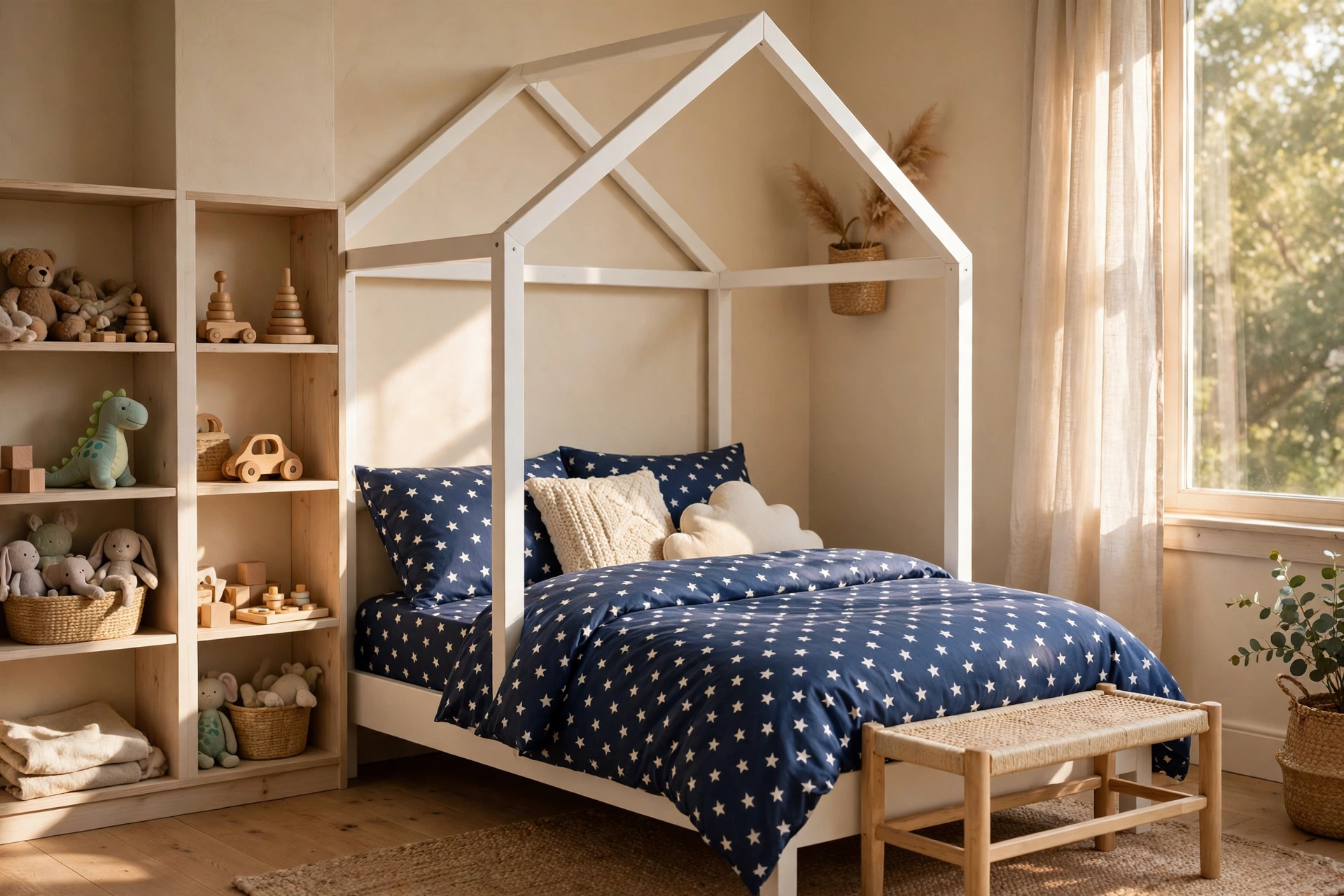
Why I Picked a House Bed Over a Regular Twin
The honest starting point: a plain twin bed frame costs $150–$250 at most big-box retailers (rough estimate from my own shopping). That looks cheaper until you list what else a seven-year-old needs. A nightstand for the lamp and the water glass. A small bookshelf, because the bed is the only furniture she truly owns. A power strip for the tablet and the lamp, which then lives on the floor collecting dust bunnies. By the time I priced it out — frame ($150–$250, estimate) plus the $99 nightstand pair I already liked, plus a $70 bookshelf and a $25 USB charging hub (both estimates) — I was at $344–$444, with cables everywhere.
I also flirted with a bunk bed. The $699 house bunk bed with stairs I reviewed earlier is genuinely nice, but the CPSC guidance sticks in my head: kids under six should not sleep on the upper bunk. My daughter is seven, so it would technically be fine — but her room is 10 by 11 feet, and a bunk would have dominated it. The low house bed solved the fall question entirely. Nobody is climbing anything.
So the twin house bed won on the napkin math: roughly the same all-in price as buying the pieces separately, with zero cords snaking across the floor. Two months later, I am still happy with the trade.
Two Boxes, 147.84 Pounds: The Honest Assembly Report
The delivery driver looked at me with sympathy. The bed ships in two boxes — box one is 83.78 pounds at 80.75 inches long, box two is 78.26 pounds — for a total of 147.84 pounds. If you order this, recruit a second adult. I am not joking.
Inside the boxes:
- House frame panels — the pitched-roof headboard and footboard, pre-drilled, plywood+MDF+pinewood
- 8 wooden slats — no box spring required, which saved me $60–$100 right there
- The foot bench — solid, anchors to the frame
- Cabinet and drawer parts — both side cabinets plus the under-bed drawers, with rails
- Shelf boards for the open display shelves
- Hardware pack and manual — the manual is genuinely clear, with every panel labeled
My husband and I spent about three hours on a Saturday, including a twenty-minute hunt for an Allen key that turned out to be taped inside one of the rails. Tip: open every box and inventory the hardware before you start. The finished bed measures 90.6″L × 58.9″W × 51.2″H — measure your doorways if the bed has to turn a tight corner, because that 80.75-inch box does not bend.
The Built-In Socket Gets Used Every Single Night
Here is the feature I underestimated: the built-in power outlet, USB ports, and wireless charging. I assumed it was a gimmick. It is not.
My daughter’s lamp plugs straight into the bed. Her tablet sits on the wireless charging pad overnight — the same ritual I have with my phone, now mirrored by a seven-year-old. When a friend comes for a sleepover, there is a second USB port for their device, and nobody is crawling behind furniture looking for a free outlet. The old power strip with its four dead spiders is gone, and the floor under her bed is just… clean.
One thing to know: the bed needs to sit within cord’s reach of a wall outlet, obviously. We pulled it about four inches off the wall so the plug sits flat, and it still looks intentional. The kids bed with charging station is not a category I thought I wanted, and now I do not want a kids’ bed without one.
The Storage Math in a 90.6 × 58.9-Inch Footprint
The bed’s footprint is about 37 square feet (90.6 × 58.9 inches). In that space it carries: storage cabinets on both sides, drawers underneath, and open shelves in the headboard section. Let me tell you what actually lives in there now, two months in.
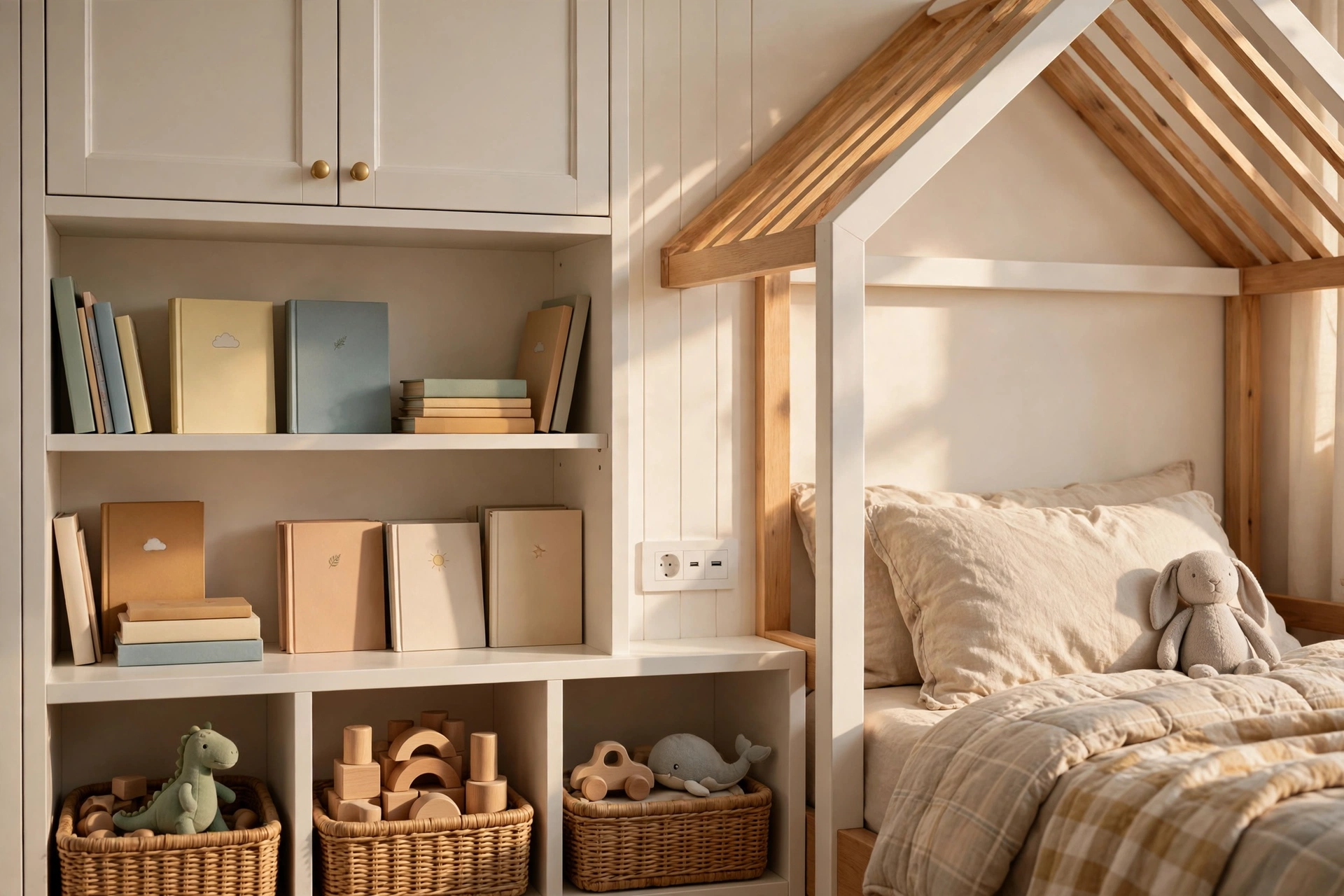
The shelves hold fourteen chapter books, upright and visible — the visibility matters, because she reads what she can see. One under-bed drawer holds her winter blanket and spare sheets; the other holds the stuffed-animal overflow that used to live in a laundry basket in the hallway. The side cabinets took the art supplies and the headphone case.
Here is my rough math: the $399 bed replaced roughly $99 of nightstand (the pair I had my eye on), ~$70 of bookshelf, ~$25 of charging hub (estimates), and $150–$250 of frame. Call it $344–$444 bought separately — the house bed lands right in the middle, and it comes with the bench and the house frame for free, essentially. Over seven years, which is my honest expectation for a kid’s bed, $399 works out to about $57 a year. My daughter spends that on slime kits.
The Bench: Shoelaces, Storytime, and One Unexpected Use
The bench at the foot of the bed looked decorative in the photos. In practice it is the hardest-working six inches of the room. Every school morning, she sits there to put on her shoes — previously this happened standing on one foot in the hallway, which is exactly as chaotic as it sounds.
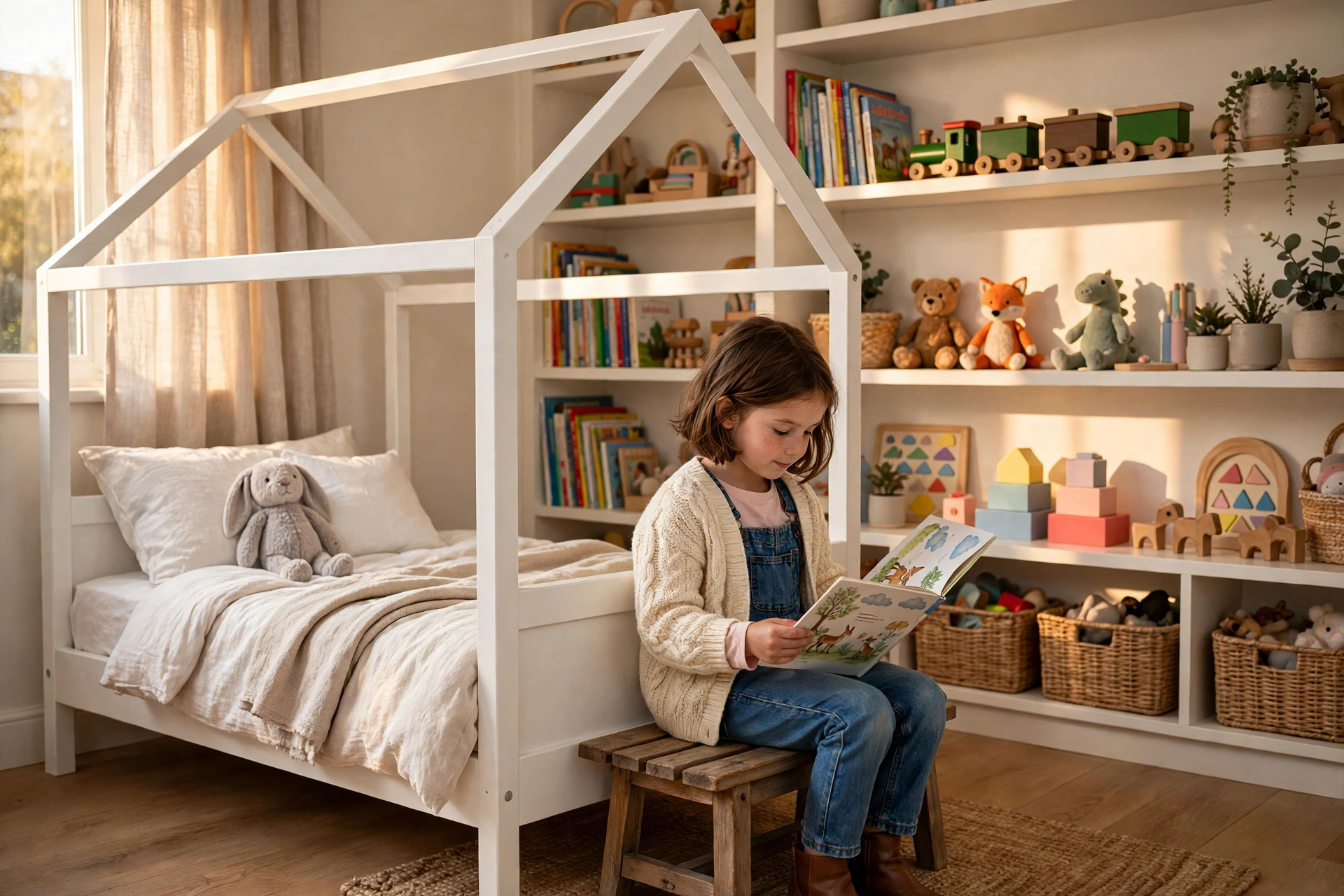
At night it is the reading spot. She picks a book from the shelf, sits on the bench, and reads “just one chapter” that becomes three — the bench is low enough that I can sit next to her for the bedtime story without squeezing onto the mattress. The unexpected use: it has become the stage for toy concerts, the desk for coloring when her real desk is buried, and the luggage rack when we pack for grandma’s. A plain twin frame has none of this. It just holds a mattress.
The 6-to-8-Inch Mattress Rule and Other Things to Know
Before you buy, read the spec sheet, because this bed has opinions. The manufacturer recommends a 6-to-8-inch mattress — thicker than that and the guard rails of the house frame start to look short relative to the sleep surface. We bought a 7-inch medium-firm twin and it is perfect. If you need a refresher on sizes, my mattress sizes chart covers why thickness matters as much as length.
Other facts worth knowing: the 250-pound weight capacity means an adult can sit on the edge for storytime with zero creaking — I am 150 pounds and it does not notice me. The 51.2-inch roofline clears standard 8-foot ceilings with room to spare, but measure if your kid’s room has a sloped ceiling or a ceiling fan. The white/gray finish wipes clean with a damp cloth; two months of fingerprints and one juice-box incident have left no marks. And the bed comes in white/gray only — if you need natural wood, look elsewhere.
Kids Beds by the Numbers: Why Storage Beds Are Everywhere
I am not the only parent doing this math. Dataintelo’s 2025 children’s furniture report puts the global market at $39.4 billion in 2025, growing to $65.5 billion by 2034 at a 5.8% CAGR — and beds are the single largest product category at 28.5% of sales, roughly $11.2 billion, because every kid needs one and parents keep buying the version with more built in.
The report’s read matches what I see: multi-functional pieces — storage, charging, convertible formats — are where the growth is. The standalone plain bed frame is slowly becoming the flip phone of kids’ furniture. A house bed with storage like this one is the market’s answer to the same problem every parent has: small rooms, too much stuff, and devices that all need power.
The Verdict
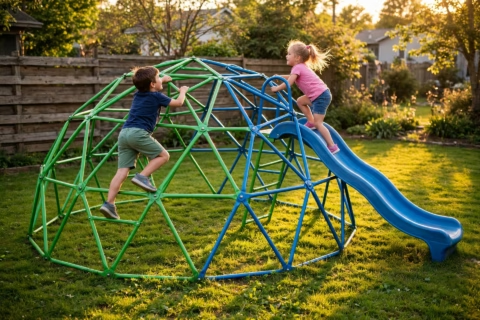
Two months in, the $399 twin house bed is the best furniture purchase I have made for my daughter’s room — and that includes the $199 climbing dome my nephew got for the backyard. The socket gets used every night, the shelves ended the book-floor, the bench runs the morning shoe routine, and the assembly, while a genuine Saturday project, produced a bed that does not wobble.
Who should buy it: parents of 5-to-10-year-olds in small-to-medium rooms, anyone tired of nightstand clutter and floor cables, and gift-buyers who want one big useful present instead of five small ones. Who should skip it: anyone needing a full or queen for a teen, anyone who genuinely wants the cheapest possible twin frame, and rooms with sloped ceilings under the 51.2-inch roofline. For everyone else — the house earns its $399.
Ready to upgrade the kids’ room? See the $399 Twin House Bed with Bench, Socket and Shelves at FLNORW MALL — or start at the FLNORW MALL homepage and browse the full kids’ bedroom collection.