I Bought a $99 Acacia Shoe Rack Bench. Five Months Later, Here’s the Entryway Math.
Our front door had a shoe problem. Not a cute little shoe problem, a real one: four people, fourteen pairs of shoes, and a front hall that sounded like a bowling alley every morning at 7:40. I spent six weeks tripping over sneakers before I admitted the shoe rack bench I had been avoiding was the only fix. Five months later, this $99 acacia bench is the most-used piece of furniture in my hallway, so here is the honest report: the dimensions that matter, the sit test I actually ran, how many pairs really fit, and the two things that still bug me.
Why the Shoe Pile by My Front Door Had to Go
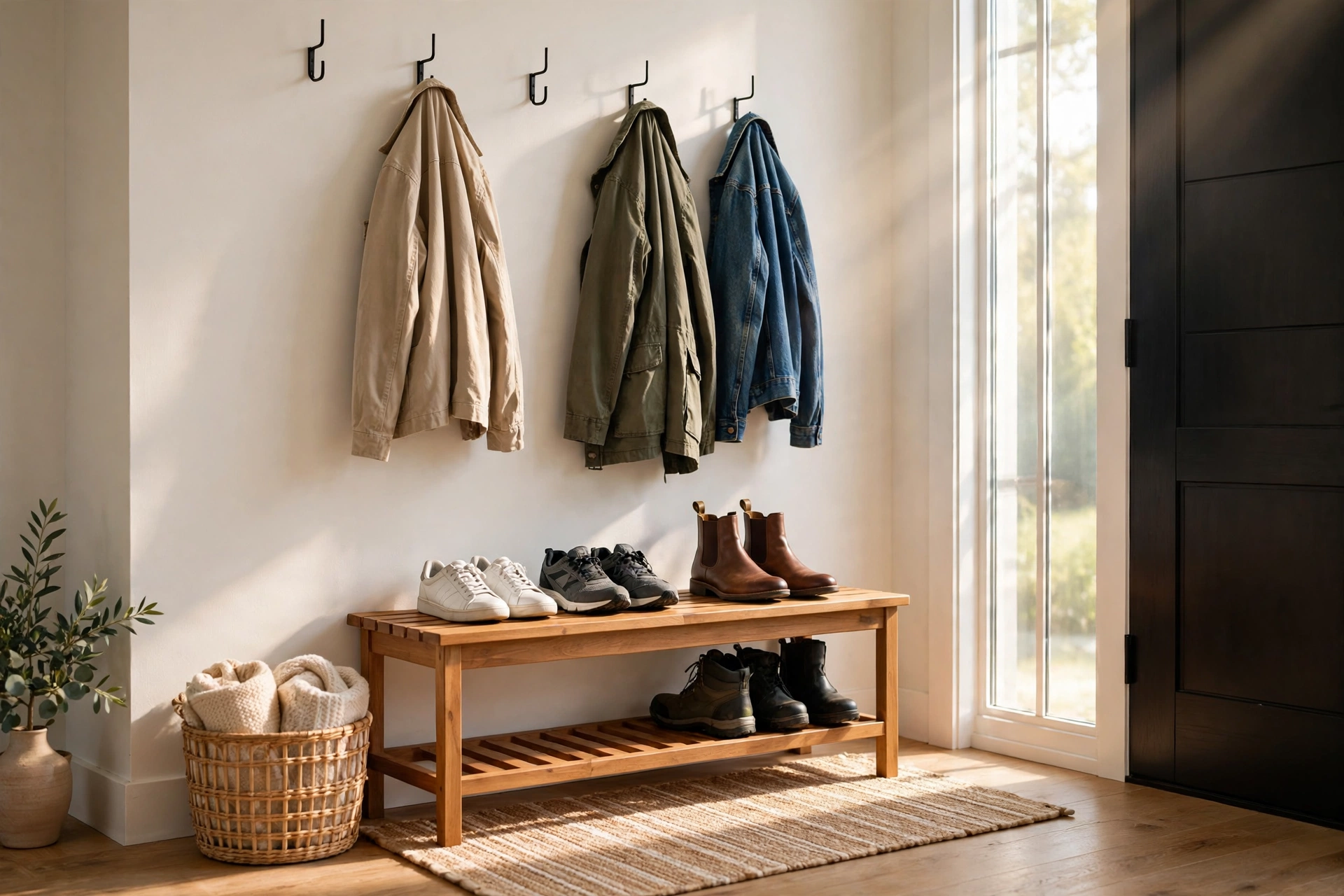
I am not proud of this, but the photo on my phone from last May tells the story. Our entryway is barely 6 feet wide, and on a normal Tuesday it held a drift of sneakers, one abandoned rain boot, and a sandal that belonged to nobody. My 8-year-old had started vaulting the pile like a tiny Olympic hurdler.
The breaking point was not the mess. It was my wife pointing out that we had started greeting guests at the side door because the front entrance was embarrassing. A shoe storage bench is one of those boring, obvious answers I resisted for a year because it felt like surrender. Turns out it was just a purchase.
The $99 Acacia Shoe Rack Bench Itself
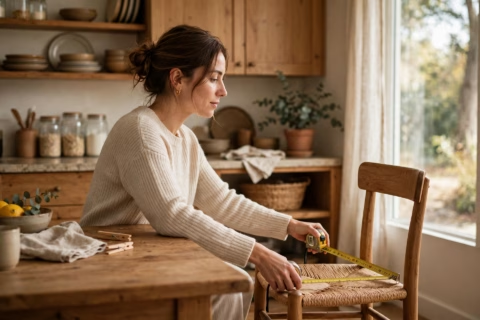
I bought the acacia wood shoe rack bench from FLNORW MALL after measuring my wall gap with painter’s tape. The numbers that sold me: 27.6 inches long, 11 inches wide, 17.8 inches tall, and a 200-pound weight rating so it doubles as a seat. It weighs 10 pounds, which means I carried it inside in one hand.
It is three tiers in practice: two storage shelves plus the top surface for sitting while you put shoes on. The frame is solid acacia wood with a water-based coating, natural brown grain, edges sanded smooth. The product page lists it at $99 (item W68535810), and it arrived with the hardware in a small bag and instructions I could read without glasses. Assembly took me about 20 minutes with the included wrench, alone, no cursing.
The 200-Pound Sit Test: Five Months of Tying Shoes
A bench you cannot actually sit on is just a shelf, and most budget shoe racks flex when an adult sits down. I weigh 190 pounds, and for five months I have sat on this bench twice a day to tie my shoes. Zero creaks. Zero wobble. The kids, ages 8 and 11, treat it as a step stool, a reading spot, and occasionally a stage. It has not developed a single crack or loose joint.
The acacia is doing real work here. Acacia is a dense hardwood, and the joinery held through the summer humidity in our un-air-conditioned hallway. The 17.8-inch seat height is also genuinely comfortable for tying laces, roughly the height of a low dining chair, so you are not doing that awkward half-squat on a too-tall bench.
Shoe Rack Bench Capacity: How Many Pairs Actually Fit
This is the section I wish every product page included. The 6.8-inch clearance between tiers is the number that governs everything. Standard sneakers, flats, loafers, and kids’ shoes slide in comfortably. My size-11 running shoes fit. Tall boots do not fit upright, full stop. I put my boots in the closet like a normal person and stopped being annoyed about it.
The 27.6-inch width holds three adult pairs side by side per shelf, roughly 9 inches per pair. Here is the honest inventory after five months of real use:
- Lower tier: 3 pairs of adult sneakers, toe-forward.
- Middle tier: my wife’s flats, my daughter’s shoes, and one sad single sandal waiting for its mate.
- Bench top: the pair I am wearing that day, plus whatever the kids kick off on their way past.
Realistic capacity for a family of four: 8 to 9 pairs in daily rotation, with overflow going to a closet. If you own forty pairs of shoes, this is not your product. If you want the entryway shoe storage that handles the daily dozen, it is exactly enough.
Three Small Entryway Ideas That Made It Work
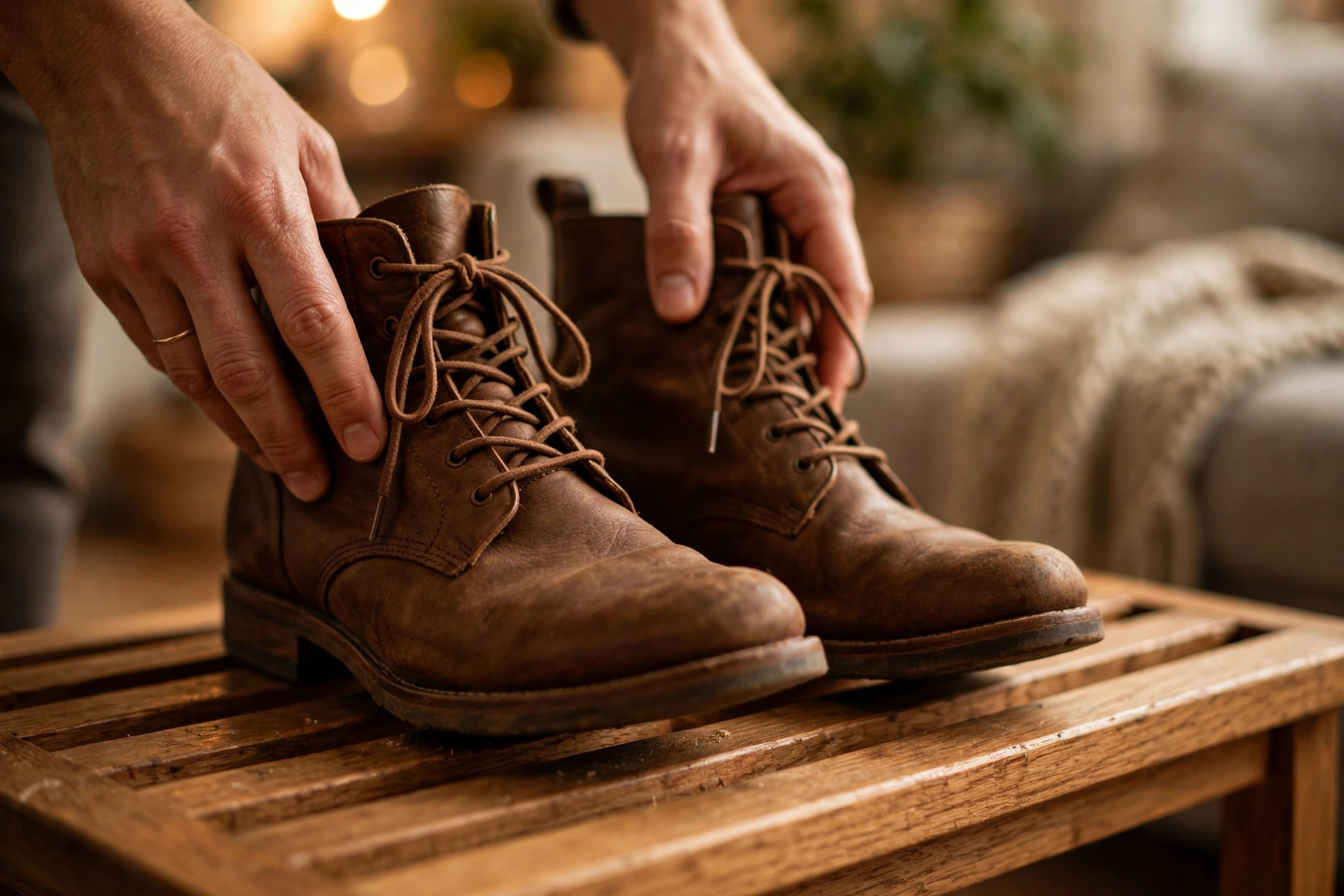
The bench alone fixed 70% of the problem. These three cheap additions fixed the rest:
1. Park it under the wall, not in front of it. The 11-inch depth hugs a wall in a way wider benches cannot. Ours sits under the hallway window, out of the swing of the front door. Measure your door swing before you buy any bench, because 3 extra inches is the difference between a walkway and a tripping hazard.
2. Give wet shoes a tray. The bench’s water-resistant coating survived muddy October rain boots, but standing water is a different fight. A $10 plastic boot tray from the hardware store slides on the middle tier and keeps the wood from sitting in puddles. Five months, zero water stains.
3. Add one hook per person above it. The bench solved shoes; hooks solved coats and backpacks. The bench-plus-hooks combo turned our 6-foot hallway into a real mudroom. This is also where a pair of rattan nightstands I bought for the bedroom proved unexpectedly relevant: small furniture earns its keep when every inch has a job, which is the same lesson as the bench.
The $99 Math: What a Real Entryway Bench Costs
Custom built-in entryway benches run $250 to $400 installed in my area, and that is before you find a carpenter with a free weekend (estimates, my quotes, October 2026). Generic particle-board benches from big-box stores run roughly $60 to $90, estimates from what I saw in store aisles. This acacia bench landed between them at $99, but built like the expensive option.
The cost-per-use math is where it quietly destroys the alternatives. I sit on it about twice a day. Over five months that is roughly 300 sits, which puts the cost at about $0.33 per sit, and it keeps dropping every week. My daughter’s soccer cleats cost more per game.
The category itself keeps growing, which tells you something about how universal this problem is. Dataintelo’s 2025 report values the global shoe storage market at $12.8 billion in 2025, projecting $18.9 billion by 2033 at a 5.2% CAGR, with open shoe racks holding the largest product share at 28.4%. People are not buying shoe racks for fun; they are buying them because every house in America has the same pile by the door.
Two Honest Caveats
First: the 6.8-inch tier clearance. I knew it going in, and I still got briefly annoyed when my winter boots would not fit. Low-profile everything is fine; anything over about 7 inches tall is not. Measure your tallest shoes before you order.
Second: wide men’s shoes overhang the 11-inch depth slightly. My size 11s stick out about half an inch. It does not matter functionally, but if you are the type who notices, you will notice.
Minor one: the top surface will show scuffs if you drop keys on it. I put a small tray on one end and the problem disappeared. That is the full complaint list after five months, which is about as close to a perfect budget purchase as I have had.
My Verdict After Five Months
This bench did the unglamorous job I bought it for: it holds our daily shoes, survives my 190-pound frame twice a day, and still looks like the day it arrived. The acacia wood, the 200-pound rating, and the wall-hugging 11-inch depth make it the rare $99 piece that behaves like furniture costing three times more. If your front door has a shoe drift and a 28-inch gap in the wall, this is the fix. I would buy it again tomorrow, which is the only review metric that actually matters.
Ready to fix your entryway? See the acacia shoe rack bench ($99, in stock), browse more small-space picks in furniture under $100, or start at the FLNORW MALL homepage.